Caste violence, and what the state does next. We follow each case from the attack to the verdict, measure the gap between the law Dalits won in 1989 and the convictions it delivers, and record how families and organisations force accountability.
Reservation is a constitutional claim, not a favour. We test it against the record: posts left empty for want of a 'suitable' candidate, quotas divided without data, a census that counts caste but may not change who is protected, and promised money that never arrived.
Who owns, who works and who profits. Dalit families still wait for land the state granted a century ago, sanitation workers still die in sewers officials say nobody cleans by hand, and caste still decides who gets hired, paid and funded.
Who holds power, and who is kept out of it. We count who sits in legislatures, newsrooms, courts and boardrooms, follow the parties that court Dalit votes, and ask what Dalit representatives can change once they are inside.
Caste does not disappear in code; it is written into it. We report who builds Indian and global tech and who gets filtered out, what automated systems learn about Dalit people, and who decides which Dalit voices stay online.
Dalit culture made on its own terms: work that refuses the stories dominant castes wrote for it, critics who judge it from a stated standpoint, the archives movements kept for themselves, and the Ambedkarite and Buddhist turn that treats leaving caste as a political act.
Caste and patriarchy work together, and so do the people who fight both. We report where Brahminical patriarchy bites hardest, in the field, the home and the courtroom, and hear from Dalit women and queer, trans and disabled Dalit people on their own terms.
Caste is not only India's, and neither is the fight against it. From Nepal's courts to Seattle's council, Geneva's treaty bodies and Brussels' trade talks, we track where caste discrimination is named in law, and whether naming it changes anything.
Dalit thought as the primary theory of caste, not a footnote to it. We read its thinkers closely, from Ambedkar's 1916 paper on endogamy to Dalit scholars writing now, and test their arguments against what happens this week.
Caste violence, and what the state does next. We follow each case from the attack to the verdict, measure the gap between the law Dalits won in 1989 and the convictions it delivers, and record how families and organisations force accountability.
Reservation is a constitutional claim, not a favour. We test it against the record: posts left empty for want of a 'suitable' candidate, quotas divided without data, a census that counts caste but may not change who is protected, and promised money that never arrived.
Who owns, who works and who profits. Dalit families still wait for land the state granted a century ago, sanitation workers still die in sewers officials say nobody cleans by hand, and caste still decides who gets hired, paid and funded.
Who holds power, and who is kept out of it. We count who sits in legislatures, newsrooms, courts and boardrooms, follow the parties that court Dalit votes, and ask what Dalit representatives can change once they are inside.
Caste does not disappear in code; it is written into it. We report who builds Indian and global tech and who gets filtered out, what automated systems learn about Dalit people, and who decides which Dalit voices stay online.
Dalit culture made on its own terms: work that refuses the stories dominant castes wrote for it, critics who judge it from a stated standpoint, the archives movements kept for themselves, and the Ambedkarite and Buddhist turn that treats leaving caste as a political act.
Caste and patriarchy work together, and so do the people who fight both. We report where Brahminical patriarchy bites hardest, in the field, the home and the courtroom, and hear from Dalit women and queer, trans and disabled Dalit people on their own terms.
Caste is not only India's, and neither is the fight against it. From Nepal's courts to Seattle's council, Geneva's treaty bodies and Brussels' trade talks, we track where caste discrimination is named in law, and whether naming it changes anything.
Dalit thought as the primary theory of caste, not a footnote to it. We read its thinkers closely, from Ambedkar's 1916 paper on endogamy to Dalit scholars writing now, and test their arguments against what happens this week.
In 2024 India's courts finished trials in fewer than 5 of every 100 caste-atrocity cases before them, and convicted in a third of those. The Una and Dangawas verdicts show what happens to the rest.
This shows how difficult it is for Dalits to get justice. This is eroding the trust in the justice system and the guarantee of justice that our constitution gives us.
Bhanwar Meghwanshi, activist, after the Dangawas acquittals · The Wire, 7 Aug 2026
339,853
Crimes against Scheduled Castes awaiting trial at the end of 2024: 95.2% of the cases before the courts. A third of finished trials ended in conviction.
Police suspect Vimal Vaniya's wife's brother and two other men killed him over a marriage her family tried to undo. The Supreme Court asked Parliament for a law in 2018, and there isn't one.
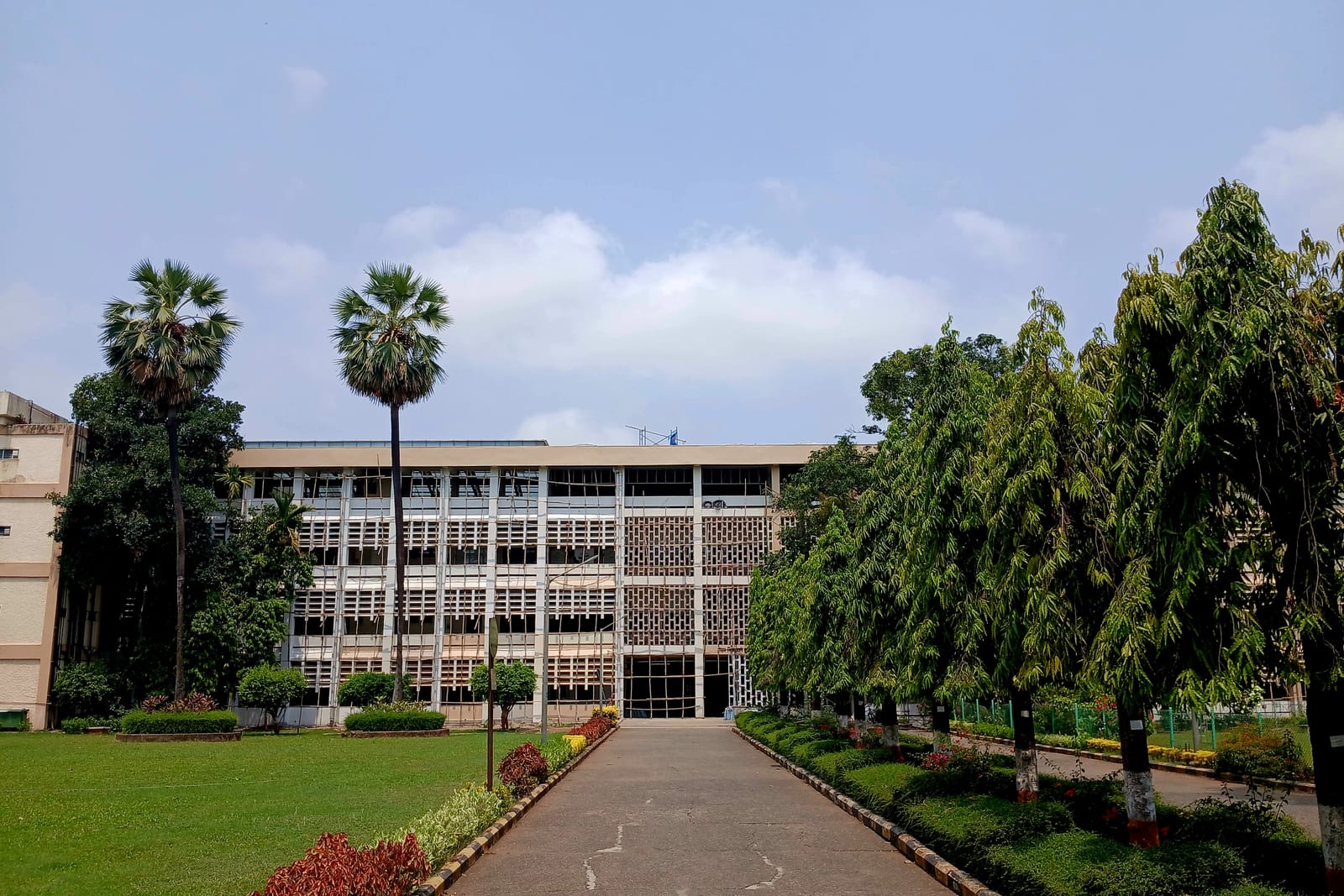
Three years after Darshan Solanki's death, another Dalit student has died at IIT Bombay, and the institute's first account again centred on the student. Students want many of the same reforms.
India's law against caste violence promises special courts and two-month trials. Khairlanji ended with no atrocity on the record; Una took almost ten years to convict five men of 41.
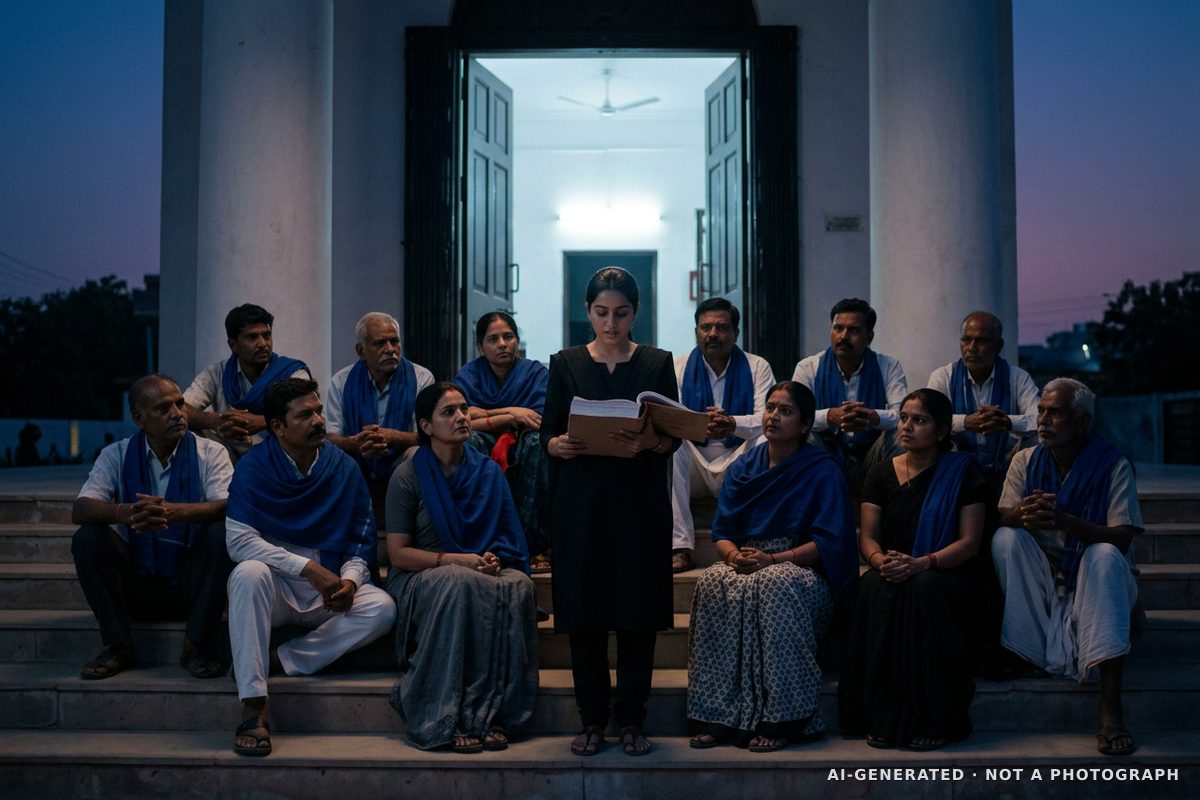
Illustration: men and women sit on the steps of a district court at dusk as a young woman reads aloud from a judgment. — DalPro Frames (AI-generated) – Why AI image?
The perpetrators commit ghastly and inhuman crimes against Dalits because they think they will not face the consequences. Indeed, the way the system has worked, it corroborates their belief and encourages them to commit ghastlier atrocities.
the people Odisha's courts ordered to clean a police station as a condition of bail, May 2025 to January 2026, who were Dalit. The other two were Adivasi.
Sanamdeep Singh's family kept his body in a Sangrur mortuary for five days to press for Atrocities Act charges. Police removed them and oversaw the cremation, citing decay.
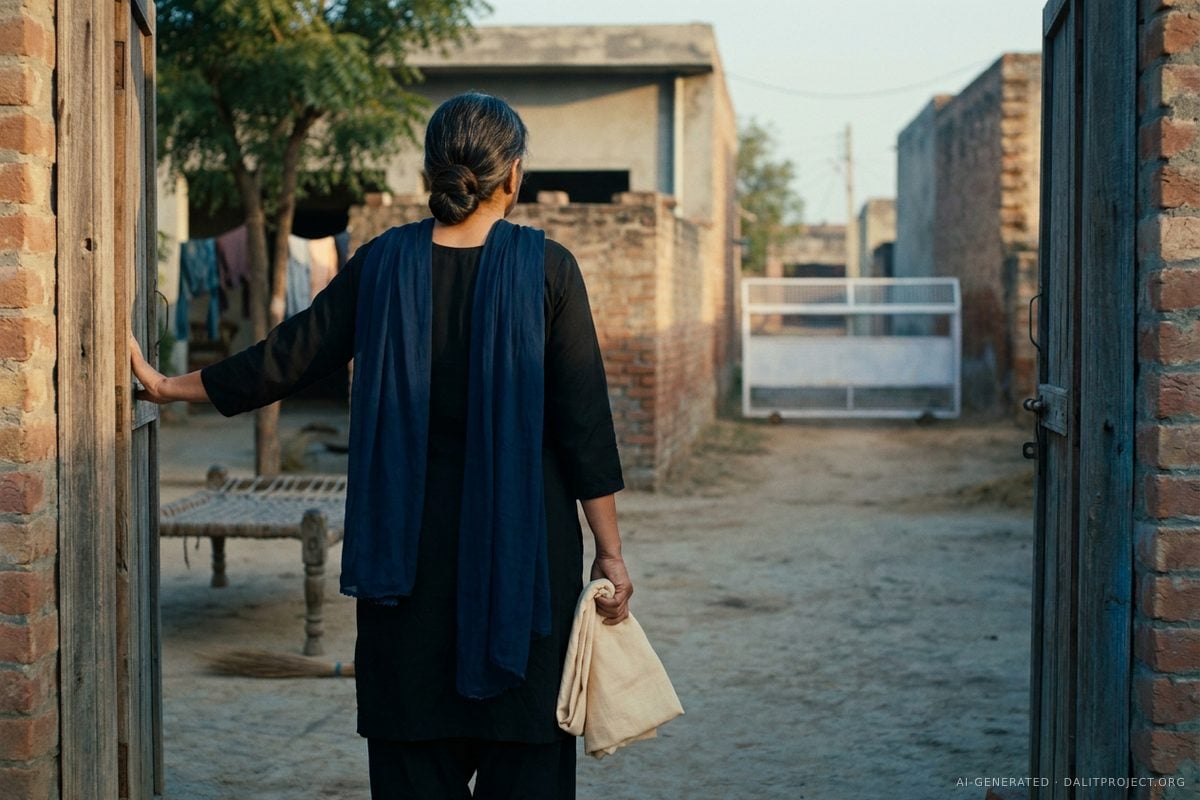
Illustration: a woman holds open the gate of a village house, a folded cloth in her hand, facing a barricade across the lane. — DalPro Frames (AI-generated) – Why AI image?
We had kept Sanamdeep's body at the hospital mortuary for five days while peacefully protesting and demanding action against the sarpanch and registration of appropriate charges, including provisions under the Scheduled Castes and Scheduled Tribes (Prevention of Atrocities) Act.
Eleven years of crime tables show more caste-atrocity cases reaching court, no more trials finishing in 2024 than in 2014, and a conviction rate stuck near one in three.
Telangana named a bill after Rohith Vemula in April and gave it to five ministers. Five months on, it hasn't said whom the law would protect, while his movement has already published its own.
The Dr. B.R. Ambedkar Telangana State Secretariat in Hyderabad, where the cabinet sub-committee on the Rohith Vemula Bill held its first reported meeting, in July 2026. File photo. — Kavali Chandrakanth KCK, CC BY-SA 4.0
We do not know what pushed him to this end: caste discrimination or unendurable stress. What we know for sure is this is an institutional issue. Let us stop looking at student suicides across campuses as isolated incidents.
— APPSC IIT Bombay, statement after Darshan Solanki's death, February 2023, as reported by Careers360
28 of 45
students who died by suicide at India's 23 IITs between 2020-21 and 2024-25 were from Scheduled Caste, Scheduled Tribe (Adivasi, or Indigenous) or Other Backward Class (OBC) communities, a broad group of historically disadvantaged castes.
Source: official data compiled from all 23 IITs for a question in the Lok Sabha, Parliament's lower house, dated 8 December 2025, as reported by ETV Bharat. The compilation gives no details of the circumstances of the deaths, ETV Bharat notes, so the numbers alone cannot show why these students died.
Showing —
Illustration: a woman holds open the gate of a village house, a folded cloth in her hand, facing a barricade across the lane. — DalPro Frames (AI-generated) – Why AI image?
Sanamdeep Singh's family kept his body in a Sangrur mortuary for five days to press for Atrocities Act charges. Police removed them and oversaw the cremation, citing decay.
The Dalit M.Ed. student says faculty harassed her and held her marks down. The national commission that took up her case can demand answers, but has no power of its own to punish.
Nepal told the UN it had apologised to Dalits. No apology was passed by the Cabinet or gazetted, and a Dalit man's death in police custody was investigated only by the police.
India's law against caste violence promises special courts and two-month trials. Khairlanji ended with no atrocity on the record; Una took almost ten years to convict five men of 41.
In 2024 India's courts finished trials in fewer than 5 of every 100 caste-atrocity cases before them, and convicted in a third of those. The Una and Dangawas verdicts show what happens to the rest.
Twenty years after a mob killed a Dalit family of four, eight men stand convicted of murder and none of an atrocity. One court even counted the absence of caste in their favour.
Three years after Darshan Solanki's death, another Dalit student has died at IIT Bombay, and the institute's first account again centred on the student. Students want many of the same reforms.
Police suspect Vimal Vaniya's wife's brother and two other men killed him over a marriage her family tried to undo. The Supreme Court asked Parliament for a law in 2018, and there isn't one.
Telangana named a bill after Rohith Vemula in April and gave it to five ministers. Five months on, it hasn't said whom the law would protect, while his movement has already published its own.
A former Chief Justice says the atrocities law is misused, though rarely. The 2024 data show two states' police made more than two-thirds of the "false" closures.
The 2013 Act defines a manual scavenger and, separately, hazardous cleaning of sewers and septic tanks. Workers sent into sewers fall between the two, and outside its rehabilitation list.
India's records call these deaths "hazardous cleaning" accidents, never manual scavenging, the caste-bound work a 2013 law banned. The label decides who is counted and who is owed.
Eleven years of crime tables show more caste-atrocity cases reaching court, no more trials finishing in 2024 than in 2014, and a conviction rate stuck near one in three.
A. Raju helped win equal burial rights in 2024. When he died in July 2026, he was buried only after nearly nine hours of talks, and the atrocities law no longer reaches Dalit Christians.
Courts in Odisha bailed Dalit and Adivasi accused on condition they sweep a police station. The Supreme Court struck the conditions out as caste-coloured.
The court backlog of crimes against Dalits rose to 339,853 cases in 2024, up for a third straight year. About a third of finished trials end in conviction, and in most large states far fewer.