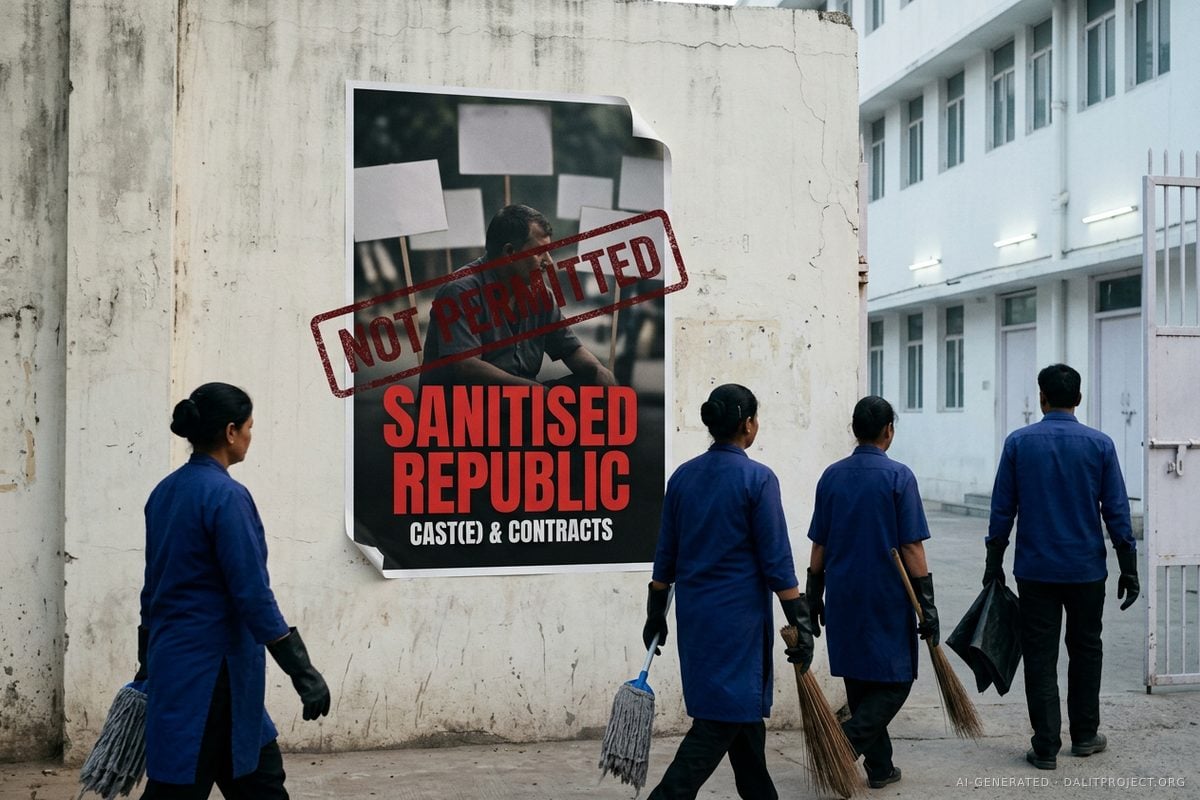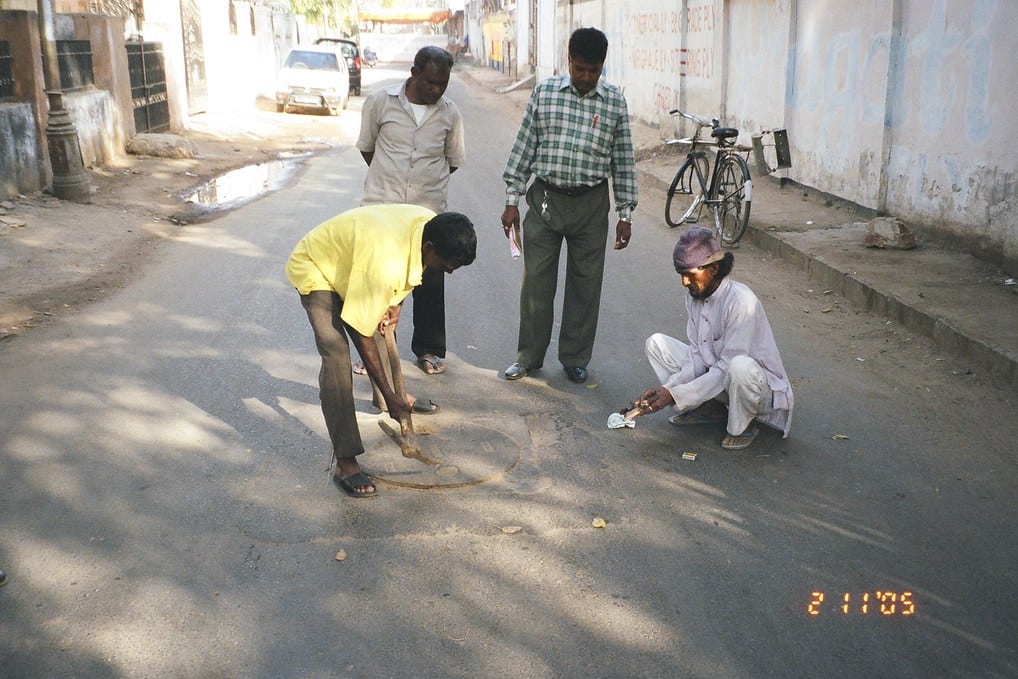
The Prohibition of Employment as Manual Scavengers and their Rehabilitation Act became law on 18 September 2013, to end the employment of people to clean human excreta by hand, work that India’s caste order has forced on Dalits, the communities once branded “untouchable”. In 2023 India’s Supreme Court called such work, in latrines and in sewers alike, “a manifestation of untouchability”. The Act came into force on 6 December 2013, the federal social justice ministry’s notification shows. It does two different things. It bans manual scavenging, which it defines narrowly, around insanitary latrines, those whose excreta must be cleaned by hand. And it bans sending anyone into a sewer or septic tank without safety gear, which it calls “hazardous cleaning”. Workers whom contractors and local bodies send into sewers and septic tanks, where these deaths happen, are covered by the second ban, but their sewer work is left out of the first definition, and with it the Act’s promise of a new livelihood.
What happened
The Act’s section 2(1)(g) defines a “manual scavenger” as a person employed by an individual, a local authority, an agency or a contractor “for manually cleaning, carrying, disposing of, or otherwise handling in any manner, human excreta in an insanitary latrine or in an open drain or pit into which the human excreta from the insanitary latrines is disposed of, or on a railway track”, or in other places a federal or state government notifies. An explanation adds that a person who cleans excreta using devices and protective gear notified by the federal government “shall not be deemed to be a ‘manual scavenger’”.
Separately, section 2(1)(d) defines “hazardous cleaning” of a sewer or septic tank as manual cleaning “without the employer fulfilling his obligations to provide protective gear and other cleaning devices and ensuring observance of safety precautions”.
Each definition carries its own ban. Section 5 bans employing a manual scavenger, with up to one year in prison or a fine of Rs 50,000 for a first offence (section 8). Section 7 bans engaging anyone “either directly or indirectly” for hazardous cleaning, with up to two years or Rs 200,000 (about US$2,100) for a first offence and up to five years or Rs 500,000 after that (section 9). Every offence under the Act is cognizable, meaning the police can arrest without a warrant, and non-bailable, meaning bail is at a court’s discretion (section 22). But a court can act only on a complaint made within three months of the offence (section 10), the Act says.
Why it matters
The definition decides who the state counts. The federal government’s replies to Parliament repeat that “No death has been reported due to engaging in Manual Scavenging (which is lifting of human excreta from insanitary latrines as defined in Section 2(1) (g) of the MS Act, 2013)”, as one in July 2022 put it. Deaths in sewers and septic tanks are listed separately, as accidents during hazardous cleaning. The National Commission for Safai Karamcharis (NCSK), the federal government’s commission for sanitation workers, has recorded 1,313 sewer and septic-tank deaths from 1993 to June 2025, Outlook reported. A sanitation workers’ movement counts many more, as an earlier Dalit Project analysis of the two counts shows.
58,098 people identified as manual scavengers in the national surveys of 2013 and 2018, the federal government’s count of those eligible for the Act’s rehabilitation. In 2023 the Supreme Court found that neither survey followed the procedure the Act sets. More than half, 32,473, were in Uttar Pradesh, the northern state, the ministry told Parliament in 2024. Source: federal social justice ministry, July 2022
Is it legal to send a worker into a sewer?
Only in narrow cases, and only with gear. The Act’s 2013 rules say no one may be allowed to clean a sewer manually, even with protective gear, except to remove a concrete, fibre-reinforced plastic (FRP) or damaged manhole cover where machines cannot work, to link a new sewer main larger than 300 mm to an old one, to remove pumps at the bottom of a suction well, to rebuild a manhole or repair a main, or when the local authority’s chief executive permits it in writing with specific reasons. Before entry to remove pumps or repair a sewer, the sewage must be emptied (rule 3).
Even then, the employer must provide protective gear and safety devices, a list of 44 items that includes a gas monitor, breathing apparatus, a safety harness and a helmet (rule 4). At least three workers, one a supervisor, must be present; the air must be tested for toxic gases; and no one may enter a manhole if oxygen is below 19.5% (rule 6). Entering without these is hazardous cleaning, and a crime for the person who sent the worker in.
Is a sewer worker a “manual scavenger” under the Act?
i
CC BY-SA 4.0Original on Wikimedia CommonsNot for sewer work. Sewers and septic tanks are not on the list in section 2(1)(g), unless a government notifies them, and the explanation excludes anyone cleaning excreta with notified devices and gear. A worker who dies in a septic tank without gear is recorded as dying during “hazardous cleaning”, not manual scavenging. A person who also does work that meets the definition can still be identified for that work. The difference matters because the Act’s surveys look only for people who meet its definition of a manual scavenger, and only people on that list are owed rehabilitation.
What does a person identified as a manual scavenger get?
Section 13 promises each person on the final list a photo identity card and one-time cash assistance within one month; scholarships for their children; and, subject to eligibility and willingness, a residential plot and help to build a house, or a ready-built house, training in a livelihood skill with a stipend of at least Rs 3,000 a month, and a subsidy and a cheap loan to start other work. The district magistrate, the district’s top civil servant, is responsible. Under the rules, the cash is Rs 40,000 (about US$420) for one person in each family, which can be withdrawn in monthly instalments of up to Rs 7,000 (rule 12).
What do sewer workers and their families get instead?
Not a statutory package, but court orders. In 2014, in a case brought by the Safai Karamchari Andolan (SKA), a national movement of sanitation workers, the Supreme Court, as its later judgment recounts, ordered compensation of Rs 1 million (Rs 10 lakh) for the family of every person who had died in sewer work since 1993. In October 2023, in Balram Singh v Union of India, it raised that to Rs 3 million (Rs 30 lakh, about US$31,000), payable also to families of earlier victims not yet paid that amount, ordered at least Rs 1 million for a worker disabled in a sewer and Rs 2 million where the disability is permanent and leaves the worker “economically helpless”, and directed governments to provide “full rehabilitation (including employment to the next of kin, education to the wards, and skill training)” for sewage workers and the families of those who die. It also ordered that manual sewer cleaning be “completely eradicated in a phased manner”.
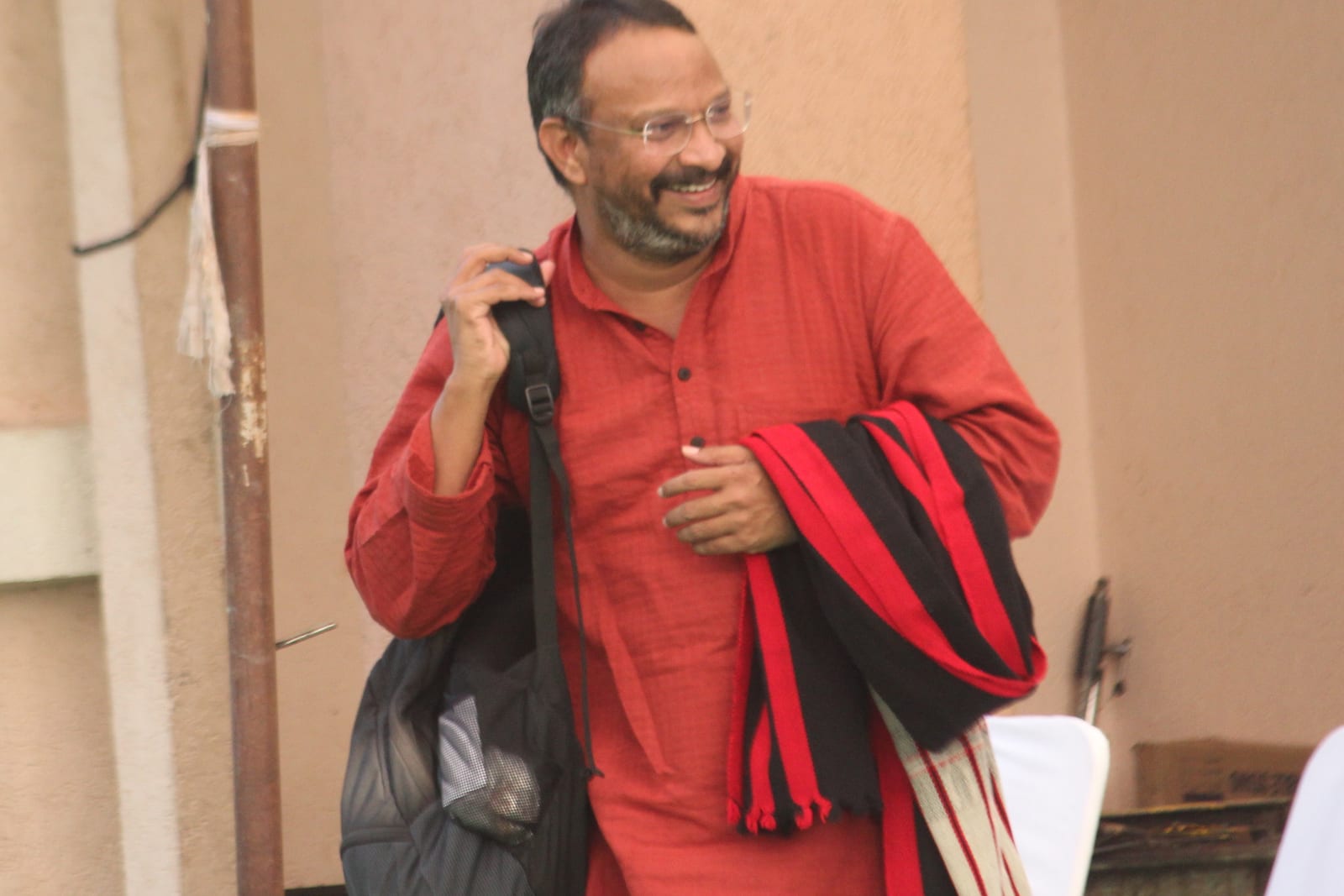
The federal government’s main scheme for sewer workers is NAMASTE, the National Action for Mechanised Sanitation Ecosystem, launched in 2023, which offers safety training, protective equipment and health insurance, as that analysis of the government’s latest reply sets out. Bezwada Wilson, the SKA’s national convenor, a Dalit activist born into a community forced into manual scavenging, says the government expects workers to take loans to buy sewer-cleaning machines, Outlook reported:
“It is the government that should provide the machines. Not doing so is a ‘modern’ form of untouchability in a ‘modern’ caste system.”
— Bezwada Wilson, national convenor of the Safai Karamchari Andolan, to Outlook, August 2025
Who does this work?
Mostly Dalits. Of the 54,574 sewer and septic-tank workers in towns and cities verified under NAMASTE, 67.9% are from Scheduled Castes, the official category for Dalits, the social justice ministry told the Lok Sabha, Parliament’s lower house, on 17 December 2024, as the same analysis reported. The ministry records no caste for the deaths.
Key terms
- Manual scavenger: under the 2013 Act, a person employed to handle human excreta by hand in an insanitary latrine, open drain, pit or on a railway track, or in other notified places.
- Hazardous cleaning: manual cleaning of a sewer or septic tank without the protective gear and safety precautions the law requires.
- Insanitary latrine: a latrine whose excreta must be cleaned or handled by hand before it decomposes.
- NCSK: the National Commission for Safai Karamcharis, the federal government’s commission for sanitation workers. Under section 31 of the 2013 Act, it monitors how the law is carried out, enquires into complaints that it has been broken and sends its findings, with recommendations for action, to the authorities concerned, advises the federal and state governments on enforcing it, and can take up non-implementation on its own. For that work, it can call for information from any government, local or other authority. It also records sewer and septic-tank deaths.
- Safai karamchari: a sanitation worker.
What’s next
The Supreme Court is still monitoring the Balram Singh case. In January 2025 it banned manual scavenging and sewer cleaning in six metropolitan cities, and on 27 July 2026, both steps reported by LiveLaw, it asked the chief secretaries, the top civil servants, of five states where deaths had continued to explain within four weeks why it should not begin contempt proceedings against them. “[W]e will fix the responsibility. Somewhere it has to stop,” Justice Aravind Kumar said. What the states answer, and what the court does next, will show whether responsibility for these deaths reaches anyone above the contractor.