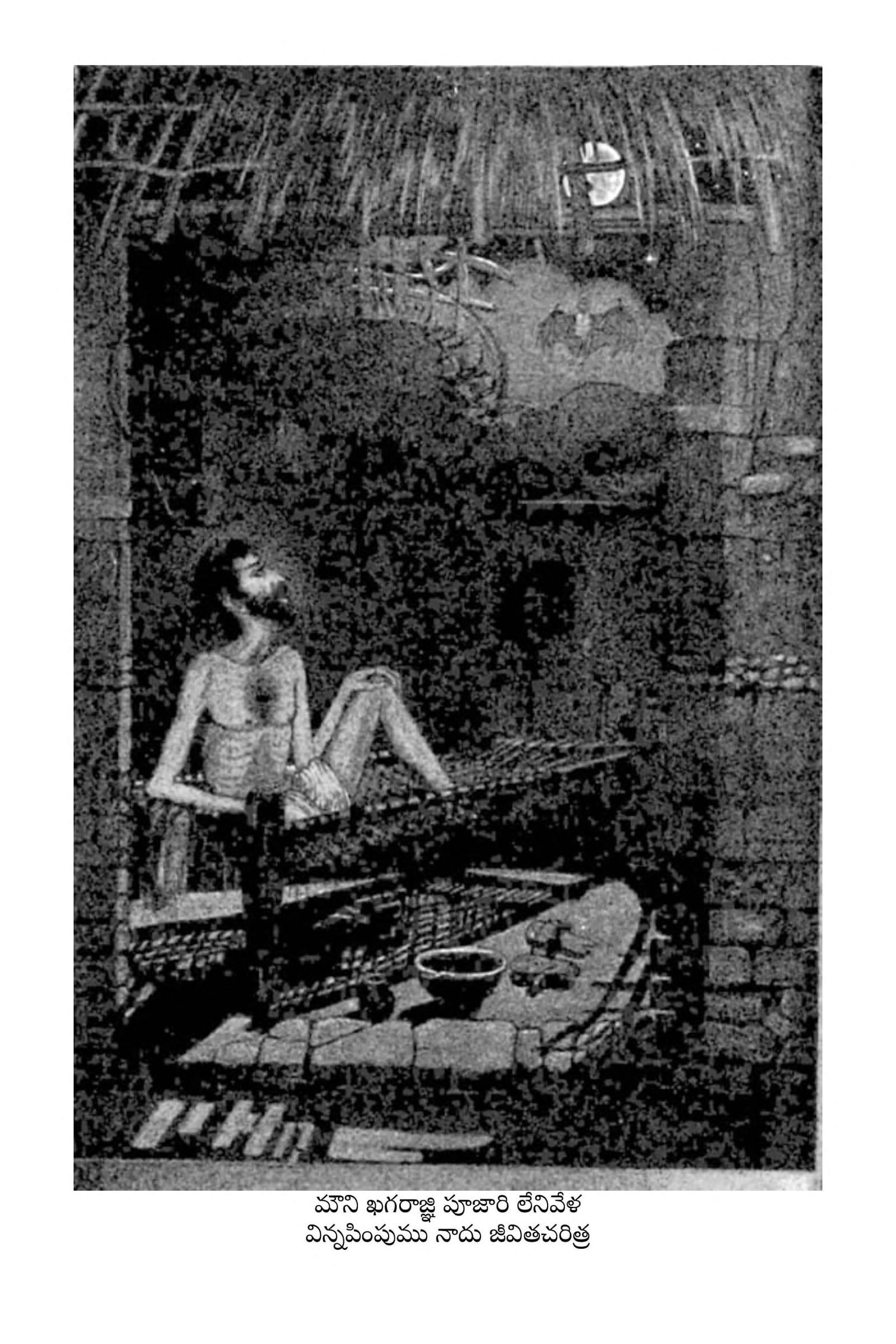
The poem: Gabbilam (గబ్బిలం, “The Bat”), by Gurram Jashuva. Telugu verse, 1941 and 1946. Many of the verses, with a commentary by the scholar Katevarapu Venkataramaiah, are on Telugu Wikisource. In English: Gabbilam: A Dalit Epic, translated by Chinnaiah Jangam and illustrated by Laxman Aelay (Yoda Press, 2022), introduced in an essay in The Hooghly Review.
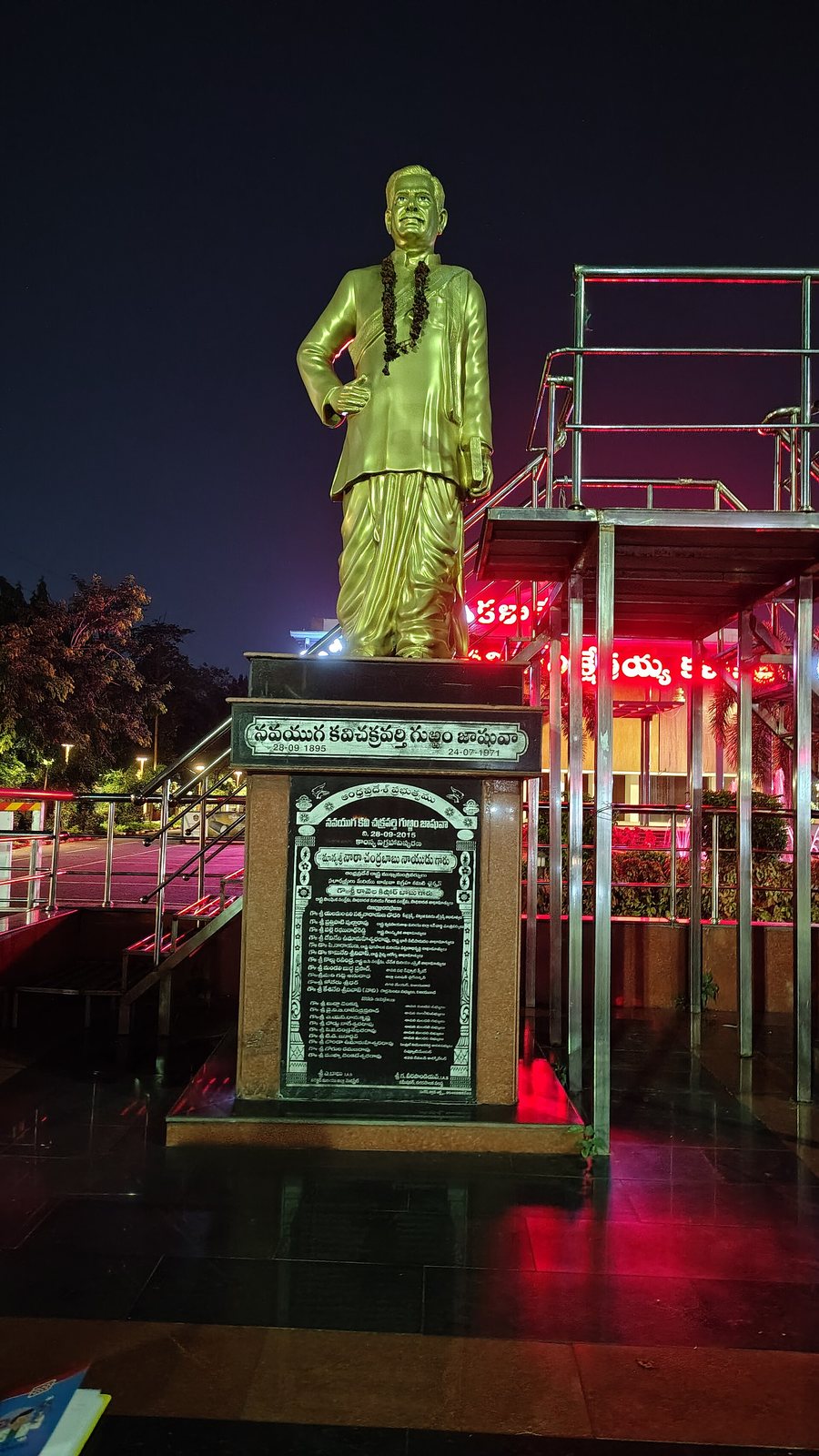
On 28 September 2026, the Andhra Pradesh government marked the 131st birth anniversary of Gurram Jashuva at the district administration’s offices in Vijayawada, a city in the south-eastern state. The culture minister, Kandula Durgesh, gave out literary prizes in his name. The state’s Chief Minister, N. Chandrababu Naidu, praised a poet who, while facing caste discrimination, “filled society with the light of equality” (our translation from Telugu). Two days earlier, Dokka Manikya Vara Prasad, a former state minister, wrote in the Telugu daily Andhra Jyothy that Jashuva was “a true Gandhian” (our translation). Further south, in the coastal town of Ongole, the Telugu Dalit People Cultural Association held a Dalit cultural and literary festival for the same anniversary.
A government, a former minister and a Dalit association all claim Jashuva, and Vara Prasad builds his case on Gabbilam. Read now, it is two poems. One is a fierce attack on caste. The other puts its hope in a nation that, in the poem’s own words, never counted its narrator as one of its own.
A message the cloud never carried
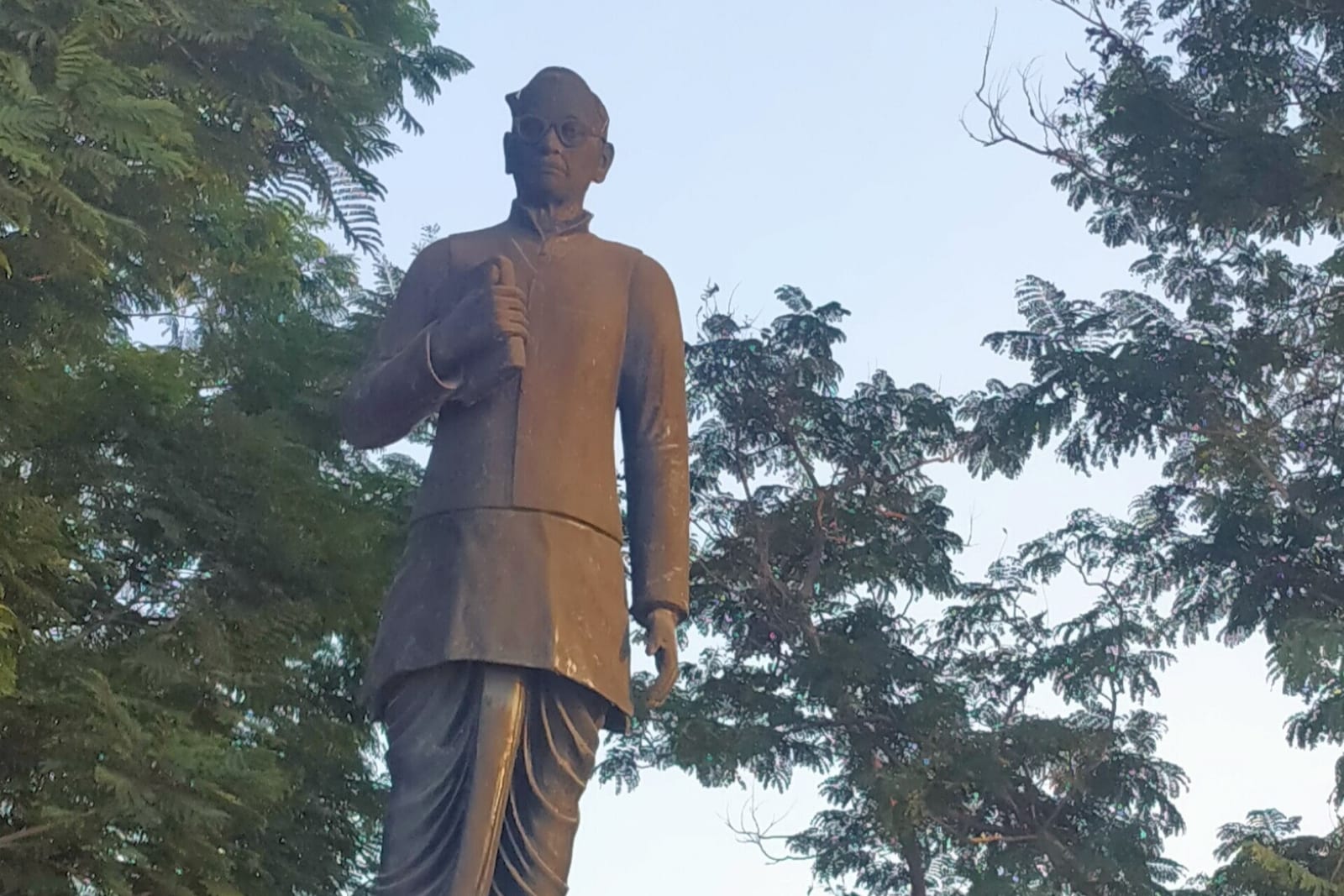
Jashuva (1895–1971) wrote in Telugu, the language of Andhra Pradesh and Telangana. He was Dalit, from the communities once branded “untouchable” under the caste order, and a Christian: his father was a missionary preacher, Jangam writes. As a Dalit he was kept from learning Sanskrit, the classical language of the Hindu scriptures; after many refused, one scholar taught him. He went on to write in classical Telugu metre, Jangam says, “to prove himself equal to Brahmin pundits”, scholars of the priestly caste. His life is told in our profile of the poet.
Gabbilam takes its shape from a Sanskrit poem that started a genre. In the Meghaduta of Kalidasa, a classical poet of around the 4th or 5th century, a yaksha, a nature spirit banished by his master for a year, asks a cloud to carry a message of love to his wife; it inspired a line of “messenger poems”. “I wrote this text by keeping Kalidasa’s Meghaduta (Cloud Messenger) in mind,” his preface begins, in Jangam’s translation.
“The protagonist in Meghaduta was sentenced to one year, but my hero was sentenced from birth.”
— Gurram Jashuva, preface to Gabbilam, translated by Chinnaiah Jangam
His hero, he goes on, is no lover burning with desire but “a victim of poverty that burns his stomach”. “Unlike the noble kings, exquisite birds like swans and parrots cannot become his messenger,” Jashuva wrote. “That is why I chose a regular visitor to the homes of the despised, a bat, as his messenger.” The bat is taken as a bad omen and counted as neither bird nor animal, and it hangs inside temple towers. Classical poets sent swans and clouds; Jashuva sent the one creature the temple lets in.
Hence the poem’s best joke. The narrator, a nameless man, tells the bat how to deliver his life story to Shiva at Kashi (Varanasi, the Hindu holy city on the Ganges):
When you hang in the temple, Shiva’s ear will be a little closer to you. Silent queen of birds! At an hour when the priest is away, tell him the story of my life.
— Gabbilam, Part 1 (Telugu text), our translation
The bat, which no one counts as a bird, is crowned their queen. The obstacle between a Dalit man and his god is not the god. It is the priest.
Caste as the theft of labour
The poem opens, in Jangam’s translation, with its hero off the map: “There are four cardinal directions in the universe / This untouchable has none to claim / He is the last son of Mother India”. He “stitched shoes to protect the feet of great / upper caste heroes of the nation”.
Jashuva names who profits, and what keeps the worker quiet:
Gagging my mouth with the doctrine of karma, the greedy live off my livelihood. What karma is, and what grudge it bears me, have God himself prove it, mother!
— Gabbilam, Part 1 (Telugu text), our translation
Karma, the doctrine that birth is earned in past lives, becomes a gag. Elsewhere the caste order becomes “the four-hooded king cobra of Hinduism”, which hisses if the Dalit man’s breath so much as touches it (our translation); Venkataramaiah reads the four hoods as the four varnas, the ranks of the scriptural caste order. Piety is measured against hunger: people who “spent thousands of rupees to celebrate / the marriage of dolls” will “refuse to put a grain of rice in the bowl of a beggar”.
Then the bat flies north, from Thanjavur, in today’s Tamil Nadu, to Varanasi, Delhi and Lake Mansarovar in Tibet, a tour that claims all of India’s history for a man the country shuts out.
A god who weeps, a nation that promises
i
CC BY 4.0Original on Wikimedia CommonsTwo parts, five years apart: about 117 verses written in 1941 and 142 in 1946, by Venkataramaiah’s count.
The second part, written as independence neared, is where the poem’s politics turn. Its narrator lists the country’s triumphs, from a speech at the World Parliament of Religions and Gandhi’s independence campaign to Rabindranath Tagore’s Nobel Prize, and then: “But they never counted me as one of them / Always considered me an outsider / despite being their brother”.
The god replies in four lines: “Not sure what the Bat told him / But the god Shiva had tears in his eyes / Stood up like a mountain / And vanished in seconds into dark clouds.” None of the critics quoted here explains why a Christian poet sent his message to Shiva. In this poem, the god weeps and disappears. What follows is earthly politics: the doors of the Travancore temple opening to Dalits (the princely state, now part of Kerala, opened its temples by royal proclamation in 1936), and Gandhi with “a stick and spinning wheel”. Then comes the promise: “Brother Harijan! Do not be afraid / The chariot of independence is here / You will have a place in it.” Harijan, “people of God”, was Gandhi’s name for Dalits, and Ambedkarites have long rejected it.
The poem has room for B.R. Ambedkar too, the Dalit jurist who chaired the drafting of India’s Constitution: “There is Ambedkar, my brother, who for us has suffered every hardship”, runs a line that Vara Prasad quotes (our translation). But its trust is in Gandhi’s movement. Vara Prasad is not wrong about the text when he calls Jashuva a Gandhian.
How Dalit critics read it
The Telugu Dalit writer Endluri Sudhakar, a professor of Telugu at the University of Hyderabad who did extensive research on Jashuva, and who died in 2022, wrote a book called Kotha Gabbilam (“The New Bat”). By his daughter’s account, Jashuva as a boy slapped a dominant-caste boy who barred him from a playground. Sudhakar, quoted by Jangam, wrote that as a poet “he had given Gabbilam which is a much more powerful ideological slap to caste Hindu society”.
Jangam, a historian at Carleton University in Canada, makes the larger claim. Gabbilam, he told the writer Githa Hariharan, “is the first Dalit text that is not inward-looking, limited to defining the Dalit self through a narrative of oppression. Instead, it is forward-looking”. On the nationalism, Jangam is candid: written in the context of the anti-colonial struggle, the poem “expresses love for the mother tongue and the nation”, and at the time, he says, there was “no conflict” between national liberation and attachment to Telugu.
The strongest case against the poem follows from that. A complaint sent up to a god, and answered by a march led by Gandhi, is a petition, not a revolt. It speaks in the masters’ metre and asks to be let in. The case is real, but it misses what the narrator demands. He does not leave his share to the nation’s goodwill. “Whatever share of rule comes to each community, may not that much come to me?” he asks (our translation of the line Vara Prasad quotes). Near its close, the second part turns to doubt: “What is the power of education? / That cannot eradicate the practice that tramples people”.
After the bat
A later Telugu Dalit poet refused the terms Jashuva accepted. Kalekuri Prasad (1962–2013), born into a Mala family, a Dalit community, who took positions on the massacres of Dalits at Karamchedu, in Andhra Pradesh, in 1985 and later at Tsundur, told young writers: “We should write neither in their standards nor for their approval, but in our language with our standards.” One of his poems, in The News Minute’s rendering, speaks as a Dalit mother who will “give birth to swords besides sons”.
Jashuva wrote by their standards and beat them at it. “No other Dalit poet could write like him,” Jangam says. The cost shows in the poem’s god and its Gandhi. The gain is the bat, the creature the canon called a bad omen, carried into the canon’s own form.
This September a minister laid flowers at his portrait and a Dalit association held its own festival. Both are true to a poem that holds the nation’s promise and its broken faith side by side. In 2022 Hariharan put to Jangam the question the poem asks: whether its narrator will “get a place in the mansion of independence”. The bat is still waiting for the answer.