In the first 188 days of 2026, 101 people died cleaning India’s sewers and septic tanks, about one every 45 hours, according to the Safai Karamchari Andolan. A 2013 law makes it a crime for anyone to send a person into that work without protective gear and safety precautions. The toll passed 100 on 8 July, when three workers died in two separate incidents in Madhya Pradesh, in central India, The Indian Awaaz reported. The deaths came from 16 states, and 12 were in Delhi and its surrounding National Capital Region, according to Maktoob. For the whole of 2025, the movement counted 121.
“Despite a sewer death happening every 45 hours in the country, shameless governments have chosen to remain in criminal silence,” the SKA said in its statement, as published by Maktoob.
The government’s record is a fraction of that. On 4 August, in a written reply to the Lok Sabha, Parliament’s lower house, Ramdas Athawale, a federal junior minister for social justice, gave figures from the National Commission for Safai Karamcharis (NCSK), the government commission that compiles these deaths: 16 for January to June 2026. The reply also said, again, that “no death has been reported due to manual scavenging”.
The finding
In every year for which both counts are published, the sanitation workers’ movement recorded more deaths than the state did, and on the figures published so far the gap has grown from five deaths in 2022 to 74 in 2025.
Deaths in sewers and septic tanks. The 2026 periods differ (official to 30 June; SKA to about 8 July). Official figures for a year are revised upwards for years afterwards. SKA yearly figures for 2019–2021 are not published.
Sources: Lok Sabha written reply to unstarred question 2730, 4 Aug 2026, Annexure-III (NCSK data); Safai Karamchari Andolan figures as reported by ThePrint (17 Aug 2026) and SabrangIndia (9 Jul 2026). Compiled by The Dalit Project.
| Year | Official count (NCSK, reply of 4 Aug 2026) | SKA count |
|---|---|---|
| 2022 | 88 | 93 |
| 2023 | 65 | 102 |
| 2024 | 54 | 116 |
| 2025 | 47 | 121 |
| 2026 | 16 (Jan to Jun) | 101 (first 188 days, to about 8 Jul); 113 (to end of Jul) |
Official figures: Lok Sabha reply of 4 Aug 2026, Annexure-III. SKA figures: ThePrint and SabrangIndia.
Over the longer run, the SKA puts the gap at 261 deaths. The government told the Lok Sabha on 21 July that 332 sanitation workers died in hazardous sewer and septic-tank cleaning between January 2021 and June 2026, according to the Press Information Bureau (PIB), the government’s press office. The SKA counts 593 from January 2021 to late July 2026, a month longer, The Wire reported.
101 deaths in sewers and septic tanks in the first 188 days of 2026, by the Safai Karamchari Andolan’s count, against 121 in all of 2025 — SabrangIndia
Why the label matters
The people sent into these tanks come overwhelmingly from the communities India’s caste order assigned to sanitation work. Of the 54,574 sewer and septic-tank workers in towns and cities verified under a federal sanitation scheme, 92% are from a Scheduled Caste, Scheduled Tribe or Other Backward Class (67.9% Scheduled Caste, 15.7% Other Backward Class, 8.3% Scheduled Tribe), the social justice ministry told the Lok Sabha on 17 December 2024. Those are India’s official categories for Dalits (the communities once branded “untouchable”), Adivasis (India’s Indigenous peoples) and other historically oppressed castes. The ministry keeps no caste data on the deaths themselves. In March 2026, Athawale told the Rajya Sabha, Parliament’s upper house, that sanitation work is “occupation-based”, The Tribune reported.
The official answer turns on two definitions in one law, the Prohibition of Employment as Manual Scavengers and their Rehabilitation Act, 2013, which bans the employment of people to clean human excreta by hand.
- A “manual scavenger”, under section 2(1)(g), is a person employed to handle “human excreta in an insanitary latrine or in an open drain or pit into which the human excreta from the insanitary latrines is disposed of, or on a railway track”, or in other spaces a federal or state government notifies. Sewers and septic tanks are not on that list.
- “Hazardous cleaning”, under section 2(1)(d), is the manual cleaning of a sewer or septic tank “without the employer fulfilling his obligations to provide protective gear and other cleaning devices and ensuring observance of safety precautions”.
So a death in a sewer is recorded as a death during “hazardous cleaning”, never as a manual-scavenging death. The replies have used the same words for years: “No death has been reported due to engaging in manual scavenging… However, 188 persons have died due to accidents while undertaking hazardous cleaning of sewer and septic tanks,” Athawale said in July 2022, The Tribune reported. A 2025 reply repeated it, Outlook reported. In July 2026 the government added that “recent surveys conducted across all districts have not reported any instance of the practice of manual scavenging”, according to PIB.
The label has consequences.
Rehabilitation. The Act’s rehabilitation duties attach to people on the official list of manual scavengers. Section 13 promises them a photo identity card, one-time cash assistance, scholarships for their children, a house plot or house, and skills training with a stipend of at least Rs 3,000 (about US$31) a month. The latest national survey, in 2024–25, identified no manual scavengers at all, and every district declared itself free of the practice, the 4 August reply said. For sewer workers, the government points to NAMASTE, a federal mechanised-sanitation scheme launched in 2023, which has validated 89,915 workers and offers safety training, protective equipment and health insurance, according to the same reply.
Prosecution. Hazardous cleaning is a crime under the same Act. Section 7 bars any person, local authority or agency from engaging anyone “either directly or indirectly” for it. Section 9 sets a penalty of up to two years in prison or a fine of up to Rs 200,000 (about US$2,100) for a first offence, and up to five years or Rs 500,000 (about US$5,200) after that. The government told the Lok Sabha that 193 First Information Reports (FIRs), the police complaints that open a criminal case, were registered in the last five years, according to PIB. The release gives no figures for charges or convictions. Amit Sahni, who filed a public-interest case on the Act in the Delhi High Court in 2019, told Outlook that when a worker dies, “criminal liability is usually pushed onto the contractor or immediate supervisor, while government departments distance themselves by claiming no permission was given for manual entry.”
Compensation. In Balram Singh v Union of India, decided on 20 October 2023, India’s Supreme Court raised compensation for sewer deaths from Rs 1 million (Rs 10 lakh) to Rs 3 million (Rs 30 lakh, about US$31,000). The Rs 1 million award, set by the court in 2014, had applied to deaths since 1993. The court held that “entitlements which are akin to those given to manual scavengers must be granted to families of hazardous workers who had died in sewers and septic tanks”. It also ordered governments to set up a way of ensuring accountability, especially “wherever sewer deaths occur in the course of contractual or ‘outsourced’ work”, such as cancelling the contract. The government’s only published account of those payments, though, covers the deaths the NCSK has recorded.
Methodology
- Official count. Deaths during “hazardous cleaning of sewers and septic tanks”, compiled by the NCSK. The 2019 to June 2026 series and the compensation figures are from Annexure-III of the Lok Sabha written reply of 4 August 2026 (unstarred question 2730); Business Standard and Outlook reported the same figures. Its 2021 to 2026 years sum to 332, the total in the 21 July reply PIB published and in the state-by-state table of a second reply on 4 August (unstarred question 2562).
- SKA count. The movement’s own documentation, released in statements. The 2022 to 2025 figures are as reported by ThePrint; those for 2023 to 2025 match its March 2026 memorandum, as reported by The Mooknayak. Its yearly figures for 2019 to 2021 could not be found in its published statements.
- Limitations. The 2026 figures cover different periods (to 30 June; to about 8 July). Official figures for recent years are still being revised. No case-by-case list behind the SKA’s totals was found in its published statements or the reporting cited here, so they cannot be checked death by death.
How the official count moves
The official figure for a given year keeps rising for years afterwards. That points to deaths reaching the record late, if at all.
The December 2022 figure for 2022 was given before the year ended.
Sources: Lok Sabha written replies, Jul 2022 and Dec 2022 (The Tribune) and 4 Aug 2026 (unstarred question 2730, Annexure-III). Compiled by The Dalit Project.
- 2019: 116 deaths in a July 2022 reply (The Tribune); 132 in August 2026 (Lok Sabha reply).
- 2021: 36 in July 2022; 49 in December 2022 (The Tribune); 62 in August 2026.
- 2022: 48 in a December 2022 reply, before the year had ended; 88 in August 2026.
Takeaway: an early official figure for a year is a floor, and the latest official year, 2025, will probably rise too.
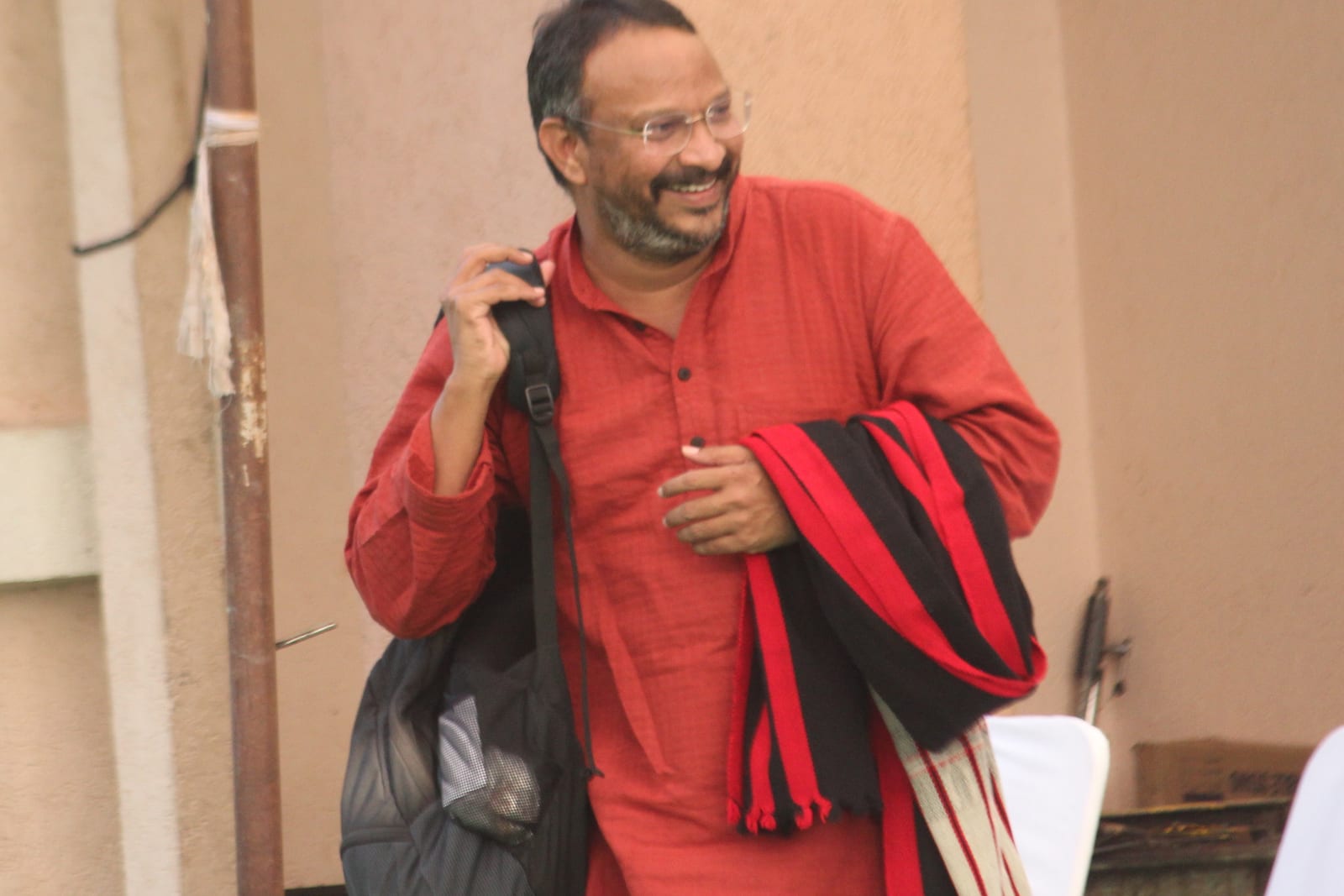
Bezwada Wilson, the SKA’s national convenor, says the record misses deaths altogether. “While they (NCSK) do collect some data and the SKA also writes to them about each death, many cases are overlooked or not properly recorded,” he told Outlook in 2025. In the same report, a senior government official who spoke to Outlook on condition of anonymity pointed to sewers that start working before they are fully built: deaths in them, Outlook reported, often go unrecorded as manual-scavenging or sewer deaths because the system has not been officially inaugurated.
Deaths not in the official count have no compensation record at all. The Rs 30 lakh rate was set in Balram Singh v Union of India, 20 Oct 2023. For all 498 deaths recorded from 2019 to June 2026: 345 paid in full at Rs 10 lakh, 75 at Rs 30 lakh, 22 partly paid, 56 not confirmed.
Source: Lok Sabha written reply to unstarred question 2730, 4 Aug 2026, Annexure-III (NCSK data). Compiled by The Dalit Project.
The 4 August reply also listed compensation for the 498 deaths the government recorded between 2019 and June 2026, in an annexure. Full payment at the old rate of Rs 1 million was recorded in 345 cases, and full payment at the new rate of Rs 3 million, which applies from 20 October 2023, in 75. Payment was partial in 22 cases and not confirmed in 56. For 2026, full payment was confirmed in six of the 16 cases and not confirmed in the other 10.
Takeaway: even among deaths the state counts, the higher award is often unconfirmed. Of the 117 deaths recorded from 2024 to June 2026, all after the ruling, full payment of Rs 3 million is recorded for 61, and payment is not confirmed for 40.
What the counts mean to the people inside them
The SKA rejects the word the official record uses for these deaths. “These deaths are not accidents. They are caused by illegally employing and forcing workers to get inside septic tanks and underground sewer drains,” its August memorandum to the Prime Minister said, SabrangIndia reported. Deepthi Sukumar, an SKA leader, put the gap as a question at Jantar Mantar, Delhi’s protest ground, in March: “Where are the remaining people who were killed? The government should present the actual figures in Parliament,” she said.
“They have to mechanise the entire system. More importantly, they have to delink caste from occupation. Families that have been doing this work for generations must be given dignified alternative livelihoods. Until that happens, people will continue entering sewers because they have no other choice.” — Bezwada Wilson, national convenor of the Safai Karamchari Andolan, to ThePrint, August 2026
A school cleaner in Delhi, whose brother died in a sewer in 2017, described to ThePrint what the choice looks like at the manhole. “A poor worker like us will say, ‘Brother, give me Rs 500. My house will run in the evening,’” he said. “So he has to get down.”
What the data can’t tell us
Which count is right, death by death. Without a case list from either side, the gap can’t be split into deaths the state never heard of, deaths it recorded under another heading, and deaths still on their way into the record.
How much of the widening will last. Part of the wider gap in 2024 and 2025 may close as those years are revised. It is unlikely to close fully: the SKA’s 2022 count of 93 is still higher than the official 88, three and a half years on.
Who the dead are. The ministry records no caste for these deaths, so the official data cannot test what the SKA says: that the people sent into the tanks are overwhelmingly Dalit. The one official figure, the 92%, covers living sewer and septic-tank workers on a federal scheme’s books, not the dead.
What happens in court. The replies count FIRs, not outcomes. On 27 July, the Supreme Court, which is still monitoring the Balram Singh case, asked the Chief Secretaries (the top civil servants) of states where deaths had continued to explain why it should not begin contempt proceedings against them, LiveLaw reported. “[Y]ou start putting the blame on contractors…we will fix the responsibility. Somewhere it has to stop,” Justice Aravind Kumar said. The court gave them four weeks to file affidavits. What they say, and what the court does next, will show whether anyone above the contractor answers for these deaths.
The government says it remains committed “to the complete eradication of manual scavenging through strict enforcement” of the 2013 Act, according to PIB. By its own definition, it has already succeeded: no manual scavengers found, no manual-scavenging deaths reported. The 101 deaths the SKA counted by July, and the 16 the NCSK recorded to June, fall outside that definition.
Data download
Download the year-by-year official and SKA counts from 2019, with a source for every figure, and the official state-by-state breakdown for January 2021 to June 2026, from the Atrocity Justice tracker.
Official figures are from the National Commission for Safai Karamcharis as given in Lok Sabha and Rajya Sabha written replies; the Safai Karamchari Andolan’s figures are its own counts as reported by the outlets linked above, and could not be checked death by death.