On 29 September, hundreds of protesters from Maharashtra’s Matang community blocked roads near Mumbai’s Chhatrapati Shivaji Maharaj Terminus railway station. They want Maharashtra, in western India, to divide its 13% reservation quota for the Scheduled Castes, the constitutional list of Dalit communities (among those once branded “untouchable”), into groups, so that its benefits are shared more equitably. The state’s chief minister, head of its elected government, had promised in July to decide within two to two and a half months on the report of a committee under Justice Badar, and the community had held 72 marches across the state over the delay, the Marathi daily Pudhari reported. Its leaders said they would not leave Mumbai until the government issued an order.
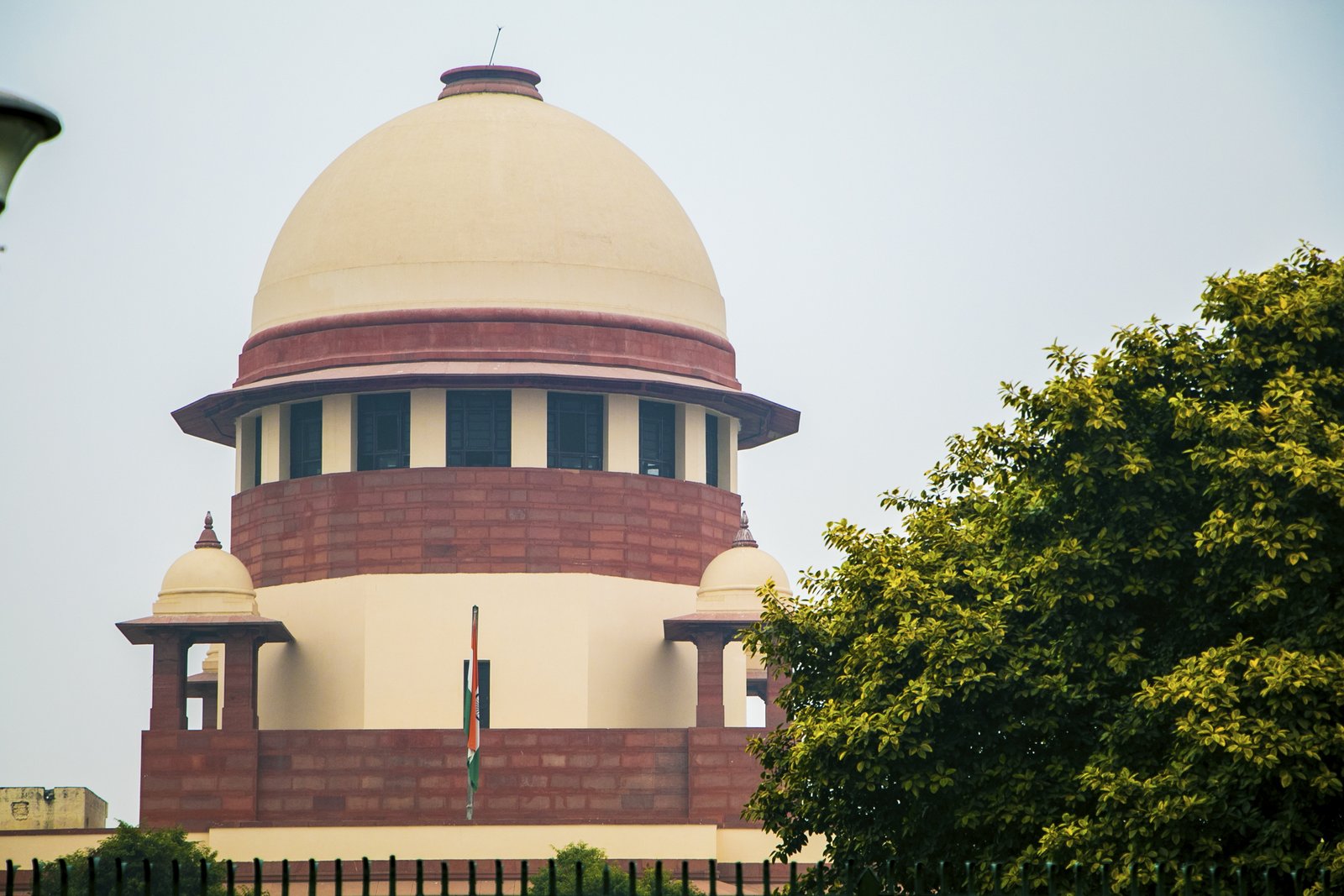
India’s Supreme Court opened that door in August 2024, when it ruled that states may sub-classify the Scheduled Castes: 201 million people at India’s 2011 census, 16.6% of the population, and far from one community. Two years on, at least four states have split their quotas. Each built its own case through its own commission, under a 50% ceiling on reservation that the courts enforce. The federal government does not keep centrally the figures that would show which Dalit communities its own quota has reached. The crack the court acknowledged runs through Dalit politics itself; the fight now is over who must prove it, and how.
What the ruling means for the census and for Dalit seats in Parliament is set out in The Silence After Enumeration.
What the court allowed
A seven-judge bench overruled a 2004 judgment that had treated the Scheduled Castes as one uniform class. The case began in Punjab, in the north-west, which in 1975 had set aside half of its Dalit quota for two communities, the Balmikis and Mazhabi Sikhs. Chief Justice D.Y. Chandrachud, agreeing with Justice B.R. Gavai, set the condition: a state must show, on empirical evidence, that the group it carves out is “more disadvantaged and inadequately represented”, and its choice is open to judicial review. Justice Bela Trivedi dissented, holding that sub-classification by states tinkers with the list of Scheduled Castes the President notifies, which only Parliament may alter.
Four of the seven judges, led by Justice Gavai, who later became the second Dalit Chief Justice of India, also wrote that states should find a “creamy layer”, the better-off families within the Scheduled Castes, and exclude it from reservation, as India already does for the Other Backward Classes (OBCs), its intermediate castes. The Chief Justice’s own opinion did not mention it. Gavai has defended the view since retiring. B.R. Ambedkar, the architect of India’s Constitution, he said in a December 2025 lecture, saw affirmative action as a cycle given to those lagging behind until they catch up, not one to keep for good: “In my view, that was not the vision of social and economic justice as contemplated by Babasaheb Ambedkar.” He said he had been “widely criticised” by his own community for it.
Four states, four commissions
Haryana, in the north, decided first. Its cabinet decided on 18 October 2024 to accept its Scheduled Caste Commission’s recommendation and reserve half of its 20% Dalit quota in government jobs for 36 “Deprived Scheduled Castes”, among them the Valmiki, Bazigar, Sansi, Dhanak and Sapera. A 2020 state bill, Business Standard reported, had put those castes’ share of state jobs at under 6% though they were about 11% of the population. The notification came into force the next month.
Telangana, in the south, brought its law into force on 14 April 2025, splitting 15% among three groups of its 59 Dalit castes.
Andhra Pradesh, its neighbour, followed three days later by ordinance, an executive order with the force of law, on a one-man commission’s report: 1% for 12 castes it ranked most backward, 6.5% for 18 castes including the Madiga, and 7.5% for 29 castes of the Mala group, which it ranked “less backward”. Chief Minister N. Chandrababu Naidu told the assembly in March 2025 that the split would be redone district by district after the next census.
Karnataka, in the south, shows how much the arithmetic leaves unsettled. A commission under retired judge H.N. Nagamohan Das proposed five groups. The government cut them to three and the legislature passed a 6:6:5 formula: 6% for the Madigas and 15 related castes, 6% for the Holeyas and 18 related castes, and 5% for the Lambani, Bhovi, Korma, Korcha and 59 castes the commission had called “most backward”. Those shares divided 17%, not 15%. A previous government had raised the Dalit quota to 17% and the tribal quota from 3% to 7% in 2022, taking Karnataka’s total reservation to 56%.
Both decisions went to court. Two public interest petitions in the Karnataka High Court argue that the 2022 law breaches the 50% ceiling the Supreme Court set in its 1992 Indra Sawhney judgment. On 27 November 2025 the court barred new recruitment notifications under that law until further orders. Even before the legislature voted, the Confederation of Untouchable Nomadic Communities of Karnataka had challenged the 6:6:5 formula as a “serious injustice” to the nomadic castes grouped with the Lambani, Bhovi, Korma and Korcha, and in October 2025 the court restrained final appointments under it.
i
CC BY-SA 3.0Original on Wikimedia CommonsOn 24 April 2026 the cabinet scaled every share down to fit 15%: 5.25% for the “left-hand” group, mainly Madiga and related castes, 5.25% for the “right-hand” group, mainly Holeya and related castes, as The Wire explains, and 4.5% for the third. Chief Minister Siddaramaiah said recruitment to 56,432 posts would start at once. The state kept the extra 2% for Scheduled Castes as a “backlog” until the High Court rules and reserved one in five posts in the third group for the nomadic castes. That falls short of the separate 1% their organisations had asked for. “We urge the government not to merge our quota with other castes!” Sanna Mareppa, president of the State Alemari (Nomadic) Organisation, told a protest in Bengaluru, the state capital, against the earlier formula. Chalavadi Narayanaswamy, opposition leader in the state’s upper house for the Bharatiya Janata Party (BJP), India’s governing party, asked of the new split: “Which report supports this decision? Where is the data?”
The mechanism: proof without a national count
The ruling asks each state for exactly that: evidence that one Dalit community is further behind another. The federal government told the Lok Sabha, Parliament’s lower house, in August 2026 that Scheduled Castes held 17.14% of central government posts on 1 January 2026, above their 15% quota, but that “data on caste-wise representation within the Scheduled Castes category is not maintained centrally”.
17.14%. Share of federal government posts held by Scheduled Castes on 1 January 2026, against a 15% quota. How those posts divide among the communities on the list is not recorded centrally. Source: Ministry of Social Justice and Empowerment, reply in the Lok Sabha, August 2026
So the evidence is built state by state, by commissions their own governments appoint. Telangana ranked its groups by backwardness but sized their shares by population at the 2011 census. The communities with least access to offices and courts must prove their exclusion, and those that lose share must contest it, before commissions whose reports state cabinets can rewrite, as Karnataka’s did. Haryana’s government approved its commission’s report in the run-up to the 2024 state election, Business Standard reported, and the CSDS-Lokniti post-poll survey it cited, a national election study, found that 45% of “other” Scheduled Caste voters backed the BJP, against 35% of Jatavs, the state’s largest Dalit group.
A Dalit economist’s reading
Sukhadeo Thorat, the economist and former chair of the University Grants Commission, India’s higher-education regulator, who grew up in the Mahar Dalit community in Maharashtra, argued in Outlook that the court’s evidence of untouchability between Dalit communities came mainly from social life, such as food, wells and temples, with almost none from jobs, property or schooling. B.R. Ambedkar, he wrote, saw the Scheduled Castes as both uniform and divided, and proposed two remedies: reservation for the whole group, and economic and educational help for the landless and least-educated within each community. “At no stage in the 37-year-long search for affirmative action policy between 1919 to 1950, had Dr Ambedkar proposed reservation within sub-castes,” Thorat wrote. He also warned that at the state level “the political forces come in to play more forcefully than at the Centre”. On the creamy layer he was blunter: “Caste discrimination is neutral to economic status.”
“What can possibly be done is to exclude the economically better SCs from economic concession and various caste-based subsidies but not from job reservation.”
— Sukhadeo Thorat, writing in Outlook, September 2024
The strongest objection: divide and rule
The case against sub-classification is that it splits a bloc that wins rights only together. Mayawati, who leads the Bahujan Samaj Party, said the Scheduled Castes were a homogeneous group that had been discriminated against as one, and that any classification would be unjust. Golla Aruna Kumar, national president of the Mala Mahanadu, an organisation of the Mala community, demanded the federal government withdraw it, saying it had created a rift among Dalits. A nationwide protest shutdown against the ruling followed on 21 August 2024. The political theorist Kancha Ilaiah Shepherd calls a creamy layer, which would move Dalit reservation from caste towards class, “an ideological capital punishment for the foundation of the reservation system”.
The fear is warranted where it concerns timing and the creamy layer. It falls short as an account of where the demand came from. Madiga and Madiga-related communities in undivided Andhra Pradesh and in Karnataka have campaigned for internal reservation since the 1990s, and commissions in both states gathered data on the gaps, as the Bengaluru activist and journalist Shivasundar sets out in The Wire. “When exploitation is a reality, unity cannot be forged just by its denial,” he writes. The divide-and-rule reading explains who gains from the split, not the grievance of the communities furthest behind.
The other counter-reading: the creamy layer
A second challenge comes from the other side: that within each reserved group, income should decide who benefits first. Eight days after the Supreme Court’s August 2024 ruling, the federal cabinet said “the Constitution does not provide for creamy layer for SCs and STs”. The question returned through petitions. In August 2025 a bench of Justices Surya Kant and Joymalya Bagchi issued notice on a plea by two petitioners from Scheduled Caste and OBC backgrounds asking that the poorest within each reserved group be given first preference; the judges told their counsel to “be ready to face lots of opposition”. In January 2026 the same judges, with Justice Kant now Chief Justice, issued notice on a petition by the advocate Ashwini Kumar Upadhyay arguing that an “elite class” within the Scheduled Castes and Scheduled Tribes, the constitutional list of Adivasi (Indigenous) communities, corners reservation “generation after generation”.
In August 2026 the federal government opposed both. Its affidavit said, as reported, that discrimination against these communities “does not happen on the basis of economic conditions” alone, that the petitions ask the court to write policy, and that any income-based change should follow “a holistic review and thorough empirical study, including socio-economic data of reserved category beneficiaries”.
The income reading falls short on the same missing evidence. Before the Supreme Court the government says income-based change needs a study of who benefits within reserved groups first. In Parliament it says it keeps no central caste-wise count of who holds its own Scheduled Caste posts, and that its social justice ministry has no proposal for a survey. Thorat’s point holds against it too: caste discrimination, he wrote, is neutral to economic status.
What to watch
- Maharashtra: whether the state acts on the Badar committee’s report.
- The Karnataka High Court: the petitions on the 56% total, on which the 2% “backlog” depends, and the nomadic communities’ challenge to the grouping.
- The Supreme Court: the creamy-layer and income-priority petitions.
- The census: new figures, which Andhra Pradesh will use to redraw its groups.
- Results: a count, group by group, of posts and seats filled under the new formulas.
In Mumbai on 29 September, the Matang marchers were still waiting for a formula. In Karnataka a minister, K.H. Muniyappa, says his state’s has “ended the conflict between SC Left and SC Right”. Recruitment to its 56,432 posts will show whether it has, and whether a divided quota reaches the communities it was divided for.