B.R. Gavai, a former Chief Justice of India, says he has seen the Scheduled Castes and Scheduled Tribes (Prevention of Atrocities) Act, India’s 1989 law against caste violence towards Dalits and Adivasis (Indigenous communities), misused, though “in very, very rare cases”, and that Parliament should consider amending it to provide stringent penal action against those who file false complaints, Business Today reported on 24 September. He spoke amid a renewed debate over alleged misuse of the Act.
“Misuse” is a claim about Dalits, the communities once branded “untouchable”: that they file caste complaints they know to be untrue. The official evidence for it is a police category, the “false” final report. Read closely, that category says more about how two police forces handle Dalit complaints than about the people who file them.
What Gavai said
Gavai, whom Business Today describes as “only the second person from a Scheduled Caste community” (India’s official category for Dalits) to have served as Chief Justice, was speaking to the broadcaster NDTV. He said he had seen misuse of the Act but that such cases were rare and could not be a ground to strike down the law. “Merely because the law is being misused can’t be a ground to do away with that law. The better course would be to find out the ways and means as to how the people are prevented from misusing the law,” he said, according to Business Today. Parliament, not the court, should consider amending the law to provide stringent penal action against those who file false complaints, he said, as Business Today reports it.
He widened the point to other laws. He named Section 498A of the old Indian Penal Code, the provision on dowry harassment and cruelty by a husband or his relatives, and added: “Similarly, in the Domestic Violence Act also, we find that many, many false allegations without any basis are made.”
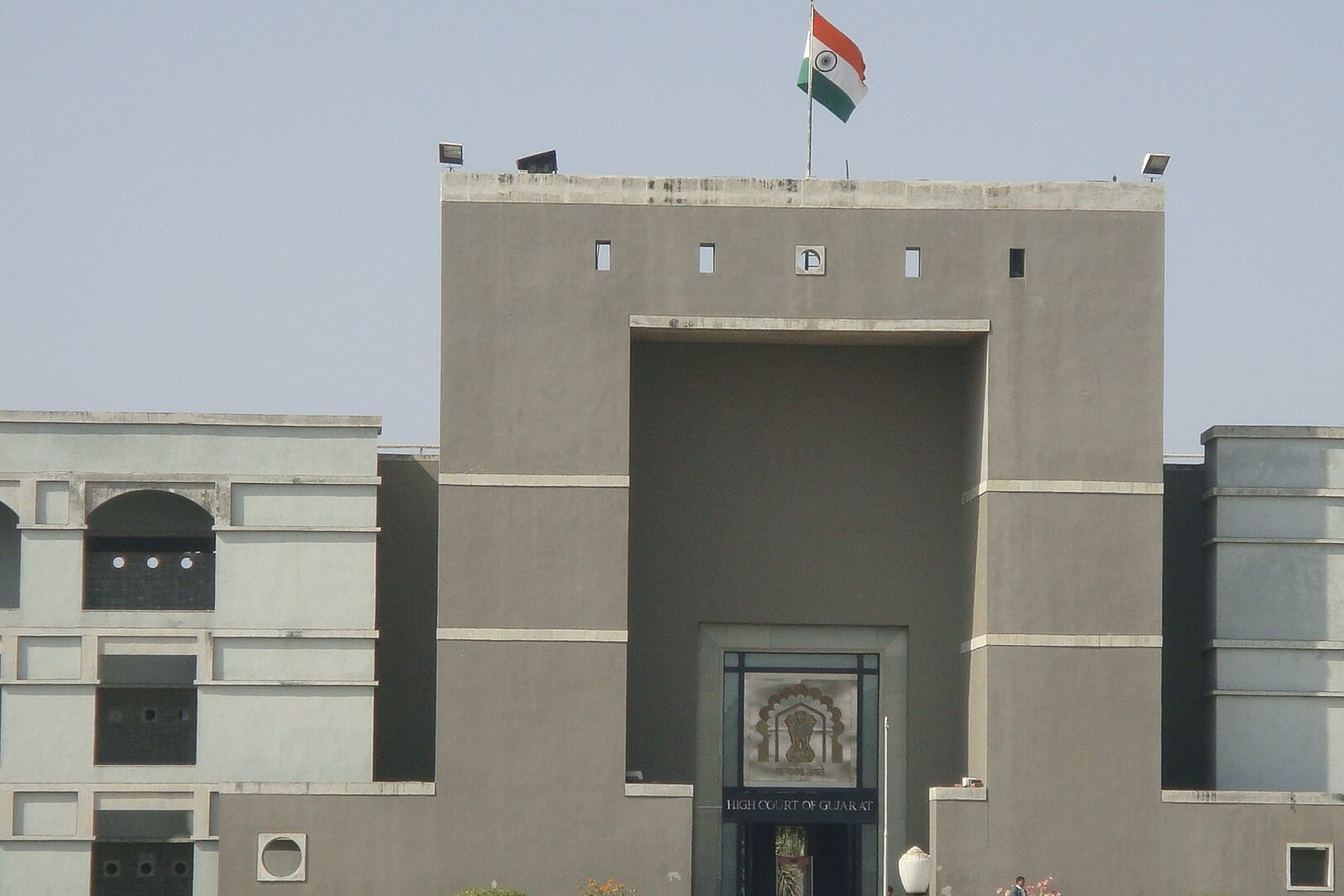
Asked about claims by some faculty members that they were afraid to take classes, he said those fears were overstated. “I don’t think that the Act has been so misused that every professor in a particular institution should be scared of going to those colleges. Fortunately, such incidents of misuse are not that common. We have seen it in very, very rare cases,” he said. Asked whether arrest was mandatory once a First Information Report (FIR), the police complaint that opens a criminal case, was registered under the Act, he said: “No, no, if they find that these provisions have been misused only to harass them, the person can always knock the doors of the court, and the court is not powerless to give its protection.”
The court has been here before
India’s Supreme Court has already tried to act on the misuse argument, and then undid its own decision. In March 2018, in Subhash Kashinath Mahajan v State of Maharashtra, Justices U.U. Lalit and A.K. Goel ruled that a public servant could be arrested under the Act only with the approval of the appointing authority. They also said a preliminary inquiry may be made before an FIR is registered. They said the Act should not result in “perpetuating casteism” and that there was a need to check “false implications of innocent citizens on caste lines”. Among the statistics they cited, from India’s National Crime Records Bureau (NCRB): in 2016, police had closed 5,347 cases of crimes against Scheduled Castes as false. The judgment quoted no other government or academic study of misuse, the sociologist Sthabir Khora noted in the Economic and Political Weekly.
On 2 April 2018, Dalits in several states took to the streets in what Scroll called a largely leaderless protest. Nine people were killed that day, Scroll reported. Parliament then amended the Act, adding a new Section 18A that reversed all three of the court’s safeguards, according to the Supreme Court Observer.
On 1 October 2019, a three-judge bench of Justices Arun Mishra, M.R. Shah and B.R. Gavai recalled the 2018 directions, in Union of India v State of Maharashtra. The judgment Gavai signed is blunt about the misuse argument. “There is no presumption that the members of the Scheduled Castes and Scheduled Tribes may misuse the provisions of law as a class,” it says. “For lodging a false report, it cannot be said that the caste of a person is the cause. It is due to the human failing and not due to the caste factor.” And it adds: “There may be certain cases which may be false that can be a ground for interference by the Court, but the law cannot be changed due to such misuse.”
In February 2020, in Prathvi Raj Chauhan v Union of India, the court upheld Section 18A. It kept the courts’ power to grant bail before arrest where the complaint does not make out a case on its face (a prima facie case), and, in exceptional cases, to quash a case to prevent misuse. Those powers remain the law.
What “false” means in the data
In its Crime in India reports, the NCRB, which sits under India’s federal home ministry, publishes what police did with the cases they investigated. Most cases that end without a charge sheet, the police document that sends it to trial, end in a “final report” filed in one of several boxes. “False” is one box. “Mistake of fact or of law or civil dispute” is another, and “true but insufficient evidence or untraced” a third. The table records how police disposed of each case, not what any court found.
In 2024, police finished investigating 54,921 cases of crimes against Scheduled Castes. They charge-sheeted 45,023, or 82%, and closed 6,055 as false, NCRB Table 7A.4 shows. That false share, 11%, is about three times the 3.6% share for all crimes under India’s penal code: 128,248 of more than 3.5 million cases disposed of, according to NCRB Table 17A.2. On its face, that is the misuse argument’s best number.
i
CC BY-SA 4.0Original on Wikimedia CommonsIt does not hold up across states. Police in Rajasthan, in the north-west, closed 3,676 cases of crimes against Dalits as false, 49% of those they disposed of and 61% of the national total. Haryana, its neighbour to the north-east, closed 466, or 39%. In Madhya Pradesh, in central India, where police disposed of 7,602 such cases, 11 were closed as false. In the northern state of Uttar Pradesh, which registers more of these crimes than any other state, it was 334 of 14,572. Outside Rajasthan and Haryana, police closed 1,913 of 46,239 cases as false, about 4%, the same table shows.
68% of the 6,055 crimes against Dalits that police closed as “false” in 2024 were closed in just two states, Rajasthan and Haryana — NCRB, Crime in India 2024, Table 7A.4
If Dalits were filing false complaints across India, the pattern would show up everywhere. Most of it follows two police forces instead. Both also close complaints as false more often in general: about 20% of all penal-code cases in Rajasthan and 22% in Haryana, according to NCRB Table 17A.2. In both states, cases of crimes against Dalits were closed as false at about twice that rate or more. Both states’ officials, speaking about complaints of crimes against women, have pointed to how freely complaints are registered: Rajasthan’s then chief minister, Ashok Gehlot, said his government made registration of FIRs mandatory in 2019, Deccan Herald reported, and Haryana’s State Crime Record Bureau director, Sibash Kabiraj, told The Tribune, “We have a policy of free registration of complaints. During the investigation, many cases are found to be false and motivated, so they are declared false.”
The comparison Gavai drew points the same way. Under the cruelty-by-husband heading that covers Section 498A, police closed 4,593 of 120,390 cases as false in 2024, under 4%, according to NCRB Table 3A.5.
Khora also studied closed atrocity cases for a north Indian state government. He found that 81 of 461 cases had been “compounded”, settled out of the process, even though the Act does not allow it, the Supreme Court Observer reported. Members of the dominant castes at the top of the hierarchy, he argues, can misuse the law two ways: by putting the complainant on the wrong side of it, or by using the complainant’s weak position to make the case die. The NCRB table cannot tell such cases from an invented complaint.
The larger failure comes after the police station. In 2024, 357,009 cases of crimes against Dalits were before the courts for trial. Trials were completed in 16,973 of them, and 95.2% were still pending at year’s end, according to NCRB Table 7A.6. Of the completed trials, 33.9% ended in conviction. Low conviction rates are often read as evidence of false cases. “An acquittal is not proof that a law was misused. To establish misuse, you need a separate finding of mala fide intent,” Disha Wadekar, a Supreme Court advocate, told Outlook.
What the closures mean
The National Campaign on Dalit Human Rights (NCDHR), a network of Dalit rights defenders founded in 1998, studied the same NCRB tables for 2019 to 2023. It reads the closures as the work of investigators:
“In 2023 alone it recorded 11326 cases ending in final report, which does not represent the genuine classification but influence of investigating authorities in diluting the cases. Behind each such closure is a story of pressure, fear, and silence forced upon Dalit victims and their families.” — National Campaign on Dalit Human Rights, Five Years of Caste Based Atrocity (February 2026)
No Dalit organisation had answered Gavai on the record by the time of writing. But the penal clause he wants has been fought over before. A draft of the University Grants Commission’s 2026 rules against caste discrimination on campus carried a clause on “false complaints”; it was dropped after objections, and rights groups warned that such clauses often deter genuine complainants rather than punish proven misuse, Outlook reported in February. “An acquittal is not proof that a law was misused. To establish misuse, you need a separate finding of mala fide intent,” Disha Wadekar, a Supreme Court advocate who represents petitioners seeking safeguards against caste discrimination in higher education, told Outlook. “If society is unequal, laws cannot be symmetrical. Otherwise, they become paper laws.”
When the Supreme Court made the misuse argument in 2018, the economist Sukhadeo Thorat, a scholar of Dalit issues, answered that Dalits, economically dependent and a minority in most villages, are poorly placed to file false cases. “So it is against logic to say Dalits will file false cases,” he told Scroll. “My answer also to the Supreme Court judges who have alleged that Dalits have misused the Act is that this is based on prejudice and not factually correct.”
The strongest case for Gavai’s view
He does not argue for doing away with the Act. He signed the 2019 judgment that restored it, he calls misuse “very, very rare”, and he says misuse “can’t be a ground to do away with that law”. Courts do quash some complaints as abuse of process: the Allahabad High Court, in the northern state of Uttar Pradesh, quashed a 2016 complaint by an assistant professor against senior colleagues as frivolous and fined the complainant Rs 1.5 million, Outlook reported. The federal government has told Parliament that “misuse has been reported by States”, according to the Press Information Bureau. And a national false-closure rate of 11%, three times the penal-code average, is a real number that a judge with his experience is entitled to take seriously.
The data do not support the remedy, though. A penal clause aimed at complainants treats “false” as a fact about the person who complained. NCRB treats it as a police decision, and that decision is concentrated in two forces. Across the rest of the country taken together, false closures run close to the rate for crime in general. The ministry has given no national figure for misuse, Outlook noted. The judgment Gavai signed in 2019 had already answered the argument: members of these communities “hardly muster the courage to lodge even a first information report, much less, a false one.” A person falsely accused can already file a counter-complaint or sue for defamation, ETV Bharat notes, and the 2020 ruling kept the courts’ power to stop a baseless case. A penalty tied to police closures would weigh heaviest on complainants in the states where police close the most cases as false.
What to watch
- Parliament. Whether anyone takes up Gavai’s call for a penal clause, and whether it would turn on a court’s finding of bad faith or a police closure.
- Rajasthan and Haryana. Whether anyone audits why their police close so many Dalit complaints as false.
In 2018, the Supreme Court leaned on NCRB’s count of “false” cases to conclude that the Act was being misused. Eighteen months later, Gavai sat on the bench that ruled the law “cannot be changed due to such misuse.” The 2024 numbers bear out that ruling. Most “false” cases come from two police forces, and they say far less about the Dalits who walk in to complain than about how police close the file.