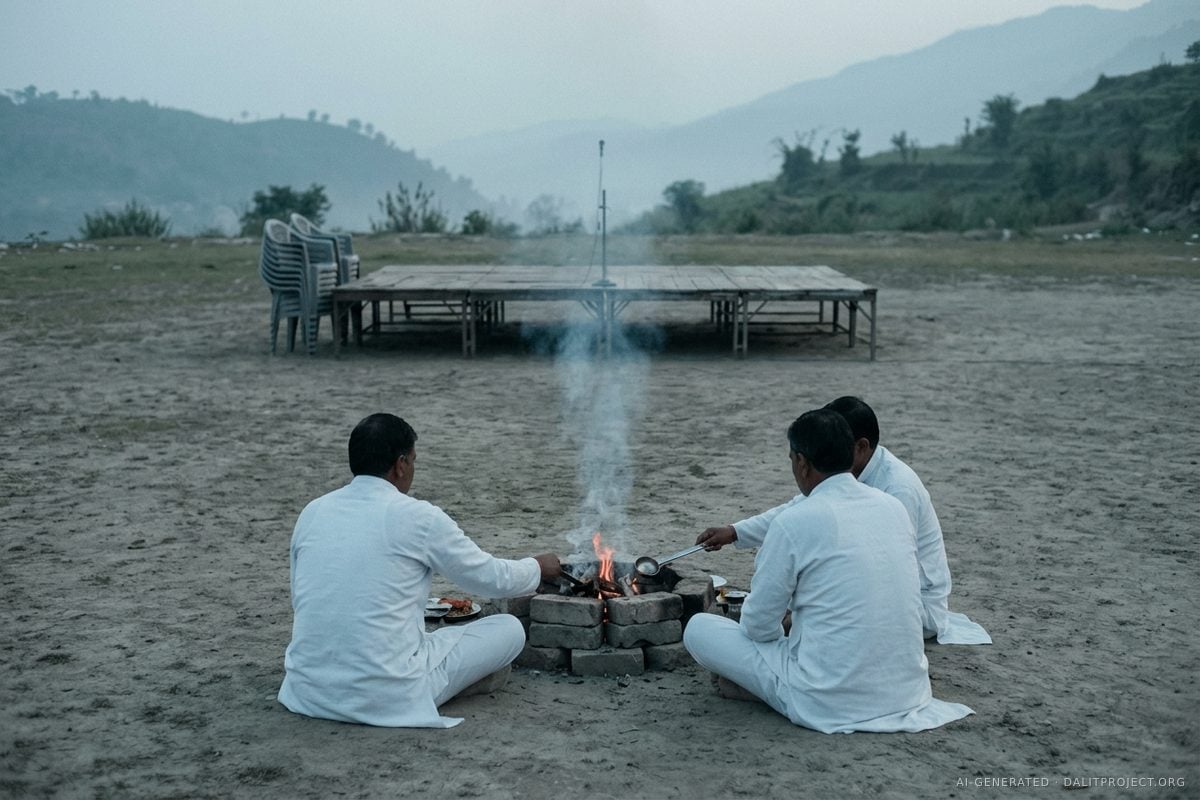
In December 2015 the University of Hyderabad, in the southern Indian city of Hyderabad, barred five Dalit students from its “hostels, administrative building and other common places”, Newslaundry reported, drawing on a fact-finding report by three academics. Dalits are the communities once branded “untouchable” under India’s caste order. The five, members of the Ambedkar Students’ Association (ASA), slept in the open on campus, in a camp they called the velivada (Dalit ghetto). One of the five was Rohith Vemula, a PhD scholar. He died by suicide on 17 January 2016, The Wire reported.
Ten years later, the rules his mother went to court for lasted sixteen days. In 2019 Radhika Vemula and Abeda Salim Tadvi, whose daughter Payal Tadvi, a 26-year-old resident doctor in Mumbai, also died, petitioned India’s Supreme Court, The Wire reported. That petition led the University Grants Commission (UGC), India’s federal higher-education regulator, to write new equity regulations, LiveLaw reported. The UGC notified them on 13 January 2026. On 29 January the court ordered them “kept in abeyance” and kept the older 2012 rules in force, its order records. The case returns to the court on 5 November, its latest order says. Our guide to the rules on hold sets out what still protects students.
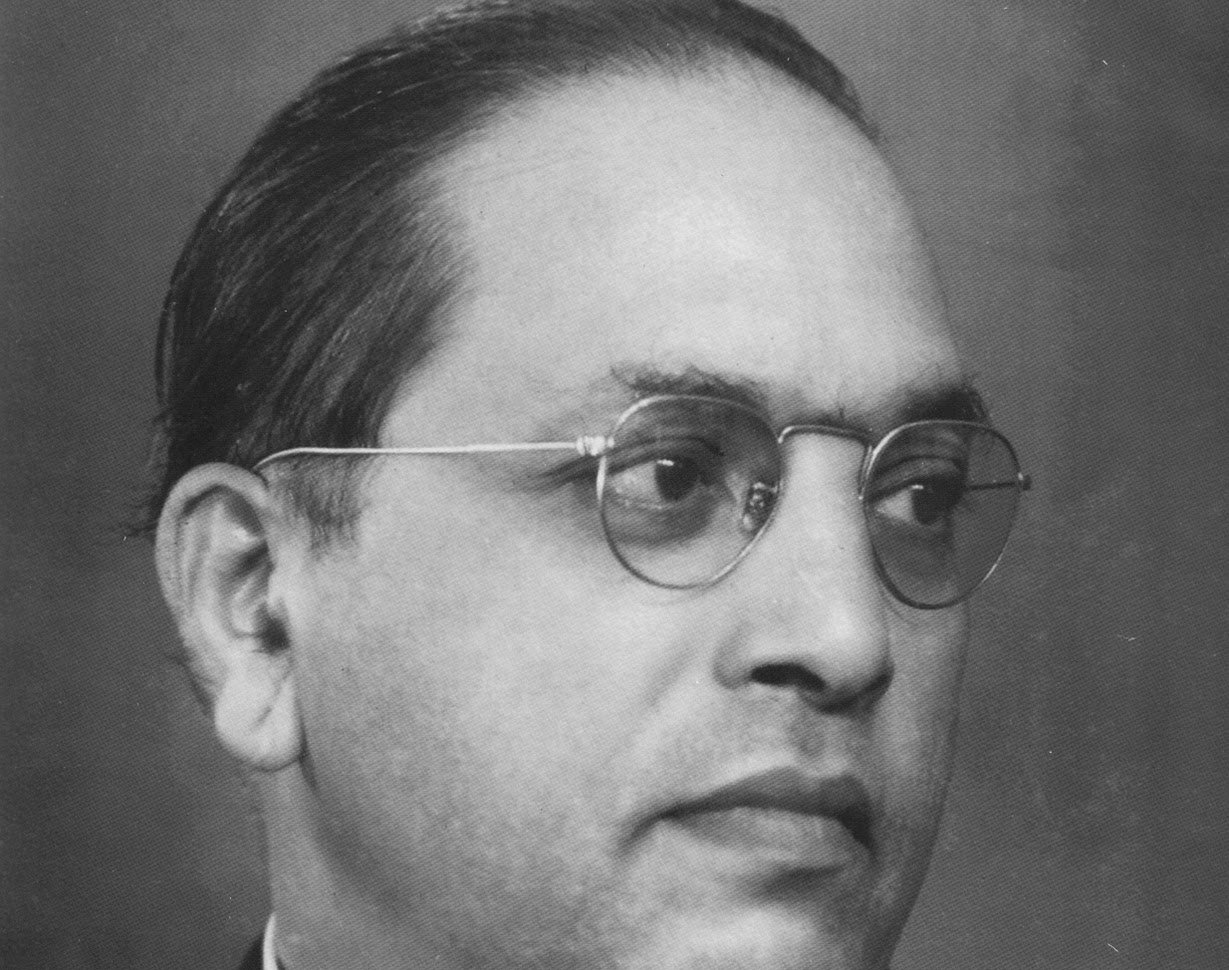
Read together, the challenge and the order make the rules look less like a drafting failure than a casualty of what B.R. Ambedkar, born into a Dalit family in 1891, said reformers of caste were up against. He wrote Annihilation of Caste in 1936 for the Jat-Pat-Todak Mandal, a society of “Caste Hindu Social Reformers” in Lahore, now in Pakistan, which then cancelled the conference he was to address. In it he wrote: “Caste is a notion, it is a state of the mind. The destruction of Caste does not therefore mean the destruction of a physical barrier. It means a notional change.” A regulation can change procedure. On its own, it cannot change the notion, and the notion fights back.
The fight was over who caste hurts
Regulation 3(1)(c) defined caste-based discrimination as discrimination “only on the basis of caste or tribe against the members of the scheduled castes, scheduled tribes, and other backward classes”, LiveLaw reported. Those are India’s legal categories for Dalits, Adivasi (Indigenous) communities and other historically disadvantaged castes. The petitioners said “general category” students, those outside the reserved categories, were left “completely remediless”, and that the rules presumed “caste-based discrimination is necessarily unidirectional”, the order records. The court found, “upon a prima facie consideration”, that some provisions “suffer from certain ambiguities, and the possibility of their misuse cannot be ruled out.”
Caste, Ambedkar wrote, places communities “in a graded order one above the other in social status”, and “Castes form a graded system of sovereignties, high and low, which are jealous of their status”. A hierarchy that grades everyone can always say that everyone has a caste, so no one is on top. A rule that says caste has a direction contradicts that story, and the story is what the hierarchy defends.
Disha Wadekar, the lawyer for both mothers, pointed out that the 2012 rules the court revived also protected only Scheduled Castes and Scheduled Tribes. “Upper castes were not there. So, how does this stay on the regulations even help?” she told The Federal.
Rules leave the power where it was
Both the 2012 and the 2026 rules rely on officers and committees inside the institution where the discrimination happened. Vemula’s case moved through his own university’s committees. In Newslaundry’s account of the fact-finding panel’s report, a subcommittee of the university’s executive council “disregarded police and medical evidence and decided to punish ASA students”. The pro-vice-chancellor at the time took the view that caste played no role in the punishment, the same account says. While the 2012 rules were in force, reported caste-discrimination complaints at universities and colleges rose from 173 in 2019-20 to 378 in 2023-24, according to UGC data reported by The Wire.

i
CC BY 4.0Original on Wikimedia CommonsShainal Verma, who in 2022 became the first elected student representative on the Equal Opportunity Cell, the campus body for discrimination complaints, at the Indian Institute of Technology (IIT) Delhi, an elite engineering school, wrote in Scroll: “The refusal to acknowledge casteism is a structural response to Dalit assertion … Students who file caste discrimination complaints are seen as ‘troublemakers’ rather than lonely, isolated individuals who had no other recourse.”
In the 1936 speech, Ambedkar quoted Ferdinand Lassalle, “the friend and co-worker of Karl Marx”, on exactly this gap: “political constitutions have value and permanence only when they accurately express those conditions of forces which exist in practice within a society.” A rulebook enforced by the institution it is meant to restrain expresses the old balance of forces, whatever its text says.
“You cannot build anything on the foundations of caste. You cannot build up a nation, you cannot build up a morality. Anything that you will build on the foundations of caste will crack, and will never be a whole.” — B.R. Ambedkar, Annihilation of Caste (1936)
The case for reform, taken seriously
The strongest objection is Ambedkar himself. He was no enemy of law: he chaired the Drafting Committee of India’s Constitution, the Constitution of India archive records. For a student filing a complaint this week, the 2012 rules still give a written complaint to an Anti-Discrimination Officer and a 60-day deadline, as our guide sets out. The mothers were right to spend seven years in court for stronger ones. At the January hearing, too, Chief Justice Surya Kant warned that without intervention the rules “will divide the society”, The Wire reported.
All of that is true, and none of it answers Ambedkar. He said, in the same speech, that “political constitution must take note of social organisation.” Caste already divides the campus; a rule that names the division does not create it. A rule written as though caste were symmetrical, or enforced by the people it is meant to restrain, has not taken note. Such rules are worth fighting for. They are not the whole fight.
What should change
First, the definition is not an ambiguity to be drafted away. Naming the direction of caste is the point, and the next rules, or a law, should say so and say why. Second, enforcement has to leave the accused institution. After police stopped a march for the rules at Lucknow University, in the northern city of Lucknow, the All India Students’ Association (AISA) called for “autonomous Equal Opportunity and Anti-Discrimination bodies that function without administrative interference” and appeals outside university control, Careers360 reported. The cabinet of Karnataka, a southern state, has approved a Rohith Vemula Bill, and Telangana, another southern state, has set up a committee of ministers to prepare its own, Telangana Today reported.
Third, and hardest: the notional change. Ambedkar’s remedy was not a better procedure. “The real remedy is to destroy the belief in the sanctity of the Shastras,” he wrote, meaning the Hindu scriptures and law books that, he argued, made caste sacred. It is slower than any regulation, and no court can stay it.
The five students in Hyderabad did some of it. Barred from the common places, they named the segregation for what it was and slept in the open under that name. Ambedkar wrote that democracy “is primarily a mode of associated living”. A campus that can bar Dalit students from its common places is not yet one. The rules on hold tried to make those places common. They cracked where Ambedkar said everything built on caste would crack. The answer is to change the ground they stand on.
If you or someone you know is struggling, help is available. In India, call Tele-MANAS on 14416. In Australia, call Lifeline on 13 11 14.