“Neither the statements nor the material examined by us indicated any caste-based malice,” Kishor Makwana said in an interview with The Sunday Guardian published on 27 September. Makwana chairs the National Commission for Scheduled Castes (NCSC), the body India’s Constitution sets up to guard the rights of Dalits, the communities once branded “untouchable” and listed in law as Scheduled Castes. He was speaking about a ritual performed in August to “purify” a public ground in Haldwani, a city in the northern state of Uttarakhand, after Mallikarjun Kharge, the president of the opposition Indian National Congress, who is Dalit, had addressed a rally there.
The finding, stated by the Commission’s chair, carries a constitutional body’s weight, and it comes with no explanation. It was delivered in a newspaper interview, rests on “available facts and circumstances” that the Commission has not described, and came 19 days after police registered a case under the country’s main anti-atrocity law. When the institution built to hear Dalits’ complaints can rule out untouchability without showing its evidence, the power to decide what counts as caste discrimination sits with the institution, not with the people it exists to protect.
What happened in Haldwani
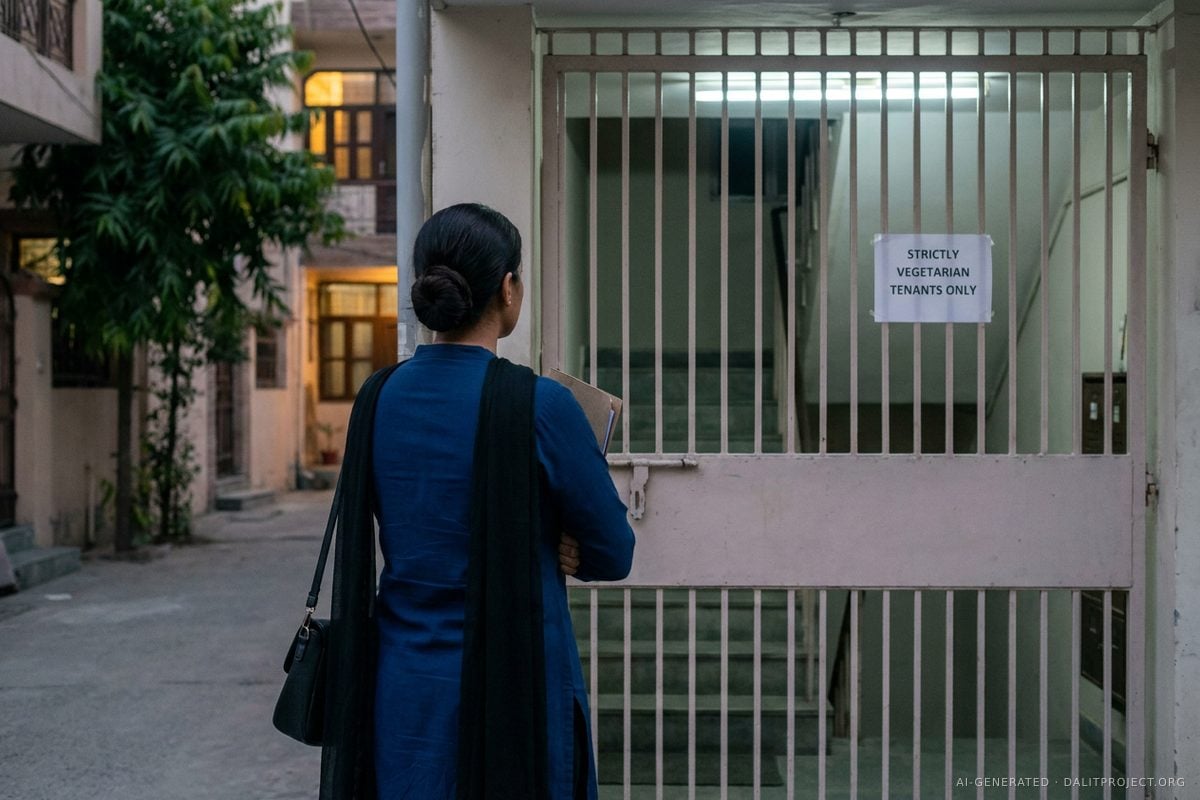
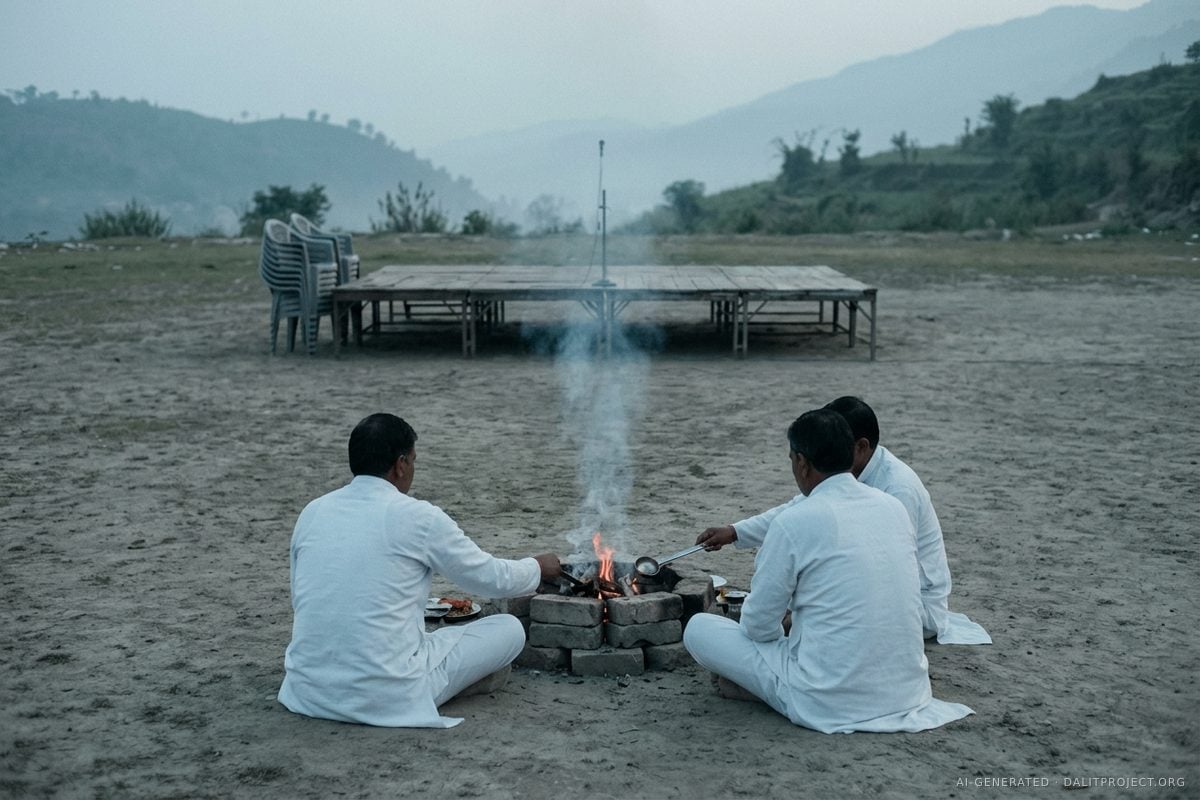
On 8 August Kharge addressed a rally at Ramlila Maidan, a public ground in Haldwani. The ritual followed on 10 August, the date Nainital police give; PTI reported it as 11 August. According to Round Table India, members of the Shri Ram Sena Dharmarth Seva Nyas Sangathan performed a shuddhikaran havan, a Hindu fire ritual to purify the site, and cited the slogans raised at the rally and Kharge’s criticism of the Bharatiya Janata Party (BJP), which governs Uttarakhand and India, and of the Hindu nationalist Rashtriya Swayamsevak Sangh (RSS) as their justification. Mahendra Bhatt, the BJP’s Uttarakhand president, defended the ritual and said the place was “polluted”.
On 13 August Kharge told the Rajya Sabha, Parliament’s upper house, that he had been made to feel “the sting of untouchability”, and J.P. Nadda, a federal minister who leads the government’s side in the house, said action would be taken. On 30 August Haldwani police registered a case against Rahul Gandhi, the Congress leader of the opposition in the lower house, after he called the ritual a crime at a press conference. The complaint came from two men associated with the Shri Ram Sena Dharmarth Seva Nyas; one of them, a member of a Scheduled Caste, alleged that the remarks had hurt his sentiments, The Hindu reported. Police invoked provisions of the Scheduled Castes and Scheduled Tribes (Prevention of Atrocities) Act, India’s 1989 law against caste violence, the news agency ANI reported. The Congress questioned the police action, saying no case had been registered against the organisers of the ritual, the paper reported. The Congress held protests across the country, and on 4 September Nainital police said an investigation had been launched into the filing of that case, The Wire reported. Two federal ministers from the BJP’s own allies criticised the ritual: Ramdas Athavale called it “wrong and unconstitutional”, and Chirag Paswan called it “a matter of concern”, The Wire reported.
On 8 September, after Congress MPs sat in a Delhi police station for over three hours, Nainital police registered a First Information Report (FIR), the complaint that opens a criminal case, against unknown persons. Alongside two sections of India’s criminal code, it invokes section 3(1)(r) of the Atrocities Act, which covers intentional insult “with intent to humiliate” a Scheduled Caste or Scheduled Tribe member in public view. The complaint was first made by a Haldwani lawyer and social activist, who gave police videos, according to Nainital police.
Nineteen days later, The Sunday Guardian published Makwana’s interview giving the Commission’s finding. The same day, the Congress party’s forum of MPs from Scheduled Castes and Scheduled Tribes (Adivasis, India’s Indigenous peoples), its SC/ST MPs’ Forum, announced a “Dalit-Adivasi Self-Respect Meeting” for 29 September to discuss the ritual.
What the Commission is for, and what it didn’t show
The NCSC is not an advisory panel. Article 338 of India’s Constitution makes it the Commission’s duty “to inquire into specific complaints with respect to the deprivation of rights and safeguards of the Scheduled Castes”, and to report to the President. While it inquires, it has “all the powers of a civil court trying a suit”: it can summon anyone in India and examine them on oath, require documents, and receive evidence on affidavits. Makwana described the same mandate in the interview: to take cognisance of “humiliation, exclusion or attacks on dignity, through an impartial and sensitive inquiry”.
Measured against those powers, the interview leaves the essential questions unanswered. It doesn’t say whether the Commission opened a formal inquiry, whose “statements” it examined, whether it heard Kharge, the complainant or the organisers, or what “material” it saw, whether that included the videos police say they were given. It doesn’t say whether a written finding exists, or whether one will go to the President, as reports under Article 338 do.
The test Makwana described matters as much as the missing evidence. He looked for “caste-based malice” and found none. But untouchability has never needed anyone to announce a motive. Akhilesh Kumar, a doctoral researcher at Jamia Millia Islamia, a university in Delhi, and an Ambedkarite activist, writes in Round Table India that the caste order has always regulated Dalits’ “touch, presence and proximity”. Because that order attaches impurity to birth, Kumar argues, a Dalit leader’s presence alone is enough for a stage to be treated as defiled, whatever he said on it. “It is not necessary for the organisers to explicitly announce that Kharge’s caste was the reason for the purification for the caste meaning of the act to matter,” Kumar writes. A test that asks for declared malice will rarely find it.
“Politically motivated”
Makwana also said the Commission “found that the matter was politically motivated”, and warned that “attempts to give it a political colour could affect the atmosphere of social equality, harmony and fraternity”. He didn’t say whose motives he meant.
If he meant the organisers’, the finding repeats their own defence: they said they were answering the rally’s slogans and Kharge’s attacks on the BJP and RSS. If he meant the politicians who took up the complaint, it doesn’t answer the question the complaint raised. Either way, “political” and “caste” are not alternatives. Kumar’s essay puts the objection plainly: “A political speech can be criticised. A slogan can be opposed. A political leader can be challenged. None of these requires a purification ritual.”
Kharge himself drew the line in the Rajya Sabha on 13 August. “I did not mention the name of any community or religion; I only reiterated the issues of the government,” he said, as reported by The Wire.
“But after my speech, you … tried to insult me by doing a purification ritual … you made me feel the sting of untouchability.”
— Mallikarjun Kharge, in the Rajya Sabha, 13 August 2026, as reported by The Wire
For the Congress MPs who took up the complaint, the insult reached beyond one man. “This was not merely an insult to Kharge ji, but an insult to the entire SC/ST community,” Mallu Ravi, a Congress MP, told a press conference in New Delhi on 27 September, PTI reported via ThePrint.
The case for the Commission, and why it isn’t enough
The strongest defence of the Commission is that it declined to be drawn into a party fight. The Congress has made Haldwani a campaign: its SC/ST MPs’ Forum has called a meeting on it, and a party leader, Manoj Kumar, has called the government “anti-Dalit”. A constitutional body could reasonably refuse to lend its authority to either side. Makwana also said in the same interview that he “would not say that caste-based discrimination has been completely eradicated” and that the law must protect “genuine victims”.
That defence would hold if the Commission had stayed silent, or had shown its work. It did neither. The Constitution gives the NCSC the powers of a court to gather evidence, and requires its reports to the President to be laid before Parliament. A verdict delivered in an interview can’t be tested by anyone: not by the police, whose case named no one when it was registered, and not by the Haldwani lawyer whose complaint started it. A commission that doesn’t take sides still has to say what it saw.
What to watch
- 29 September. The Congress SC/ST MPs’ Forum meets at the Constitution Club in Delhi to discuss the ritual and prepare a “roadmap” against such incidents.
- The Commission’s record. Whether the NCSC publishes what it examined, or includes Haldwani in its report to the President under Article 338.
- The FIR. Whether Nainital police identify anyone from the videos the complainant supplied.
The Commission looked for “caste-based malice” in Haldwani and says it found none. Kumar’s test is harder, and closer to how untouchability works: whether, once a Dalit leaves the stage, anyone still believes “that the stage has been contaminated by their presence.” On 10 August, the people who purified the ground acted as though they did. The Commission has yet to explain why that isn’t caste.