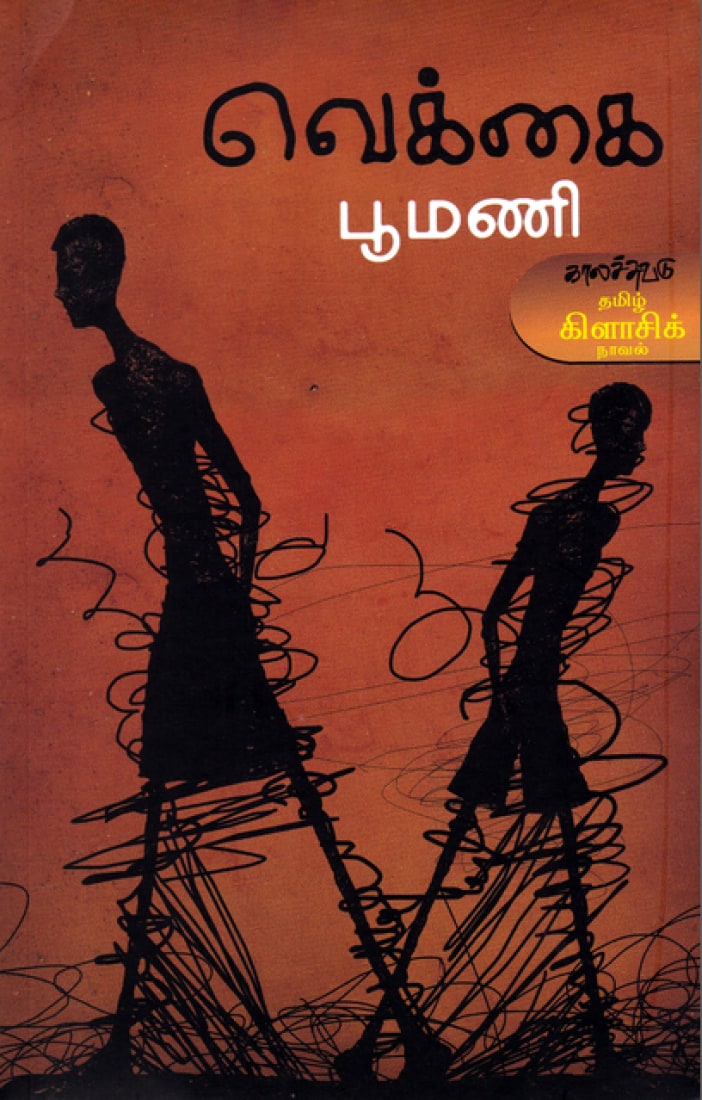
The book: Heat, by Poomani, translated from the Tamil by N. Kalyan Raman. Juggernaut Books, 2019; 260 pages, Rs 499 (about US$6). The Tamil original, Vekkai, was published in 1982.
Heat opens on a miscalculation. “Chidambaram had only planned to hack off the man’s right arm,” runs its first line in N. Kalyan Raman’s translation. The boy is 15; the sickle goes deeper than he meant, and the man he wanted to shame, a landowner he knows only as Vadakkuraan, dies. The rest of the novel asks what led to that blow, and who pays for it.
Poomani, the pen name of Pulithurai Manickavasagam, died on 12 July 2026, aged 79, and the chief minister of Tamil Nadu, the southern Indian state where he lived, announced state honours for his funeral. He won the Sahitya Akademi Award, the prize of India’s national academy of letters, in 2014 for his novel Agnaadi. He wrote about the karisal, the rain-fed black-soil country around Kovilpatti, a town in Thoothukudi district in the state’s dry south. Read now, Vekkai is sharper about land and law than its fame as a revenge story suggests, and quieter about caste than its own world allows.
A week in hiding
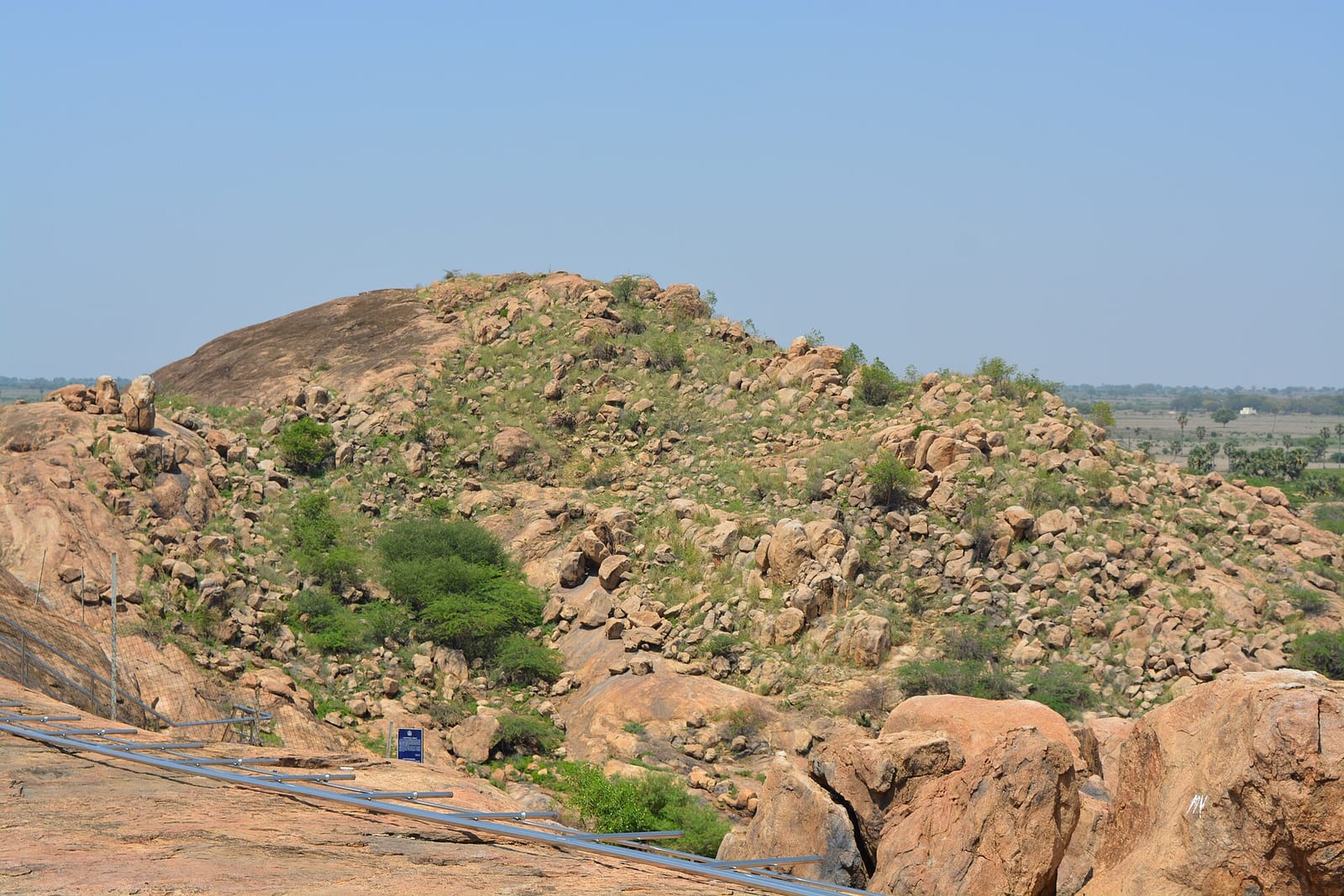
The novel covers eight days in eight chapters. Chidambaram and his father, Paramasivam, whom he calls Ayya, hide in a forested tank bed (the dry bed of a village reservoir), a rocky outcrop on a hill, a graveyard, an abandoned temple and cane fields around their village, and in the end they surrender to the police. What matters most comes in flashback: Vadakkuraan’s murder of the elder brother over the family’s land, and a cousin’s death from fever, and the father’s own past.
Poomani told the Indian news site Scroll in 2019 that the story came from a real case. The wilderness was his own: in his Author’s Note he wrote, “He was the killer; I was the one who went into hiding and roamed the forests”.
Whose land
The feud is over a field. The publisher calls Vadakkuraan “a powerful landowner”, and the critic Trisha Gupta, reviewing the translation for Scroll, traces the enmity to his “avaricious desire for their land, and the cycle of violence he starts”. A third of the way in, Paramasivam tells his son why he went to jail as a young man, for a killing Gupta reads as retaliation for long oppression: “The rich guys couldn’t stomach the fact that we were farming our own piece of land.”
That sentence carries the novel’s economics: for this family, owning land is itself the provocation. Yashasvi Arunkumar, also writing in Scroll, observes that small farmers in the novel are under constant pressure to give up their land, and those who give in are left stealing from the fields. Chidambaram’s family keep their land. It costs them a son.
Whose law
On the law, Poomani is explicit. Paramasivam complains that police go armed: “But we are not allowed to carry weapons… if we do the same thing, it’s a crime.” And he warns his son about what comes next:
“The police may not come after us today. But if our enemy gives them money, they’ll come running like hound dogs. So many atrocities take place in our courts. The law is what the rich people lay down.”
— Paramasivam, in Heat, translated by N. Kalyan Raman, as quoted by Trisha Gupta
The Tamil original puts it as a question. The reviewer Ira. Yuvaraj, writing in the Tamil literary site Bookday, quotes Chidambaram’s question from the original: “சட்டம்னா அது பொதுவா தான இருக்கணும், அது நம்மள மட்டும் ஏன் கேள்வி கேட்குது”. Roughly: if it’s the law, shouldn’t it be the same for everyone, so why does it question only us? Gupta calls the novel “centrally concerned with the difference between law and justice”. Poomani’s police answer to money.
What it names, and what it leaves unsaid
The novel never names a caste. “There is no reference to caste in the novel, but it is very subtly present—not as identity but as manifested in oppressive social relations,” Raman told the Global Literature in Libraries Initiative in 2020, adding that “a pitiless description of the caste-based social order in rural Tamilnadu underlies the events in Heat”. Yuvaraj makes the same double point. There is “no reference to caste anywhere in the story”, he writes, and yet everything it speaks of is Dalit thought (பேசுவது எல்லாம் தலித்தியம் தான்). Dalits are the communities once branded “untouchable” under India’s caste order.
Poomani defended the silence through his narrator. “He doesn’t know that Vadakkuraan is an upper-caste man. He only knows that he is an oppressor and wants to take all the land,” he told Scroll. Vadakkuraan is not even a name; it means “the man from the village in the north”, and the landowner’s strongman is only “Thadiyan (fat guy)”. “This novel is not about caste,” Poomani told The News Minute, a south Indian news site. “Because Chidambaram’s mind is beyond all that.”
The boy’s-eye view is real craft, and it is also the novel’s limit. By Poomani’s own account, the landowner is “an upper-caste man” and the narrator simply does not know it. The result is a book in which caste power is everywhere in its effects and nowhere in words. That is how its author could describe it, as the magazine Outlook reported after his death, as a story about a family defending its honour. Arunkumar notes that this refusal to talk openly about caste “has been criticised by many literary critics”, as has Poomani’s refusal to identify his work as Dalit literature. Raman said in 2020 that there had been “no discussion” of this aspect of the novel “by leading proponents of the anti-caste discourse across India”.
His own position matters here. According to S. Mohan, a human-rights journalist from Thoothukudi district writing on the website Countercurrents after Poomani’s death, Poomani was born into the Devendra Kula Vellalar community, which is listed as a Scheduled Caste, India’s official category for Dalit communities. He rejected the description “Dalit writer” when a newspaper used it after his 2014 award, argued that his community’s place on the Scheduled Caste list was a historical error, and took up the slogan “I am not a Dalit”. If that account is right, the silence in Vekkai may belong to a long argument about who gets to name a community, rather than to indifference to caste.
Who carries the violence
The killing is done by a 15-year-old, guided in hiding by a father who once killed over land himself. His mother, in a scene one reader quotes, tells him as he asks for materials to make bombs: “Yes, you should always carry a weapon. Your brother wouldn’t have been killed if he had carried a weapon on that unfortunate day.”
The cost does not fall evenly. Arunkumar notes that father and son are named as the accused while the boy’s maternal uncle, the Mama, “walks away free”, protected by his standing in the village, and that even with Vadakkuraan dead it is Chidambaram’s family who are displaced. Raman says the boy’s quest for justice “can only lead to a dark future in prison”.
Poomani knew how such violence is arranged. Of the real case, he told Scroll that young offenders are sent to corrective schools rather than jail: “That’s why those who wanted to kill the man sent a 14-year-old boy to get the job done.” In the novel, Poomani said, “Chidambaram is the one who plans everything”. But the adults’ long grievance lands on the youngest person in the family, and the book sees it.
The boy and the many
Does the flight centre the community or flatten it? Mostly it centres the boy, whose “unerring eye” for the land’s beauty Gupta rightly praises. Arunkumar reads a collective into the book, people who understand “that there is strength in numbers”. But the novel is narrated through the boy’s eyes, and that collective arrives as shelter and memory along a father and son’s trek. The small farmers already driven off their land stay at the edge of the story. Poomani told Scroll he felt “a distance in the English version”, while calling it “a very sincere translation”. Some of that distance is the novel’s own.
Beside his other books
Poomani did not always write this way. His first novel, Piragu, was, he said, “on the lives of the Arunthathiyars”, a Scheduled Caste community in Tamil Nadu, and the writer Tamilselvan said after his death that it described the karisal life of oppressed people in detail. Agnaadi names its communities, following marginalised groups, the Pallar and Vannar among them, through caste relations and agrarian change across more than a century. Beside them, Vekkai is the most inward. The Tamil director Vetrimaaran’s 2019 film Asuran recast it as a Dalit revolt, a reading Poomani rejected for the novel itself.
Verdict
Vekkai holds where it is concrete: a plot of land, police who come running when paid, a law “the rich people lay down”, and a child left to carry what the adults could not settle. It falls short where it chooses not to name. Without a word for caste, the landowner’s power can read as one rich man’s greed and the family’s fight as a matter of honour, and the community stays at the edge of a father and son’s flight. Forty-four years on, it is still one of Tamil fiction’s clearest accounts of whose law governs the karisal. It is less clear about why.