“I know my teammates tolerate me, but I will never be one of them,” a Dalit worker at a technology firm in Hyderabad, southern India, using the name Ravi, told Rest of World in 2022. Dalits are the communities once branded “untouchable” under South Asia’s caste order. From his first day, Ravi said, he has displayed a picture of B.R. Ambedkar, the Dalit jurist who was one of the primary authors of India’s constitution, and kept his social media open. He believes that is why he is not progressing at his company.
Tech describes itself as a meritocracy: code is tested, output is measured, and anyone good enough gets in. But much of a tech career is decided where no test reaches: who gets referred, who is pulled onto a project, who is “a good fit”, whose review reads “strong”. Dalit engineers in the United States and India describe caste operating in exactly those places.
The hierarchy on a tech team rarely announces itself. It works through the informal machinery that the industry calls culture, and that machinery is shaped by who already holds it.
What happened
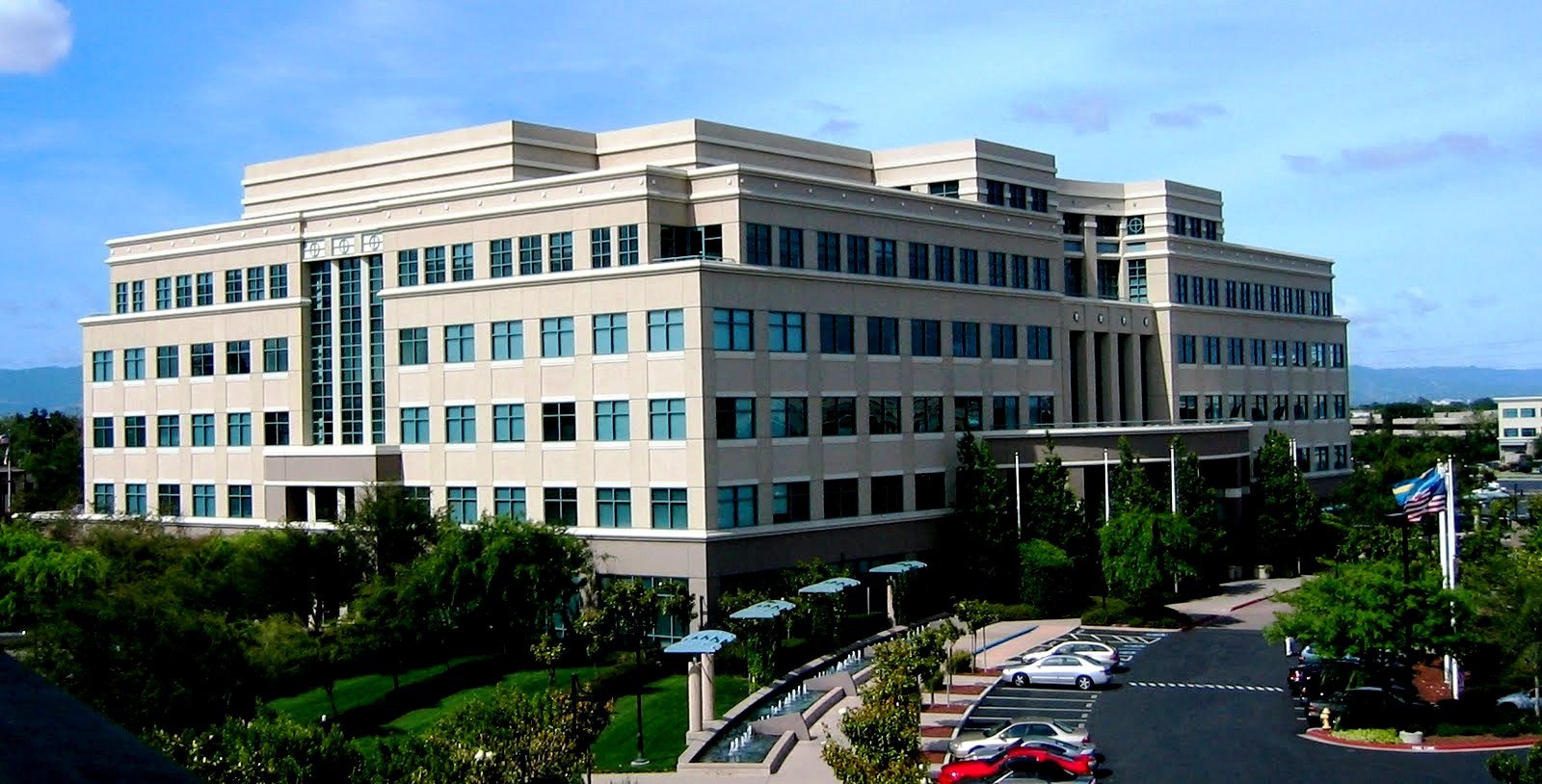
In June 2020, California’s Department of Fair Employment and Housing, now the Civil Rights Department, sued Cisco Systems and two managers at its San Jose headquarters. The agency alleged that a Dalit engineer “was expected to accept a caste hierarchy within the workplace where he held the lowest status within a team of higher-caste colleagues, receiving less pay, fewer opportunities, and other inferior terms and conditions of employment.” It was the first time a US government agency had taken a private employer to court over caste discrimination, VICE News reported.
Cisco denies it. Its own investigation, the company’s general counsel wrote in a blog post, “found no evidence” that the engineer was discriminated or retaliated against on the basis of caste. In April 2023 the agency dropped its claims against the two managers and said the case against Cisco “remains ongoing”. A copy of the Santa Clara County court docket, last updated in November 2025, still lists the case as open. Its 2025 entries are case-management steps, including an October order on the time allowed to bring the case to trial; no trial, verdict or settlement is recorded. Where US law stands on caste is covered in our explainer on the patchwork of US bans.
In the three weeks after it was announced, Equality Labs, a Dalit-led civil rights group in the US, received complaints about caste bias from nearly 260 US tech workers, The Washington Post reported, in a story republished by The Philadelphia Inquirer. They described caste-based slurs and jokes, bullying, discriminatory hiring, bias in peer reviews and sexual harassment. In October 2020, 30 Dalit women engineers at Google, Apple, Microsoft, Cisco and other companies told the same paper, anonymously and for fear of retaliation, that networks of engineers from the dominant castes had replicated caste bias in the US “by favoring their peers in hiring, referrals, and performance reviews.”
How the filter works
The accounts Dalit engineers have given in published interviews and research describe one mechanism in four steps.
First, find out who someone is. Benjamin Kaila, a Dalit database administrator in the US, told the Post that in more than 100 interviews for contract work over 20 years, he received only one job offer when another Indian interviewed him in person, and Indian interviewers asked questions that seemed meant to place him. “They don’t bring up caste, but they can easily identify us,” he said. Seven Indian engineers told the Post that questions about diet, hometown, religion or marriage work as a “caste locator”. A study of 16 Dalit engineers in India, the US and the UK, by Palashi Vaghela, Steven Jackson and Phoebe Sengers at Cornell University, found the same pattern: when a surname didn’t give caste away, the engineers were asked their region, village or city of origin, or which temple they went to. In one case they recorded, a manager in a newly graduated Dalit woman’s new team asked what her last name suggested, and then what her caste was.
Second, sort by network. Most hiring in India’s information technology (IT) industry happens through referrals, Vinod A.J., general secretary of the All India Forum for IT Employees, told Rest of World: “this is how people from the same communities climb up the ladder.” The same report recounts a Dalit senior manager who hired six people through referrals for a firm’s office in Pune, in western India. Senior management was furious that all six were Dalit, he said, and the firm asked all six to leave when their probation ended.
Third, call it culture. S. Shakthi, a University of Amsterdam researcher who conducted 61 interviews, mostly in the IT industry of Chennai in southern India, found caste “referred to by (or subsumed under) euphemisms such as ‘background’ or ‘culture’”, terms used repeatedly in diversity-and-inclusion settings. Those words, Shakthi wrote, let the industry “confidently claim ‘castelessness’ while simultaneously keeping caste structures intact.” The same paper cites earlier research: sociologists Surinder Jodhka and Katherine Newman found hiring managers using questions about “background” to place candidates socially, and in a field experiment by Sukhadeo Thorat and Paul Attewell, matched résumés sent to employers fared differently depending on whether they carried Dalit, Muslim or typical dominant-caste names. When a Chennai office of PayPal named the teams for its 2011 annual day after dominant-caste groups, such as the Iyers of Tamil Nadu, a group within the Brahmins, the caste ranked highest in the traditional order, the human resources staff called them “fancy” names, former employees told Shakthi. After a protest, the office apologised and dropped caste from the team names.
Fourth, decide quietly. Once caste is known, the decisions that follow are the ordinary ones of team life. A Dalit project manager at large US tech companies told NBC News that after her boss found out she was Dalit, she stopped being invited to lunch and her ideas were shut down; later, in front of colleagues, he told her not to touch a project because she was “ill-fated”. A Dalit engineer using the name Raina told VICE News that her promotion was held for five years at a company where she worked with dominant-caste Indians, and that at a new company with no other Indians she was promoted within four months.
None of these steps needs a slur, and none needs a policy. Each looks, to the person doing it, like judging fit.
67% of Dalit respondents said they had been treated unfairly at their workplace because of their caste, against 12% of Shudra respondents and 0–1% of Brahmin, Kshatriya and Vaishya respondents. All four groups rank above Dalits in the traditional caste order. Equality Labs, Caste in the United States (2018): a web survey of self-selected South Asian Americans that drew 1,534 responses, 1,200 of them usable, so a pattern among respondents, not a national rate.
What it costs
i
CC BY 2.0Original on Wikimedia CommonsVaghela, the Cornell study’s lead author, is herself from a Dalit and engineering background, and the paper calls the extra labour its participants do to survive “caste work”: reading every question for what it is really asking, deciding when to stay ambiguous and when to speak.
“The normative and nominal castelessness of computing thus requires considerable effort for Dalits to fit into,” the authors write, an effort “often achieved by diversionary strategies such as avoiding conversations about caste, or utilizing ambiguity to not exactly lie but also not entirely claim their position.”
In the Cornell study, one engineer, Khushi, came home in tears after a project manager complained that reservations, India’s constitutional quotas in public jobs and education for historically excluded castes, had given a Scheduled Caste woman, a member of India’s official category for Dalits, a government job over his wife. Her father told her: “Now, you understand why I am advising you to not tell our caste to people. You will miss opportunities because of it if you don’t be careful.”
The 30 women engineers put it this way:
“We are good at our jobs and we are good engineers. We are role models for our community and we want to continue to work in our jobs. But it is unfair for us to continue in hostile workplaces, without protections from caste discrimination.” — Statement by 30 Dalit women engineers at US tech companies, The Washington Post, October 2020
For workers on H-1B visas, the US permit for skilled foreign workers that is sponsored by an employer, speaking up can cost more than a job. Many of the Dalit tech workers Equality Labs interviewed held H-1B visas, its executive director, Thenmozhi Soundararajan, told Slate: “you could lose your immigration status as well.” A Dalit worker told NBC News that after he challenged colleagues defending the caste system at a client lunch, his performance ratings dropped and he was reassigned to his company’s office in India, though his manager had promised to process his green card, the sponsorship for US permanent residence.
The strongest counter-reading
The best case against this argument is about evidence. The Equality Labs survey is self-selected, and the Carnegie Endowment for International Peace said as much: it is “not based on a representative sample, raising questions about the generalizability of its findings.” Carnegie’s own 2020 survey of 1,200 Indian Americans, run through the polling firm YouGov, found that 5% of all respondents reported caste discrimination. The Hindu American Foundation and the Coalition of Hindus of North America, which oppose caste-specific laws, say there is no clear data showing such discrimination exists. And the Cisco case is unresolved: no court has ruled on its allegations.
Much of that should be conceded: individual testimony, however consistent, is not a count. But the representative survey cannot settle the question either, and Carnegie says why. Of the 293 Hindu respondents in its sample who identified with a caste, 1% identified as Dalit, and the authors warn that nonresponse “could mask those who do not wish to disclose their caste affiliation.” A sample in which Dalits barely appear cannot tell us how Dalits are treated. Among the Hindu respondents who named a caste, 83% were in the survey’s “General or upper caste” group, the dominant castes outside India’s affirmative-action categories. A low average across that population is what a hierarchy looks like from the top.
The deeper problem is missing data. “There are no numbers because companies are not collecting data,” Soundararajan told Slate. A Google employee told NBC News in 2022 that there was “no official or unofficial data around representation” by caste at the company. An industry that measures almost everything does not measure this. “No evidence” from inside a system that does not look is not the same as no problem.
What to watch
The Cisco case has yet to reach trial. Its docket in Santa Clara County is the place to watch, along with the Hindu American Foundation’s appeal against California’s civil rights agency, which our explainer tracks.
Tech workers have asked for the first step. In 2021 the Alphabet Workers Union, which organises Google employees, said caste “should be recognized as a protected class by the federal government and be included in anti-harassment policies within our industry,” Al Jazeera reported. Dalit engineers’ accounts point to a second step: the informal decisions where caste works, such as referrals, “fit” interviews, peer reviews and promotion slates, are the ones no anti-slur policy reaches.
Ravi chose to be visible, knowing what it may cost. “I have lived the other way, too, where you are hidden,” he told Rest of World. “You can progress that way, but your spirit regresses. This way I may have a smaller life, but at least I have my integrity.” Until the industry looks at how it decides who fits, that is the choice it leaves Dalit engineers.