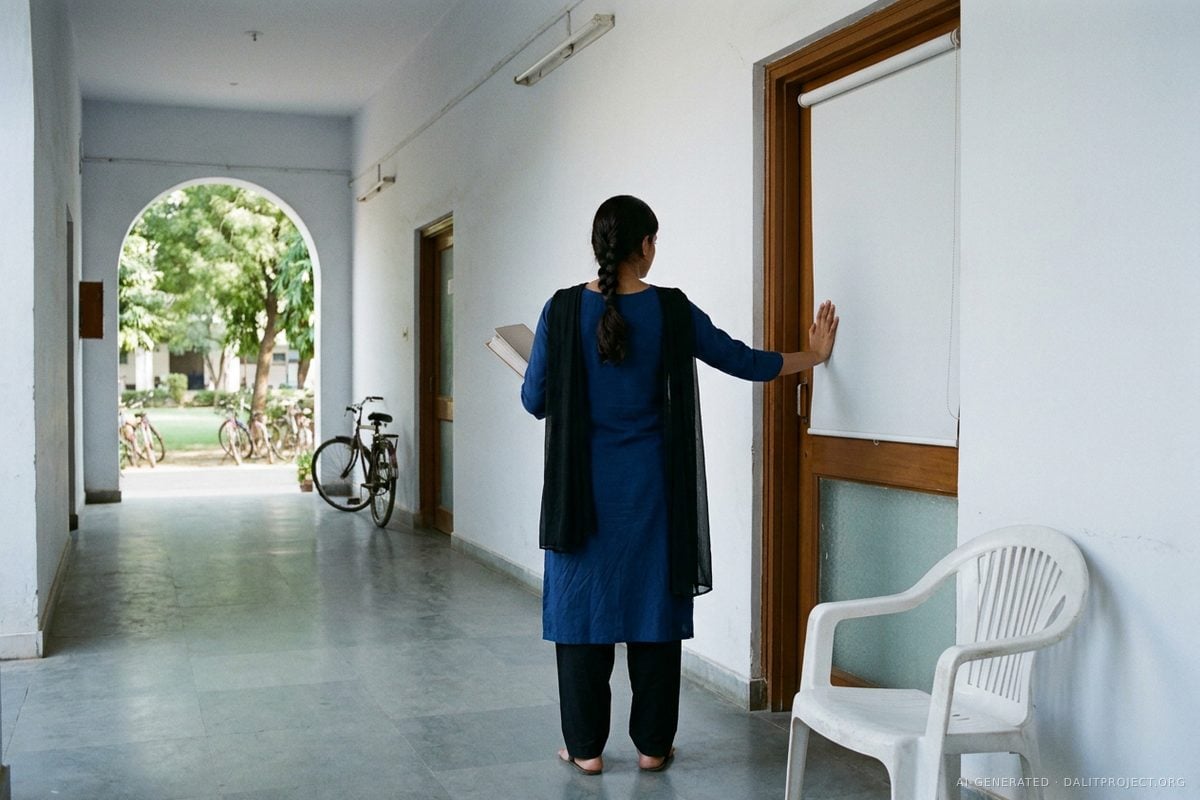
A Dalit woman studying for a Master of Education (M.Ed.) at Chhatrapati Shahu Ji Maharaj University (CSJMU) in Kanpur, in the northern state of Uttar Pradesh, took her complaint of caste harassment to the university and to the national higher-education regulator. The university closed it on 28 September 2026 on the strength of a report by its own internal committee, which found no evidence of discrimination. Dalits are the communities once branded “untouchable” under India’s caste order.
Three days later a body outside the university took the complaint up. On 1 October the National Commission for Scheduled Castes (NCSC), a constitutional body that safeguards the rights of Dalits, accepted the family’s complaint and asked the Kanpur Police Commissioner and the university’s registrar, its chief administrative officer, for an action taken report, an account of what they have done, within 15 days.
The case is still an allegation, and the university rejects it. But the way it was handled shows the structure most campus caste complaints meet first: an institution investigating its own faculty, and a student whose route past that runs to a national body that can summon and question, but has no power of its own to punish.
What happened
According to her brother, as reported by The Mooknayak, an outlet that covers Dalit issues, the harassment began early in the academic session at the university’s School of Teacher Education. He alleges that a senior teacher in her department publicly humiliated her over her rural background and simple dress, and made casteist remarks in front of classmates, including that whatever she achieved her place would remain “four yards under the ground”. The family says it has voice notes from an official university WhatsApp group in which that teacher is allegedly heard mocking her ability and threatening consequences in the third semester. The family also alleges biased marking: her result capped at a cumulative grade point average (CGPA) of 6.49, when, the complaint says, a first division needs 6.50. Her brother says the harassment has seriously affected her health. The Mooknayak withheld the family’s identity at their request.
She filed a grievance on e-Samadhaan, the University Grants Commission’s (UGC) online complaints portal, on 18 July 2026. She also complained to the vice-chancellor, the university’s head, to Uttar Pradesh’s online grievance system, to a women’s commission and to the NCSC, Amar Ujala reported. The UGC is India’s federal higher-education regulator.
The university’s own inquiry cleared the faculty. Its internal report, cited by The Mooknayak, says a departmental committee found no substantive evidence of discrimination or deliberate marking bias. It says the university grades answer scripts under a coding system that hides students’ identities, and that she scored higher in the accused teacher’s paper than in her other papers. CSJMU’s administration says the internal report found the allegations baseless, Amar Ujala reported. No public comment from the accused teacher has been reported, and no report says the teacher was asked. No report says the teacher has been charged with any offence or that a police case has been registered. The family calls the inquiry a sham, saying the committee included faculty members who, it alleges, enabled the harassment.
On 1 October the NCSC’s director issued notices to the Kanpur Police Commissioner and the CSJMU registrar, seeking an action taken report within 15 days. The Mooknayak says it has sent questions to the vice-chancellor and the registrar and is awaiting a reply.
How the mechanism works
6.49 The CGPA the student received, according to her family’s complaint as reported by The Mooknayak. The complaint says a first division needs 6.50; the family says her marks were held down, and the university says grading is anonymised. Source: The Mooknayak
Most of what decides a caste complaint on campus happens inside the institution. Since the Supreme Court suspended the UGC’s 2026 equity rules in January, universities have worked under the older 2012 equity regulations, which the court kept in force. They name caste and require an Anti-Discrimination Officer and a published complaint procedure. But the inquiry stays inside the institution, and an appeal goes to the institution’s own head, under clause 6 of the 2012 rules.
That design matters most when the complaint is about evaluation. A student who says her marks were held down is challenging the judgement of the faculty who would normally review it. A coding system that hides names on answer scripts is a real safeguard, and the university is right to cite it. But the student’s complaint is broader than one exam. It covers remarks in class and in a WhatsApp group, and a department’s treatment of her since early in the academic session. An internal committee that answers the marking question can still leave the rest unexamined.
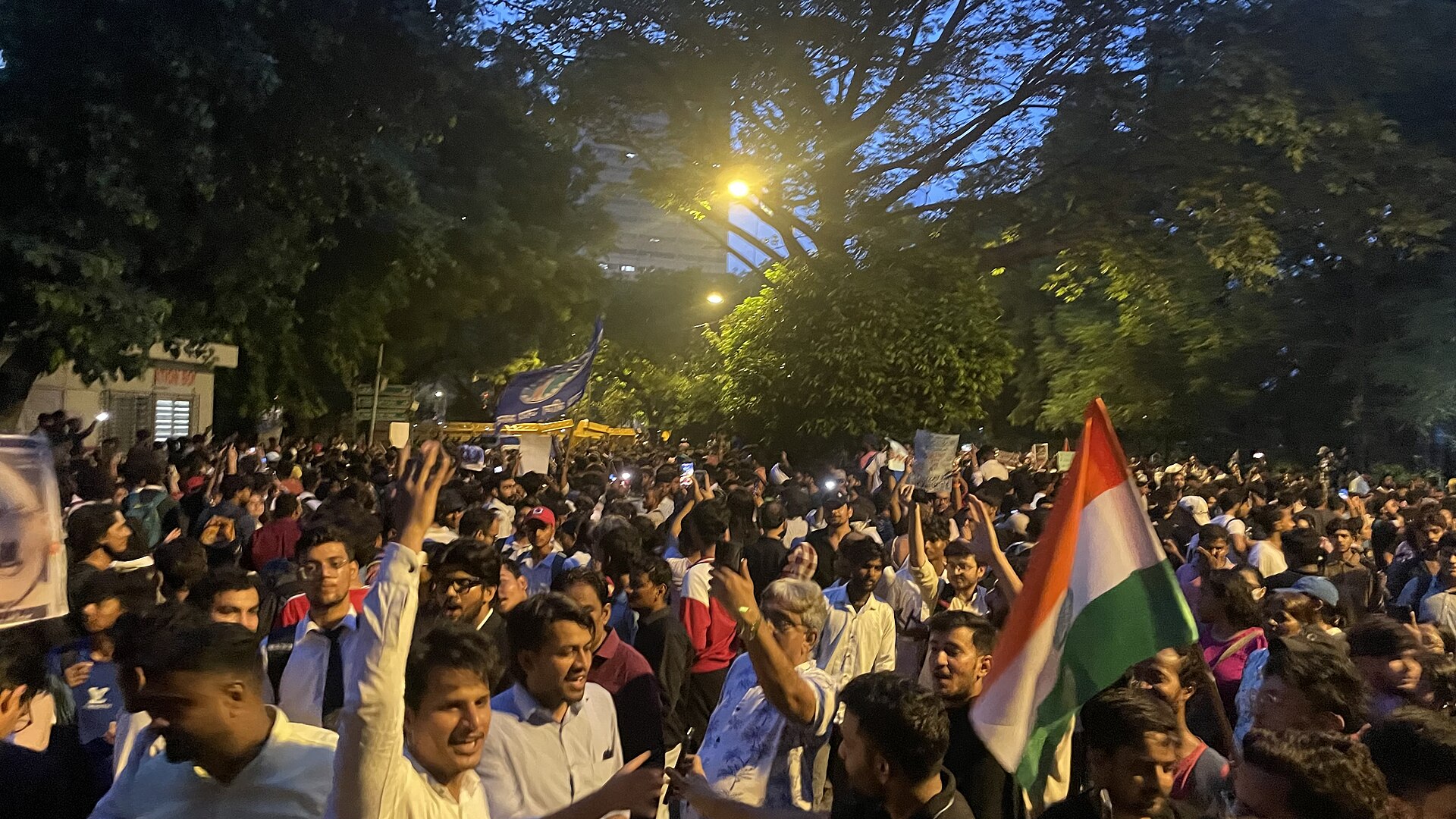
The mothers of Rohith Vemula and Payal Tadvi, students whose deaths led to the Supreme Court case on campus discrimination, asked the court for exactly this missing piece. In September 2025 the court recorded their proposals, including grievance committees with half their members from Scheduled Caste, Scheduled Tribe and Other Backward Class communities, protection for complainants and personal liability for negligent staff. Students at Lucknow University, also in Uttar Pradesh, have marched for appeals outside university control.
In their own words
“The fear in the Brahminical establishment is that a Dalit can enter this so-called prestigious institute with a voice and assertion. Their deepest insecurities were exposed in the way this case was handled.” — Prashant More, a Dalit former student at the Film and Television Institute of India, on how his caste complaint was handled, in Outlook
Prashant More has been through the same route. He grew up in a Dalit colony in Chalisgaon, in Jalgaon district of the western state of Maharashtra, and in 2023, as a student at the Film and Television Institute of India (FTII) in Pune, complained that a professor had made casteist remarks about him. An internal committee found no caste-based discrimination; the NCSC, to which he then turned, later disposed of his complaint, Outlook reported. FTII’s registrar, Prateek Jain, told Maktoob the inquiry followed established procedures and was “both fair and transparent”; Outlook reported that it could not reach the professor for comment. “There should have been representation from the student body, specifically someone from the SC/ST community, as well as an unbiased, external party to ensure fairness,” More told Maktoob.
Others have described the same pattern. Students who file caste discrimination complaints “are seen as ‘troublemakers’ rather than lonely, isolated individuals who had no other recourse,” Shainal Verma, a sociologist and the first elected student representative on the Equal Opportunity Cell at the Indian Institute of Technology (IIT) Delhi, wrote in Scroll. She wrote that students often turn to “recording verbal encounters with the perpetrators” to prove what happened, and that committees “view this suspiciously”. The CSJMU family says its evidence includes such recordings. Whether the university’s committee heard them has not been reported.
The strongest counter-reading, and why it falls short
The university’s case deserves its full weight. Its committee met, examined the complaint and found no evidence. Anonymised grading is designed to rule out exactly the bias alleged, and the student’s higher score in the accused teacher’s own paper cuts against the marking claim. No outside body has ruled on the allegations. The NCSC’s notice is a request for a report, not a finding.
All of that can be true and the process can still fall short. The question is not whether the committee reached the right answer, which no outsider can yet know. It is whether a departmental committee, which the family says included faculty who enabled the harassment, can produce an answer a Dalit complainant has reason to trust. The family says it cannot. The 2012 rules keep both the inquiry and the appeal inside the university. That is why a complaint about a classroom had to travel to a constitutional commission before an outside body with inquiry powers was reported to have taken it up.
What to watch
The NCSC’s 15-day window for the action taken report runs to mid-October. Under Article 338 of India’s Constitution, when the Commission inquires into a complaint it has the powers of a civil court: it can summon and examine people on oath and requisition public records. Article 338 gives it no power of its own to punish. Its weight comes from those inquiry powers and from the reports and recommendations it makes to the government. Watch whether it summons university officials, and whether the police, who also received the notice, register a case.
Watch, too, the Supreme Court. The challenge to the 2026 equity rules and the mothers’ petition return on 5 November 2026, after the federal government told the court the rules were being reconsidered. Cases like this one are the test of whatever comes out.
The university closed the complaint in-house in September. The NCSC has asked for an answer in October. What changes for the next Dalit student in Kanpur depends on whether that answer comes from outside the department she accused.