The Supreme Court has frozen India’s new campus equity rules, but Dalit and Adivasi students are not left without a remedy. The 2012 equity rules stay in force by the court’s own order, and the anti-ragging rules and the Atrocities Act, India’s 1989 law against caste violence, were never paused.
What happened
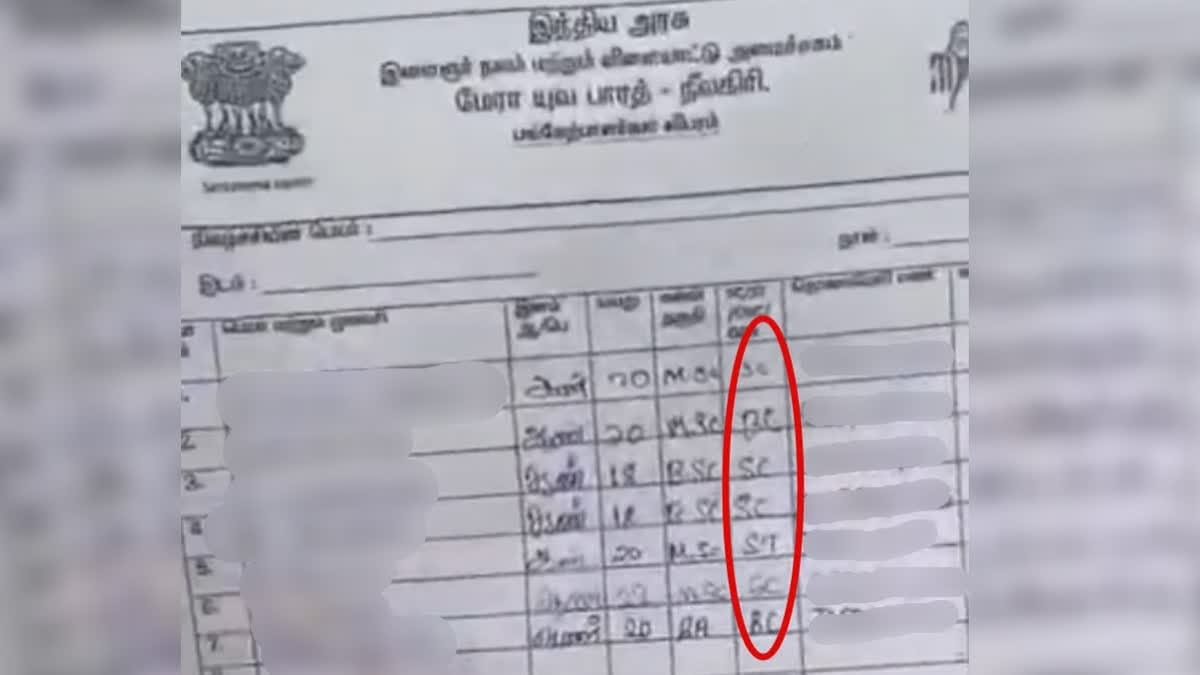
On 13 January 2026 the University Grants Commission (UGC), India’s federal higher-education regulator, notified the UGC (Promotion of Equity in Higher Education Institutions) Regulations, 2026. Institutions had to set up an Equal Opportunity Centre, an Equity Committee and a 24-hour equity helpline, or risk losing funding, The Wire reported.
The rules came out of a 2019 petition by Radhika Vemula and Abeda Salim Tadvi. Their children, Rohith Vemula, a Dalit PhD scholar at the University of Hyderabad, in southern India, and Payal Tadvi, a resident doctor in Mumbai from the Tadvi Bhil tribal Muslim community, died by suicide in 2016 and 2019, The Wire reported. Both allegedly died after facing caste-based discrimination, Careers360 reported. Indian law lists Dalits, the communities once branded “untouchable”, as Scheduled Castes (SC), and Adivasi (Indigenous) communities as Scheduled Tribes (ST).
Three petitions, filed by Mritunjay Tiwari, advocate Vineet Jindal and Rahul Dewan, challenged the rules, LiveLaw reported. Their main target was Regulation 3(1)(c), which defined “caste-based discrimination” as discrimination “only on the basis of caste or tribe against the members of the scheduled castes, scheduled tribes, and other backward classes”. They argued it left “general category” students, those outside the reserved categories, without a remedy. On 29 January Chief Justice Surya Kant and Justice Joymalya Bagchi said that, “upon a prima facie consideration”, some provisions “suffer from certain ambiguities, and the possibility of their misuse cannot be ruled out”, and suspended the rules, the order records.
Why it matters to you
118% rise in caste-discrimination complaints reported by universities and colleges, from 173 in 2019-20 to 378 in 2023-24 — UGC data submitted to a parliamentary committee and the Supreme Court, as reported by The Wire
The UGC has not published the data behind these figures.
The stay left you with older, thinner rules, and with laws outside the UGC that were never paused.
Which rules apply now?
The 2012 UGC equity regulations. The court used its special power under Article 142 of the Constitution to keep them in force, the order says. They name caste. They bar discrimination against SC and ST students in admissions, and bar anyone at the institution from announcing students’ castes in class, “labeling students as reserved category”, blaming caste for poor performance, segregating students in hostels, messes or reading rooms, or withholding fellowships, the regulations list. They cover “acts of ragging specifically targeted against such students”. Every institution must have an Equal Opportunity Cell and an Anti-Discrimination Officer of at least professor rank in a university, or associate professor in a college.
The anti-ragging regulations. Ragging, the hazing of junior students by seniors, has its own UGC regulations from 2009, as Senior Advocate Indira Jaising, for the two mothers, pointed out in court, the Supreme Court Observer reported. The stay doesn’t touch them.
The Atrocities Act. The Scheduled Castes and the Scheduled Tribes (Prevention of Atrocities) Act, India’s 1989 law against caste violence, applies on campus too. When the accused is not SC or ST, it is an offence to intentionally insult or intimidate an SC or ST person “with intent to humiliate” in “any place within public view”, or to abuse them “by caste name” in public view, punishable by six months to five years in prison, section 3 says.
Where do I complain?
- Write it down. Note dates, exact words and witnesses. The complaint must be in writing with “sufficient details”; you or a parent can make it, whether it happened on or off campus, clause 5 of the 2012 rules says.
- Send it to the Anti-Discrimination Officer. Your institution must publish its complaint procedure online and decide complaints “within a maximum period of sixty days”.
- Appeal. You can appeal the officer’s order to the head of the institution within 90 days, clause 6 says.
- Go to the UGC. Its e-Samadhaan portal logs grievances against institutions under a tracking ID; the toll-free line is 1800-111-656.
- Ragging: call the national anti-ragging helpline, 1800-180-5522, listed on the UGC’s anti-ragging portal.
- A crime: ask the police to register a First Information Report (FIR), the complaint that opens a criminal case, under the Atrocities Act.
- A national commission. The National Commission for Scheduled Castes, a constitutional body, takes complaints through its online portal, by post or in person; its helpline is 1800-118888, its website says. Adivasi students can go to the National Commission for Scheduled Tribes, which runs NCSTGRAMS, an online grievance system, the federal government’s Press Information Bureau says.
This is general information, not legal advice. For your own case, speak to a lawyer, your district’s Legal Services Authority, or the bodies above.
What has the court directed in the mothers’ case?
i
CC BY-SA 3.0Original on Wikimedia CommonsThe mothers’ 2019 petition, Abeda Salim Tadvi v Union of India, argued that the 2012 rules were not being enforced. In January 2025 the court asked the UGC how many institutions had set up Equal Opportunity Cells, Careers360 reported. In September 2025 it recorded the mothers’ proposals, including grievance committees with half their members from SC, ST and Other Backward Class (OBC) communities, protection for complainants and personal liability for negligent staff, and said the UGC may notify new rules “as early as possible”, the order records.
The January stay order sent the challenges to be heard with the mothers’ petition by a three-judge bench, it says. On 20 August, a counsel questioned the mothers’ right to bring it. “These are mothers of two children who died. If they can’t raise this issue, who can?” Jaising replied, LiveLaw reported.
What is the court deciding?
The January order framed four questions. Does a separate definition of caste-based discrimination make sense when the rules set no separate procedure for it? Does it affect protection for the most disadvantaged groups within the SC, ST and OBC lists? Does allowing “segregation” in hostels and classrooms, even on transparent criteria, amount to “separate yet equal”? And was leaving out ragging “regressive”? The order sets them out.
On 20 August, Solicitor General Tushar Mehta, for the federal government, told a bench of the Chief Justice, Justice Bagchi and Justice V. Mohana that the rules were under reconsideration. The court gave the UGC four weeks to file its written reply, and said it would “be appreciated” if a decision on the rules came before the next hearing, on 5 November 2026, the order records.
What students’ organisations say
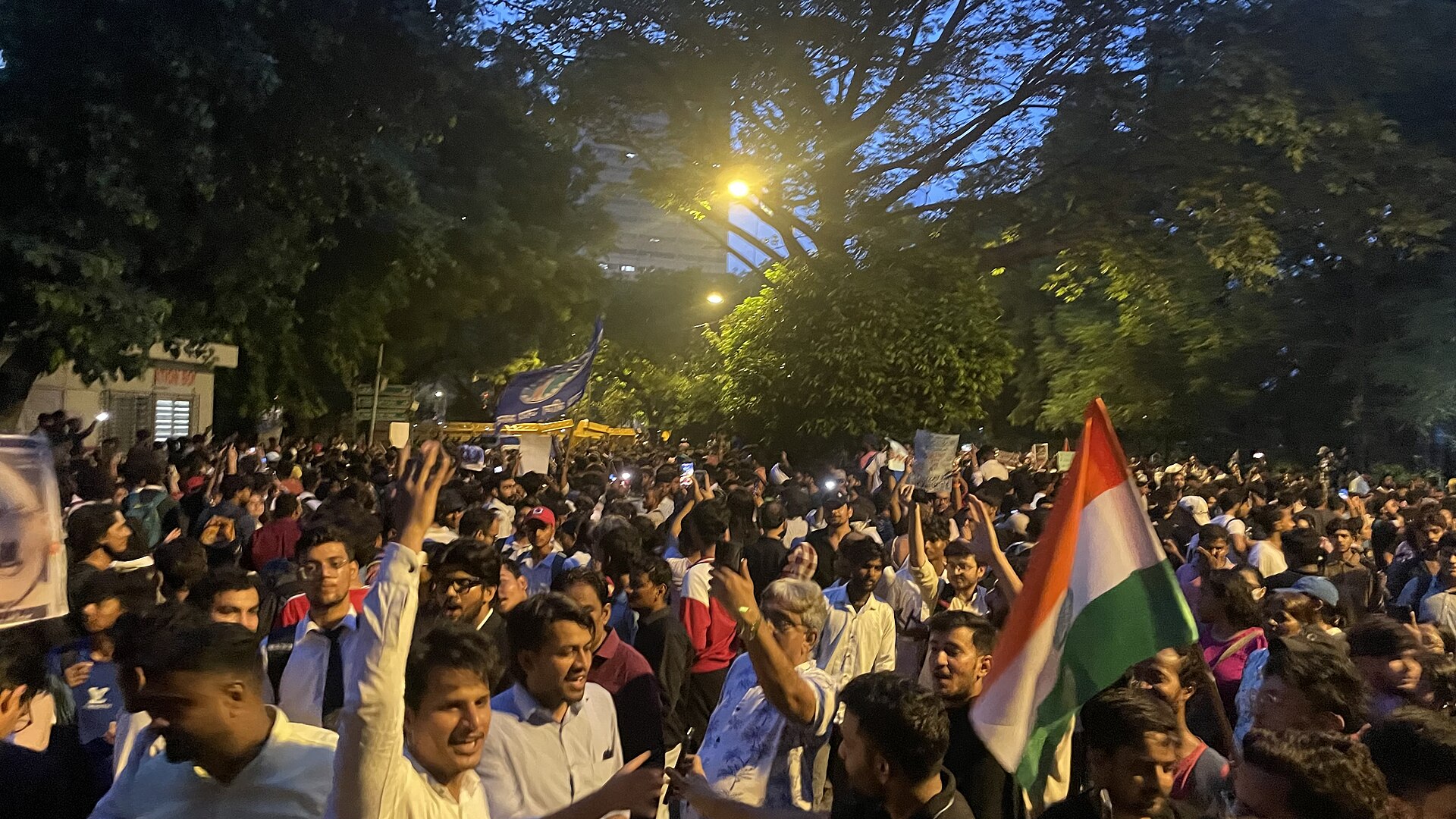
At Delhi University, the All India Students’ Association (AISA) led an “Equity March” on 3 February. “The stay on these guidelines is a clear indication that casteism remains deeply entrenched within the highest echelons of our institutions,” said Nitish, a former president of the students’ union at Jawaharlal Nehru University, in Delhi, Careers360 reported. AISA called the stay “reprehensible but predictable” and called for a nationwide movement to enact the Rohith Act, a proposed law against caste discrimination on campus, NewsClick reported, as republished by Janata Weekly.
At Banaras Hindu University, in the northern state of Uttar Pradesh, the SC, ST and OBC Unity Forum called the rules “a positive and necessary step toward promoting equity in higher education”, Careers360 reported.
At Lucknow University, also in Uttar Pradesh, where police stopped a march on 13 February backed by groups including AISA, the Birsa Ambedkar Phule Students’ Association (BAPSA) and the Bhim Army Student Federation, AISA said students wanted autonomous anti-discrimination bodies and appeals outside university control, Careers360 reported.
Shainal Verma, who in 2022 became the first elected student representative on the Equal Opportunity Cell of the Indian Institute of Technology (IIT) Delhi, an elite engineering school, described what often follows a complaint:
“Students who file caste discrimination complaints are seen as ‘troublemakers’ rather than lonely, isolated individuals who had no other recourse.” — Shainal Verma, Scroll, 30 January 2026
Disha Wadekar, the lawyer for Rohith Vemula’s and Payal Tadvi’s mothers in the Supreme Court, questioned what going back to the 2012 rules achieves. The challenge was that dominant-caste students should be covered, she told The Federal, “But in the older regulations too, the protection was only for the Scheduled Caste and the Scheduled Tribes. Upper castes were not there. So, how does this stay on the regulations even help?” Prakash Ambedkar, who leads the Vanchit Bahujan Aghadi party, called the stay “a troubling judicial capitulation” to the debate around the rules, in a post on X that The Federal quoted: “The stay is against the constitutional ideas and promise of substantive equality, social justice, and democratic access to education.”
Key terms
- In abeyance: paused, not struck down. The court has not ruled on whether the 2026 rules are constitutional.
- General category: students outside the reserved SC, ST and OBC categories. OBCs are a broad group of historically disadvantaged castes.
What’s next
On 5 November the three-judge bench is due to take up the challenges and the mothers’ petition together. Until the court orders otherwise, the 2012 regulations are the equity rules your college must follow.
If you or someone you know is struggling, help is available. In India, call Tele-MANAS on 14416. In Australia, call Lifeline on 13 11 14.