In 1932, the British government offered India’s “Depressed Classes” a separate electorate: their own seats, elected by their own voters, so that caste-Hindu majorities in general constituencies could not simply out-vote them into irrelevance. B.R. Ambedkar had fought for exactly this. Gandhi began a fast unto death against it, and within a week Ambedkar signed the Poona Pact, trading the separate electorate for a larger number of reserved seats elected by the general (caste-Hindu-majority) electorate instead. Ambedkar called it a surrender extracted under duress, not a negotiation. Depressed Classes voters kept a name on the ballot. What they lost was the right to decide, on their own terms and among only themselves, who that name belonged to.
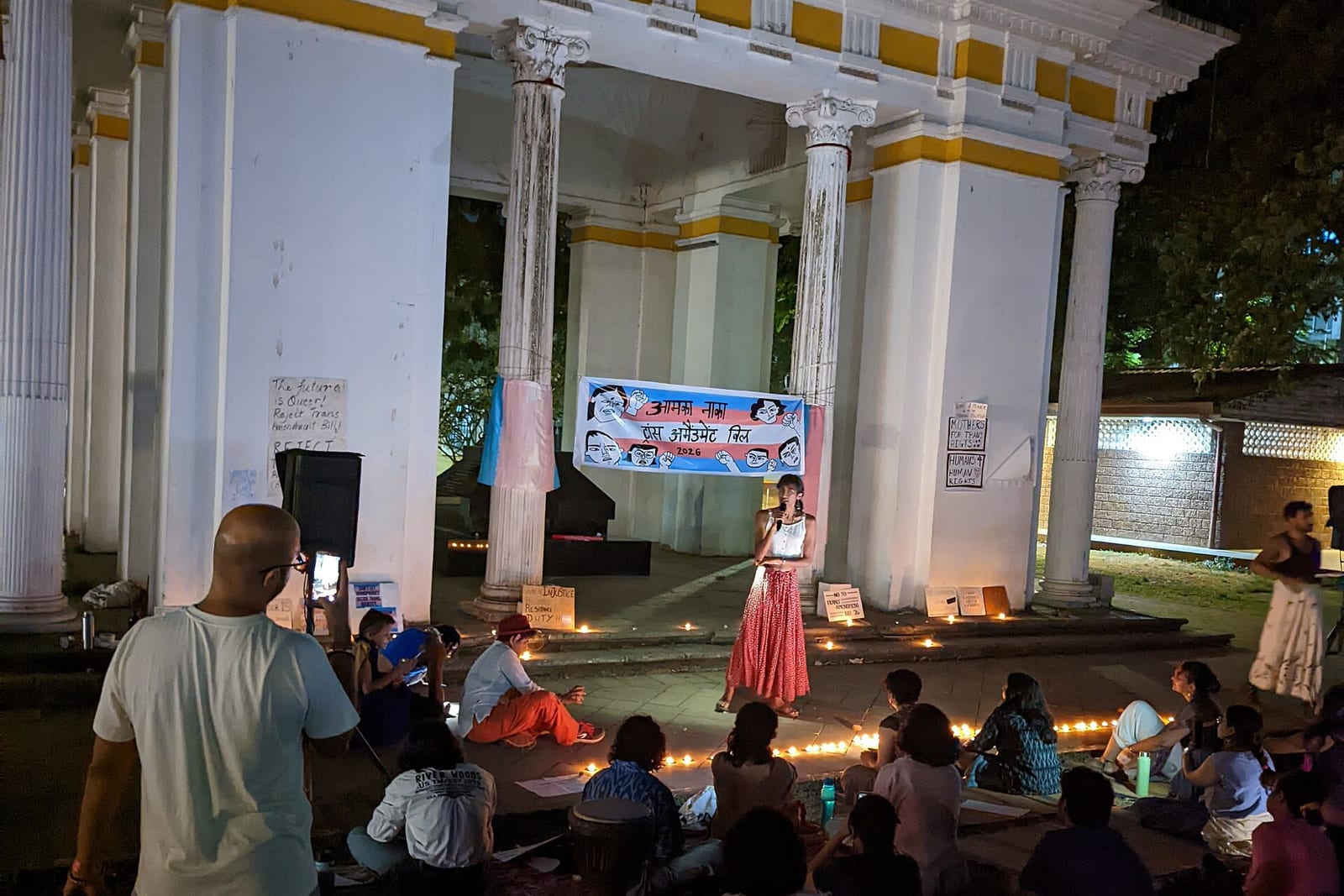
Ninety-four years later, on March 30, 2026, President Droupadi Murmu gave assent to the Transgender Persons (Protection of Rights) Amendment Act, 2026 — a bill introduced in the Lok Sabha on March 13 and pushed through both houses in under two weeks. The 2019 law it amends had, after the Supreme Court’s 2014 NALSA v. Union of India ruling established a constitutional right to self-perceived gender identity, let a person apply for a transgender identity certificate on the strength of their own declaration. The 2026 Act deletes the statutory sentence that gave that declaration force — “a person recognised as transgender… shall have a right to self-perceived gender identity” — and has the District Magistrate issue a certificate only “after examining the recommendation of the authority”, a medical board headed by a Chief Medical Officer or Deputy CMO, the Act’s text shows. A hospital that performs gender-change surgery must send the patient’s details to the District Magistrate and the board. And the Act narrows who is covered at all: its new definition names socio-cultural identities such as kinner, hijra, aravani and jogta, people with intersex variations, and people compelled to assume a transgender identity, and it excludes “self-perceived sexual identities”. A right the state had recognised as residing in a person’s own declaration now depends, by statute, on a medical board’s recommendation instead.
The two denials are the same in kind. In 1932 and again in 2026, the state took from a marginalised group the power to declare who it is, and handed that power to an outside authority.
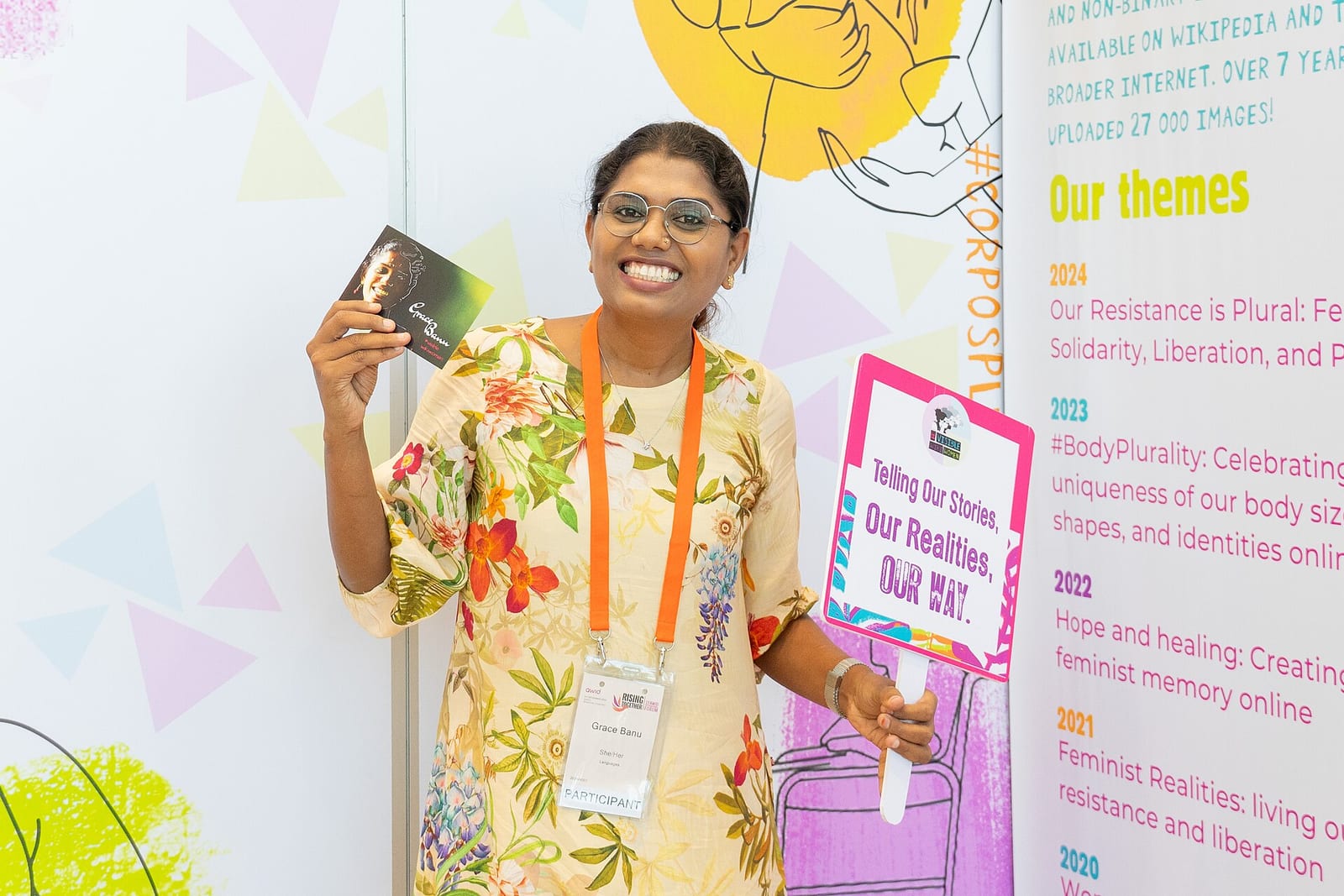
Akkai Padmashali, a trans rights activist, put the shift in the plainest possible terms:
“This new bill criminalizes us and disrespects our right to exist.”
i
CC BY-SA 2.0Original on Wikimedia CommonsCritics point to the new offences. The Act adds offences for compelling a person to assume a transgender identity “by force, allurement, deceit, undue influence or otherwise”, punishable, where an adult is kidnapped and seriously injured, by ten years to life in prison, and where the victim is a child by life imprisonment and a fine of at least Rs 500,000 (about US$6,000), the Act says. The People’s Union for Civil Liberties (PUCL), a civil-liberties group, warned that “the broad wordings of the section, enable its misuse against any person supporting a transgender person in their attempt to undergo sex change / reassignment procedures or to outwardly present themselves as transgender.” Human Rights Watch urged the President not to sign the bill and the government to consult transgender communities; after assent, Amnesty International called for its implementation to be “halted, and the law revisited through genuine, inclusive consultation.” A petition filed at the Supreme Court by Laxmi Narayan Tripathi on April 24 argues the deleted self-determination clause was not a policy preference but a constitutional floor set by NALSA itself, and that removing it violates Articles 14, 15, 19, and 21. The Court declined to stay the Act but referred the constitutional question to a three-judge bench, and in June, on the federal government’s request to move the High Court challenges to itself, stayed those cases, indicating that it may examine the challenge itself to avoid conflicting decisions from different High Courts, LawBeat reported. The Act comes into force on a date the federal government notifies, its text says. As of this writing, the challenge is unresolved.
The sharpest response to the Act came in a statement by the DBA (Dalit, Bahujan and Adivasi) Trans Queer Panthers National Network. The network did not frame the Act only as an attack on gender self-determination in isolation. They named the pattern it belongs to directly, in a passage reproduced by AWID, the international feminist network:
“We see this denial of the principle of self-determination in conjunction with the historic denial of separate electorates for Dalits, the violent suppression of Adivasi resistance to developmentalist violence in India’s heartland, penalizing religious conversion, the arbitrary revocation of Article 370, the racial marginalization of India’s north-east, the weakening of federalism and the linguistic imposition of Hindi. In doing so, we call for a broader struggle for self-determination that takes the trans experience at its centre but also engages at multiple fronts.”
That is not a rhetorical flourish borrowing caste’s moral authority for a separate cause. It is a precise structural claim, and it holds up against the Poona Pact comparison on its own terms. In both cases, a state (colonial in 1932, elected in 2026) faced a demand that a marginalised group be allowed to define its own membership and answer for itself who belongs inside a protected category. In both cases, the state’s answer was to substitute an external authority, the general electorate then, a medical board now, for the group’s own declaration, while preserving the appearance of continued recognition: reserved seats still existed after 1932; transgender identity certificates still exist after 2026. What was actually removed both times was narrower and more consequential than the headline protection: the right to be the one who decides. The DBA network’s statement makes the claim that follows: that a Dalit trans person’s stake in this Act is not divided loyalty between two movements, but one continuous argument about who gets to hold the pen that defines them.
The counterargument deserves stating plainly, because it is not frivolous: gender identity and caste status are not interchangeable categories, self-perceived gender and inherited caste rest on different claims about what a person is, and collapsing every denial of self-determination into a single undifferentiated grievance can blur distinctions that matter for building an actual legal remedy. A medical board’s power to certify gender is a different instrument than a general electorate’s power to out-vote a reserved-seat candidate, and the specific harms of each need their own specific fix. But naming a shared mechanism is not the same claim as declaring the harms identical, and the DBA network’s statement doesn’t make the stronger claim. It draws a line to a mechanism, a state deciding it will not simply take a marginalised group’s word for its own membership, and asks other movements built on that same mechanism’s history to recognise it here. Ambedkar recognised an oppression’s shape across a national divide in 1946, comparing caste to Jim Crow-era race, without claiming the two systems’ machinery would fail in the same place (see “Ambedkar Compared Caste to Race in 1946” for that argument in full). The DBA network is doing the same work across a smaller distance: not race and caste on two continents, but two denials of self-determination on the same soil, ninety-four years apart.
What would show this argument was heard rather than merely noted is specifiable. Whether Dalit and Bahujan organisations that have spent decades defending reservation and reserved-seat representation take up the trans self-determination fight as their own, not as a favour owed to an ally but as the same argument in a different register. Whether the three-judge bench, when it finally rules, engages the self-determination question as the constitutional floor NALSA set, rather than as a policy question Parliament is free to redraw. And whether the next iteration of this fight, whichever community brings it, gets to define its own membership before a court decides that someone else should. Ninety-four years is a long time for the same argument to keep needing to be made. The DBA network’s statement is, among other things, a record of how long the mechanism has outlasted any single fight against it.
_Amendment_Bill,_2026_in_Goa.jpg)