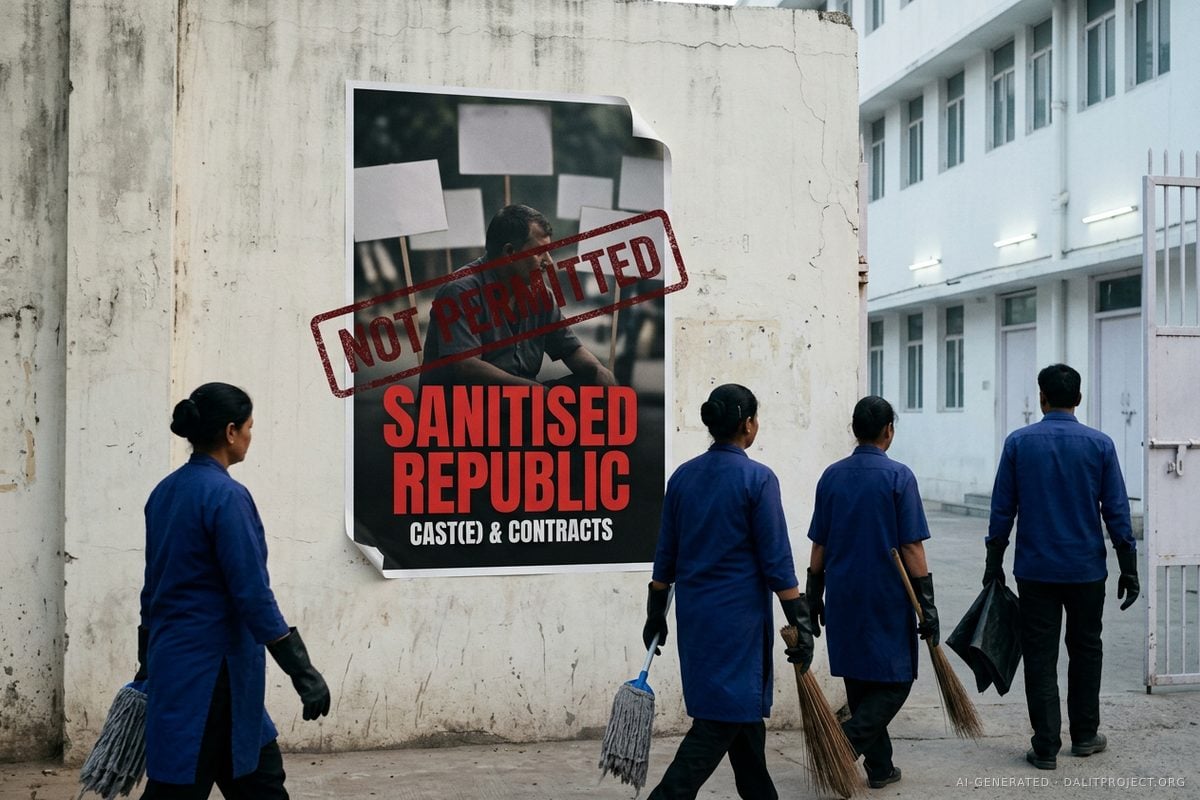
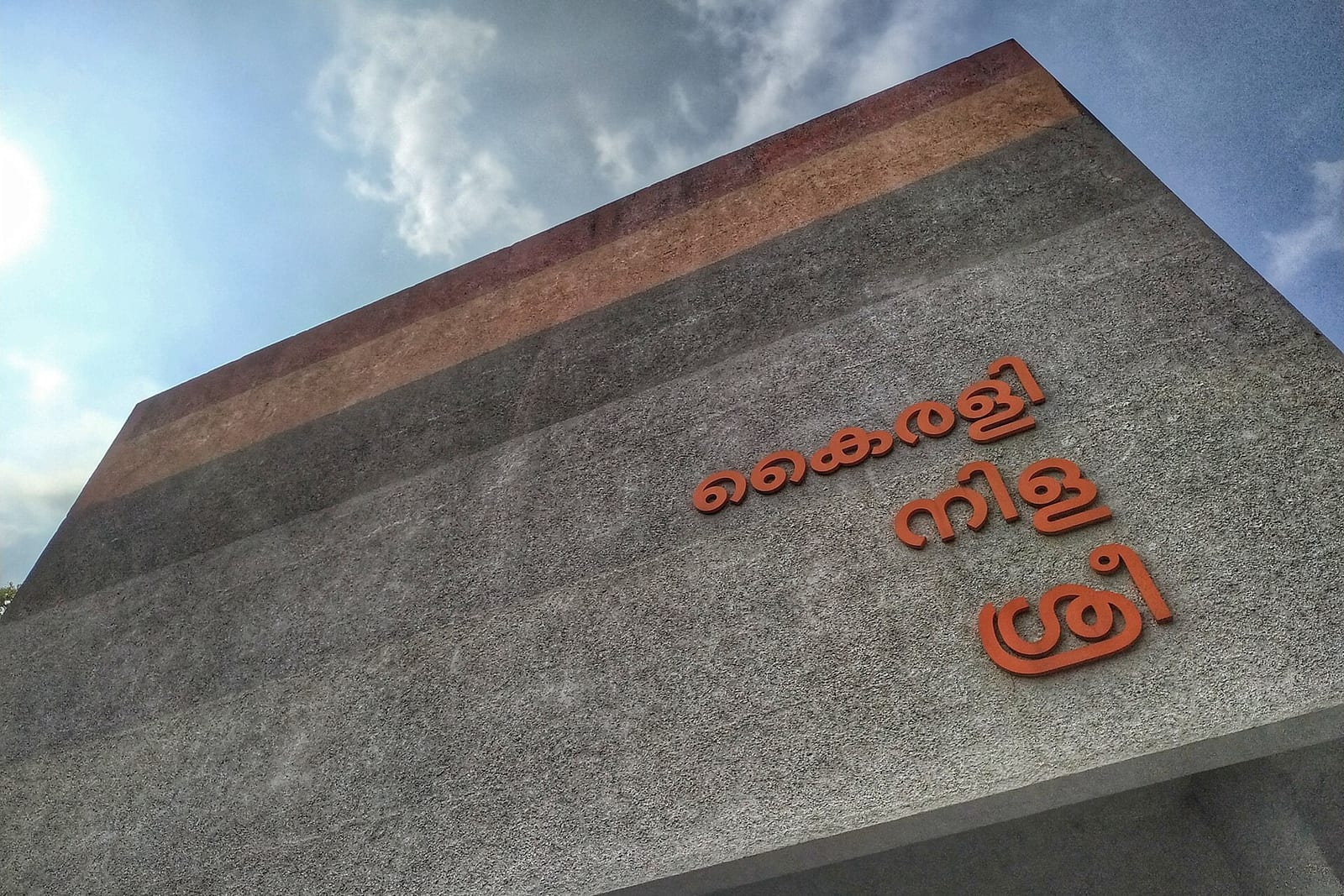
On the festival’s first weekend, filmmakers whose work had been selected for the documentary festival of Kerala, in southern India, gathered at the Kairali Theatre complex in Thiruvananthapuram, the state capital, dressed in black. They had come to ask the festival’s organisers whether the jury would at least be allowed to watch their films in private, The News Minute reported. Two of them, Afiya Khalid and Rizwan Rahman, had made Sanitised Republic: Cast(e) & Contracts, a short documentary about the contract sanitation workers of two Delhi hospitals.
“This is the third film festival for which our film has been denied permission for screening, because of the same objections by the Union Ministry,” Khalid told The News Minute. The Union Ministry is India’s federal Ministry of Information and Broadcasting, which decides whether a film that hasn’t been certified for cinemas can be shown at a festival.
The directors made the cuts the Ministry asked for. Nobody in government has said why their film, or the seven others still barred, still can’t be seen. That is the point. A film about the people India’s caste order assigns to clean its hospitals has lost three festival audiences to a decision that comes with no stated reason, and too late to challenge in court before this festival closes.
What the film shows
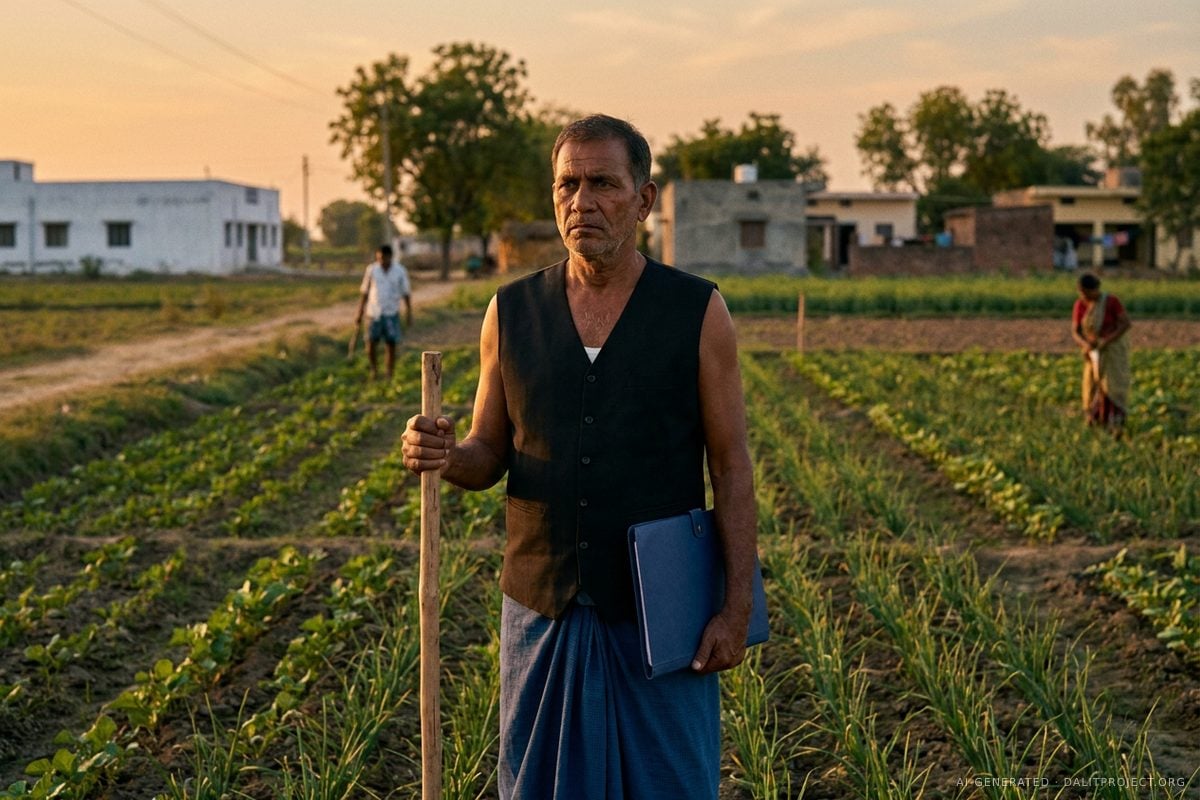
Sanitised Republic runs about 19 and a half minutes. It follows sanitation workers at Kalawati Saran Children’s Hospital and Lady Hardinge Medical College in Delhi, many of them from Dalit and other marginalised communities, through the Covid-19 pandemic, and asks how caste shapes who does this work and on what terms, The Mooknayak reported. The workers were promised permanent jobs during the pandemic and were later laid off, according to The News Minute.
The layoffs are on the record. About 357 contract sanitation workers were retrenched across the Lady Hardinge hospital complex in 2022, many after more than a decade there, the All India Central Council of Trade Unions (AICCTU), the federation behind their union, reported. The hospital’s administration fired workers at the start of June 2022, days after an interim order of 31 May from the Delhi High Court, the high court for India’s capital territory, barred the hospital from terminating the workers who had petitioned it, SabrangIndia reported. The hospital said it had complied with the court’s orders and that any lapse lay with the contractor, the outlet reported.
What the Ministry asked for
The Ministry’s objection has shifted, the directors say. Officials first objected to the film’s use of audio from Prime Minister Narendra Modi’s announcement of the national lockdown, then to “specific references” to the Prime Minister, they told The Mooknayak. “They wanted us to cut a few references to the Prime Minister of India. We cut them and sent the film again. They asked us to further cut down some references, and we did that too,” Khalid told The News Minute. “Even after that we didn’t get an exemption order.”
“If there is a specific concern with the subject matter and issues raised, we believe that filmmakers should be told what that concern is,” Khalid and Rahman said in a statement quoted by The Mooknayak. Without the exemption, the Durgapur Film Festival, in the eastern state of West Bengal, and the Ritu Rangam Film Festival also turned the film away, the outlet reported. The film has had no official premiere and isn’t available online, it added.
How a festival loses a film
India’s Cinematograph Act of 1952 requires films to be certified before they are shown in public. Section 9 lets the federal government exempt films from that rule for festival screenings, Outlook reported. The Kerala State Chalachitra Academy, which runs the International Documentary and Short Film Festival of Kerala (IDSFFK), sent the Ministry 347 films. The Ministry asked for screeners and synopses of 40, then refused 31, The News Minute reported on 20 September. Eighteen were from the festival’s official selection.
“Neither has the ministry stated reasons for not granting permission nor has it said that it is denying permission. It has only sent us the list of films that have been granted permission,” P.C. Vishnunadh, Kerala’s minister for tourism, culture and cinema, said in a statement, Outlook reported.
i
CC BY-SA 3.0Original on Wikimedia CommonsAfter Kerala’s government wrote to the Ministry, it cleared 23 of the 31, The News Minute reported on 26 September. It gave no reasons for the eight it did not clear. Five of them are in competition, Onmanorama reported: Sanitised Republic, Parliament Street, Redlight to Limelight, In Search of Buddha and The Mali and the Parasite. The last follows Adivasi (Indigenous) and Dalit communities in Odisha, in eastern India, resisting displacement by the company Vedanta Limited, according to The News Minute. The courts were closed for the weekend, so the filmmakers could not get a ruling in time for a screening before the festival ended, according to The News Minute.
Why a film about sanitation work matters here
In India, cleaning is not work that anyone might happen to do. It is work the caste order assigns to Dalits, the communities once branded “untouchable”. It is also, more and more, contract work: in Ahmedabad and Surat, two cities in the western state of Gujarat, contract sanitation workers were often paid as little as a quarter of what permanent workers earn, the Centre for Labour Research and Action found, writes Anamika Singh in India Development Review.
92% of the 54,574 sewer and septic-tank workers in towns and cities verified under NAMASTE, the federal scheme for sanitation workers, belong to Scheduled Caste, Scheduled Tribe or Other Backward Class communities: 67.9% Scheduled Caste, 15.7% Other Backward Class and 8.3% Scheduled Tribe. Source: Ministry of Social Justice and Empowerment, answer to Lok Sabha Unstarred Question 3453, 17 December 2024. The same answer said the work “is an occupation based activity rather than caste based”.
Bezwada Wilson, who was born into a Dalit family that had done manual scavenging for generations and founded the Safai Karmachari Andolan, the movement against it, has described what he took from reading B.R. Ambedkar, the Dalit jurist who led the drafting of India’s Constitution:
“We are not scavengers because we are poor, weak, or illiterate, or because we have chosen to be scavengers. It is because somebody else has made us scavengers.”
— Bezwada Wilson, founder of the Safai Karmachari Andolan, recalling Ambedkar’s writing, interviewed by India Development Review, January 2020
AICCTU, the federation the hospital workers’ union belongs to, put it plainly in July 2022: “Forced into a caste ordained profession, the sanitation workers are being systematically denied their rights,” it wrote of the Lady Hardinge retrenchments.
That summer, as the workers protested their dismissal, Sevak Ram, general secretary of their union, said there were “attempts of pushing them away from the public eye”, Workers Unity reported. Four years later, the film that records them is being kept from its audience.
Somnath Waghmare, a Dalit documentary filmmaker, has asked why films on caste are made to go quiet. “Dalit movement explicitly states it’s not against brahmins. It’s against brahminism,” he said of films told to remove explicit caste references. “Who is afraid of showing 100-year-old customs? If they aren’t guilty themselves, why are they afraid?” He was speaking to Outlook in May 2025, not about this film.
The case for the Ministry, and why it isn’t enough
The strongest defence of the Ministry is that it cleared most of what it was asked about. Of the 347 films the Academy submitted, it held back 31 and has since cleared 23 of those. It has also denied withholding permission: it said six films had been asked for more detailed synopses and that, depending on their subject matter, some had been referred to “various sectoral authorities” for review, Outlook reported. By the directors’ own account, its stated objection to Sanitised Republic was to references to the Prime Minister, not to caste or to sanitation work. The same thing happened at the International Film Festival of Kerala (IFFK), the state’s main film festival, in December 2025: 19 films were first denied exemption, and 13 were cleared after Kerala’s government wrote to the Ministry, The News Minute reported. On that reading, this is routine gatekeeping, not a campaign against films about caste.
That reading doesn’t hold up. The filmmakers made the cuts they were asked for and still weren’t cleared. The Ministry has given no reason for the eight films it kept back, so neither the festival, nor its jury, nor the public can test whether the reason is about a prime minister’s voice or about what the film shows. Whatever the intent, the effect falls on the workers the film is about: a record of people pushed out of their jobs and away from the public eye doesn’t reach the public. Government has kept a film on caste from a festival audience this way before. In 2015 the same ministry refused a screening exemption for Caste on the Menu Card, a student documentary on beef-eating and caste in Mumbai, at Delhi’s Jeevika documentary festival; an official said only that “adequate information had not been provided about the film”, Business Standard reported.
What to watch
- The awards. Five filmmakers whose films were screened, among them Ameya Gore, Kamal K M and Shijin Govind, say they will refuse any IDSFFK award in solidarity. “I don’t want to collect the trophy by climbing on the people who have been denied a screening here,” Gore told Onmanorama. The festival closes on 30 September.
- A reason. Whether the Ministry explains why the eight films were refused, and whether any of the filmmakers go to court once the courts reopen.
- Other screens. Whether Sanitised Republic is shown anywhere else. Online, documentaries now count as “online curated content” under India’s newer IT rules, the directors say, a category that brings them under state oversight, The Mooknayak reported.
In 2022, the workers in the film went to court to keep their jobs and won an interim order that, their union said that summer, had not been carried out. In 2026, the filmmakers in black at the Kairali Theatre asked for an explanation, and for the jury at least to watch the film about them. They have been given no reason for the refusal that still stands.