The boy had written verses in praise of the poet. In Vinukonda, a town in the southern Indian state now called Andhra Pradesh, Kopparapu Subbaraya was giving a performance of ashukavitvam, verse composed on the spot, and Gurram Jashuva, still a child, wanted to hand him a page of his own poems. He hovered near the crowd with no way to reach the poet, until a Brahmin friend took him by the hand and led him through. The visiting poet read the paper and smiled.
Then, as Jashuva tells it decades later in Naa Katha (My Story), his autobiography in verse, the audience turned. “‘How did this wretch, this low-born one, push his way into the assembly?’ they muttered among themselves, and all at once ten of the audience rose and walked out in a fury,” he wrote (our translation from the Telugu). His friend bowed his head and slipped away. “I went into my house,” Jashuva wrote, “like a man who has committed a vile crime.”
Jashuva was a Dalit, born into the communities once branded “untouchable” under South Asia’s caste order. The poet the audience refused to sit with became, within his lifetime, one of the most decorated writers in Telugu, the language of Andhra Pradesh and Telangana. He took the metres of classical Telugu verse, which Brahmin pandits treated as their own, and made them carry the lives of people those pandits would not touch. The historian Chinnaiah Jangam, who translated his best-known poem into English, titled his 2014 study of the poet “The Making of Gurram Jashua – the Father of Dalit Literature in Telegu”.
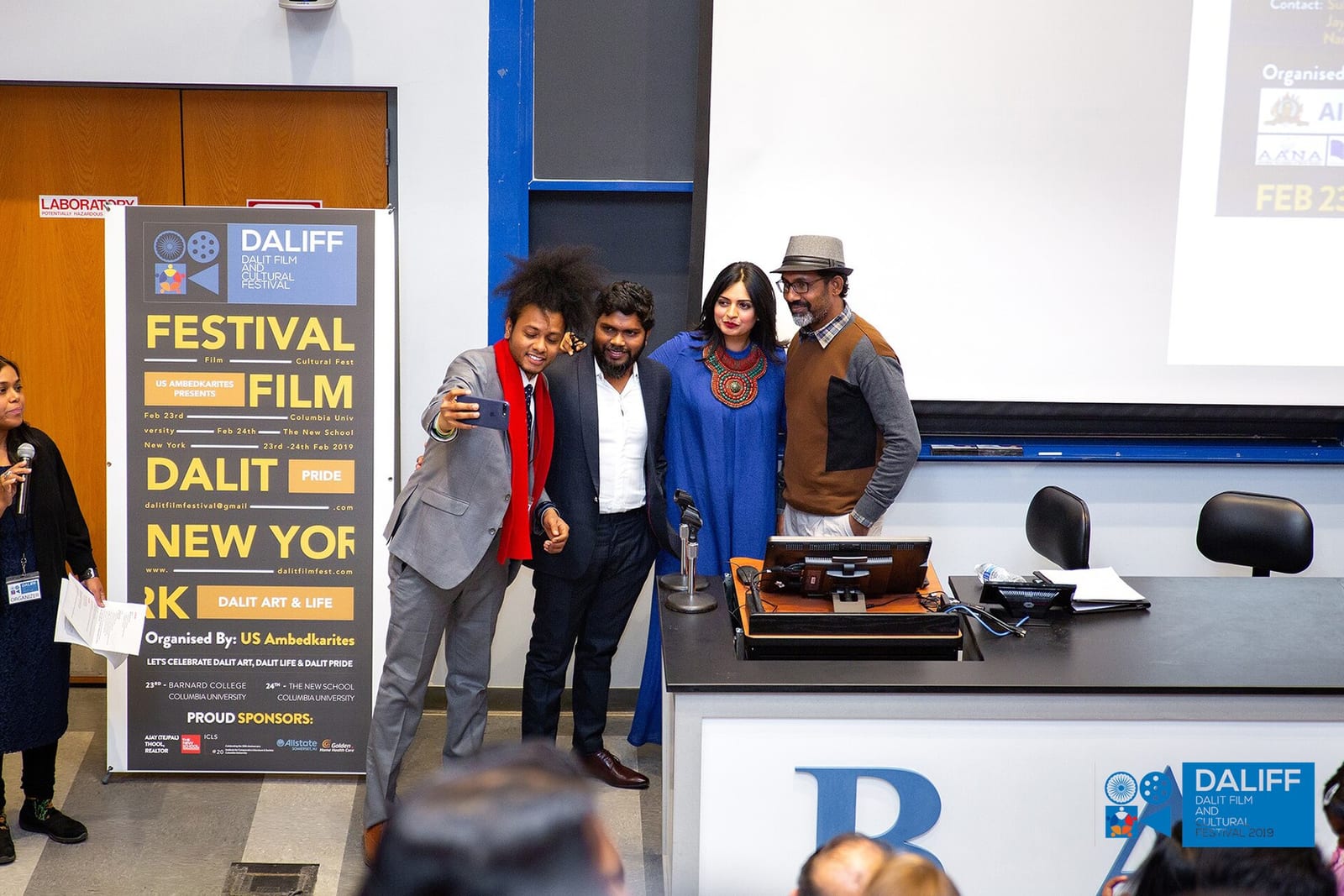
He is still being claimed. On 28 September 2026, the 131st anniversary of his birth, Andhra Pradesh’s culture minister, Kandula Durgesh, laid flowers at his portrait in Vijayawada, a city on the Krishna river, and handed out awards in his name, calling him “a rare people’s poet”. Two days earlier, in Ongole, a town on the state’s coast, the Telugu Dalit People Cultural Association held a Dalit cultural and literary festival for the anniversary, with Pradeep Aglawe, described by the Hans India as a co-founder of the Dalit Panthers movement, the radical Dalit movement of the 1970s, giving the keynote. The state honours a national laureate. The Dalit groups honour a poet of their own.
“Two teachers”
Jashuva was born on 28 September 1895 in Vinukonda, then in Guntur district and now in Palnadu district. His mother, Lingamma, was Madiga, a community listed among India’s Scheduled Castes, the official schedule of Dalit communities. His father, Veeraiah, was a Yadava, from the community also called Golla. Theirs was an inter-caste marriage, and The News Minute writes that he grew up with “alienation due to his parents’ inter-caste marriage” as well as poverty. Jangam writes that the marriage cut the family off from the extended kin who might have given them “some economic footing to look beyond survival”.
Jashuva and his brother were brought up as Christians. In Naa Katha he greets his father as “a devout man who believed in Christ, who walked whatever road my Christ pointed him to, who spoke day and night of the meaning of scripture: Veerayya, a citizen of this town, my dear father” (our translation).
School taught him what his birth meant. The Hans India reports that teachers and classmates insulted him because of his caste, and that when boys from dominant castes mocked the name of his caste, he turned and fought them. Naa Katha gives one such day. Walking down a street in the town, he wrote, he met boys from the merchant and Brahmin castes, who saw him, said “don’t touch”, and stepped back; he struck three or four of them. He went home crying and told his mother. “My son, this is a terrible country; the divisions of varna have built their nests here,” she said, in his telling. “For the panchama people, food is gone, humanity is gone, life itself is gone.” Panchama, “the fifth”, was a name for those placed outside the four varnas, the ranks of the caste order. “The gods here grant no boons to the panchama people,” she went on. “They do not accept their prayers. The Lord Jesus alone is their refuge” (our translation).
He later summed up his education in a line that admirers still repeat. The Hans India gives it as: “I have two teachers – poverty and caste discrimination. One taught me patience, while the other taught me courage to rebel.”
A working life
He married in 1910, at 15, and took a job at a mission school for Rs 3 a month. In 1915 and 1916 he worked in Rajahmundry, a town on the Godavari river, as a narrator for silent films, sitting by the screen and speaking the story and the dialogue as the pictures ran. He then taught for about ten years at a teacher-training centre run by the Lutheran Church in Guntur, a city in central Andhra Pradesh, and from 1928 to 1942 he was the Telugu pandit, the language teacher, at a high school there. He earned the diploma of Ubhaya Bhasha Praveena, a scholar of two languages, Telugu and Sanskrit.
From 1942 to 1945 he worked for the colonial government’s National War campaign during the Second World War. From 1957 to 1959 he was a producer at the radio station in Madras, now Chennai. In 1964 he was nominated to the Andhra Pradesh Legislative Council, the state’s upper house. He died in Guntur on 24 July 1971.
All the while he wrote. Counts vary: the Hans India has given 30 books across lyric poetry, long poems and plays, and elsewhere 36; Jangam puts it at nearly fifty.
The work beyond Gabbilam
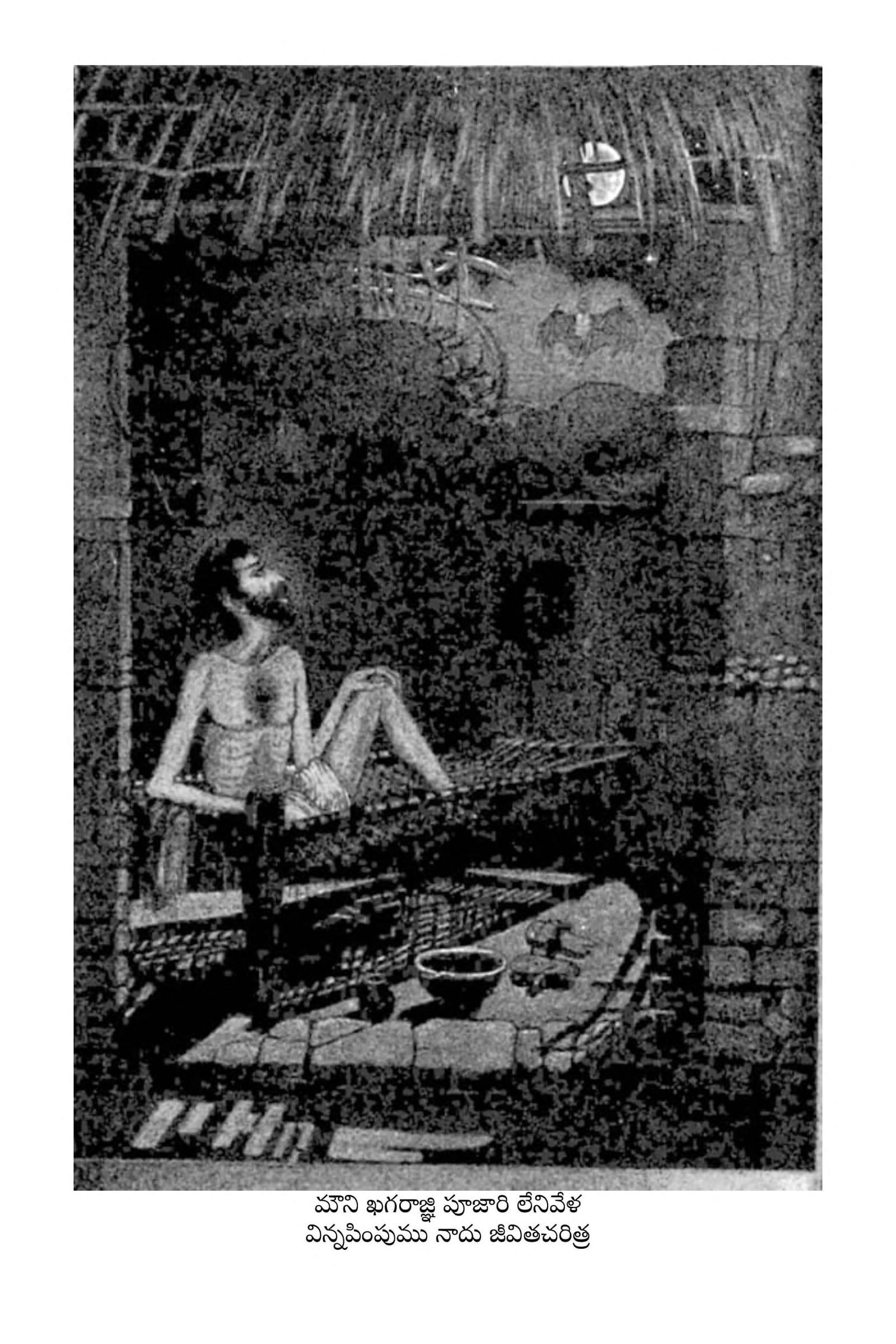
Most readers know him for one poem. Gabbilam (The Bat), published in 1941, recasts Kalidasa’s Sanskrit classic Meghaduta (The Cloud Messenger). In Kalidasa’s poem a yaksha, a demigod parted from his beloved, sends a cloud with a message of love. Jashuva’s Dalit hero, barred from the temple, sends a bat, in Jashuva’s words “a regular visitor to the homes of the despised”, with a message of suffering to the god Shiva. “The protagonist in Meghaduta was sentenced to one year,” Jashuva wrote in his preface, in Jangam’s translation, “but my hero was sentenced from birth.” Jangam’s English version, Gabbilam: A Dalit Epic (Yoda Press), won the Association for Asian Studies’ A.K. Ramanujan Book Prize for Translation in 2024. Our review of Gabbilam weighs its anger against its faith in Gandhi’s coming nation.
“Most people have only heard of Gabbilam, but his work is very wide-ranging,” Rajesh Patchala, a PhD scholar who started a readers’ club for the poet, told The News Minute in 2019.
Firdausi tells the story of the Persian poet and the ruler Mahmud of Ghazni, who promised a gold coin for each verse of the epic he commissioned and then, swayed by jealous courtiers, offered only silver. It is a poem about a court that takes a poet’s labour and cheats him of its worth. With Mumtaz Mahal, Jangam writes, it explored “injustice, suffering, and the anguish of losing loved ones”. Firdausi and Gabbilam are, the Hans India wrote in 2013, the favourite books of many Telugu readers of poetry.
The list runs on: Swapnakatha (A Dream Story), Anadha (The Orphan), Kandiseekudu (The Refugee), Netaji, Bapuji, which he wrote in 1948 after hearing of Mahatma Gandhi’s death, Kottalokam (A New World), Musafirulu (Travellers), Nagarjuna Sagar, Kreestu Charitra (The Life of Christ), and Naa Katha, in three parts. His verses on the cremation ground were taken into the popular mythological play Satya Harishchandra.
He could also be playful. In Gijigadu, a poem about the weaverbird, he tells the bird it builds a hanging, swing-like house that no human could make. The poet and critic Gunturu Lakshminarasaiah told The News Minute that Jashuva wrote padyams, metrical verse, but “used modern poetic techniques”, making an ordinary thing look new.
What joined all of it, Jangam argues, was a method. Classical Telugu literature, he writes, centred on “imaginary romance or the retelling of Brahminical puranic and epic stories”, the puranas being Hindu sacred narratives. Jashuva kept the classical form and changed what it was for: he “inserted social purpose into the classical genre by adding the authenticity of Dalit experience”. He mixed the archaic literary language with gramya, the everyday speech of ordinary people, once considered too coarse for poetry. “He made it impossible for the classical elites to ignore him by choosing the poetic form,” Jangam writes. His poems were sung in village theatres “and became people’s songs”.
In his own words
Naa Katha opens with a prose note in which Jashuva, by then nearly forty years into what he called his work in language, explains why he wrote it (our translations, from the Telugu text in the collected edition of his works). Many autobiographers, he says, write in old age, set down only the lofty episodes that suit their rank, and hide the truth; the great ones, such as Gandhi, Nehru and Tagore, record their lives as they were. He was not writing, he says, in hope of joining that list.
He describes his poetry as an instrument. As a child, he wrote, the veenas that famous Andhra poets played drew him in, and he decided he would play one too. Strings broke along the way, he wrote, but he never lost heart:
“I got one. Not a veena: a sitar. That is my poetry. I am playing it still. It was heard by the people, not by the lords. … The world looked at me sidelong, askance. It neglected me. It dishonoured me. It honoured me. It pushed me away. It drew me close.”
— Gurram Jashuva, Naa Katha (our translation)
i
CC BY-SA 4.0Original on Wikimedia CommonsHe wrote about his town without nostalgia. The first section of Naa Katha greets Vinukonda as “the mother who saw me and raised me, and planted poetry in me”, and he promises not to forget it even if it forgets him. Then he asks it a question: “The poor and the wretched, who must answer when called by names that carry no respect, ‘Madigas’ and ‘Malas’: are they happy, city of Vinukonda?” The Malas are another of the region’s Dalit communities.
In his own telling, the honours came to the same son of Veerayya and Lingamamba. “I, a poet, rode in procession on a scented elephant and wore the anklet of honour on my foot, as all looked on in praise,” he wrote. Jangam records the same honour: the poet Challapalli Venkata Kavi put a golden anklet, a gandapenderam, on Jashuva’s foot and had him carried through the streets on an elephant.
The church and the temple
By his own account, the church that raised him did not treat him as an equal either. In Naa Katha he says he read the Bible in church many times, wore the mark of baptism “like everyone else”, and “prayed, head bowed in devotion, longing for an end to untouchability”. Then he saw the gap between what was preached and what was done. “‘We are brothers,’ the padres teach everyone, and in life they keep their distance. ‘Is this dharma?’ I argued, many times, without fear,” he wrote. “Their only answer was to glare at me and tell me to keep quiet.” A few verses on he asks: “What use is empty learning without equality? What use ten thousand religions? What use a hundred vows?” (our translations).
The quarrel ran the other way too. The Hans India writes that he faced discrimination from dominant-caste Hindus for being Dalit, and from Christian priests for writing on stories from Hindu mythology. The work that won him his national prize, Kreestu Charitra, is a life of Christ. The same column says he moved slowly towards rationalism. His third daughter, Hemalatha, raised a Christian, married Lavanam, son of the atheist Goparaju Ramachandra Rao, known as Gora, at Gandhi’s ashram in Sevagram, in central India, in 1960.
He refused to be filed under any one heading. When people pointed to his caste, The News Minute reports, he answered that he was a “cosmopolitan human” whom no one could bind by caste or religion.
Laurels from the establishment
The literary world that had walked out on him came round, on its own terms. Sahitya Akademi, India’s national academy of letters, lists its 1964 Telugu award as Kreestu Charitra (Poetry), by “G. Joshua”. The Government of India gave him the Padma Bhushan, one of its highest civilian honours, in 1970. Andhra University gave him the honorary doctorate Kala Prapoorna.
The titles piled up: Kavi Kokila (the poet-cuckoo), Kavitha Visharada, Kavidiggaja, Madhura Srinadha, Vishwa Kavi (universal poet), and Navayuga Kavi Chakravarthi, emperor of poets of the new age. The Hans India’s 2013 account says the dominant castes “who boycotted him in the beginning” came to call him Maha Kavi, the great poet, and that contemporaries such as Vishwanatha Satyanarayana paid him tribute.
Jangam reads the same names differently. Jashuva’s work, he writes, “forced” the celebrated writers of classical Telugu “to not only recognize him but also honor him”. And he sets Jashuva against the man the Hans India lists among his admirers: “His contemporaries like Vishwanatha Satyanarayana wrote eulogies to Brahminism and upheld caste inequality as dharma.”
What critics argue over
The first argument is about his politics. Jangam writes that Jashuva “maintained a cautious distance from active politics”, “never joined any political organizations and did not attend nationalist Dalit or caste Hindu organized meetings”. He wrote Bapuji for Gandhi and Netaji, named for the nationalist leader Subhas Chandra Bose, and worked for the colonial war campaign. To readers who want a movement poet, that can look like a reformer working within the system. Jangam rejects the reading. Jashuva’s distance, he argues, came partly from “his precarious life riddled with financial strife” and partly from “his uncompromising critical bent of mind”, and “that does not mean he was an apolitical person. On the contrary, he was channeling the age old history of Dalit resistance through poetic imagination.”
Others say he was ahead of the politics around him. “Back when everyone around him was steeped in nationalist ideals and talked about freedom from colonial rule, Jashuva wrote about equally prioritising freedom from caste society,” Yembadi Eeshwar, a lecturer at the Government Degree College in Porumamilla, said at the 2019 anniversary gathering. Eeshwar warned that his work needed protecting from “brahminisation”, from being read in ways that strip out its context.
The second argument is about the record. He is often called the first Dalit poet in Telugu, and Jangam says plainly that he was not. “Historically Jashuva was not the first Dalit writer in Telugu,” he writes, naming Kusuma Dharma, Jala Rangaswamy, Nakka Chinavenkayya, Bhoi Bhemanna and others who wrote before him about the suffering of Dalits and “the hypocritical behavior of caste Hindus”. Their work, Jangam writes, was “made invisible in the course of history”. Jashuva’s choice of the classical form is what made his work impossible to bury.
The third argument is about faith, and it is still open. He was a Christian whose church’s priests rebuffed him and, the Hans India writes, discriminated against him for writing on Hindu mythology. He won his national prize for a life of Christ, and ended, in the same account, near rationalism. That makes him hard to claim for any one tradition.
Statues and tongues
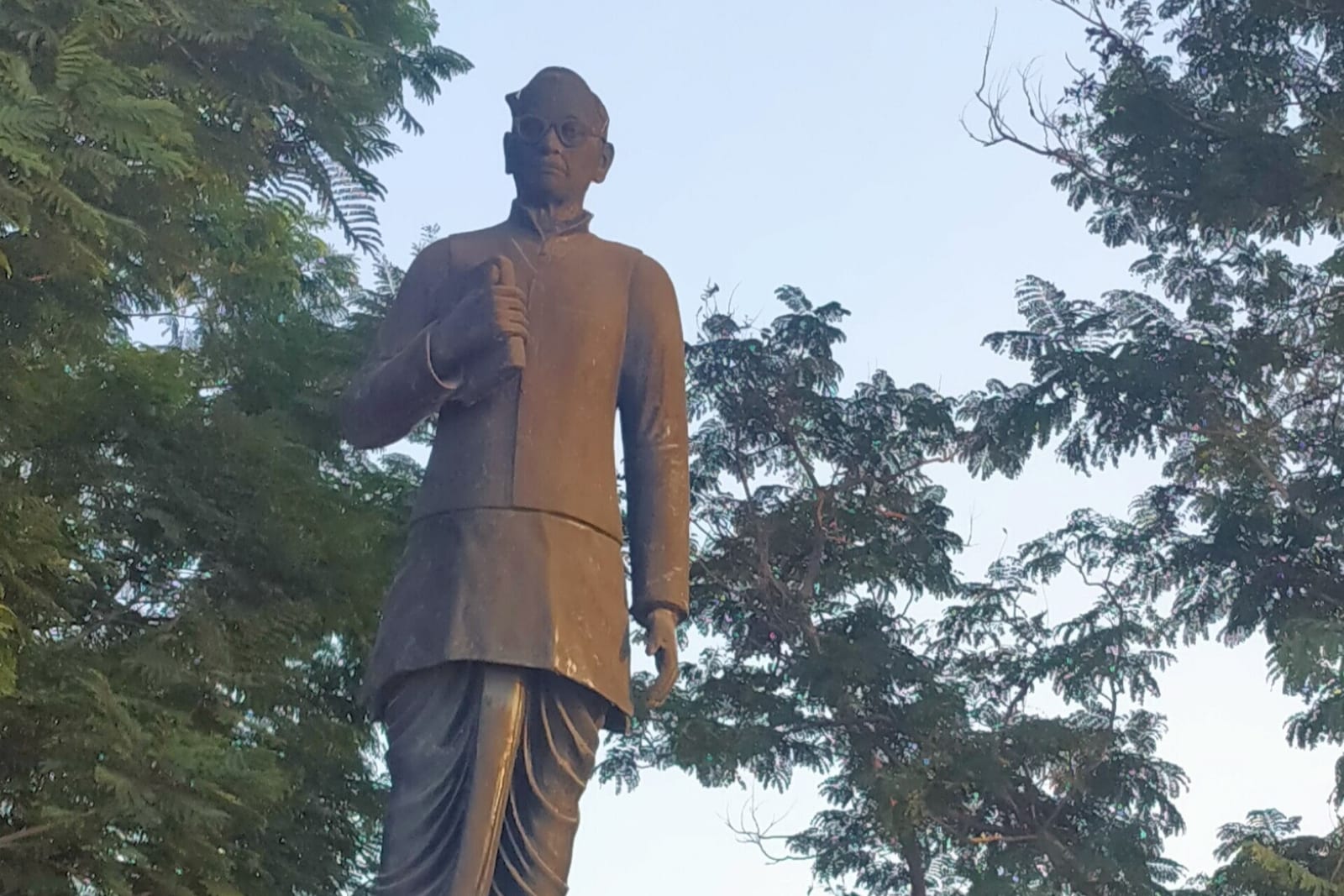
State governments have claimed him year after year. In July 2020 the state’s education minister garlanded his statue at Nagarampalem in Guntur and, the Hans India reported, announced Rs 30 million for a Gurram Jashuva auditorium in the city. At the same event Dokka Manikya Vara Prasad, a member of the Legislative Council and chairman of the Gurram Jashuva Kalapeetham, asked the government to name the planned Narasaraopet district after the poet. Vinukonda now sits in Palnadu district. Two months later the ruling party announced a Gurram Jashuva art gallery for Guntur and promised to develop his tomb as a memorial. The Jashuva Research Centre of the Telugu Akademi, the state’s Telugu language academy, has given awards in his name since about 2010; in 2013 its seven awardees included the writers Kolakaluri Swaroopa Rani and Kaluva Mallaiah.
Away from the podiums, the memory is more fragile. At the 2019 anniversary, his great-grandson Gurram Pawan Kumar told The News Minute that the Jashuva Kala Pranganam, an open-air theatre in Vinukonda, “lies neglected”, and that he had heard the government planned to raze it for a village secretariat, a local government office. “His legacy was slowly being erased in his own hometown,” The News Minute reported him lamenting.
The readers keep him by other means. Rajesh Patchala’s Gurram Jashuva Literary Fan Club grew in 2019 out of a Facebook post, and that year’s gathering, at the CSI (Church of South India) Conference Hall in Vijayawada, included a solo performance of Gabbilam by Inumula Venkateshwar Rao. In Ongole this September, the singer Santharao performed Jashuva’s poetry to a Dalit festival audience.
The poet Pasunuri Ravinder said in 2020 that Jashuva “used his pen as a weapon to fight the unequal caste society”, and that much of his work was still to be explored. Jashuva had his own view of how a poet survives. When a king dies, The News Minute paraphrases him, he lives on in stone busts; when a good poet dies, he lives on the tongues of the people.
The boy an assembly in Vinukonda walked out on now has statues in Guntur and Piduguralla. On the evidence of Ongole, he is also still on the tongues.