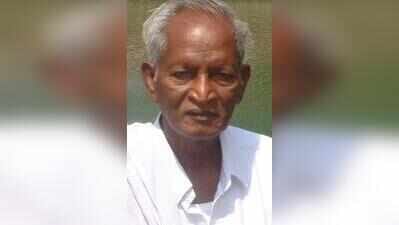
On 17 July 2026, A. Raju, an 89-year-old retired government schoolteacher, died in Kottapalayam, a village near the town of Thuraiyur in Tiruchirappalli district, in the southern Indian state of Tamil Nadu, Catholic Connect reported. He was Dalit, from the communities once branded “untouchable”, and Catholic. Twelve years earlier he had been one of five Dalit Christians who went to the civil court in Thuraiyur to win equal access to their parish’s cemetery. In August 2024 a District Munsif Court, a junior civil court, decreed that Dalit Catholics have equal rights to be buried there and that no obstruction should be permitted.
His body still waited nearly three days. Members of other Christian communities in the village objected, insisting that Dalits use the separate cemetery of St Sebastian’s Church, and Raju’s family kept his body at home while police were deployed, according to Catholic Connect. After nearly nine hours of talks at the office of the Musiri sub-collector, the senior revenue official for the area, he was buried in the common cemetery at about 1 a.m. on Monday 20 July. The officials, News Today reported, initially framed the burial “as a one-time exception”.
A decree is a right on paper. In Kottapalayam it did not enforce itself when it mattered, so a Dalit man’s place in the ground was settled by negotiation, as a concession. And the strongest criminal law India has against caste abuse, which the Madras High Court, Tamil Nadu’s highest court, said in February covers denying Dalits a public burial ground, was ruled out of reach of Dalit Christians by the Supreme Court in March.
What happened in Kottapalayam
The common cemetery is attached to St Mary Magdalene Church, a parish of the Roman Catholic Diocese of Kumbakonam that traces its origins to 16th-century Jesuit missions. It lies about 300 metres from Raju’s home, and no Dalit Christian had been buried there before, News Today reported. The 2014 suit was filed after dominant-caste Christians built a wall blocking Dalits’ entry, The News Minute reported. A year before Raju died, The News Minute reported that the wall was still standing.
The Bishop of Kumbakonam and the parish priest were among the defendants in that suit, and activists alleged that successive parish priests took no meaningful steps to implement the decree. The bishop, Jeevanandam Amalanathan, told Crux that the diocese had sided with the Dalit families. “We had talks three, four times, but they were not ready to listen,” he said of the dominant-caste parishioners. “We never supported the dominant group.” In the end, he said, “the civil authorities forced them and allowed the dead body to be buried in the common cemetery.” In July 2025 he had announced he would boycott the parish’s chariot procession in solidarity with Dalit protesters.
The settlement that buried Raju did not end the segregation, according to A. Kathir, executive director of the Tamil Nadu non-governmental organisation Evidence. He told reporters that a peace committee meeting on 19 July, at the office of the Musiri Revenue Divisional Officer (the area’s senior revenue official), directed the family to hold the funeral mass at St Sebastian’s, not St Mary Magdalene, and again mandated that Dalit Christians hold their masses at St Sebastian’s and bury their dead on the land set aside for them, LawBeat reported. His demand was short: “There should be a single mass, single burial and no discrimination in conducting the rituals.”
The mechanism: a parish run by subscription, and a plot of seven cents
About 40 times larger — the cemetery used by dominant-caste Christians in Kottapalayam (2.92 acres, about 1.2 hectares) compared with the plot left to Dalit Christians (seven cents, about 0.07 acres, under 300 square metres). Both sit on government-owned land. Source: A. Kathir of Evidence, via LawBeat.
Kathir’s figures, given in July 2026, show the scale. In early 2025 the petitioners’ lawyer, Franklin Caesar Thomas, gave different ones, 129,200 square feet against 8,800, still a ratio of more than 14 to one. Kathir also said the whole stretch is poramboke, or government land, which is why he argued that the arrangement cannot be dismissed as social custom: it is the denial, by caste, of a shared public resource.
The graveyard is the visible end of a wider exclusion. The Dalit families’ petition to the Supreme Court says they are kept off the parish council, made to use a separate funeral cart and not allowed to bring their dead into the main church for final prayers, as dominant-caste families do, The Mooknayak reported. At a protest in July 2025 they explained how the parish keeps them out of its decisions: it refuses their regular subscriptions, the payments that carry voting rights, and accepts only one-time donations. A parishioner named Mark told The News Minute that the parish would not collect their tax because they are Dalits, and that it keeps two graveyards, one for Dalits and one for caste Christians. Another put the logic plainly: “Once we pay a subscription, we get the right to question their decisions. That’s exactly why they are not allowing us to pay it.”
That is the mechanism. Exclusion from the parish’s money keeps Dalit Catholics out of its decisions, and exclusion from its decisions keeps the cemetery, and the church, as they are. It is not a local oddity. Dalit and Adivasi (Indigenous) Christians are the majority of India’s Christians: about 60% of the country’s 25 million Christians come from Dalit and Adivasi backgrounds, OSV News reported. Father Z. Devasagaya Raj, a former secretary of the Catholic Bishops’ Conference of India’s office for Dalits and Backward Classes, said in February that communities, including Christians, keep separate burial grounds for Dalits and dominant castes in several parts of Tamil Nadu. Mary John, president of the Dalit Christian Liberation Movement, told UCA News at the time: “Dalits, including Christians, are often treated as second-class citizens, even in death.”
The law that stops at conversion
The courts have said the right thing, repeatedly. In December 2021 a Madras High Court bench headed by Justice R. Mahadevan urged Tamil Nadu to convert caste-based burial grounds into common ones and to penalise those who keep burying by caste; his suggestions, National Herald noted in 2022, “did not yield any consequences”. In November 2022 another bench of the court wrote that “at least the dead must be spared of caste discrimination” and hoped the state government would make burial grounds common to all communities.
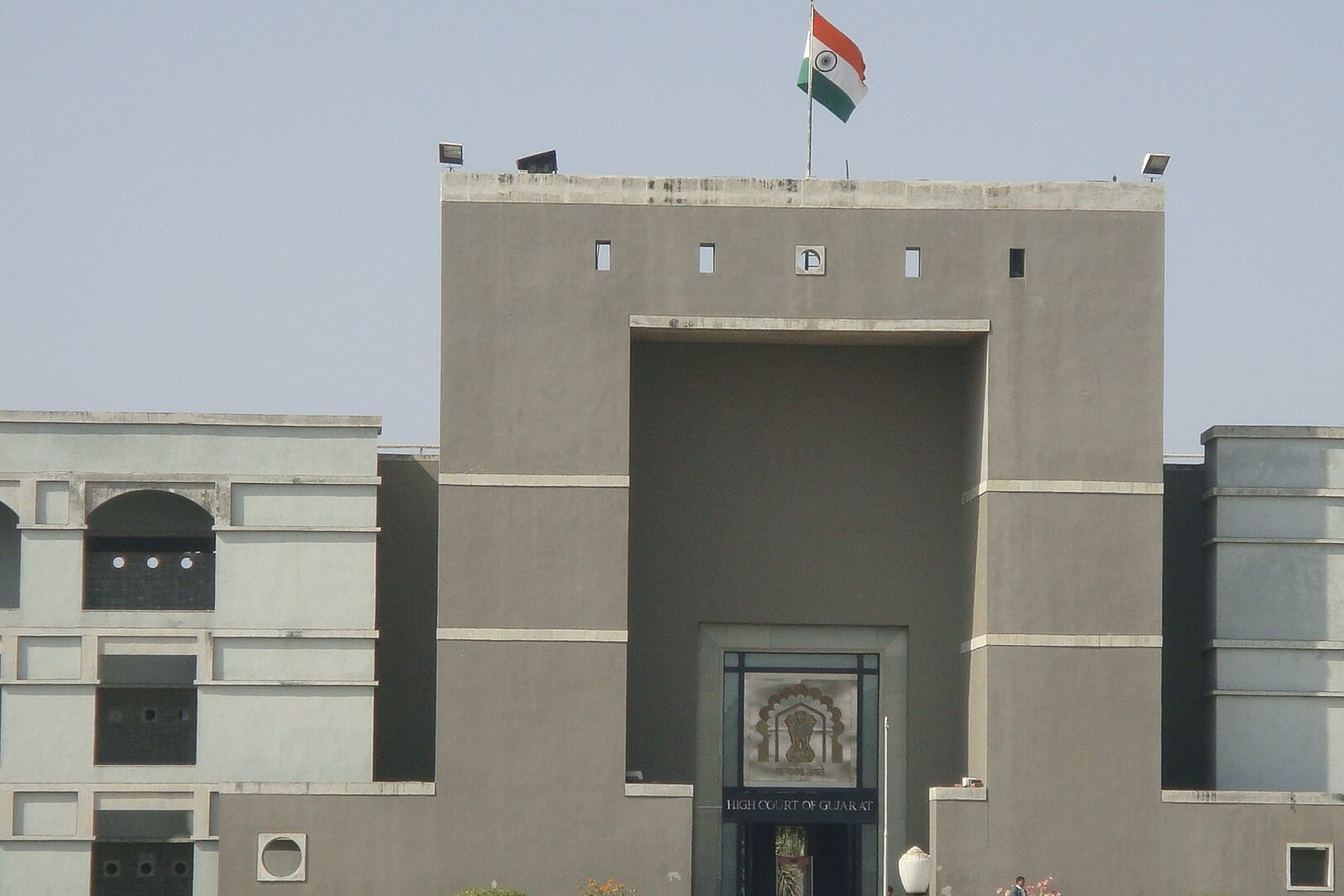
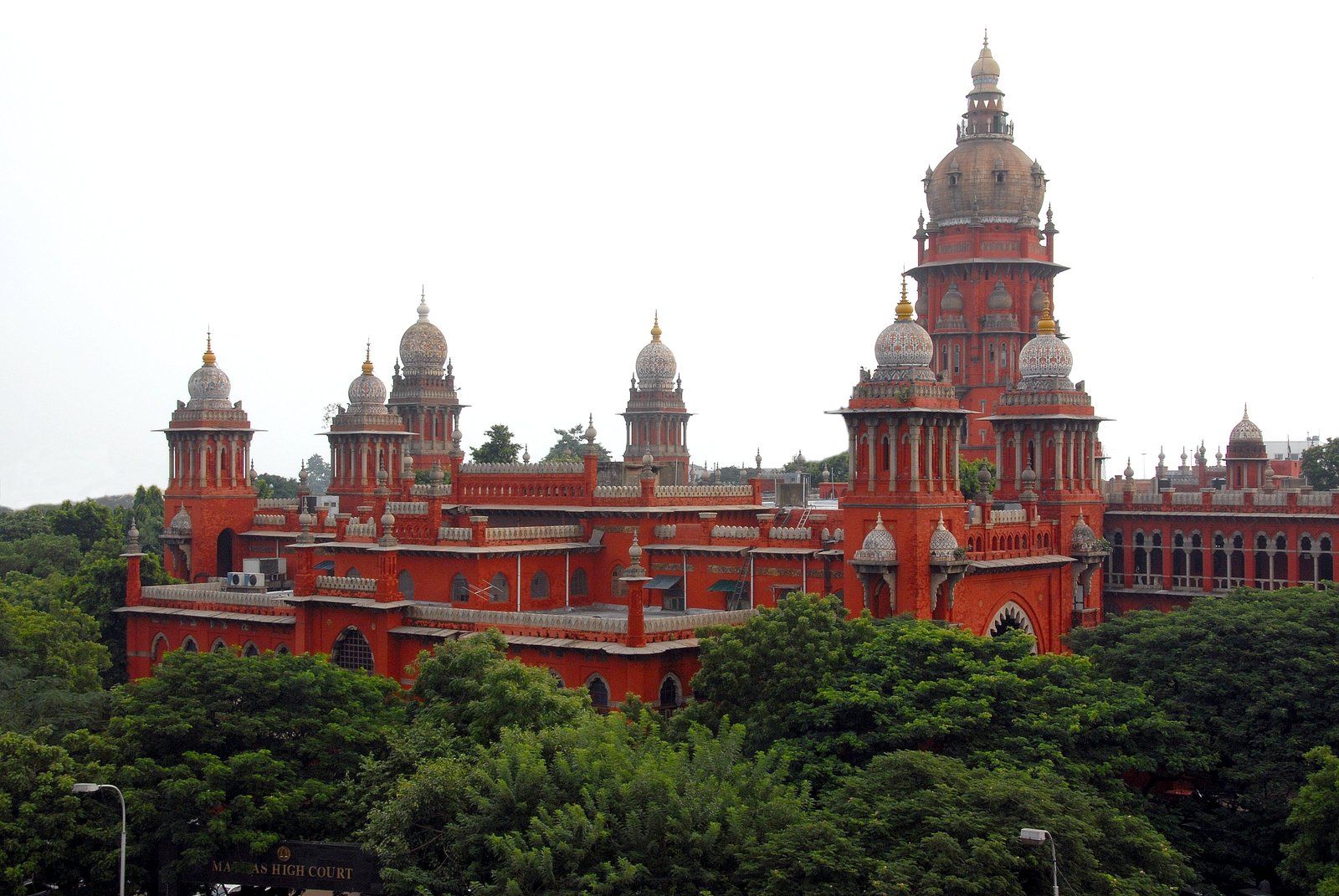
On 11 February 2026, in a land dispute from Erode district, in western Tamil Nadu, Justice V. Lakshminarayanan of the same court went further. “Denying a person from a marginalised community access to the public burial or cremation ground is a criminal offence,” he held, as Bar & Bench reported. “It is a form of practicing untouchability, which has been declared as unconstitutional under Article 17 of the Constitution of India.” He said the district collector, who holds powers under the Scheduled Castes and Scheduled Tribes (Prevention of Atrocities) Act, India’s 1989 law against caste violence, must act when members of the Scheduled Castes (SCs), the Constitution’s legal category for Dalit communities, are treated unfairly over burial grounds. Devasagaya Raj called it “a historic judgment”.
On 24 March 2026 the Supreme Court decided Chinthada Anand v State of Andhra Pradesh. The appellant was a pastor born into the Madiga community, a Scheduled Caste, who had brought a complaint under the Atrocities Act. The court held that he had “ceased to be a member of the Scheduled Caste community upon his conversion to Christianity” and so “cannot subsequently invoke the provisions of the SC/ST Act”. It rested on Clause 3 of the Constitution (Scheduled Castes) Order, 1950, which says that no one who professes a religion other than Hinduism, Sikhism or Buddhism “shall be deemed to be a member of a Scheduled Caste”. A commentary in The Leaflet, a legal publication, argued that it means “the same atrocity directed at a Christian Dalit now falls outside the scope of statute”.
Put the two rulings side by side and the gap is plain. The High Court named the denial of a public burial ground to Scheduled Castes as an offence under the Atrocities Act and said the collector should use his powers under it. On the Supreme Court’s reasoning, the Act does not reach a Dalit Catholic like Raju. That leaves families like his relying chiefly on a civil decree, the Constitution’s ban on untouchability and whatever officials choose to do on the night. Kathir has asked Tamil Nadu’s government to press the federal government to let Dalits who become Christians keep Scheduled Caste status; at present they are classified as Backward Classes, which denies them the constitutional protections available to Scheduled Castes, LawBeat reported.
“They don’t collect tax because we are Dalits. They have two different graveyards for Dalits and caste Christians, that shouldn’t exist.”
— Mark, a Dalit Catholic parishioner in Kottapalayam, at a protest in July 2025, to The News Minute
The strongest counter-reading
The case against this reading is that the system worked. The bishop backed the Dalit families, revenue officials and police intervened, and Raju was buried where the decree said he could be. On this view, Kottapalayam is a stubborn local dispute inside a church, not a failure of the state.
It falls short on the facts. The decree did not bury Raju: nearly nine hours of talks did, and what came out of them was framed at first as an exception, not as the decree being carried out. By Kathir’s account the same meeting confirmed separate masses and separate land for Dalits. When the Dalit families went to the Madras High Court for wider relief, it dismissed their petition in April 2024 and pointed them to the National Commission for Minorities, a federal body the petitioners argue lacks the authority to enforce constitutional rights. And the courts are not of one mind on burial either. In January 2025, after a Christian man’s body had lain in a mortuary in Chhattisgarh, in central India, for about three weeks, two Supreme Court judges split on whether he could be buried in his village’s common ground, and the court directed burial in a Christian cemetery in another village.
What to watch
The Kottapalayam families have their own appeal in the Supreme Court; in July 2025 a protester told The News Minute the case was still going on. On 21 February 2025 a bench of Justices P.S. Narasimha and Manoj Misra issued notice to the Tamil Nadu government and church authorities on a petition that calls the exclusion “not a private dispute but a constitutional issue”, citing the Constitution’s guarantees of equality, non-discrimination, life and dignity, and the abolition of untouchability. Their lawyer called the court’s acceptance of the case a “first in the history of India”.
Beyond the case, two things would close the gap. One is enforcement that does not wait for a death: a district administration that applies the 2024 decree to the next burial without a peace committee. The other is the question Chinthada Anand leaves for Parliament, which, as the ruling is read, alone can change the 1950 Order: whether a Dalit’s protection against caste abuse should end at baptism. Father Devasagayaraj Zackarias, national secretary of the bishops’ office for Scheduled Castes and Backward Classes, put the expectation to Crux in July: “People now expect stronger action against those who continue to practice untouchability in churches and cemeteries.”
Raju spent ten years winning the right to be buried with the rest of his parish. He used it once, at his own funeral, and officials first called it an exception. The next Dalit family in Kottapalayam to bury someone will have the same decree in hand.