Erravalli is a village in Siddipet district, in the southern Indian state of Telangana. Since 17 September, revenue officials have been marking the boundaries of Survey No. 325, a single block of about 388 acres (157 hectares), Deccan Chronicle reported. They used satellite positioning to fix its edges, the paper reported later. The block lies next to, and by the Chief Minister’s account inside, the farmhouse of K. Chandrasekhar Rao, known as KCR, the former chief minister who leads the opposition Bharat Rashtra Samithi (BRS).
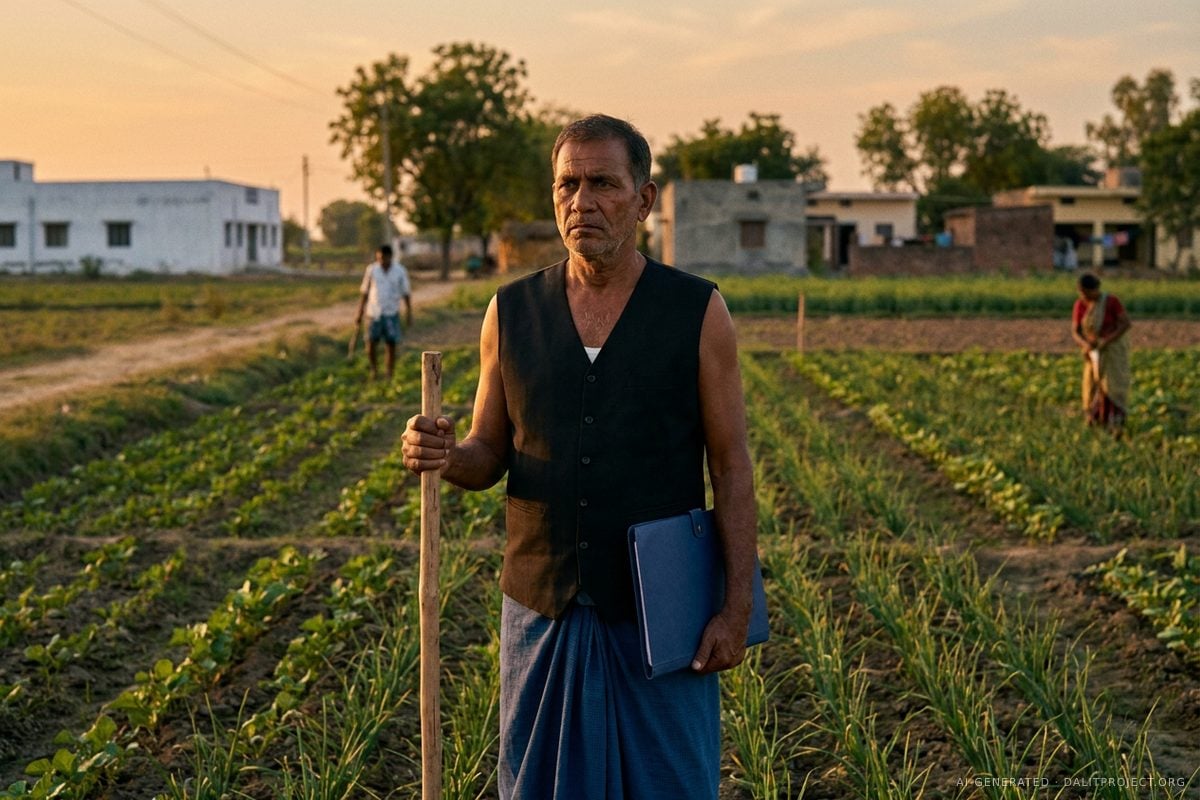
The survey was ordered to test an allegation against Rao. It has summoned the Dalit families, from communities once branded “untouchable”, who were given this land by the state about 60 years ago and have farmed it since, Telangana Today reported. They have been told to bring their papers and show officials where their fields end.
That is how assigned land works. The state gave it to landless families, many of them Dalit, and never quite let go. When two dominant parties fight over land, the people whose title is conditional are the easiest to put on trial, whichever side is asking.
What happened
On 16 September, during an Assembly debate on Telangana’s list of “prohibited” properties, which sub-registrars won’t register for sale (Deccan Chronicle), Chief Minister Revanth Reddy of the Congress party turned to Rao’s landholdings, Gulte reported. He alleged that the land around the Erravalli farmhouse covers roughly 700 acres, and that 388 acres of it is government land. He directed revenue officials to issue notice to Rao and report within 30 days, ThePrint reported. He said recovered land would go to 800 Dalit families, half an acre each, The Hans India reported.
These are allegations made in the Assembly, untested by any official finding, and the BRS rejects them. K.T. Rama Rao, Rao’s son and the party’s working president, said his father had declared all his landholdings in his election affidavits in 2014, 2018 and 2023. “On the floor of the house, the CM has spoken untruth by making a lot of frivolous comments about our family’s landholdings,” he said, and asked that “every single allegation is probed”, ThePrint reported. T. Harish Rao, Rao’s nephew and a former minister, said the lands in question were either disclosed in election affidavits or acquired legitimately, rejected the claim that they include assigned land, and demanded an inquiry by a sitting Supreme Court judge into the holdings of both the Rao family and the Chief Minister’s family, according to a column in The South First. Rao, who has stayed away from the Assembly session, ThePrint reported, has not commented publicly on the Erravalli allegation himself.
The survey began the next day. Villagers said more than 150 farmers had been cultivating the 388 acres of assigned land for 60 to 70 years, and objected to the survey, Telangana Today reported. On the second day, more than 50 police were deployed so that it could go ahead, the paper reported. On the first day, officials did not enter the farmhouse, Deccan Chronicle reported.
Telangana Today and the Telugu daily Namasthe Telangana are published by Telangana Publications, a company owned by Rao, who launched Namasthe Telangana in 2011, The Wire reported.
What the notices say, and what the farmers were told
The first notices went out on 19 September. The local tahsildar (the sub-district revenue officer) handed 100 of them to farmers at the village council office, Andhra Jyothy reported. Each recipient was told to attend the survey, explain with evidence how they came to hold the land, and show officials its boundaries, the Telugu daily reported. Farmers were asked to show where their land lies within Survey No. 325 and to hand over their documents, Telugu Post reported.
The count rose as the survey went on: “over 120” in Telangana Today on 19 September, 215 claimants in Deccan Chronicle two days later. By 26 September, after nine days of survey, notices had gone to 244 farmers on the records, Andhra Jyothy reported.
On paper, each farmer has been asked to prove a claim. Out loud, they have been told something else. On 20 September, Revenue Minister Ponguleti Srinivasa Reddy said in a statement: “The government will not take away even an inch of your land. This government has no intention of acquiring your land.” He said the aim of the surveys was to record people’s land rights clearly, and blamed certain powerful individuals for stirring panic. “Do not believe any malicious propaganda without verifying the facts,” he said, Siasat reported.
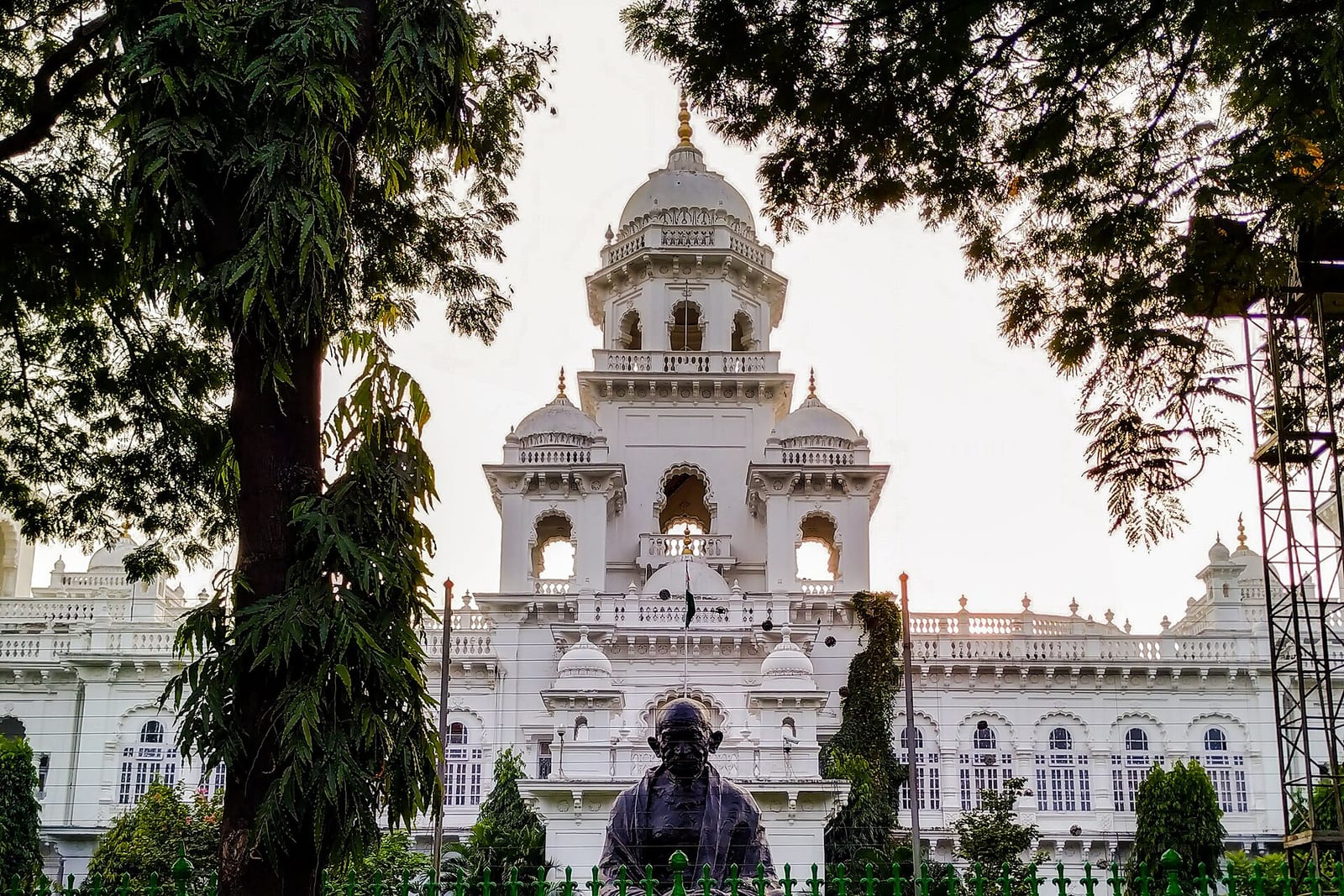
i
CC BY-SA 4.0Original on Wikimedia CommonsOfficials have described a different aim. Unnamed sources told Deccan Chronicle that the government would first identify and evict non-Dalits holding assigned land in Survey No. 325, then check “the actual possession of assignment lands by dalit farmers against the land originally allotted to them”, and give “the excess land” to other landless Dalit families, the paper reported. That is not the same as “not an inch”. A farmer whose field has grown, on paper or on the ground, in 60 years of records and boundary disputes stands to lose the difference.
In the reports cited, the Chief Minister, the Revenue Minister, the BRS and unnamed officials have all spoken about Erravalli’s Dalit assignees. None of those reports quotes one of the assignees themselves on what the notices asked of them. The families whose papers are being checked are the only party to this dispute not yet heard in their own words.
Why assigned land is easy to question
In the 1970s, landless families across what was then Andhra Pradesh, many of them Dalit, were given plots under the land reforms. Landlords of the dominant Reddy, Velama and Kapu castes resented it, and the Congress government of the time assured them the distribution was temporary. It then brought in a law that it said would stop the socially and economically powerful from grabbing the land, The News Minute reported in 2022. That law, now the Telangana Assigned Lands (Prohibition of Transfers) Act, 1977, says land assigned to “a landless poor person” for farming or a house-site “shall not be transferred”, and that any sale, gift, lease or mortgage of it is void, under section 3. The rule covers land assigned before the Act as well as after, so it reaches Erravalli’s 60-year-old grants. If the rule is broken, the district collector (the district’s chief administrator) or a revenue officer he authorises may evict whoever holds the land and take it back, under section 4.
The protection is real. It also means the assignee is never simply an owner. Observers feel the Act “has only served to turn these beneficiaries into mere ‘cultivators’, leaving them without any real rights over the land assigned to them”, The News Minute reported.
At least 3 million acres of Telangana’s farmland has reportedly been assigned to landless poor people, out of up to 15 million cultivable acres by government estimate: at least one in five, The News Minute reported in 2022.
That conditional title has been used against assignees before. In 2022, revenue officials surveyed assigned land in Islampur, in Medak district, for a ring road around Hyderabad, the state capital, and to pool it for housing ventures, The News Minute reported. More than 60% of the 200 assignees there were from the Madiga caste, a Dalit community. One of them, Cherlapally Baliah, said his parents had worked for minimal wages as household and farm servants for the village landlord before the family received its land.
“When we refused to allow the revenue officials to survey our land, they told us that it would be taken at any cost as the plot was assigned to us by the government.” Cherlapally Baliah, a Dalit farmer in Islampur, Medak district, to The News Minute, 2022
Records are the other weak point. Residents of neighbouring Venkatapur say Erravalli’s farmers hold rights to only about 250 of the 388 acres, and blame errors made in 2018 when records were updated for Dharani, the digital land-records portal introduced under the BRS, Deccan Chronicle reported. Farmers holding passbooks, the booklet that records a landholding, are worried about what happens if the area on paper doesn’t match the area on the ground, Namasthe Telangana reported.
Two parties, one set of fields
Both parties are now speaking for Erravalli’s Dalits. The Chief Minister promises to give Dalit families the land he says Rao took. The Revenue Minister calls Rao a “Dora”, or feudal lord, and reminds Dalits that Rao promised them three acres of land and, the minister says, ignored the promise, The Hans India reported. In Rao’s own newspaper, one Erravalli farmer said the land had been used only for grazing cattle until Rao helped clear its rocks, brought in drip irrigation and built a lake, the Pandu Ranga Cheruvu, that now waters it. The Dalit farmers there said there was no truth in the Chief Minister’s allegations, Telangana Today reported.
The two accounts of the land can’t both be complete. In the Assembly, the Chief Minister alleged that the 388 acres were government land with no records that had been fenced off and absorbed into the farmhouse, RTV reported. The revenue department’s own records list 244 farmers on that land, Andhra Jyothy’s count shows. After three days of survey, a senior official told Deccan Chronicle that “at least 10 acres” of assigned land had so far been traced inside the farmhouse, the paper reported. And the Chief Minister’s plan of half an acre for each of 800 families adds up to 400 acres, more than the whole survey number, on which 244 farmers are already recorded.
The case for the survey
The strongest case for the survey is that it is what the 1977 Act asks the state to do. If assigned land meant for Dalits has passed into the hands of a former chief minister, or of anyone who isn’t a landless assignee, the Act makes that transfer void and lets the collector take the land back. The preliminary findings, not yet in any official report, point that way: unnamed sources told Deccan Chronicle that the survey had found assigned land inside the farmhouse, assigned land used to build a reservoir that mainly serves the farmhouse, and large parcels held by non-Dalits, the paper reported. Farmers who lost assigned land to the Panduranga reservoir complained that the previous government never gave them the alternative land Rao had promised, the paper added. On this reading, the survey protects Dalit assignees from a powerful man, and the notices are paperwork.
That reading is right about the law and wrong about the method. An inquiry into one man’s alleged encroachment has been run as a check on every assignee, each told to prove how they got their land. The Chief Minister ordered a notice to Rao; no report so far says one has been served. The officials doing the work are under a 30-day deadline, with the Chief Minister’s warning of action against them if they miss it, RTV reported. “We are facing tremendous pressure to discharge our duties,” one officer told Deccan Chronicle. A minister’s statement is not a legal protection. The notice is on file.
What to watch
- The report. The survey is done and farmers in Erravalli and Venkatapur are waiting on the report, Andhra Jyothy reported. The 30-day deadline, set on 16 September, runs to mid-October. Watch whether it separates land inside the farmhouse from the assignees’ own fields.
- “Excess” land. Whether any Dalit assignee loses part of a field that the survey measures as larger than the original grant.
- Titles. The Chief Minister said that once records were set right, Dalits would be made owners of the land, The Hans India reported. Whether that becomes full title for the families who already farm Survey No. 325, or only for the new recipients.
The farmers of Erravalli did not start this fight. They have held Survey No. 325 for 60 years on a title the state could always question, and it is questioning it now, in their names. Whatever the report finds about the farmhouse, the test of the inquiry is whether the Dalit families who were handed notices come out of it holding more secure land, or less.