On 1 October 2026, police in Sangrur, a district in the northern state of Punjab, removed protesting family members from outside the civil hospital mortuary and supervised the cremation of Sanamdeep Singh, a 23-year-old Dalit man, allegedly without his immediate family present. Dalits are the communities once branded “untouchable” under India’s caste order. “They did not even allow us to see our brother,” the family told reporters in Chandigarh the next day.
The family had kept his body in the mortuary for five days. It was the one thing they held that the state needed back, and they were using it to ask for something specific: charges under the Scheduled Castes and Scheduled Tribes (Prevention of Atrocities) Act, India’s 1989 law against caste violence. The demand was addressed to the police, who were asked to add the Act to the FIR. What came first was a cremation; no decision on the charges has been reported.
That is the structural point. When a Dalit family’s grief turns into a demand on the state, the state holds both the body and the case file. In Sangrur it settled the first, using what police called mild force; no public answer to the second has been reported. The same police force that took charge of the last rites was the one the family had asked to record the death as a caste crime.
What happened
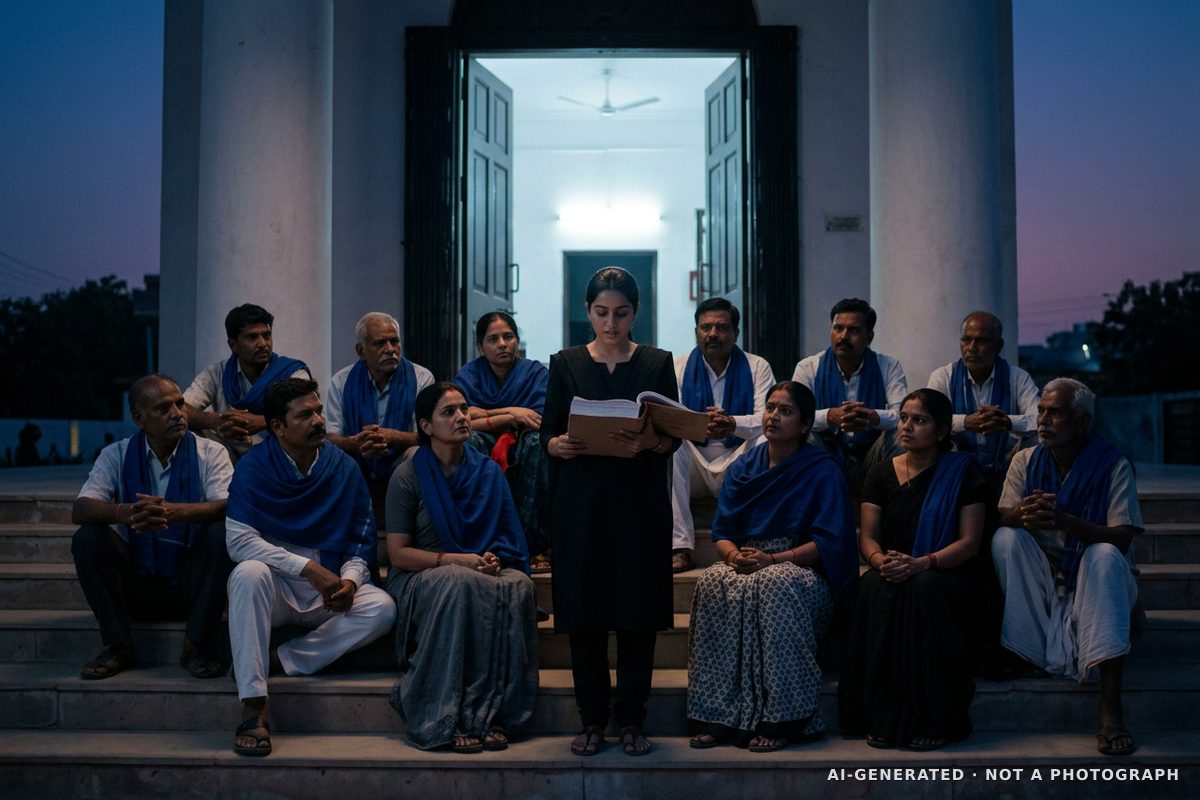
Sanamdeep Singh, a mason from Kanoi village, died during treatment on 26 September. His family alleges that he took his own life after being harassed and intimidated by the village sarpanch, the elected head of the village council, Deep Singh, and some of his associates. PTC News gives the sarpanch’s name as Deep Singh Bawa. On 28 September police registered a First Information Report (FIR), the complaint that opens a criminal case, for abetment of suicide against the sarpanch and three others, on a complaint by Sanamdeep’s father. The four are accused in the FIR; no arrest or chargesheet, the formal charge police file in court, had been reported by 4 October. The family staged a dharna, or sit-in protest, demanding the arrest of the accused and asking for the Atrocities Act to be added to the FIR. After the FIR, the family held out for the Atrocities Act and arrests before the post-mortem, and on the fifth day of their sit-in the post-mortem had still not been done.
The family traces the dispute to 2019. Sanamdeep’s uncle, Gora Singh, alleged that an FIR had been registered against the sarpanch that year on Sanamdeep’s complaint, and that about five months ago a case was filed against seven members of their own family to pressure them into withdrawing it. He also alleged that four of the family’s houses were left out when sewer lines were laid in the village, and that Sanamdeep was denied work under India’s rural jobs guarantee scheme. At a press conference, the family said the police had initially refused to record their statement for two days and “kept asking us to provide proof”.
On 1 October police and officials arrived at the hospital. The family alleges that police used force and dragged Sanamdeep’s mother and grandmother into a police vehicle, and that the post-mortem and the cremation went ahead without them. That day, a three-member board of medical officers carried out the post-mortem. Police said the last rites took place at a cremation ground on Ubhaval Road in the presence of municipal officials and some members of the village council. Police detained family members, among them his mother and grandparents, and others. The family members were later released from the Sangrur district jail and collected his ashes. Police arrested Rajinder Singh Deepa, a leader of the opposition Congress party who had joined the protest, and three others, whom police accused of attacking officers, damaging public property and obstructing officials. Congress leaders condemned the arrest.
“They turned the entire village into a cantonment [an army garrison] as if they were dealing with terrorists,” Gora Singh said, as reported by The Observer Post.
How the mechanism works
5 days How long Sanamdeep Singh’s body lay in the Sangrur mortuary without a post-mortem while his family pressed for arrests and caste-atrocity charges. Sources: Punjabi Tribune, The Observer Post
A family that refuses to take a body home is not being careless with its dead. It is using the only pressure it has. A case for abetment of suicide is filed under the general criminal law. Adding the Atrocities Act changes the case: it names the caste element, and such cases are tried in special courts. The family’s request for those provisions was made to the police.
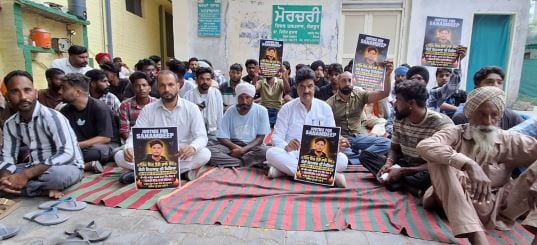
So the body and the case file sat with the same police force. On 2 October Deputy Superintendent of Police Dalbir Singh said the body had begun to decompose rapidly, that the senior medical officer had issued a notice, and that under the law, causing disrespect or indignity to a human corpse is an offence. In his account, the law on the dead was turned against the family’s protest. The law the family was asking for, the one that names caste, did not feature in it.
Sangrur is the home district of Bhagwant Mann, Punjab’s chief minister and head of its state government, and the pattern is visible there. Gulzar Singh, a daily wager, died on 7 September; his family alleged he had been harassed and subjected to casteist slurs for questioning a state minister about drugs in his area at a public event. A case was registered against five people and a special investigation team set up. The Daily Guardian counted a string of suicides and suicide attempts in the district in September, alongside an alleged custodial-torture case, and noted that the cases are separate, with no evidence of a common link. What they share is a question about how complaints against local power are handled.
In their own words
“We had kept Sanamdeep’s body at the hospital mortuary for five days while peacefully protesting and demanding action against the sarpanch and registration of appropriate charges, including provisions under the Scheduled Castes and Scheduled Tribes (Prevention of Atrocities) Act.” — Sanamdeep Singh’s family, at a press conference in Chandigarh, as reported by Punjab News Express
The family spoke at a press conference at the state headquarters of the Bharatiya Janata Party (BJP), alongside its Punjab president. That setting is political, and the Congress has taken up the case too. But the words are the family’s, and they say what the protest was for. It was not a refusal to cremate their son. It was a demand that his death be recorded in the terms they believe fit it, made with the only leverage they had.
The strongest counter-reading, and why it falls short
The police case is serious and deserves a fair statement. A body had been in a mortuary for five days. The senior medical officer, police said, had issued several notices that it was decomposing, which the family refused to accept. The FIR had already been registered on the father’s complaint. Dalbir Singh said political workers and people from outside the village had encouraged the family to hold out, and police said protesters damaged buses and attacked officers, so mild force was used. And the case itself is disputed: at a separate meeting at a panchayat house, a section of villagers said the case against the sarpanch was unjustified and that an old rivalry was being used against him. No public comment from Deep Singh or the three others named in the FIR has been reported, and none of the reports says any of them was asked for a response. The police investigation has not concluded.
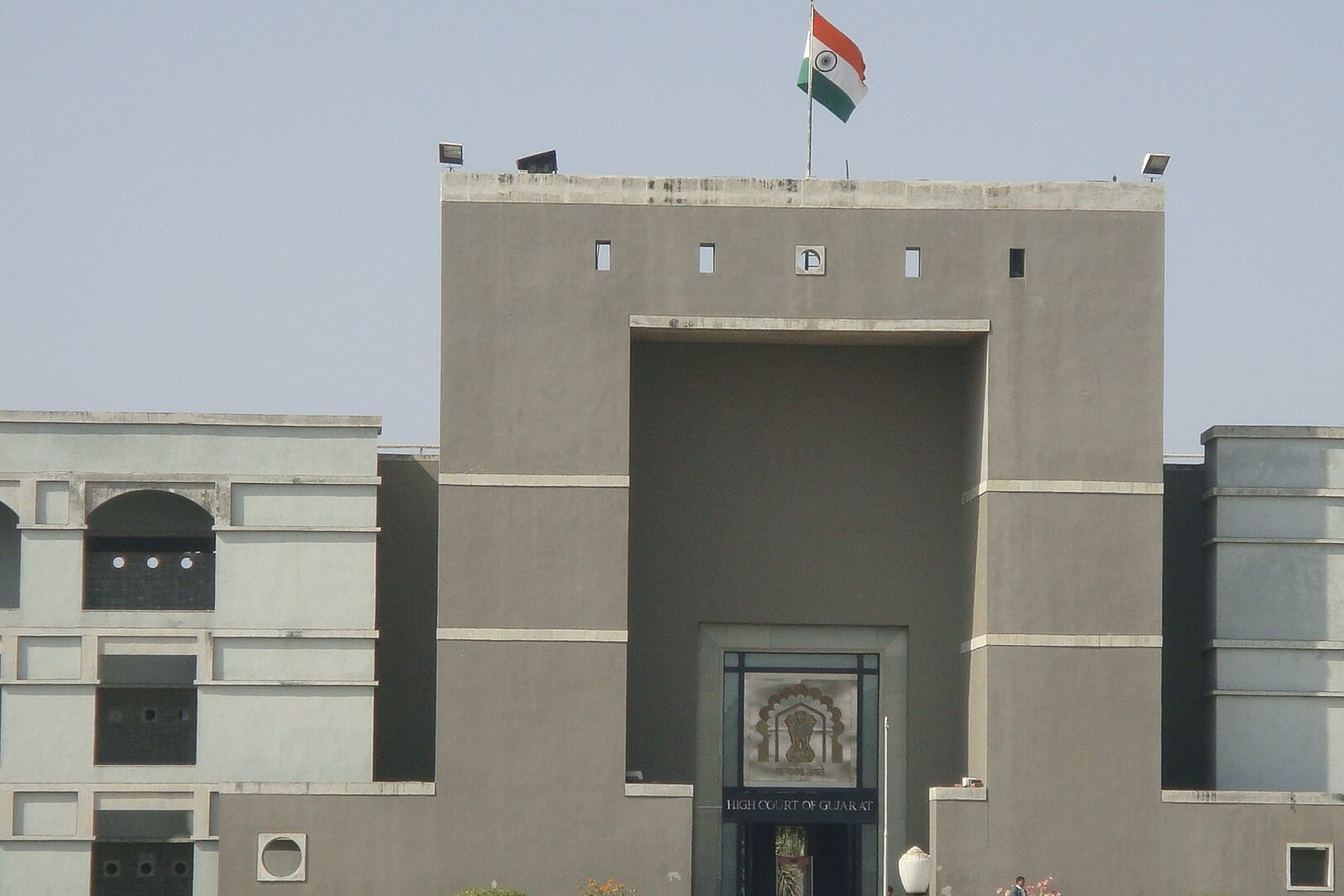
None of that settles who should perform the last rites. In October 2020, after police in Hathras, in the northern state of Uttar Pradesh, cremated a young Dalit woman at night without her family, the Allahabad High Court, the high court of Uttar Pradesh, was of the prima facie opinion that the authorities had shown no “good reason” why they could not hand the body to the family “say for even half an hour” so they could perform their rituals. It said the right to a decent cremation, by the family and in line with its customs, is part of the right to life under Article 21 of India’s Constitution, and the rite “could not have been compromised taking shelter of law & order situation”. In a later order the court said these rights belong not only to the dead but to the family, who “have a right to perform last rites as per religious traditions”.
The Hathras orders were made in Uttar Pradesh, where the court told the state to make officials follow a procedure for decent last rites. The facts also differ: in Sangrur the post-mortem had been held up for five days while the family held out for its demands. But read against the reported facts, the principle is the one the Sangrur police set aside. Decay was a reason to complete the post-mortem and to release the body. It was not a reason to cremate a son after, by his family’s account, his mother had been dragged into a police vehicle.
What to watch
The investigation into the abetment case, and whether the police add Atrocities Act provisions to the FIR, is the first test. The second is whether anyone is asked to account for the cremation itself. At the family’s press conference, the BJP’s state president demanded an independent investigation of how the body was handled, and said the party had sought information on the mother’s whereabouts. In the Gulzar Singh case, the Punjab and Haryana High Court has sought a status report. Watch whether either case reaches that court on the question of charges. In Hathras, it was a court that said last rites are the family’s to perform.
Police oversaw Sanamdeep Singh’s cremation after five days. No answer has been reported to what his family asked for while they kept him in the mortuary: whether his death will be recorded as a caste crime. The body was settled first and the case file was not, and that order of priorities is the story.
If you or someone you know is struggling, help is available. In India, call Tele-MANAS on 14416. In Australia, call Lifeline on 13 11 14.