Twenty years ago, on the evening of 29 September 2006, a crowd of about 40 people, led by men of the Kunbi-Maratha caste according to the Indian news site Scroll (a caste that V. Krishna Ananth, writing for The Polis Project, calls upper caste and a small minority in the village), surrounded the home of a Dalit family in Khairlanji, a village in Bhandara district in the eastern part of Maharashtra, in western India. The family were Mahars, a Dalit caste, among the communities once branded “untouchable”. Members of the crowd killed the mother, her daughter and her two sons and threw their bodies into a canal, India’s Supreme Court later recorded. The father escaped.
Some in the crowd, the order says, were “loudly implying that they were falsely implicated by” the mother. She had given the police a statement naming the men who had beaten a family friend. They were released on bail on 29 September, and the crowd came that evening.
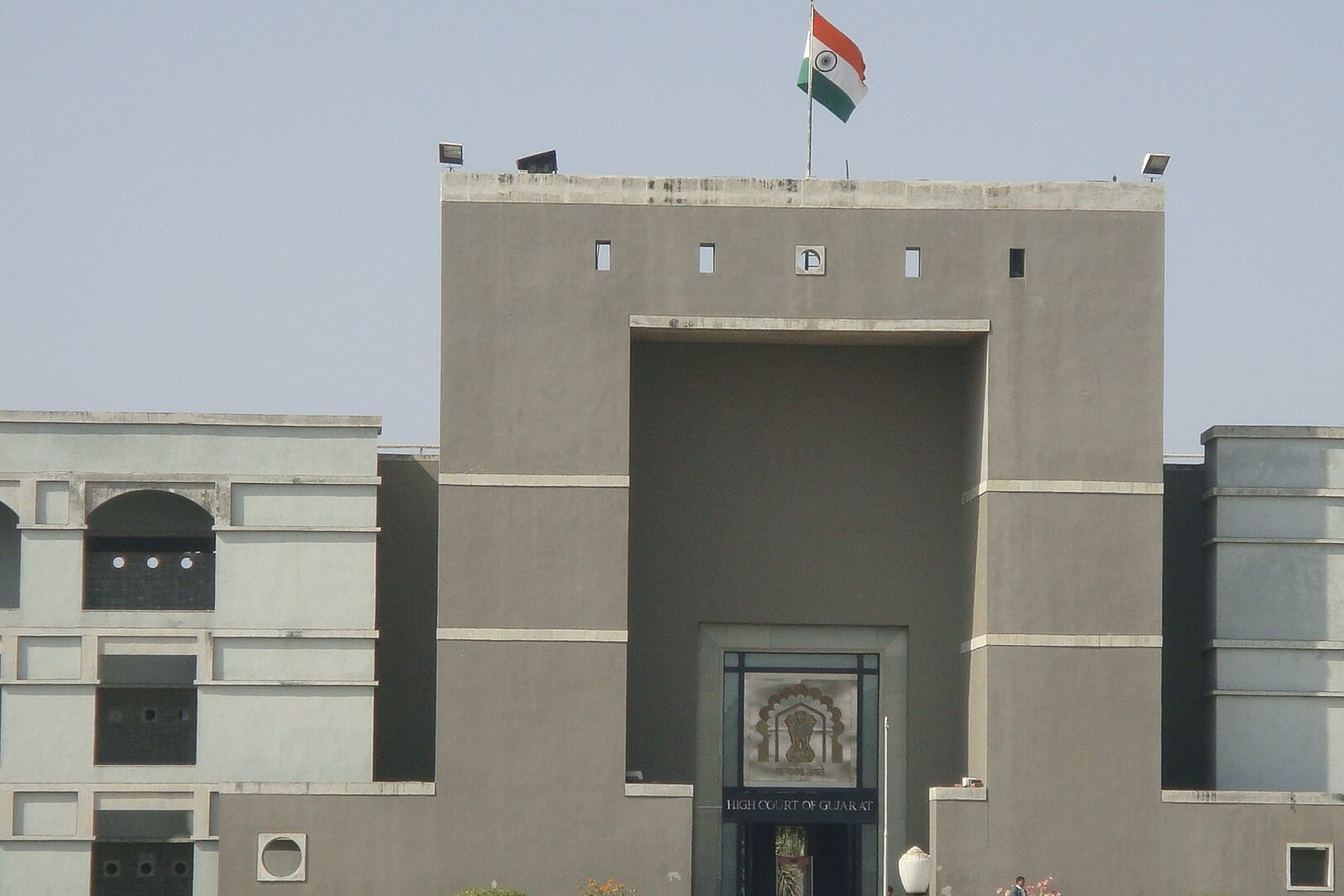
Three courts heard the case. All three accepted that the killings were murder. None found an atrocity, the legal term for a crime against Dalits or Adivasis (India’s Indigenous peoples) that Parliament wrote a special law to punish. The courts didn’t deny the facts of caste. But the trial court and the High Court treated the family’s assertion, a Dalit woman going to the police against men of the village’s dominant castes, as a personal motive, and the Supreme Court left that reading alone. On that reading, caste dropped out of the legal record.
What the courts decided
The police registered the case under the murder and rioting sections of the Indian Penal Code, India’s criminal code at the time, “read with” section 3(1)(x) of the Scheduled Castes and Scheduled Tribes (Prevention of Atrocities) Act, 1989, India’s law against caste violence, the Supreme Court’s order records. After the local police and then the state’s detectives made little progress, the order records, the case went in November 2006 to India’s Central Bureau of Investigation (CBI), the federal agency. The CBI filed charges against 11 men for murder, conspiracy and rioting, and for “offences under the Act”.
The special court at Bhandara convicted eight of them and acquitted three. It sentenced six to death and two to life imprisonment. It did not find any of the eight “guilty of committing any offence under the provisions of” the Atrocities Act, the Supreme Court’s order notes. The trial court held the killings a “revenge murder” and so refused to apply the Atrocities Act, a writer in the Asian Human Rights Commission’s journal noted in 2010.
Both sides appealed. The CBI asked the Bombay High Court, Maharashtra’s highest court, sitting at Nagpur in eastern Maharashtra, to convict the three acquitted men and to apply the Atrocities Act, Prof. V. Krishna Ananth wrote for The Polis Project. On 14 July 2010 the High Court upheld the eight convictions and held that the Act did not apply, Ananth wrote. It replaced the six death sentences with life imprisonment, with no release before 25 years of actual imprisonment, the Supreme Court’s order records.
The case then sat in the Supreme Court for almost nine years. It admitted the appeals in August 2014. On 24 May 2019, a bench of Justices Arun Mishra, B.R. Gavai and Surya Kant dismissed the CBI’s and the convicts’ appeals, its order shows. The CBI’s grievance, the order says, was the commutation of the death sentences, and the bench’s three questions concerned the sentence and the convictions. None was about the Atrocities Act. It called the killings a “ghastly crime” and marked its order “non-reportable”, meaning it was not sent to the official law reports.
How caste became a reason for mercy
The High Court’s caste finding didn’t only keep the Atrocities Act out. It shaped the sentence. Weighing the aggravating and mitigating circumstances, the court found no case for death, the Supreme Court summarised, because:
“(i) the incident did not take place on account of caste stature but the root cause was that the accused felt that they were falsely implicated in the crime of beating [the family friend] by [the mother and daughter]; (ii) there is no evidence to suggest that the accused have a criminal record.”
Set that beside the facts the same order sets out: a Dalit woman named the men to the police, they were arrested, and on the day they got bail a crowd came to her house saying she had implicated them. On the High Court’s reading, her statement was the “root cause” and caste was not. That treats a Dalit woman’s decision to give evidence as a private grievance. Maktoob, an Indian news site, on the 19th anniversary, put it the other way: by “stepping forward as a witness in the police station, she directly challenged the authority of the dominant castes.”
i
CC BY-SA 4.0Original on Wikimedia CommonsThe law made that reading easier. Until January 2016, section 3(2)(v) of the Atrocities Act, which raises the punishment for serious crimes against Dalits and Adivasis, applied only when a crime was committed “on the ground that such person is a member of a Scheduled Caste or a Scheduled Tribe”. The Supreme Court has read those old words to mean the crime had to be committed only on that ground, as it later acknowledged. A 2015 amendment, in force from 26 January 2016, changed the test to “knowing that such person is a member” of a Scheduled Caste or Tribe. Khairlanji, a 2006 crime, was judged under the old law, though the orders available online don’t say whether the CBI charged the men under section 3(2)(v).
Nationally, the backlog under the Act is vast.
287,694 cases of crimes against Scheduled Castes (Dalits) under the Atrocities Act were awaiting trial at the end of 2024, against 5,192 cases that ended in conviction that year. Source: data from the National Crime Records Bureau (NCRB), India’s official crime-data agency, given by the Ministry of Social Justice and Empowerment in a written reply to the Rajya Sabha, Parliament’s upper house, on 30 July 2026 (government release).
What the verdicts meant
The scholar and civil-rights activist Anand Teltumbde documented the case in The Persistence of Caste: The Khairlanji Murders and India’s Hidden Apartheid (2008), Scroll noted. After the High Court ruled, he wrote in the Mumbai-based Economic and Political Weekly (EPW) that the court “did not think there was a caste angle or that any planning was involved in the crime”. “The whole episode reveals, in a microcosm, the character of the state vis-à-vis dalits,” he added (EPW, August 2010).
On the tenth anniversary, in an email conversation with his publisher, S. Anand of the publishing house Navayana, he said that atrocities of this kind are “committed by a collective of caste Hindus on a few Dalits as a mode of teaching a lesson to the entire Dalit community” (Scroll, September 2016). In that account the lesson is the motive. Asking whether the killers were settling a score or acting on caste misses the point, because the score was about caste.
“The perpetrators commit ghastly and inhuman crimes against Dalits because they think they will not face the consequences. Indeed, the way the system has worked, it corroborates their belief and encourages them to commit ghastlier atrocities.” Anand Teltumbde, interviewed for Scroll, September 2016
“When the police are biased, the prosecution weak, and the judiciary interprets the law in a manner disconnected from the social realities of caste, the entire institutional framework collapses,” Priyadarshi Telang, a lawyer and human rights researcher, was quoted by Maktoob as saying last year.
The case for the courts, and why it falls short
The strongest defence of the courts is that the system worked. Teltumbde himself wrote that the case “was tried as one of the fastest-tracked cases and punishments were meted out to the culprits within two years” (EPW, 2016). Eight men were convicted, six of them to at least 25 years in prison. The Supreme Court found “no scope of deviation” from the lower courts’ findings. Courts decide on evidence and on the statute’s words, and the old section 3(2)(v) asked for a crime committed on the ground of caste; the facts the courts accepted were that the crowd was angry about a police statement. Even some critics didn’t want the death sentences back: Samar, writing in the Asian Human Rights Commission’s journal, argued that “the failure of justice is not rooted in the commuting of the death sentence”, but “in seeing their behavior as mere revenge killing”.
Samar’s second point is where the defence breaks down. A murder conviction doesn’t record what the crime was. Parliament wrote the Atrocities Act because violence against Dalits is a distinct wrong, and the Act carries its own duties and remedies: the surviving father was denied any compensation because the judges found the Act didn’t apply, Ananth wrote. And a “revenge” motive can’t be separated from caste when what was being avenged was a Dalit woman’s evidence against men of the village’s dominant castes.
The Supreme Court has since said as much in general terms. In a 2021 appeal from Andhra Pradesh, in southern India, a two-judge bench, in a judgment by Justice D.Y. Chandrachud, wrote that reading “only” into section 3(2)(v) “would be to add a restriction which is not found in the statute”. To deny the Act’s protection because a crime wasn’t committed solely because of caste, it said, “is to render the experiences of the most marginalized invisible. It is to grant impunity to perpetrators who on account of their privileged social status feel entitled to commit atrocities” (Supreme Court, April 2021). It still set aside the atrocity conviction in that case for want of evidence, the legal news site LiveLaw reported, and chose not to refer the older rulings to a larger bench, keeping the question “open and the debate alive for a later date and case”.
Since the last order
The criminal case ended with the Supreme Court’s order of 24 May 2019, Ananth wrote. The surviving father had filed his own appeal. In October 2016 the court’s registrar sent it to be listed for hearing, a court record shows. He died on 20 January 2017, Navayana reported two days later. In August 2018 a judge asked the police in Bhandara to report whether the appellant had died. On 10 September 2018, on that report, the court disposed of his appeals “as having abated” (order).
Two things are worth watching:
- The courts’ reading of caste motive. The 2021 bench doubted the “only on the ground” rulings but didn’t overrule them. For crimes committed before 2016, judged under the old words, those rulings stand until the court revisits them.
- The backlog. With nearly 288,000 Atrocities Act cases of crimes against Dalits awaiting trial, Khairlanji’s speed is the exception. The NCRB’s 2025 figures are the next test.
Twenty years on, the legal record of Khairlanji holds eight murder convictions and no atrocity. The crowd that evening said why it had come: a Dalit woman had named them to the police. Three courts heard that, and none of them named caste as the motive. That record is closed. The question the Supreme Court left open in 2021 is whether the next court will read caste the same way.