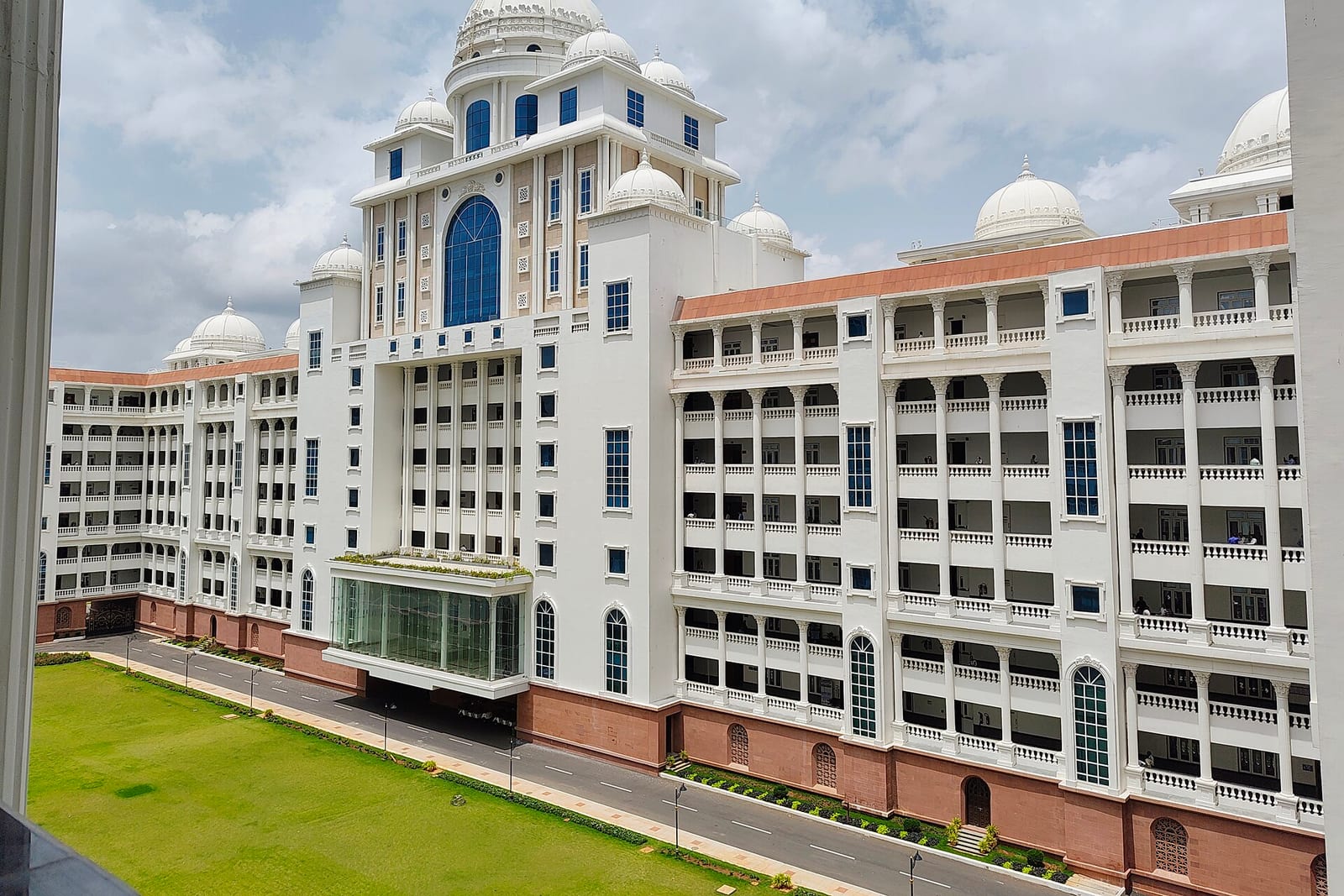
On 17 January 2026, ten years to the day after her son’s death, Radhika Vemula met Telangana’s Deputy Chief Minister, Mallu Bhatti Vikramarka, and handed him a memorandum. Rohith Vemula was a Dalit PhD scholar at the University of Hyderabad, a federally funded central university in Hyderabad, capital of the southern state of Telangana. Dalits are the communities once branded “untouchable”. He died by suicide in January 2016. His mother’s memorandum asked for three things: withdraw the cases against former members of his student group who protested after his death, carry the investigation forward, and enact the Rohith Act. That same day, The News Minute reported, Telangana’s government, led by the Congress party, had yet to prepare a draft.
Three months later the state did something. On 17 April it issued a government order forming a cabinet sub-committee, a group of five ministers, to recommend how to frame the Rohith Vemula Telangana (Prevention of Identity Based Discrimination in Higher Education) Bill, 2026. More than five months on, the bill is still with that sub-committee. Telangana has turned a decade-old Dalit demand into a process with no deadline and no public draft of its key terms, while the people who made the demand have already written the law they want.
What happened
The order, GO Ms 490, makes Bhatti Vikramarka the sub-committee’s chair. Its members are the ministers D. Sridhar Babu, N. Uttam Kumar Reddy, Ponnam Prabhakar and C. Damodar Rajanarasimha. The convenor is the Special Chief Secretary of the Scheduled Caste Development Department. Telangana Today reported that “there is no specific deadline”: the sub-committee was asked to report “at the earliest”. The paper said Telangana was “taking a cue” from neighbouring Karnataka, whose cabinet had approved its own Rohith Vemula Bill the day before.
The sub-committee’s first reported meeting came on Thursday, 16 July, at the State Secretariat, the Telangana government’s headquarters in Hyderabad, three months after it was formed. The Hans India lists Sridhar Babu, Uttam Kumar Reddy and Ponnam Prabhakar as taking part. Bhatti Vikramarka told officials to speed up the drafting. He asked them to form a committee of officials, to have the department secretary prepare “a comprehensive preliminary draft report”, and to study Karnataka’s draft. He promised “extensive public consultations across the state”. The Supreme Court advocate Disha Wadekar was invited, he said, so that the law would not face legal challenges later.
By late September the bill had not left the committee. On 26 September the Deccan Chronicle reported that the bill “is still with a Cabinet sub-committee, which sought public feedback on it, even though the monsoon session ended on September 18”. The government, the paper found, “has not publicly specified the protected categories or the proposed complaint mechanism.”
How a promise becomes a holding pattern
The demand for a Rohith Act was born in the protests after his death. Before his death, the university had suspended him, stopped his fellowship and evicted him from his hostel, Careers360 reports. He was one of five Dalit PhD scholars from the Ambedkar Students’ Association (ASA), a student group that follows the anti-caste thought of B.R. Ambedkar, whom the university put out of their hostels. The action against him came through the university’s own disciplinary process. Some campaigners, as below, now want a law that does not leave the inquiry to the institution being accused.
The Congress, India’s main national opposition party, governs both Telangana and Karnataka. It promised a Rohith Vemula Act in its 2024 national election manifesto, and the Congress leader Rahul Gandhi, Leader of the Opposition in the Lok Sabha (Parliament’s lower house), wrote to A. Revanth Reddy, Telangana’s Chief Minister (head of the state government), on 17 April 2025 asking Telangana to enact one. Telangana had been here before: earlier drafts were prepared there, Careers360 notes, but they “did not translate into law due to limited political momentum and public engagement.” A national attempt went the same way. In 2016 Bhalchandra Mungekar, then a member of the Rajya Sabha (Parliament’s upper house), introduced a bill against caste discrimination in educational institutions; it lapsed without discussion.
The national alternative has stalled too. India’s higher-education regulator, the University Grants Commission (UGC), notified equity regulations against campus discrimination in January 2026. They drew opposition “mainly by forward-caste [dominant-caste] and rightwing groups”, and the Supreme Court has stayed them (what still protects students in the meantime is set out here). After that backlash, The News Minute reported, the Congress leadership “became wary”, and Karnataka’s draft went through months of uncertainty before its cabinet approved it. That leaves state laws as the route still moving, and in Telangana it moves only as fast as a ministerial committee chooses.
162 days: the time from Telangana’s order forming the sub-committee (17 April 2026) to the Deccan Chronicle’s report that the bill was still with it, its protected groups and complaint mechanism not yet made public (26 September 2026). The first reported meeting came on day 90. Sources: Telangana Today, The Hans India, Deccan Chronicle.
i
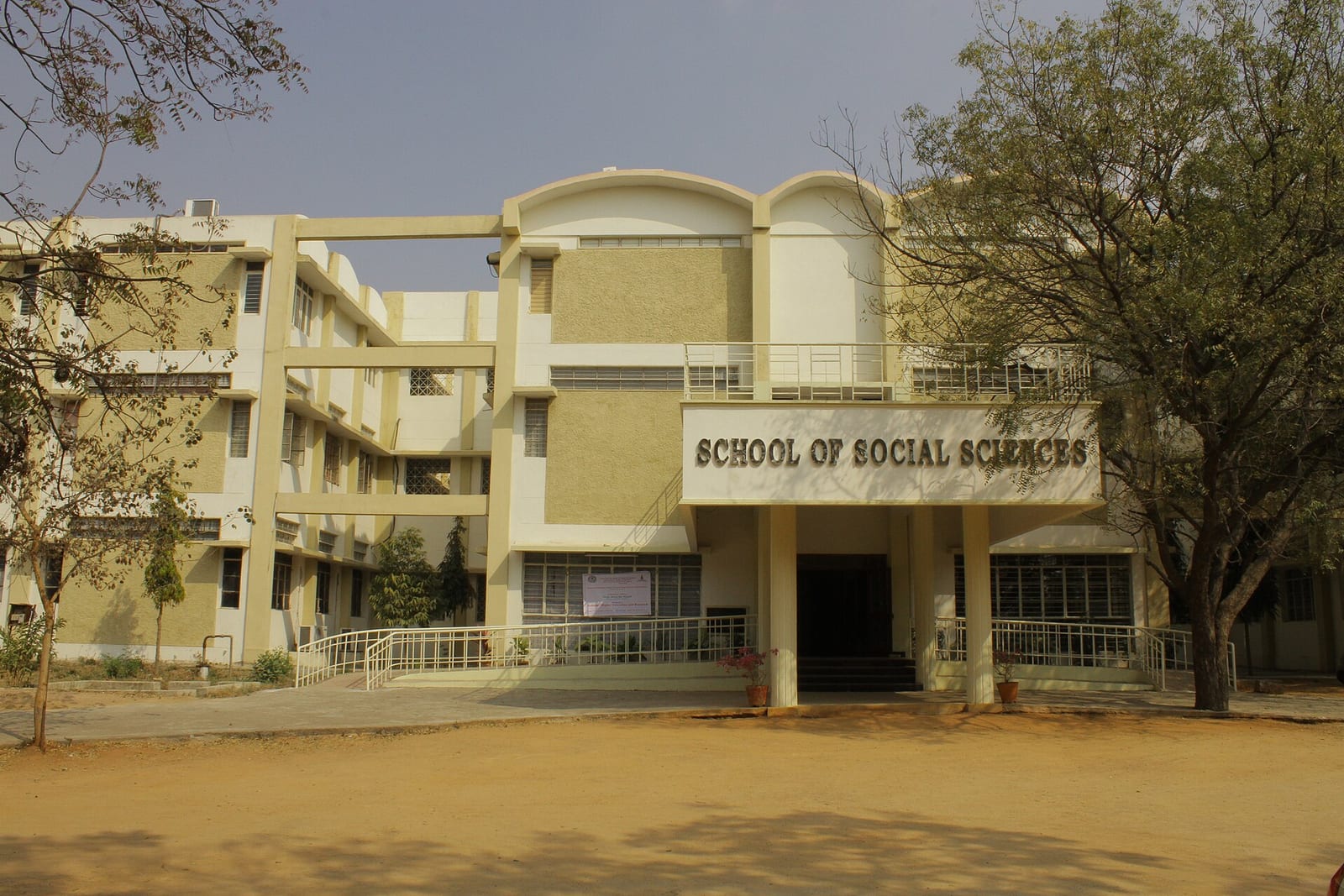
CC BY-SA 3.0Original on Wikimedia CommonsKarnataka’s draft shows what a text looks like when one exists. It requires an equity committee in every institution, chaired by a Scheduled Caste or Scheduled Tribe (SC/ST, the constitutional categories for Dalit and Adivasi communities) member of at least assistant-professor rank, with at least two SC/ST student members and at least 80% of its members from SC/ST groups. The Karnataka minister Priyank Kharge said the state might even use an ordinance, an executive decree with the force of law until the legislature votes on it, so that the law would not be “pushed to the next academic year.”
What the movement has said
Rohith’s own organisation did not wait for the state. On the tenth anniversary the ASA released a “People’s Draft of the Rohith Act” at the University of Hyderabad; the draft was written by civil society members in Bengaluru, Karnataka’s capital. The same day the ASA said: “It has been a decade and yet, there has been no accountability from the University of Hyderabad, the Ministry of Education, and the Indian state for Vemula’s death.”
At the same gathering, Radhika Vemula put the stakes in her own terms:
“Just like cancer, casteism is a disease. But casteism is worse. It’s like the coronavirus. It endangers people at large. But there was a vaccine to cure Covid, and similarly, the Rohith Act is a cure for casteism.”
— Radhika Vemula, Rohith Vemula’s mother, at the University of Hyderabad, 17 January 2026, as reported by The News Minute
Dontha Prashant, one of the scholars suspended alongside Rohith in 2016 and now an assistant professor of economics at Azim Premji University, described what the decade built: “What was born out of the Rohith movement was several instances of Dalits asserting themselves in spaces that were previously closed off to them.”
The movement has also been specific about design. Daya, president of the ASA at the University of Hyderabad, told the Deccan Chronicle that “campus discrimination can happen at a micro level, and this kind of discrimination needs to be investigated”. He asked that the ASA be consulted before the state finalised a draft. B. Karthik Navayan, a Telangana High Court advocate, argued in written feedback to the Campaign for Rohith Act in October 2025 that an equity committee inside the institution would lack independence. He proposed district-level committees outside campuses, fixed inquiry timelines and penalties for institutions that obstruct complaints. “Without structural independence in inquiry, Rohith Vemula’s legacy will fail. It becomes another paper tiger,” he wrote.
The case for patience, and why it falls short
The strongest case for the sub-committee is that slow drafting makes a better law. Telangana’s title speaks of “identity-based discrimination”, which is broader than caste, and the All India OBC Students Association wants Other Backward Classes (OBCs), the government category for socially and educationally disadvantaged castes outside the SC/ST lists, covered: “They have not consulted us,” its president, Gowd Kiran Kumar, said. The Human Rights Forum, a civil-liberties group, warns that “legislation alone will not remove discrimination or prejudice”. After the UGC rules were stayed, a law that survives the courts is worth a few months.
But consultation needs a text to consult on. The order set no deadline. The first reported meeting came three months in, and as of late September the government had still not said who the law protects or how a student would complain. And the expert the government invited has said why a statute matters. “The UGC regulations are mandatory; they are not advisory. But they are regulations, whereas an Act has legislative force,” Wadekar told the Deccan Chronicle. With the 2026 regulations stayed, delay leaves students without either new protection. The Human Rights Forum’s S. Jeevan Kumar suggested the state could issue interim anti-discrimination guidelines while the bill is pending. The Deccan Chronicle’s report gives no sign that it has.
What to watch
Three things will show whether Telangana means it. First, whether the sub-committee publishes a draft for the “extensive public consultations” Bhatti Vikramarka promised in July, and gives a date. Second, whether that draft takes the inquiry out of the accused institution’s hands, as Navayan urged, or at least puts students and outside experts on the complaint bodies, as Wadekar asked, and whether it penalises institutions that obstruct complaints. Third, whether the state acts on the rest of Radhika Vemula’s memorandum: the cases against the protesting students, and the investigation.
A name and a date
In January, Telangana’s Congress government had no draft. At the end of September it had a committee, a chair, a government order and a meeting, and still had not said publicly whom the law protects or how it would work. A sub-committee with a named chair is something the state can be held to, and Rohith’s mother, his comrades and their lawyers are holding it to it. Ten years after Rohith Vemula’s death, the bill carrying his name is still a title with a committee behind it.
If you or someone you know is struggling, help is available. In India, call Tele-MANAS on 14416. In Australia, call Lifeline on 13 11 14.
.jpg)