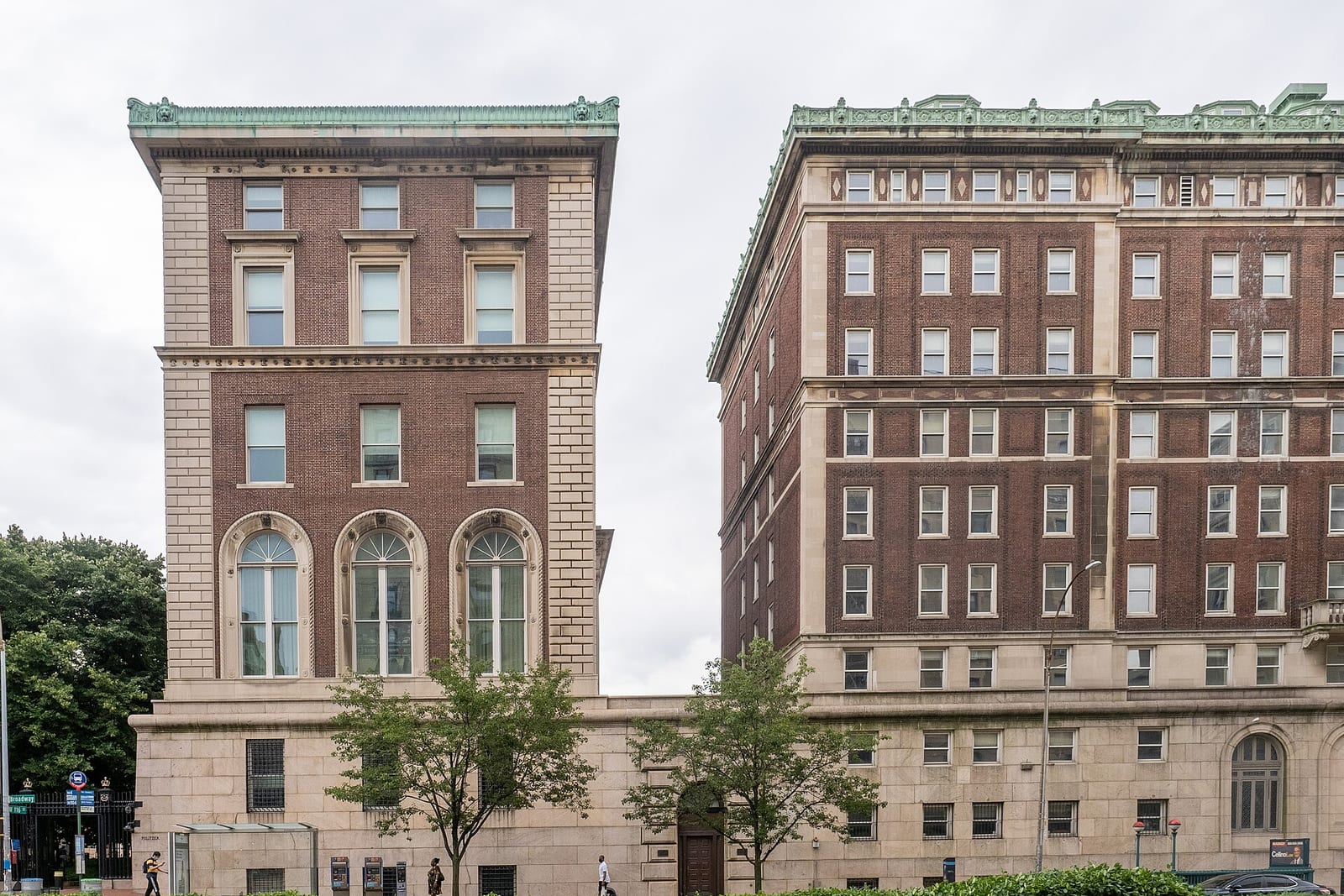
On 30 January 2026, more than 120 people gathered at the LGBT Community Center in Manhattan for an event called “From Shadows to the Stars: Honoring Rohith Vemula’s Legacy”. It was his birthday. Vemula was a Dalit PhD scholar at the University of Hyderabad, a public university in the southern Indian city of Hyderabad, and he died by suicide in January 2016, at 26. The university had suspended him and four other Dalit students and barred them from campus housing, PBS NewsHour reported at the time. Dalits are the communities once branded “untouchable” under South Asia’s caste order. Some attendees, the event page says, had travelled from Philadelphia, New Jersey and Chicago. There were Dalit storytellers, art, anti-caste music, a documentary screening and video tributes from Vemula’s mother, Radhika Vemula, and his friends.
The woman who organised it opened with a line about how little had changed. “The more things change, the more the establishment claws back for them to stay the same,” Yashica Dutt said in her opening speech, as she later wrote in her newsletter.
Ten years earlier, Dutt had been a journalism graduate in New York who was still hiding her caste. Vemula’s death changed that. Within days she had said in public that she was Dalit, and her phrase for it, “coming out as Dalit”, became the title of an award-winning memoir and then the subject of a fierce argument among Dalit writers. Now she reports on caste in American politics and helps organise the campaign for a New York State caste law.
Why now
In April 2026, during Dalit History Month, the annual observance of Dalit history, she helped organise the first press conference for a bill that would ban caste discrimination in New York State, and reported on it for Prism, a US nonprofit newsroom. The bill “would create caste protections for employment, housing, and public accommodations,” she wrote. Prism’s disclosure at the foot of the piece says she “helped organize the press conference and was part of the coalition”. The Senate version is still in committee, where it was referred again in January 2026.
On her newsletter, Featuring Dalits, she has written that the lawyer behind the bill, Swati Sawant, “reached out to me in March last year to get involved with this effort”. In another post she called herself “among the leading voices on the New York Caste Bill”, which she describes as “a Dalit femme led effort”. Her author pages at New Lines Magazine and Prism say she is writing a second book, on caste in the United States.
Ajmer, and the lie
Dutt grew up in Ajmer, a city in the north-western Indian state of Rajasthan. In her own words, she comes from “a formerly untouchable manual scavenging family in small town India”. Manual scavenging is the cleaning of human waste by hand, work that caste assigned to particular Dalit communities. She was born, she has written, into a caste “whose name itself is used as a slur”. In 2023, the Indian news site ThePrint reported that she “emphasised that she is not just a Dalit woman but a Valmiki woman”. The Valmikis are a Dalit community.
The family’s way of surviving was to pass as members of a dominant caste. “I was born in a Dalit family in Ajmer, Rajasthan. And I grew up learning to hide it,” she wrote in January 2016. “My convent school education, a non-Dalit sounding last name, and a skin color that was ‘dusky but still not dirty’ eased my passing as a non-Dalit.” She set down the exchange she had repeated through childhood:
“Beta, what caste are you from?” “Aunty, Brahmin.”
“A lie I spoke so often and with such conviction, that I not only fooled my friends’ mothers but even myself,” she wrote. Brahmins are the priestly caste at the top of the caste order. The family name had been changed two generations earlier: “I conveniently forgot the last name my grandfather dropped to allow him to pass, almost 60 years ago – Nidaniya.”
The lie once failed. When she was 15, she told PBS NewsHour in 2016, a school friend’s parents asked her caste at their home. “I vividly remember thinking, ‘It’s now or never,’” she said. She told them she was Dalit. The next time she saw her friend, the friend said her parents had forbidden her to speak to Dutt again. After that, PBS reported, she “became really good at hiding” who she was.
What she was hiding was not only a caste but a family history. She told NPR about her great-grandfather: “He couldn’t access classrooms and he couldn’t use a slate [blackboard] because his touch would be considered ‘polluting’ it. He had to sit outside and scrawl the alphabet in the mud with a stick.”
Her mother is at the centre of the memoir, and of the way Dutt explains her own life. In a 2019 interview with The Wire, an Indian news site, she said she had written about the domestic violence her mother endured, and why. “The fact that she endured what she did just to send her two daughters to good schools and give them a life that was in no way lesser than her son’s has been the driving force behind most of my decisions,” she said. She also wanted to make a point about her own community: “I also wanted to make a larger point about patriarchy and misogyny and how it didn’t magically disappear just because we were Dalit.”
The reporter who avoided politics
The schools her mother paid for led to St Stephen’s College in Delhi, one of India’s best-known colleges. Reservation, India’s system of reserved places in education and public jobs for groups that caste excluded, did not get her in, she wrote in a 2016 essay for Scroll, an Indian news site: she “scored enough marks to make the cut-off list”. All it helped with, she wrote, was “a small scholarship to pay the college fees”. Even so, the record itself frightened her. “‘This time, they’ll find out’, I had thought when the undergraduate college I attended tucked my name under the SC/ST quota,” she wrote in her coming-out post. SC/ST refers to Scheduled Castes and Scheduled Tribes, the official categories for Dalit and Adivasi (Indigenous) communities.
She became a journalist in Delhi. PBS reported that she worked for the Hindustan Times, “one of India’s largest newspapers”. She wrote for its Sunday magazine, Brunch: in 2014 she reported from Kathmandu on LGBT rights in Nepal, and in 2016 the magazine called her a “former star reporter with Brunch”. Much of her work was on fashion and culture, and she kept away from politics on purpose. “I never covered politics or took an interest in writing anything political when I was working in Delhi because I was worried that I might write a story or express an opinion that might reveal my caste,” she told The Wire.
In September 2014 she moved to New York to study journalism at Columbia University. Distance changed things. “For the first time, I felt that I had a reprieve from thinking about my caste,” she told NPR.
January 2016
Rohith Vemula’s death in January 2016 set off “a massive wave of outrage across campuses in India”, Dutt later wrote, and his last letter spread across social media. It began, the Guardian noted: “My birth is my fatal accident.” Dutt read it in New York, then visited his Facebook page “and realized that he had sent me a Facebook request ten days ago, which I had promptly ignored”, she wrote in the post that announced her caste, published by the Indian newspaper The Indian Express on 21 January 2016. “He made me ‘come out’ to the people I grew up hiding from, wanting to fit in with. He made me recognize that my history is one of oppression and not shame.”
In the memoir, as quoted by the Guardian, she drew the contrast with Vemula directly: “Unlike me, Rohith did nothing to bury his Dalitness. Instead, he used it to … stand up for Dalit students at Hyderabad University.”
The same post launched a project. “That’s why I am starting Documents of Dalit Discrimination,” she wrote. “A safe space for conversation about caste that needs to go beyond ‘reservation’ and ‘merit’ and voices that echo the hurt so many of us suffer silently.” Within days, PBS reported on 22 January, she said she had received “hundreds of submissions”. Ten years later, she wrote that it took her “less than 70 minutes to write the note where I would reveal my caste, and to create the Tumblr page”. She had wanted, she wrote, “a community of other Dalit people, where I did not have to hide my caste or feel shame”.
The backlash came as fast. Five days after the first post she replied in Scroll, listing nine arguments people had used against her and replying to each. To those who said she was too privileged to complain, she agreed in part: “Obviously I am privileged, to have had three generations before me who valued education the way they did, which is what made it possible for me to pass successfully as non-Dalit.” To those who objected to the phrase “coming out”, she explained the borrowing: “As with all non-heteronormative sexuality, my Dalit identity was also taboo.”
“But I am not here begging for equality. I am taking what’s mine – my place in the society as a loud and proud Dalit, whether they like it or not.” — Yashica Dutt, in Scroll, January 2016
The book
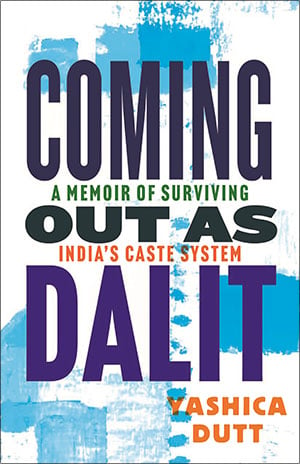
Coming Out as Dalit: A Memoir was published in India by Aleph Book Company in 2019. She told The Wire that mixing her story with other Dalits’ stories, “with data, facts and research, was a deliberate choice. I’ve been a journalist all my life. So the idea of just writing my own story was odd for me.” She saw it as “the natural extension of my Tumblr”.
It also argued with the image of Dalits that she kept meeting. The most common response to her coming out, she told The Wire, was “Oh, but you don’t look like a Dalit”. “This is the real danger of the single narrative,” she said. “It perpetuates this false idea that Dalits only have to be a certain type of person, i.e. possibly uneducated or unable to speak English, possibly rural and possibly at the receiving end of horrible discrimination and violence.”
In March 2021, India’s Sahitya Akademi, the national academy of letters, named the book the English winner of its Yuva Puraskar, its award for young writers, for 2020. A US edition from Beacon Press came out on 6 February 2024, NPR reported. According to her website, it “includes 2 new chapters covering how the caste system traveled to the US, its history here, and the continuation of bias by South Asian communities in professional sectors”.
She has been plain about her own advantages, and about where they stop. “I had the unique privilege of being able to use other caste labels because I pass off easily,” she told Scroll in 2020. “Can a Dalit girl in rural Bilwada, Rajasthan hide her caste like I did? No, she can’t.” Money and migration did not dissolve caste either. “You cannot move out of your lower caste. You can obscure it but cannot escape it,” she told NPR. At Columbia, after she came out, she heard people ask: “How did that Dalit girl get into Columbia?” (The Dalit Project’s history of how untouchability outlived the law draws on the same interview.)
Caste, carried abroad
In the United States her journalism turned to the diaspora. In September 2020 she reviewed Isabel Wilkerson’s bestseller Caste for the US magazine Foreign Policy. She placed herself inside two systems at once: “As a Dalit woman and immigrant from a formerly untouchable manual scavenging caste in India, my place in the Indian social order lies at the very bottom. But as a brown resident in the United States, I fall somewhere in the middle of the racial caste pyramid.” Wilkerson, she wrote, gave “little space to the inequities that affect Dalits today”: “Yet for me, a Dalit reader often marginalized and restricted to the bottom of an even more lopsided global order, it often feels like being left out of my own history.”
That summer, California’s civil rights agency had sued Cisco Systems and two managers, alleging that a Dalit engineer at its San Jose headquarters “was expected to accept a caste hierarchy within the workplace where he held the lowest status within a team of higher-caste colleagues”. Dutt wrote about the case in an opinion piece for The New York Times, “The Specter of Caste in Silicon Valley”, in July 2020, her website records. The case is unresolved. In April 2023 the agency dropped its claims against the two managers and kept suing the company. Cisco denies wrongdoing; its own investigation, it wrote in November 2020, “found no evidence” of caste discrimination or retaliation. The court docket lists the case as open, with no verdict or settlement recorded. The Dalit Project’s account of US caste protections follows it in detail, and another piece looks at how caste shapes who “fits” on a tech team.
When Seattle’s city council voted 6–1 in February 2023 to add caste to its anti-discrimination laws, the first US city to do so, Dutt told American Kahani, an Indian American news site: “Caste-oppressed people, Dalit Americans, Adivasi Americans, and Dalits from Nepal have been working toward this specific campaign for months.” Her website says she “helped shaped [sic] the text” of the Seattle law. American Kahani’s report credited the drafting to Equality Labs, a Dalit civil rights group, “along with Sawant and other South Asian community leaders”, meaning Kshama Sawant, the council member who proposed the ordinance.
California came next, and failed. SB 403, introduced by State Senator Aisha Wahab, a Democrat, would have defined “ancestry” in the state’s civil rights laws to include caste. According to the legislature’s record, the Senate passed it 34–1 in May 2023, the Assembly passed an amended version 55–3 on 28 August, and the Senate agreed to the amendments 31–5 on 5 September. On 7 October, Governor Gavin Newsom returned it unsigned. “Because discrimination based on caste is already prohibited under these existing categories, this bill is unnecessary,” he wrote. The veto was sustained in January 2024.
Dutt wrote about the veto that October, but the essay did not run until she put it on her newsletter in July 2025. She called Newsom’s reasoning puzzling, given that “it was the very lack of these protections that led to the landmark caste discrimination case against the Silicon Valley giant, Cisco”. She wrote that the bill was altered several times, changes that “some anti-caste organizers and activists felt had diluted its impact”; the biggest, in July 2023, took caste out as a category of its own and “subsumed” it “under the larger umbrella of ancestry”. Her conclusion was a refusal: “Caste is not complex. It is simply the issue of a majority with enormous visibility and power denying the right to a minority to even acknowledge their discrimination.” The essay describes the campaign for the bill by anti-caste groups, including a hunger strike, but not a role for herself in it.
55–3: the California Assembly’s vote for SB 403 on 28 August 2023. The governor vetoed it on 7 October. (California Legislature)
The New York beat
Since 2025 her reporting has followed caste into New York politics. For the US-based New Lines Magazine she wrote in October 2025 that as mayoral candidates toured Hindu temples for votes, Dalits “were missing from the conversation”. She wrote about it from inside: caste had become a talking point, she argued, “especially because Hindu temples, where Dalits, like this reporter, often don’t feel welcome, have emerged as fertile ground for canvassing”. She reported that Zohran Mamdani, then a state assemblymember and since January the city’s mayor, had co-sponsored a state caste protection bill in March 2025.
That bill is the one she is now helping to pass. Her Prism report gathered testimony from South Asian New Yorkers. Sawant described a Nepali restaurant worker whose co-workers “wouldn’t eat with him” and whose manager told him, after he complained, “It’s better that you leave than other people”; because New York does not legally recognise caste discrimination, Sawant said, she could not pursue his case. The report also carried the opposition in its own words. Pushpita Prasad of the Coalition of Hindus of North America (CoHNA) told Prism that “current law covers that”, and that adding caste “singles out people of Hindu and Indian American and South Asian origin”.
The fight over a phrase
The sharpest public criticism of Dutt has come from other Dalits, and it began with a television show.
In August 2023 an episode of Made in Heaven, an Amazon Prime Video series, introduced Pallavi Menke, a fictional Dalit author who speaks at Columbia University about “coming out” as Dalit. Dutt said the character drew on her life and asked for formal credit. “It was so clearly me,” she told CNN. The episode’s director, Neeraj Ghaywan, a Dalit filmmaker, as the Indian news site The News Minute describes him, had already thanked her on Instagram, CNN reported: her book “made the term ‘coming out’ become part of the popular culture lexicon for owning one’s Dalit identity. This inspired Pallavi’s interview section in the episode.” The show’s creators, Zoya Akhtar, Reema Kagti, Ghaywan and the writer Alankrita Shrivastava, then issued a statement saying Pallavi was fictional. “We categorically deny any claim that Ms. Dutt’s life or work was appropriated by us,” it read. The creators said legal scholar Sumit Baudh had used “coming out” in the context of caste as far back as 2007.
Baudh, a queer Dalit academic, made the case against her in an opinion piece for ThePrint in September 2023. “Dalit author Yashica Dutt seems to have appropriated the idea ‘coming out’ from queer discourse, and used it as an appealing title of her 2019 memoir,” Baudh wrote, and pointed to “the failure of Dutt’s memoir to acknowledge and credit my published essay”. Baudh also traced the idea of disclosing a hidden caste to a 1963 story in Marathi, a language of western India, by the Dalit writer Baburao Bagul, When I Concealed My Caste. Jyotsna Siddharth, a queer Dalit actor and artist, told ThePrint she found it “hypocritical” for Dutt to demand credit when she had not credited Baudh in her book.
In January 2024, ahead of the US edition, 14 queer and/or Dalit writers, editors and activists, Baudh among them, wrote to Aleph and Beacon Press asking them to review the title. Their letter said it “showcases the idea of ‘coming out’ without sufficiently engaging with the complexities and depth of the LGBTQIAP+ discourse”. The US edition came out that February under the same title.
Dutt answered Baudh in a response ThePrint published with the op-ed. “Borrowing from language that describes one form of oppression to create an expression that could help further the understanding of a different kind of systemic discrimination isn’t ‘appropriation’,” she wrote. “It’s called building a discourse.” What gave the phrase its reach, she argued, “was my life story, my book and my years of publicly responding to the immense backlash on my own”. Dutt has since written publicly that she is queer: in February, describing the life her mother made possible, she listed the freedom “to be queer, unmarried well into your thirties”.
She had defenders too. More than 400 writers, journalists and scholars signed a statement demanding credit and compensation for her, and said that “a few Dalit and lower-caste intellectuals and activists have amplified the ongoing hate campaign”. In February 2024 the University of California Collective for Caste Abolition, a group of students, staff and faculty, said it was “alarmed by the criticisms” of Dutt from “some scholars and organisers hailing from the Dalit community and their savarna accomplices”. Savarna is a term for the dominant castes. Anurag Minus Verma, an anti-caste writer and podcaster, gave ThePrint a third reading: “In this case, people from marginalised castes are pitted against each other whereas the production houses which profit from it face no accountability.”
For Dutt, the episode was about who is allowed to ask. She told The News Minute in 2023: “Women are expected to shrink themselves. To support the men. To always cover up for the mistakes that have been made.” Two years later she wrote that the online campaign against her “lasted until September 2024”, and that she received a death threat the day before she left on her book tour.
Who the story is for
Not every Dalit criticism of her work has been an attack. Reviewing the memoir for Scroll in 2019, Christina Thomas Dhanaraj, a Dalit writer, began: “I’m a Dalit woman and this is my review of a Dalit sister’s memoir.” She called it required reading for classrooms that discuss caste, and thanked Dutt for writing plainly about violence by Dalit men. But she asked whom it was written for: “several times through the book I found myself asking, if I, a Dalit woman, was an intended reader or if it was the savarnas/those of other identities that go about life, completely oblivious to how caste works.” She wanted more of the author and less of the reporter: “I want to know why it is important to ‘come out as Dalit’, when so many of us (including our families) are trying to escape this identity.”
Dutt has heard a harsher version of the same question. At the Jaipur Literature Festival, held in Rajasthan’s capital, in 2020, she told Scroll that some social media accounts that said they were from oppressed castes had accused her of self-promotion and said “I’m not a representative of the movement”. Her reply: “I have never claimed to represent anybody but myself.” She added: “I have clawed my way in. I had certain advantages. And let’s work together to bring those advantages to everyone.”
Her own critique of the movement points inward too. At the first Dalit Literature Festival in Chicago this spring, on a panel on gender and caste, she said Dalit women had been marginalised “even within mostly male-dominated Dalit spaces”. “While Dalit women in movement spaces are encouraged, their leadership within our own communities is at best tolerated,” she said, in an address she published in May.
Ten years out
In December 2025, looking back on the decade, Dutt asked herself whether she would come out again. “Without a question, yes,” she wrote. She did not pretend it had won her acceptance. “There might not be acceptance, respect or even acknowledgment from those who consider Dalits as lesser than them,” she wrote. “But coming out as Dalit can lead to acceptance from the one person who matters more than anyone else: yourself.”
Then she described it as a practice rather than a moment: “Because coming out is not something you do once. Accepting and owning our Dalitness is something we do everyday.”
If you or someone you know is struggling, help is available. In India, call Tele-MANAS on 14416. In Australia, call Lifeline on 13 11 14.
.jpg)