Caste violence, and what the state does next. We follow each case from the attack to the verdict, measure the gap between the law Dalits won in 1989 and the convictions it delivers, and record how families and organisations force accountability.
Reservation is a constitutional claim, not a favour. We test it against the record: posts left empty for want of a 'suitable' candidate, quotas divided without data, a census that counts caste but may not change who is protected, and promised money that never arrived.
Who owns, who works and who profits. Dalit families still wait for land the state granted a century ago, sanitation workers still die in sewers officials say nobody cleans by hand, and caste still decides who gets hired, paid and funded.
Who holds power, and who is kept out of it. We count who sits in legislatures, newsrooms, courts and boardrooms, follow the parties that court Dalit votes, and ask what Dalit representatives can change once they are inside.
Caste does not disappear in code; it is written into it. We report who builds Indian and global tech and who gets filtered out, what automated systems learn about Dalit people, and who decides which Dalit voices stay online.
Dalit culture made on its own terms: work that refuses the stories dominant castes wrote for it, critics who judge it from a stated standpoint, the archives movements kept for themselves, and the Ambedkarite and Buddhist turn that treats leaving caste as a political act.
Caste and patriarchy work together, and so do the people who fight both. We report where Brahminical patriarchy bites hardest, in the field, the home and the courtroom, and hear from Dalit women and queer, trans and disabled Dalit people on their own terms.
Caste is not only India's, and neither is the fight against it. From Nepal's courts to Seattle's council, Geneva's treaty bodies and Brussels' trade talks, we track where caste discrimination is named in law, and whether naming it changes anything.
Dalit thought as the primary theory of caste, not a footnote to it. We read its thinkers closely, from Ambedkar's 1916 paper on endogamy to Dalit scholars writing now, and test their arguments against what happens this week.
Caste violence, and what the state does next. We follow each case from the attack to the verdict, measure the gap between the law Dalits won in 1989 and the convictions it delivers, and record how families and organisations force accountability.
Reservation is a constitutional claim, not a favour. We test it against the record: posts left empty for want of a 'suitable' candidate, quotas divided without data, a census that counts caste but may not change who is protected, and promised money that never arrived.
Who owns, who works and who profits. Dalit families still wait for land the state granted a century ago, sanitation workers still die in sewers officials say nobody cleans by hand, and caste still decides who gets hired, paid and funded.
Who holds power, and who is kept out of it. We count who sits in legislatures, newsrooms, courts and boardrooms, follow the parties that court Dalit votes, and ask what Dalit representatives can change once they are inside.
Caste does not disappear in code; it is written into it. We report who builds Indian and global tech and who gets filtered out, what automated systems learn about Dalit people, and who decides which Dalit voices stay online.
Dalit culture made on its own terms: work that refuses the stories dominant castes wrote for it, critics who judge it from a stated standpoint, the archives movements kept for themselves, and the Ambedkarite and Buddhist turn that treats leaving caste as a political act.
Caste and patriarchy work together, and so do the people who fight both. We report where Brahminical patriarchy bites hardest, in the field, the home and the courtroom, and hear from Dalit women and queer, trans and disabled Dalit people on their own terms.
Caste is not only India's, and neither is the fight against it. From Nepal's courts to Seattle's council, Geneva's treaty bodies and Brussels' trade talks, we track where caste discrimination is named in law, and whether naming it changes anything.
Dalit thought as the primary theory of caste, not a footnote to it. We read its thinkers closely, from Ambedkar's 1916 paper on endogamy to Dalit scholars writing now, and test their arguments against what happens this week.
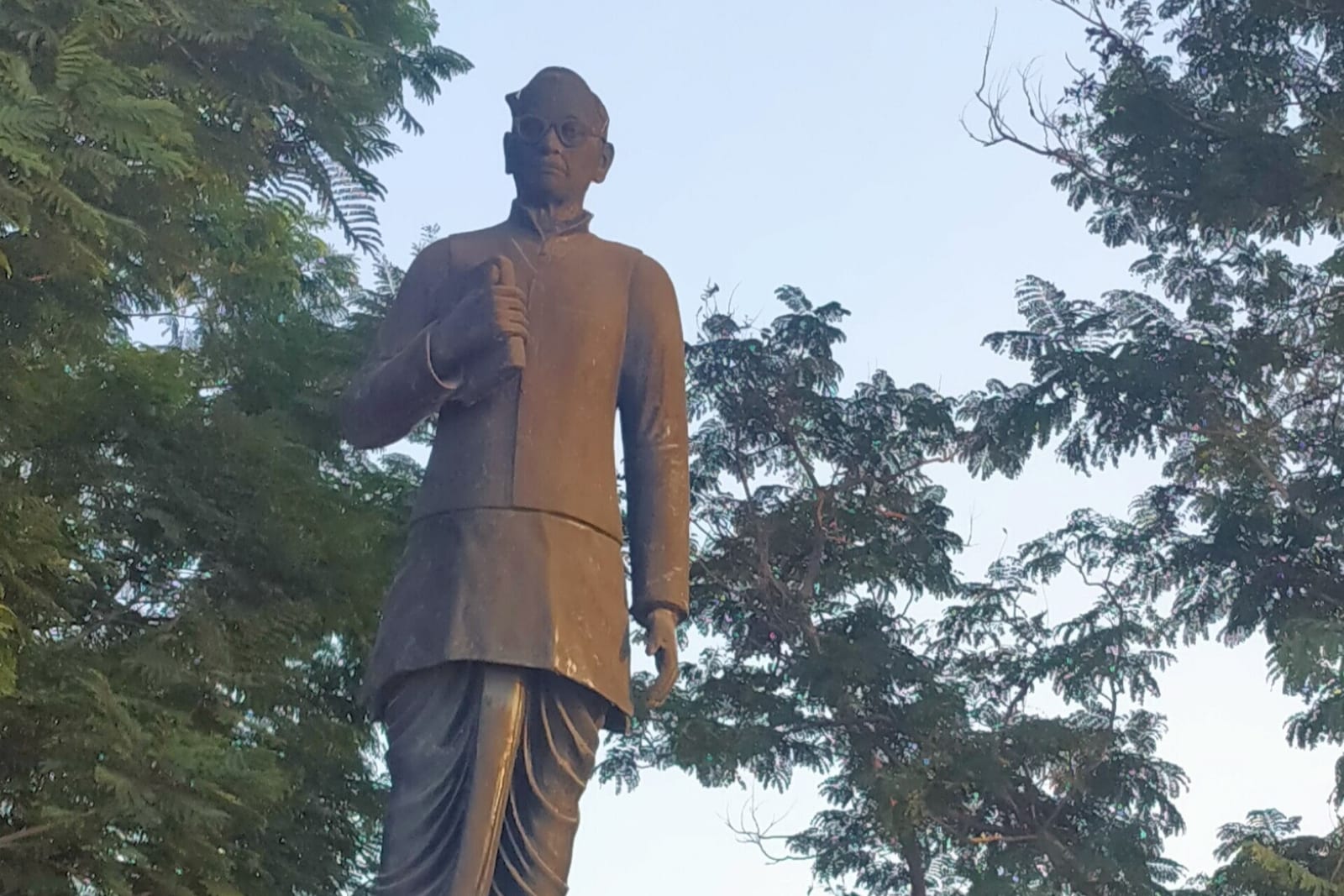
Walked out on as a boy poet in Vinukonda, the Telugu Dalit poet mastered the classical verse of the Brahmin pandits and used it to put caste on trial, from the church pew to the temple door.
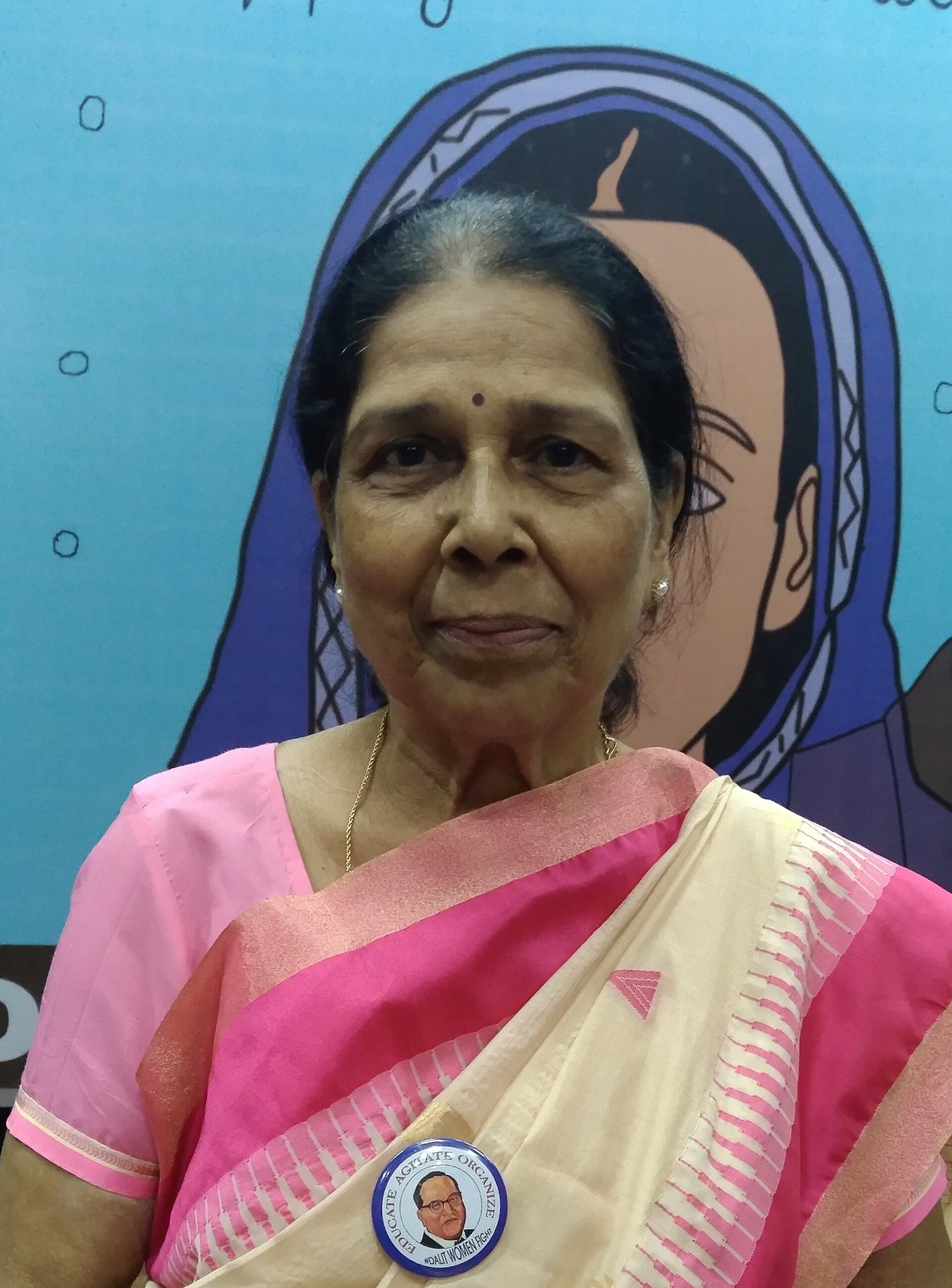
From a Konkan village to Mumbai's women's movement, the Marathi-language writer has spent fifty years putting Dalit women, and the caste and patriarchy that bound them, on the page in their own terms.
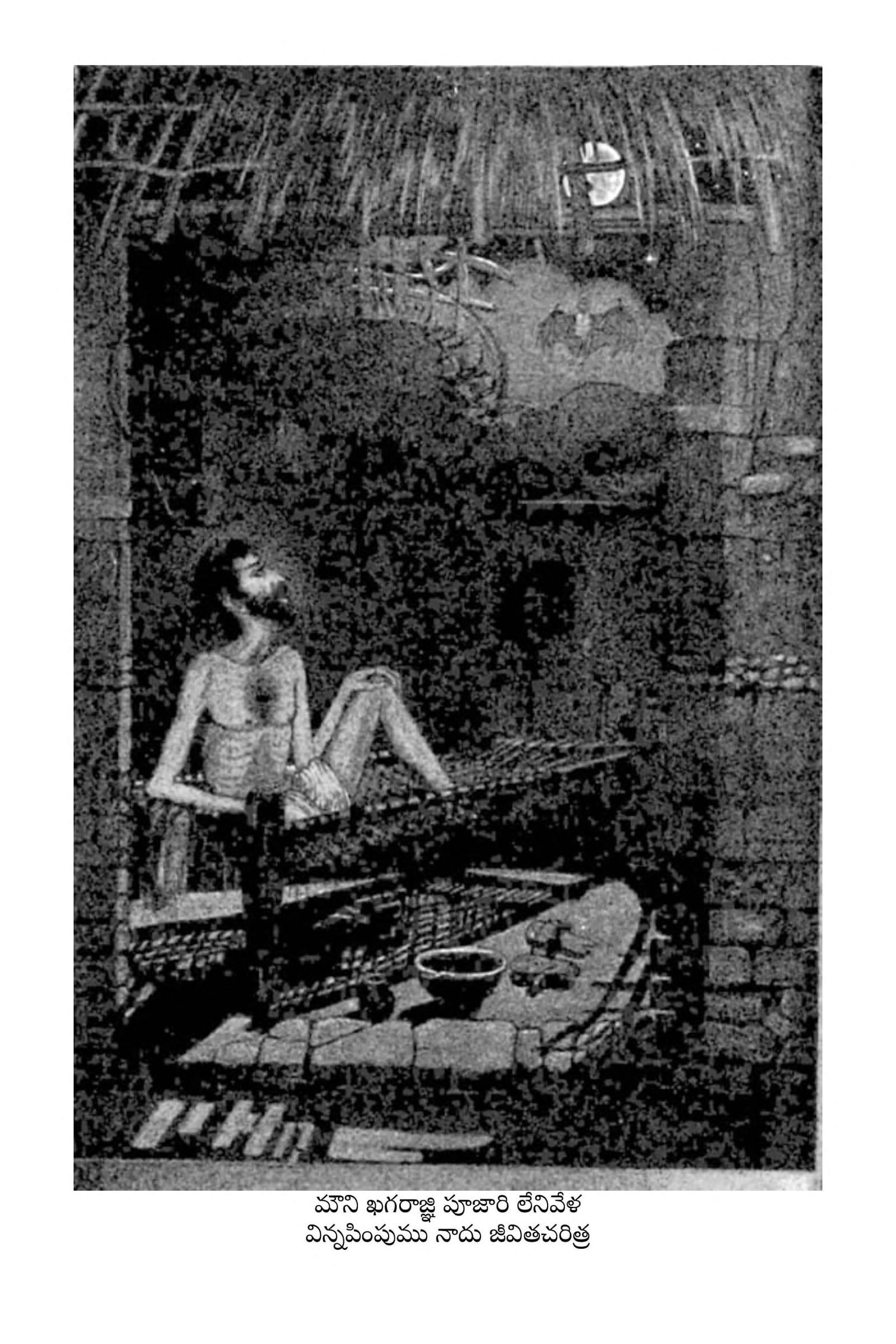
Gurram Jashuva's Telugu poem turned a Sanskrit love-messenger poem into a Dalit man's case against caste, and it still cuts. Its faith in Gandhi's coming nation has aged worse than its anger.
The untouchable man and the bat: Kancharla Pandurangasarma's black-and-white copy of the painting Hanumantha Rao made for Gabbilam's first edition in 1941. — Kancharla Pandurangasarma, after Hanumantha Rao (1941)
From the stone thrown at the camera in Fandry to an Ambedkar Jayanti dance in a Bachchan film, the Marathi filmmaker has spent sixteen years putting caste in Indian cinema's blind spot.
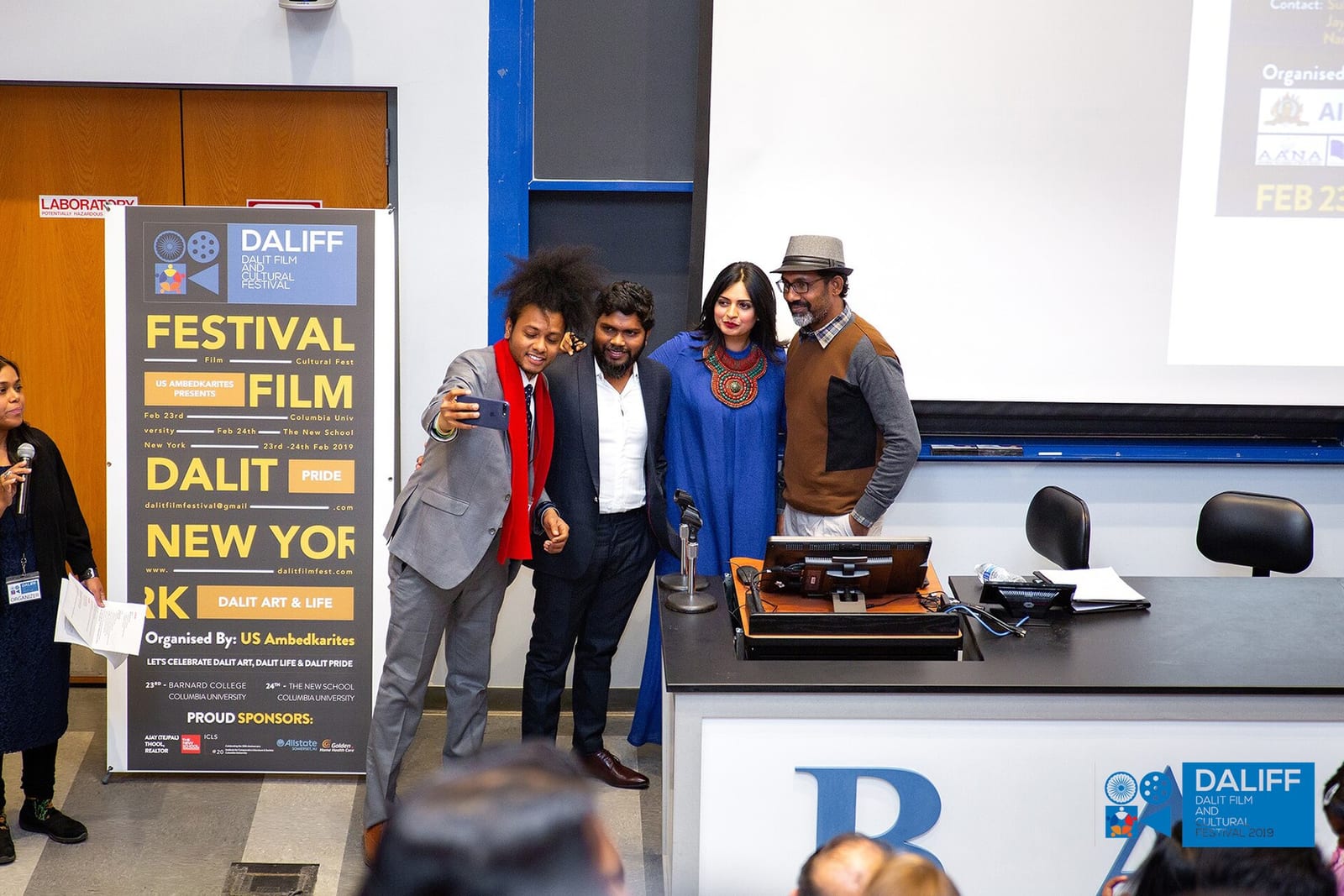
Suraj Yengde, Pa. Ranjith, Niharika Singh and Nagraj Manjule (left to right) at the Dalit Film and Cultural Festival in New York, February 2019. File photo. — RamdasIndia, CC0 1.0
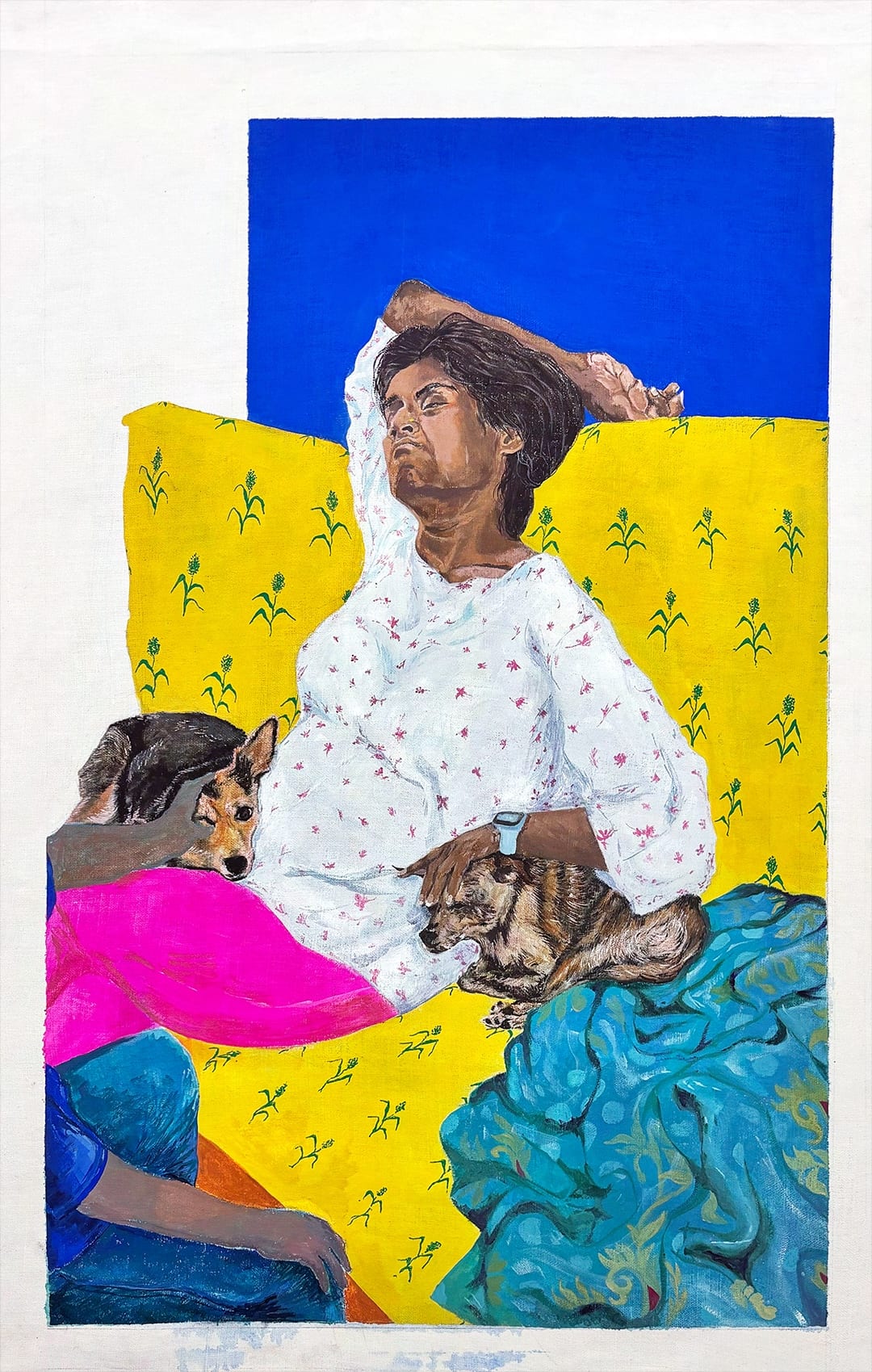
The Mumbai artist known for archiving the Dalit Panthers' magazines makes work about who gets to picture Dalit women, and what even the anti-caste movement lets them be.
Art cannot just make us feel represented. It can't only give us images of Dalit women that confirm what we already know. It also has to push us to ask, 'What do we allow Dalit women to do?'
— Shrujana Niranjani Shridhar, in conversation with Maya Varma, MoMA's post, January 2026
14
Mukta Salve's age, by Shridhar's account, when she published "About the Grief of the Mahars and Mangs" in 1855, the essay that Shridhar's series Educate starts from.
Walked out on as a boy poet in Vinukonda, the Telugu Dalit poet mastered the classical verse of the Brahmin pandits and used it to put caste on trial, from the church pew to the temple door.
Gurram Jashuva's Telugu poem turned a Sanskrit love-messenger poem into a Dalit man's case against caste, and it still cuts. Its faith in Gandhi's coming nation has aged worse than its anger.
Her book Dalit Women and the Fullness of Life is sharpest on merit, allyship and who sets the terms. Its turn to joy as a political practice is braver than it is finished.
Tamil Nadu's SC/ST Commission has given Collectors a month to strip caste names from streets and settlements. For Dalits whose address told strangers their caste, the name is the point.
The co-founder of Dalit History Month has spent more than a decade making spaces where Dalit women tell their own story. Her first book is the newest of them.
From the stone thrown at the camera in Fandry to an Ambedkar Jayanti dance in a Bachchan film, the Marathi filmmaker has spent sixteen years putting caste in Indian cinema's blind spot.
The journalist who hid her Dalit caste, then named it in public, now reports on caste in the diaspora and helps organise New York's caste-law campaign. She answers her Dalit critics in print.
The Telugu Dalit writer has turned the speech of Madiga women in a Telangana village into literature, and gathered eight decades of Dalit women's writing in Telugu into print.
He went from driving an auto-rickshaw in Chalakudy to about 200 films and folk albums that sold in the millions. Ten years on, his memorial is still, in his director's words, fallow land.
From a Konkan village to Mumbai's women's movement, the Marathi-language writer has spent fifty years putting Dalit women, and the caste and patriarchy that bound them, on the page in their own terms.
Gidla traced her Dalit Christian family's caste through mission schools, communist parties, a police cell and a New York subway job. Her newest writing turns to her mother.
A paper at this year's FAccT conference argues that auditing AI image models for caste bias one category at a time misses how caste works: as a ranking between groups.
The Tamil novelist, who died in July aged 79, spent five decades writing the black-soil south and the people at the bottom of its order. He rejected the "Dalit writer" label.
A new book asks what is left over when a story about a Dalit woman is neither an atrocity report nor an inspiration reel. That question is the book's argument before a single chapter is read.
The Mumbai artist known for archiving the Dalit Panthers' magazines makes work about who gets to picture Dalit women, and what even the anti-caste movement lets them be.
The Dalit Panthers' little magazines survived on their own people's shelves. Shrujana Niranjani Shridhar is scanning and translating them, arguments and art alike.
Tamil cinema's anti-caste filmmakers built their own institutions and audiences before Mumbai noticed — calling that a 'crossover' gets the story backwards.