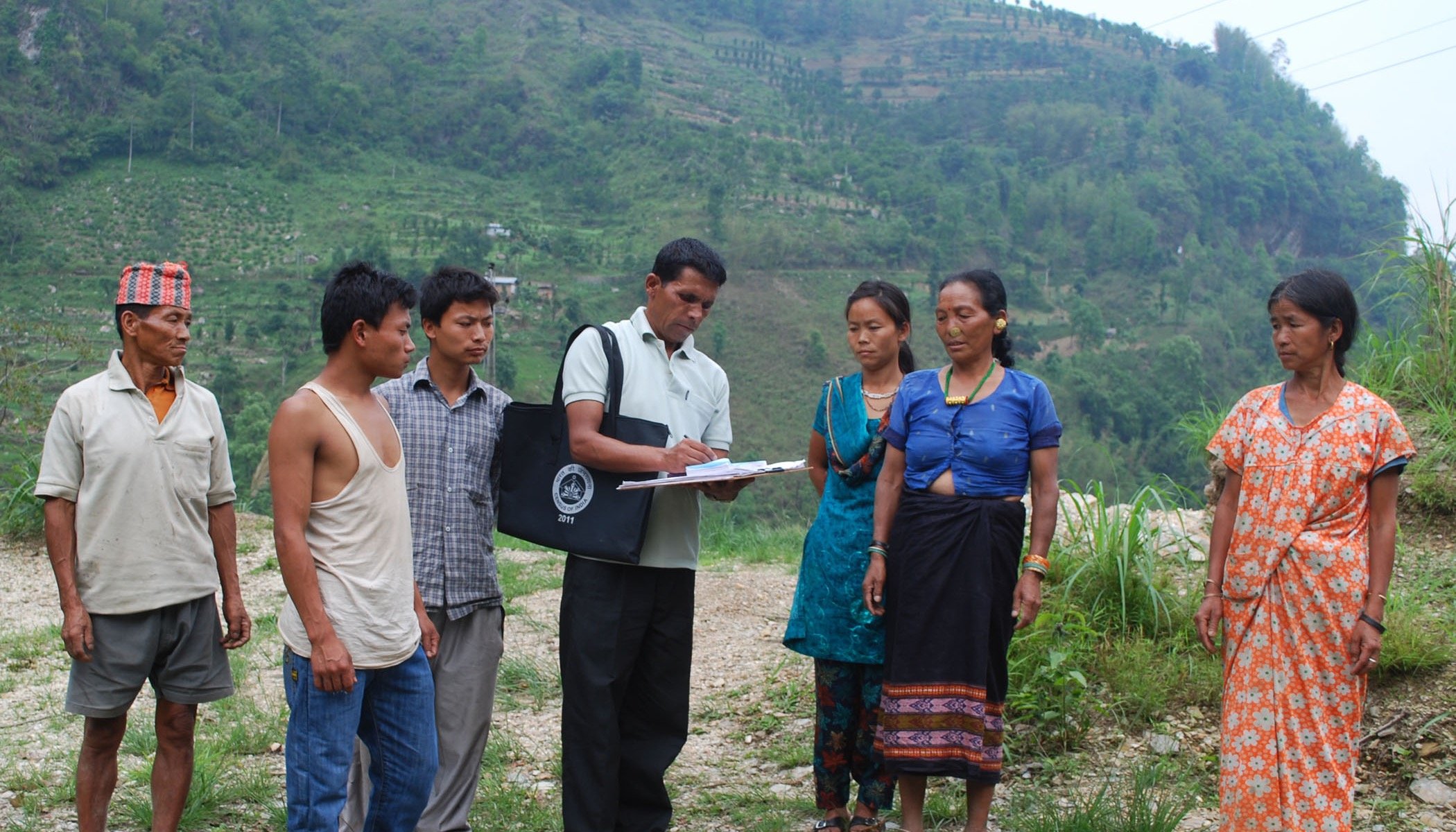
India’s new census has its first households. Ladakh, the high Himalayan territory in the far north, went first, with snow-bound areas of three other Himalayan regions: Jammu and Kashmir, Himachal Pradesh and Uttarakhand. Their door-to-door count was set for September, and it is anchored to midnight on 1 October 2026. Those households were the first in a live count to meet question 10, the caste question. Everyone else in India answers in February 2027.
The question works in two ways. Most Dalits, the communities once branded “untouchable”, are recorded against a list. In the July trial whose method the count follows, Scheduled Castes, the constitutional list of Dalit communities, and Scheduled Tribes, the list of Adivasi (Indigenous) communities, were recorded with existing community codes. Everyone else names a caste in their own words, which the enumerator records as declared. That blank field is where the dominant castes will be counted. Who turns the answers into numbers, and which Dalits the list leaves out, is still open.
What happened
On 14 August 2026 the federal Ministry of Home Affairs published the 40 questions of the census household schedule in the Gazette of India, the government’s official journal. Question 9 is religion. Question 10 reads: “Scheduled Caste (SC)/ Scheduled Tribe (ST)/Caste”.
The form had been tried first. From 6 to 20 July, a pre-test in 16 states and federally run union territories used an “open column” for caste. Officials said then that the trial format was not final and that the method would be decided once feedback from the exercise was assessed. Twenty-five days after the trial was due to end, the notification fixed the wording of question 10, and the count in the mountains kept the open field.
Why it matters
Since independence, the census has counted castes only within the Scheduled Castes and Scheduled Tribes. Asking everyone is a first for independent India.
The method has been tried once before. The Socio Economic and Caste Census of 2011 also let people name their caste, and in a 2021 affidavit to India’s Supreme Court, Telangana Today reported, the federal government said it had produced more than 4.6 million different caste names, with one community spelt 40 ways by different enumerators. It called the data unusable for reservation, India’s system of quotas in public jobs, education and elected bodies, and said: “It would have been ideal for the Registry of Castes that there should have been given a drop down menu for selection of the castes.” In 2027 there is again no list to pick from for anyone outside the Scheduled Castes and Scheduled Tribes: the enumerator writes down the caste as declared.
More than 4.6 million. Different caste names recorded by the 2011 Socio Economic and Caste Census, which also asked people to name their caste. In Maharashtra alone, 428,677 names were recorded against 494 entries on the state’s official lists. Source: federal government affidavit to the Supreme Court, 2021, reported by Telangana Today
When is everyone counted?
- Houselisting, the first phase, which records the condition of homes and the amenities and assets households have, ran from April to September 2026, with each state choosing a 30-day window. Two flood-hit districts of Assam, in the north-east, Charaideo and Sivasagar, have until 31 October.
- The snow-bound areas counted people early, before winter closes the roads: households could fill in the form online from 17 to 31 August, the schedule put enumerators at the door from 1 to 30 September, and a revisional round runs from 1 to 5 October. Large defence establishments along Ladakh’s borders with China and Pakistan are recorded on paper schedules, because they cannot be geo-tagged for security reasons.
- Everyone else is counted in February 2027, to a reference date of midnight on 1 March 2027.
Because about four in five of Ladakh’s people were counted as Scheduled Tribes in 2011 (218,193 of 274,289 across Leh and Kargil, the census figures as compiled by the National Health Systems Resource Centre, a government body), the open question there reached only the minority outside the SC and ST lists. The real test of the blank field comes in February.
Which Dalits does the list leave out?
The Scheduled Caste list is set by the Constitution (Scheduled Castes) Order, 1950, which recognises Dalits only among Hindus, Sikhs and Buddhists. Dalit Christians and Dalit Muslims cannot be coded as Scheduled Castes. Officials told India Today in 2025 that every person would be asked their caste along with their religion, Muslims and Christians included. Under the method the count uses, that means writing it in.
Many Dalit Christians stay Hindu on paper to keep Scheduled Caste status, Christianity Today reported in April. “Dalit Christians should be allowed to record both their identities,” Asir Ebenezer, general secretary of the National Council of Churches in India, told the magazine. “Denying that choice amounts to discrimination.”
Why do states and scholars object to the open field?
i
Public domainOriginal on Wikimedia CommonsTwo state assemblies have asked the federal government to change it. Tamil Nadu’s, in the south, resolved on 8 September that the open-column method be dropped for its Backward Classes, whose names should instead be picked from official lists in a drop-down menu. Neighbouring Telangana’s asked in September for question 10 to name the Other Backward Classes (OBCs), India’s intermediate castes, alongside the Scheduled Castes and Scheduled Tribes.
Sumit Baudh, a legal scholar who has written of coming out as Dalit, argued in Scroll as the pre-test closed that both designs on offer fail the same people. A closed form puts the OBCs and the dominant castes in one box marked “Other”; an open one “guarantees a flood of self-reported variants”. He proposed a third path: a coded list of caste names, built the way the OBC lists were, with a write-in field kept for exceptions and expert coding before anything is published.
“Two opposite designs have one identical outcome: the OBC and the General category [castes outside the quotas] – the population a caste census was revived specifically to make visible – remain, by design, unseen.”
— Sumit Baudh, in Scroll, July 2026
The economist Sukhadeo Thorat, a former chair of the University Grants Commission, India’s higher-education regulator, who grew up in the Mahar Dalit community of Maharashtra, in western India, told The Hindu, The Mooknayak reported, in May 2025 that the earlier failures can be fixed: “Since the errors from these attempts have already been identified, we know the problems and they can be overcome.”
What can a blank field do for Dalits?
It can carry a name the state did not choose. In the 1920s, Mangoo Ram’s Ad-Dharm movement argued that the Dalits and other oppressed castes of Punjab, in India’s north-west, were neither Hindu nor Sikh, and the 1931 census recognised Ad-Dharmis as a separate religion and caste community. On 12 July 2026, thousands gathered in Phagwara, in Punjab, to demand that a Ravidassia identity, built around the 15th-century poet-saint Guru Ravidas, be recognised in Census 2027 under a separate column: a century-old claim, made again.
The open field leaves that naming to the person answering. What it does not settle is what the state does with the names.
Who sorts the answers?
Officials told India Today that caste names would be recorded but not classified into reserved and non-reserved categories within the census, and that there would be no check on what people declare. Quotas will still go by official caste certificates. The step that turns millions of written answers into caste tables, and decides which are published, comes after the count. The last full list, from 1931, became the frame for the Scheduled Caste list India still uses.
Key terms
- Scheduled Castes (SC): Dalit communities listed under the Constitution for reserved seats, jobs and college places.
- Scheduled Tribes (ST): Adivasi communities on a parallel constitutional list.
- Other Backward Classes (OBC): intermediate castes on federal and state lists, with their own quotas.
- Reference date: the moment a census count describes, whenever the household is visited.
- Self-enumeration: filling in the census form online before the enumerator’s visit.
What’s next
The revisional round in the mountains ends on 5 October. The rest of India meets question 10 in February. After that, the fight moves to the tables: what the count can change for Dalits, and what it can’t, depends on what the census office chooses to publish.