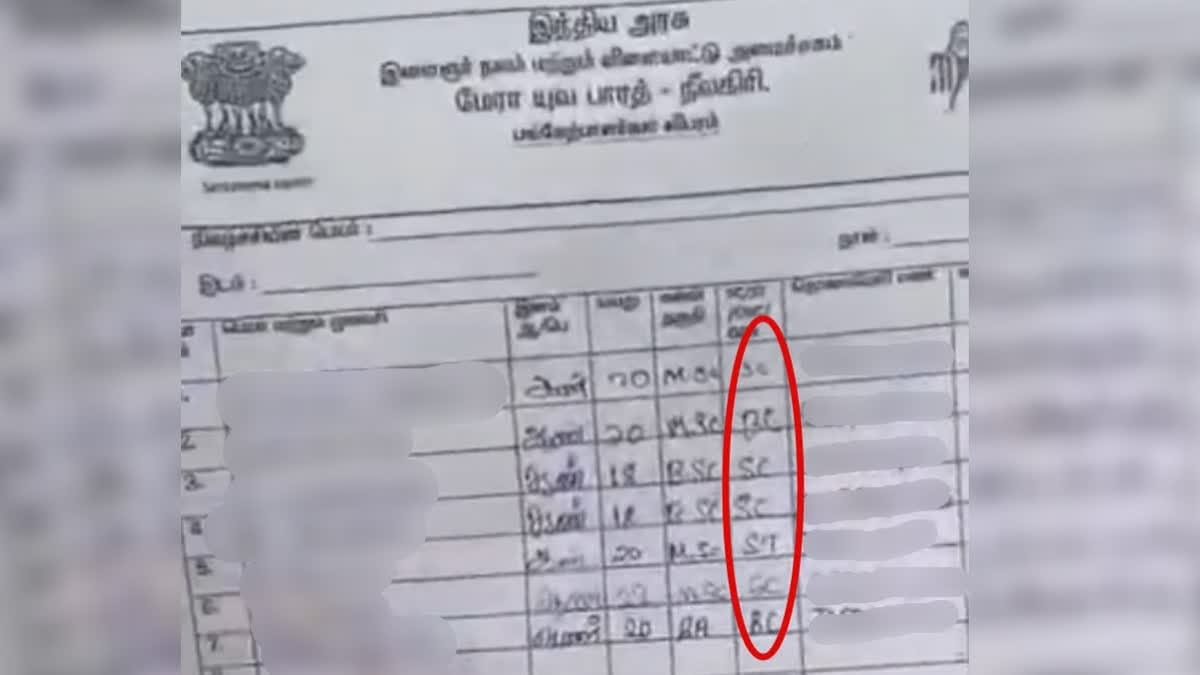
A student at a government college in Ooty, a hill town in the Nilgiris district of the southern state of Tamil Nadu, was filmed at a blood-donation camp asking the question that became the story: would blood be accepted or rejected based on caste? The form, the college says, came from Mera Yuva Bharat (MY Bharat), a youth platform run by India’s federal Ministry of Youth Affairs and Sports, and the college never asked for it. India’s model blood-donor questionnaire has no caste field, so the question is what that form was for. No public explanation has been reported.
What happened
On Wednesday, 30 September 2026, the Government Arts College, the Government Medical College and the state Health Department held a blood-donation camp on the college campus, according to DT Next, a Tamil Nadu newspaper, and Minnambalam, a Tamil news site. Students who donated gave basic details to the medical college’s register. Members of MY Bharat then allegedly distributed separate forms asking for each student’s name, age, course, mobile number and caste. Some students objected at once, and a video of the forms being handed out and filled in spread on social media.
“Will they accept blood based on caste? There is no need to give blood by stating caste.” — A student in a video of the camp, as translated by ETV Bharat
The principal, A Ebanasar, said the college had neither sought this information nor authorised the forms. “Only the name, age, course and mobile number of students were entered in the register maintained by the Government Medical College when the camp was inaugurated. Students were not asked to fill out any additional forms,” he told DT Next. He lodged a police complaint against a MY Bharat coordinator, alleging that he had attended the camp without the college’s permission and distributed the forms, and describing the alleged collection as an act of cheating the institution. Ooty police received the complaint and began an inquiry, ETV Bharat reported; no case against him has been reported. “Outsiders entered the college claiming to be participants in the blood donation camp,” N Shenbagalakshmi, the regional joint director of collegiate education, a state higher-education official, told DT Next. A senior police official told DT Next the matter had since been resolved. No public response from MY Bharat or the coordinator has been reported, and none of the reports says either was asked for one.
Why it matters
Caste on a form is never a neutral field in India. A caste category decides access to reserved seats and public jobs, and it can mark a person out. When the state does ask, it says why: the census now under way asks a caste question on a published schedule, as part of a national count. Even then, the count is not neutral ground. The census “is imagined as neutral, whereas data production is always political and can be deployed for agendas contrary to social justice,” Anand Teltumbde, a Dalit scholar, told Countercurrents in December 2025. If that holds for a census, it holds more for a form whose purpose has not been publicly explained. The blood camp’s own register did not ask for caste at all.
The students’ objection also matters. They objected immediately, the principal said, and asked on camera why the question was there. The college’s complaint came after them.
Did the blood camp need caste?
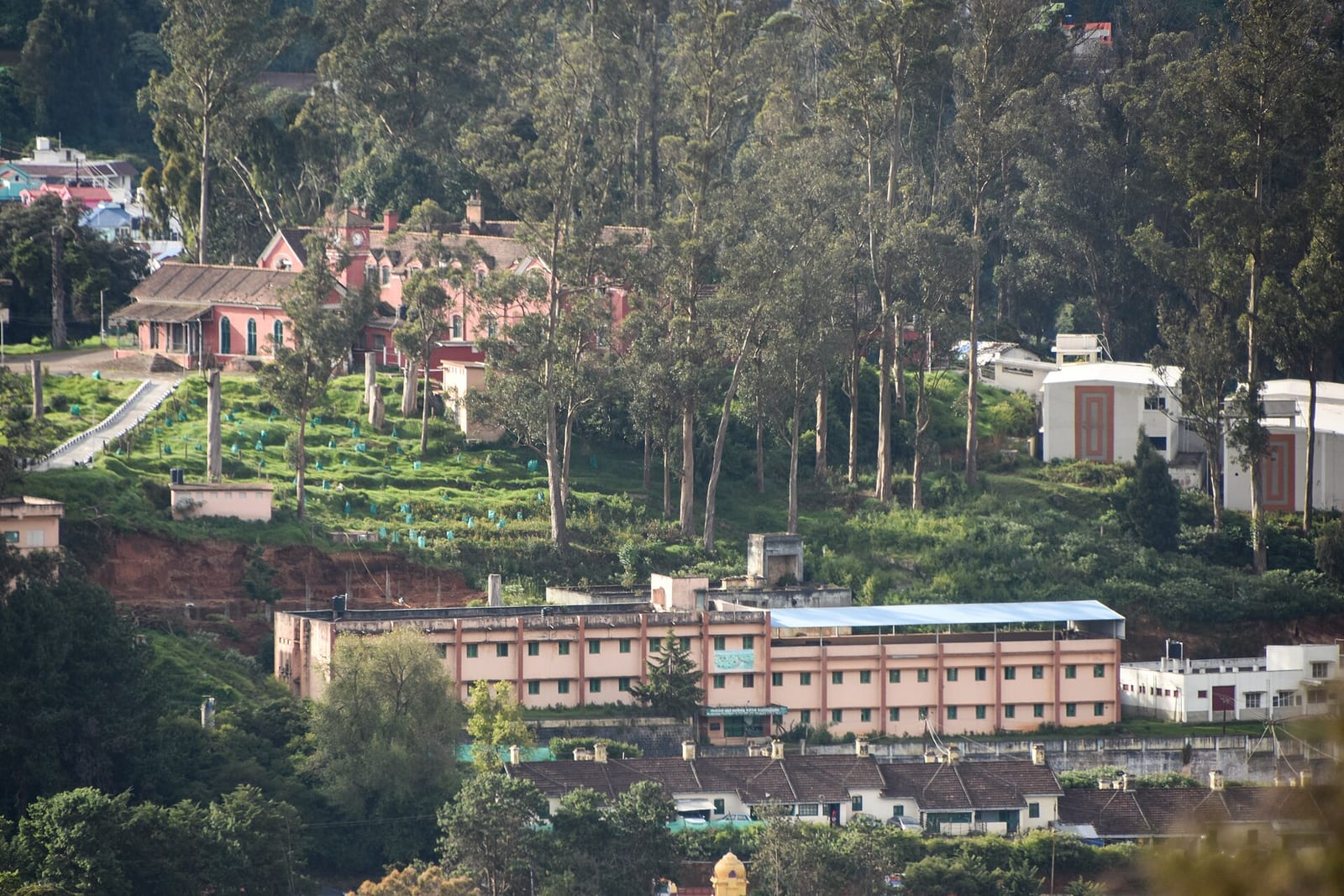
i
CC BY-SA 4.0Original on Wikimedia CommonsNo. India’s own model does not ask for it. The sample donor questionnaire in the National Blood Transfusion Council’s 2017 guidelines for selecting blood donors asks for name, date of birth, sex, age, addresses, phone numbers and email, then medical questions. It has no caste field. The organisers’ own record, the medical college register, took only name, age, course and mobile number, the principal said. The caste question came on a second form, from a different body, that the college says it had not seen.
Does MY Bharat ask for caste elsewhere?
Yes. MY Bharat’s national online registration form makes a caste category a required field for users in India, with six options: General, EWS (the Economically Weaker Sections quota), two Other Backward Classes (OBC) options, SC and ST. Those are the official categories: Scheduled Castes (SC) are the constitutional list of Dalit communities, the communities once branded “untouchable”, and Scheduled Tribes (ST) the list of Adivasi (Indigenous) communities.
What does MY Bharat say it does with the data?
17 kinds of personal data MY Bharat’s privacy policy lists what it collects, from name and mobile number to marksheets, blood group and a photo ID number. Caste is not on the list. Source: MY Bharat privacy policy
Its privacy policy, last modified on 31 October 2023, lists 17 kinds of personal data it may collect, ending with “etc.”. Caste is not among them, though its own registration form requires a caste category. The policy says the data can be used by “Partners”, which it says include central and state governments, academic institutions, public sector units, “Private Companies”, small businesses and NGOs. It keeps personal data for as long as an account exists, and uses pooled data for “reports, heat maps, and other statistical visualizations”. It does not say who saw the Ooty paper forms, where they went, or how long they will be kept.
What does the law say?
India’s Supreme Court held in 2017, in the Puttaswamy case, that privacy is a fundamental right under the Constitution. The Digital Personal Data Protection Act, 2023, India’s data protection law, builds on seven principles, among them consent, purpose limitation and data minimisation: collect only what a stated purpose needs, and use it only for that purpose. The rules under the Act were notified on 14 November 2025 with an 18-month period for phased compliance. Under them, every data fiduciary, the organisation that decides why and how personal data is used, must issue a separate consent notice explaining “the specific purpose” for which the data is collected and used, the government said.
So the principles are on the books. Whether the law’s duties reach a paper form handed out at a camp, the reports do not say. The Ooty form, whose purpose has not been publicly explained, shows how far practice can sit from the principle.
Key terms
- MY Bharat (Mera Yuva Bharat): a youth platform of India’s federal Ministry of Youth Affairs and Sports, with a national online registration and district coordinators.
- Caste category: the official group a person belongs to for reservation: General, EWS, OBC, SC or ST. Different from a person’s caste, the specific community.
- Digital Personal Data Protection Act, 2023: India’s data protection law. Its rules set duties for “data fiduciaries”, the organisations that decide why and how personal data is used.
- Purpose limitation: the principle that personal data may be collected only for a stated purpose and used only for it.
What’s next
The principal said an inquiry is under way, and police in Ooty received his complaint, even as a senior official called the matter resolved. Two questions remain for MY Bharat: why a caste column was on a form handed out at a blood camp, and what has happened to the forms the students filled in. For now, students’ best protection is the one they used in Ooty: asking why, out loud.