On 17 March 2026, a special court for caste-atrocity cases in Veraval, a town in the western state of Gujarat, sentenced five men to five years in prison for the 2016 attack in Una, in which a group of self-styled cow protectors, dominant-caste men by Deccan Herald’s account, beat four Dalit men and paraded them through the town. Dalits are the communities once branded “untouchable” under India’s caste order. The court found the five guilty under the Scheduled Castes and Scheduled Tribes (Prevention of Atrocities) Act, India’s 1989 law against caste violence, and under the penal code for hurt, wrongful confinement and insult, Deccan Herald reported. All five had already spent more than five years in jail, so they may not have to serve any more of it. The court acquitted 35 others, and found no evidence for the charges of attempt to murder, unlawful assembly and conspiracy, the ones that carried a possible life sentence, the same report says.
Five months later, on 5 August 2026, a special court in Merta, a town in the north-western state of Rajasthan, acquitted all 40 people charged over the 2015 Dangawas massacre, in which a mob killed five Dalit men over a land claim. The judge found the violence proven “beyond any doubt” and the involvement of any one of the accused unproven, The Wire reported. The Dalit Project examined that verdict in September.
The two verdicts fail in different ways, and neither is an exception. The Atrocities Act names the caste crime. In court, that name rarely holds: most trials do not finish in a given year, the charges that describe a crowd acting together fall away, and the convictions that remain can carry a sentence already served. India’s own crime data show how far this goes.
What the courts decided
The Una attack took place on 11 July 2016 near Mota Samadhiyala, a village in Gujarat’s Gir Somnath district. The men were skinning a dead cow, Deccan Herald reported. Videos of the assault spread and set off protests across Gujarat and beyond, DeshGujarat, a Gujarat news site, reported. The state police’s crime branch filed its charge sheet, the document that sends a case to trial, in December 2016, citing attempt to murder, kidnapping, robbery and the Atrocities Act, ETV Bharat reported.
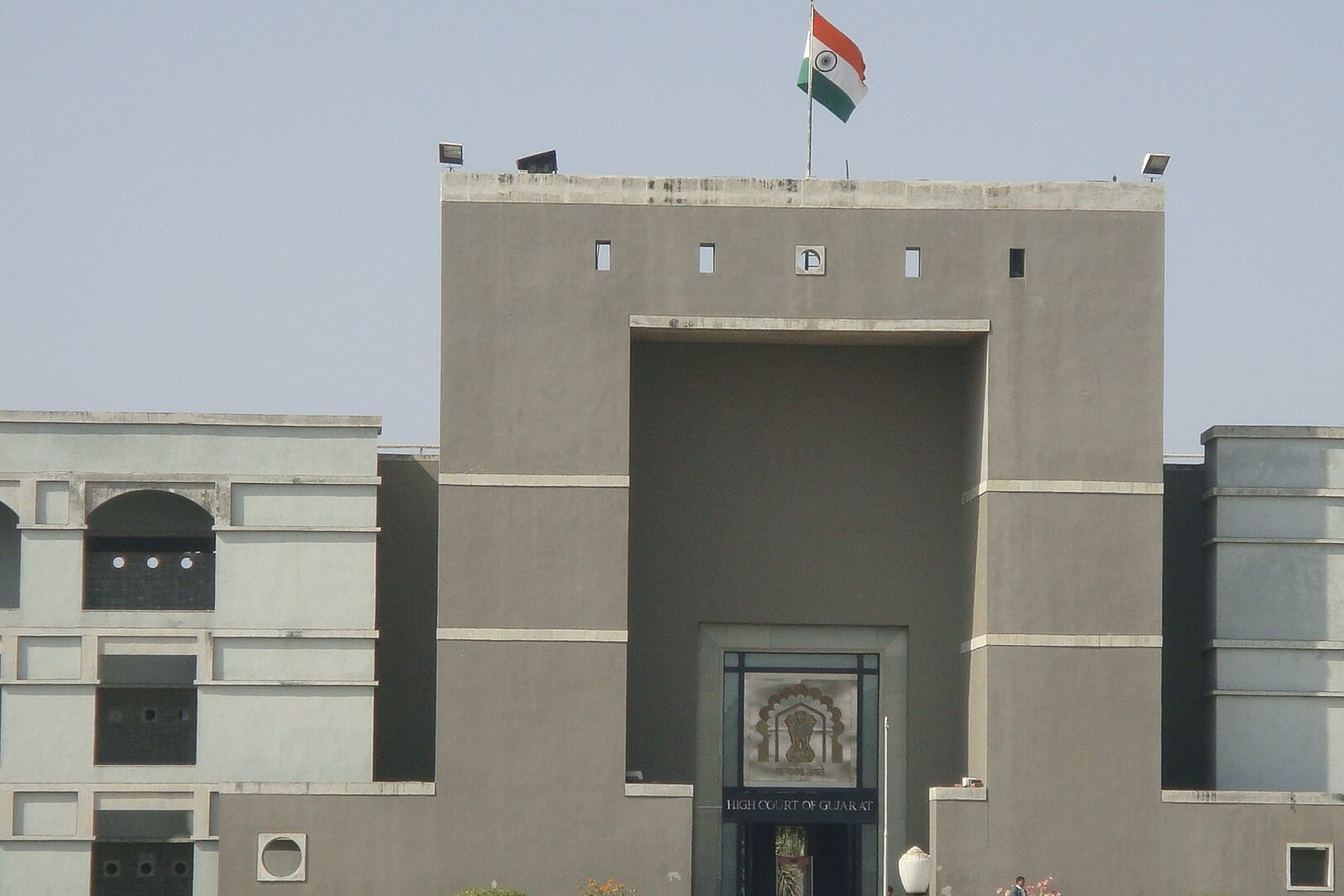
Forty-one people stood trial, four of them police officers from Una. One officer died during the trial, and the other three were acquitted, DeshGujarat reported. A defence lawyer said the prosecution “could not establish specific roles” of most of the accused, and that the offences carried a maximum of five years, which the convicted men had already spent in jail, the site added. The caste element was contested from the start. At a bail hearing in 2022, a lawyer for four of the accused told the Gujarat High Court, the state’s highest court, that “nobody knew that these are the persons who were not the minority people (sic)”. The judge called it “not a welcome argument”, The Wire, an Indian news site, reported. Vashram Sarvaiya, one of the four men and the complainant, said the family would challenge the verdict in the High Court, and in the Supreme Court if necessary, according to DeshGujarat.
In Dangawas, the special judge wrote that “the incident is proven, but the perpetrator is disproven”, and that “this failure does not arise from the skill of the defence, it arises from the prosecution’s own evidence”. No identification parade, the line-up in which witnesses pick out suspects, was held, and the tractors at the centre of the prosecution’s case were never seized or examined, The Wire reported.
The oldest of these cases shows a third way the Act drops out. In 2006, in Khairlanji, a village in Maharashtra in western India, members of a crowd killed four members of a Dalit family. Eight men were convicted of murder and none of an offence under the Atrocities Act. The Bombay High Court, Maharashtra’s highest court, reasoned that “the incident did not take place on account of caste stature”, as the 2019 order of the Supreme Court, India’s highest court, records, quoted in The Dalit Project’s account of how three courts read caste out of that case.
Anand Teltumbde, a Dalit scholar who documented the Khairlanji case, saw a pattern. “In scores of cases in trial, the courts themselves have declined to apply the Atrocity Act,” he wrote in Scroll, an Indian news site, in 2018. In a 2002 case in Dulina, in the northern state of Haryana, where a mob killed five Dalits, the court did not apply the Act, he wrote, because it said “the criminals did not know the caste of the victims”.
What the numbers show
Most cases do get past the police station. In 2024 police sent 82% of the caste-atrocity cases they closed to court, the National Crime Records Bureau (NCRB), the federal government’s crime-data agency, reports in Crime in India 2024. The pile-up is in the courts. Of 357,009 cases of crimes against Scheduled Castes, the legal category for Dalits, before them that year, trials finished in 16,973 and 339,853 were still pending at year end. Of the finished trials, 5,757 ended in conviction, 10,679 in acquittal and 537 in discharge, a conviction rate of 33.9%, the NCRB’s court table shows.
The NCRB also breaks the court results down by the kind of crime, and the gap is starkest where caste power works through a crowd. Cases of murder charged under the Act ended in conviction in 262 of 449 finished trials, 58.4%, the crime-wise table shows. Cases of rioting, the charge for violence by a crowd, did far worse:
26 of 325: finished trials in 2024 of rioting cases under the Atrocities Act that ended in conviction, 8.0%. Another 8,068 were still pending. Source: NCRB, Crime in India 2024, Table 7A.5
i
CC BY-SA 4.0Original on Wikimedia CommonsThe offences that exist only in the Act fared worse still. Courts finished 39 trials in cases of occupying or taking land belonging to Dalits or Adivasis (India’s Indigenous peoples) and convicted in none. They finished 10 trials for social boycott, forcing people from their homes, or blocking their use of a public place, and convicted in none of those either, the same table shows. The largest single group, intentional insult or intimidation meant to humiliate, ended in conviction in 234 of 814 finished trials, 28.7%, with 30,387 cases still waiting.
Gujarat, where Una happened, recorded 45 convictions, 762 acquittals and 28 discharges, a conviction rate of 5.4%. In Maharashtra, where Khairlanji happened, it was 9.3%, the state-wise table shows.
What the tables do not show is the Una pattern, where a case ends in conviction but its gravest charges fall away, or the Khairlanji pattern, where the murder charge holds and the atrocity charge does not. They record each case’s outcome, convicted, acquitted or discharged, not which of its charges survived. How often courts drop or reduce the atrocity charge itself is not counted in the NCRB’s published tables.
How the charge falls away
Part of the answer is how courts have read the Act. Until January 2016, its section 3(2)(v), which raises the punishment for serious crimes against Dalits and Adivasis, applied to a crime committed “on the ground that” the victim belonged to a Scheduled Caste or Tribe. Courts had read that as “only” on that ground. A 2015 amendment changed the test to “knowing that” the victim belonged to one. In 2021 a two-judge bench of the Supreme Court wrote that reading in “only” “would be to add a restriction which is not found in the statute”, its judgment says, but left the older rulings in place, LiveLaw, a legal news site, reported.
The insult offence has narrowed the same way. In 2024 the Supreme Court held that “mere knowledge” that a victim is from a Scheduled Caste or Tribe is not enough, and that “not every intentional insult or intimidation of a member of a SC/ST community will result into a feeling of caste-based humiliation”, SCC Online, a legal publisher, reported. Both readings make a conviction turn on what was in the accused’s minds, which the prosecution must prove on the complainant’s behalf.
The rest is how the state builds its cases. An analysis of 450 judgments of Gujarat’s special atrocity courts over the decade from 1995, by the Ahmedabad-based Council for Social Justice, found that in over 95% of cases acquittals were due to technical lapses, such as an investigation by an officer below the rank of deputy superintendent of police, or a victim’s caste certificate missing from the police complaint, Teltumbde wrote. In Rajasthan, Satish Kumar, director of the Dalit Adhikar Kendra, a Dalit rights centre in Jaipur, the state capital, said in 2023 that advocates in some special courts are chosen on political parties’ recommendations and are “neither trained nor accountable”. “This is why there are low conviction rates,” he told Newslaundry.
What the delay does
Teltumbde described how a case dies slowly. When a Dalit victim does report a crime, the pressure from the accused builds as community support fades, “invariably mediated through police”, until the victim gives in, he wrote in Scroll:
“As they go to trial, these become false cases or failed cases.” Anand Teltumbde, writing in Scroll, April 2018
Una took nearly ten years to reach a verdict; Dangawas, eleven. Bhanwar Meghwanshi, a Dalit rights activist, said after the Dangawas acquittals: “This shows how difficult it is for Dalits to get justice. This is eroding the trust in the justice system and the guarantee of justice that our constitution gives us,” The Wire reported.
The case for the courts
The strongest defence is that courts must convict individuals on evidence, and that the Act should not turn every quarrel into a caste crime. The Dangawas court held that the acquittal of the guilty is as unjust as the punishment of the innocent, The Wire reported. The Supreme Court’s insult ruling granted pre-arrest bail to a journalist accused by a legislator. And there are claims of misuse: B.R. Gavai, a former Chief Justice of India, has said he saw it misused, though rarely, Business Today reported.
None of that explains the pattern. Complaints police judge to be false are closed before they reach a court, and 4,142 of the 6,055 cases police closed as “false” in 2024 came from two states, Rajasthan and Haryana, the NCRB’s police table shows (a closer look). The cases above were investigated and sent to trial. In Dangawas, the judge placed the failure on the prosecution’s own evidence. In Una, where the assault was filmed, five men were convicted, and the defence’s own explanation for the 35 acquittals was that the prosecution could not establish who did what. Rioting cases, the charge built for crowds, ended in conviction in 8% of finished trials. When the state does not identify a crowd’s members, a standard of proof that a crowd can defeat simply by being a crowd leaves crowd violence unpunished.
What to watch
- The Una appeal. The family has said it will go to the Gujarat High Court (DeshGujarat).
- The Dangawas appeal. The family plans to appeal to the Rajasthan High Court, Forward Press, an Indian magazine, reported.
- The “only” question. The Supreme Court’s 2021 bench kept the question of the old wording “open and the debate alive for a later date and case” (LiveLaw). Khairlanji, a 2006 crime, was judged under the old words.
- The 2025 figures. The NCRB’s next Crime in India will show whether the court backlog, which has grown for three straight years, keeps growing.
In Una the law did its part on paper. It named what happened a caste atrocity, and the court convicted under it. Then the sentence matched the time the men had already spent in jail awaiting trial, and 35 others were acquitted. Whether anyone answers for a caste crime is decided in the courts, and in 2024 they decided fewer than 5 of every 100 cases before them.