At the United Nations in late September, Nepal’s foreign minister told the world that his country had already said sorry to Dalits, the communities its caste order once branded “untouchable”. Shisir Khanal, addressing a General Assembly meeting in New York that marked 25 years since the Durban declaration against racism, “reminded the global community of the heartfelt apology made to the Dalit community in Nepal”, Republica reported. The paper tied it to a statement that Rabi Lamichhane, chair of the ruling Rastriya Swatantra Party (RSP), had made in parliament.
At home, the apology that Nepal’s government promised Dalits had still not been made, by mid-August, in the form the government itself set out. In the same six months, a 23-year-old Dalit man, Shree Krishna BK, died in police custody, and the only inquiry into his death was run by the police. The two records end in the same place. In each, the state chose the instrument it controls: a party leader’s speech in place of a Cabinet decision, and a police committee in place of an independent investigation. Both instruments sit inside institutions in which Dalits, about 13 to 14 percent of Nepal’s people, hold very little power.
What was promised, and what was delivered
On March 27, the first Cabinet meeting of Prime Minister Balendra “Balen” Shah’s new government approved a 100-point reform agenda. Point five pledged a formal state apology within 15 days. “We will formally acknowledge the injustice, discrimination and deprivation of opportunities inflicted on Dalits and historically marginalised communities by the state, society and policy structures,” the agenda said.
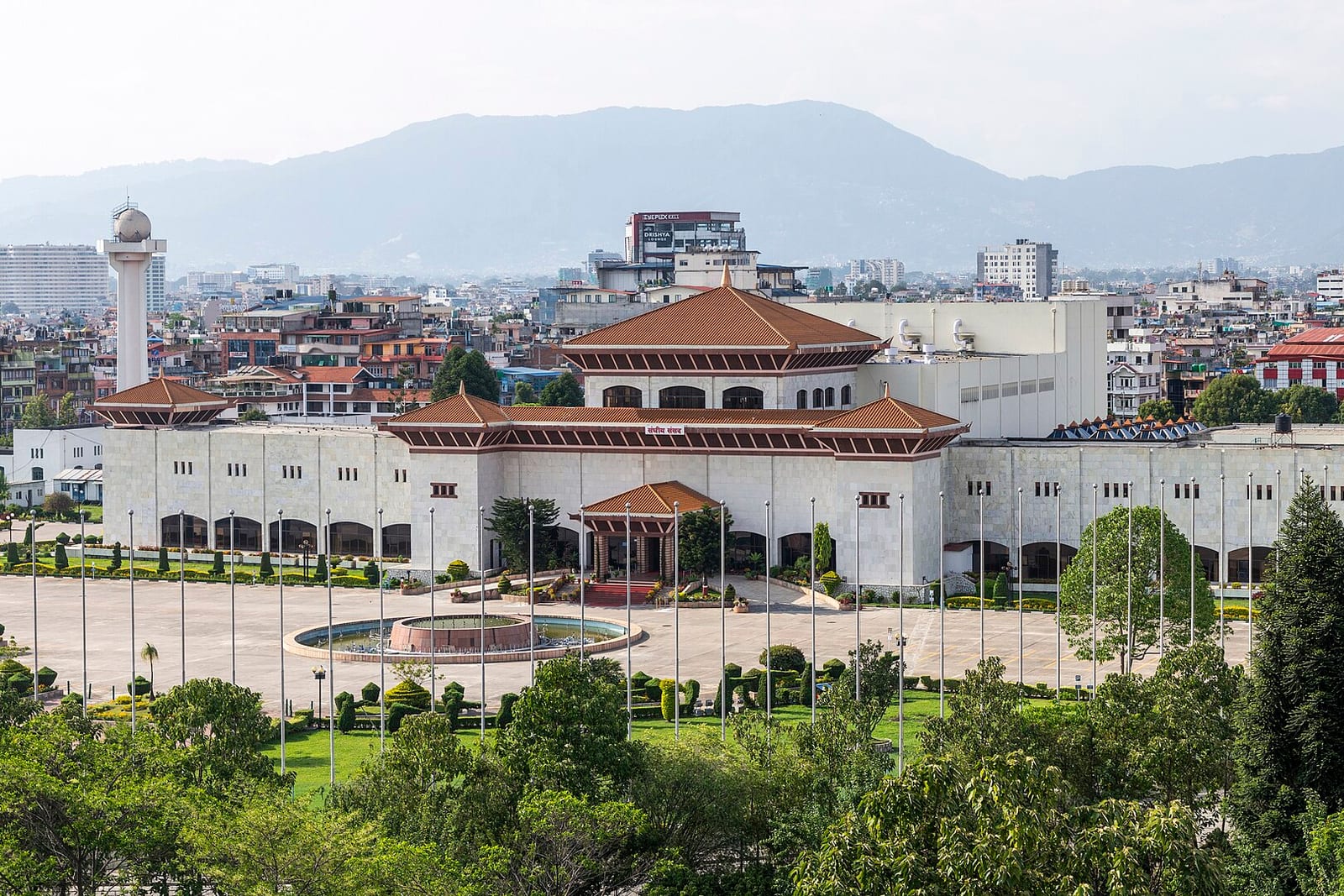
On April 2, Lamichhane rose in the House of Representatives, the lower house of Nepal’s parliament. “No Nepali shall ever have to bow down again in the name of caste. I apologise on behalf of my entire party, the prime minister, and the government,” he said. Mitra Pariyar, a Dalit rights activist and Kathmandu Post columnist, wrote that a party chair’s words cannot be a state apology. By his account a state apology needs a written decision passed by the Cabinet, published in the Nepal Gazette, the official record of state decisions, and presented to both houses by the prime minister. “Only the things published in a gazette become truly official, which are required to be honoured by all state bodies,” he wrote. How the 15-day deadline passed, and the sit-in that has outlasted it, is set out in a separate report.
The government says the pledge stands. On August 13, answering questions in the National Assembly, parliament’s upper house, on the prime minister’s behalf, Law Minister Sobita Gautam said a “bill relating to Dalits’ rights and development” had been drafted under Article 40 of the constitution, which sets out Dalits’ rights, and that an expert committee was taking it forward. She pointed to budget measures: 3 billion Nepali rupees (about US$21 million) for Dalit children under five, and a child support allowance doubled to Rs 1,000 (about US$7) a month. The same Republica report recorded the gap: “Four months after the agenda was unveiled, no formal apology has yet been issued,” and “neither the prime minister nor any other government official has apologized in Parliament or at a formal ceremony.” Six weeks later, the foreign minister was citing the apology in New York.
The death the police investigated
Shree Krishna BK died in police custody on April 20 in Sindhuli, a hill district in Bagmati province south-east of Kathmandu. He had been held for four days in a criminal investigation opened on a complaint against him. His family told the Kathmandu Post that prejudice against a relationship across caste lines, along with police negligence and procedural failures, contributed to his death. Police say he took his own life. His relatives claim he was pressured to sign a statement and subjected to physical and mental torture in custody. They also question why CCTV footage from custody has not been made public.
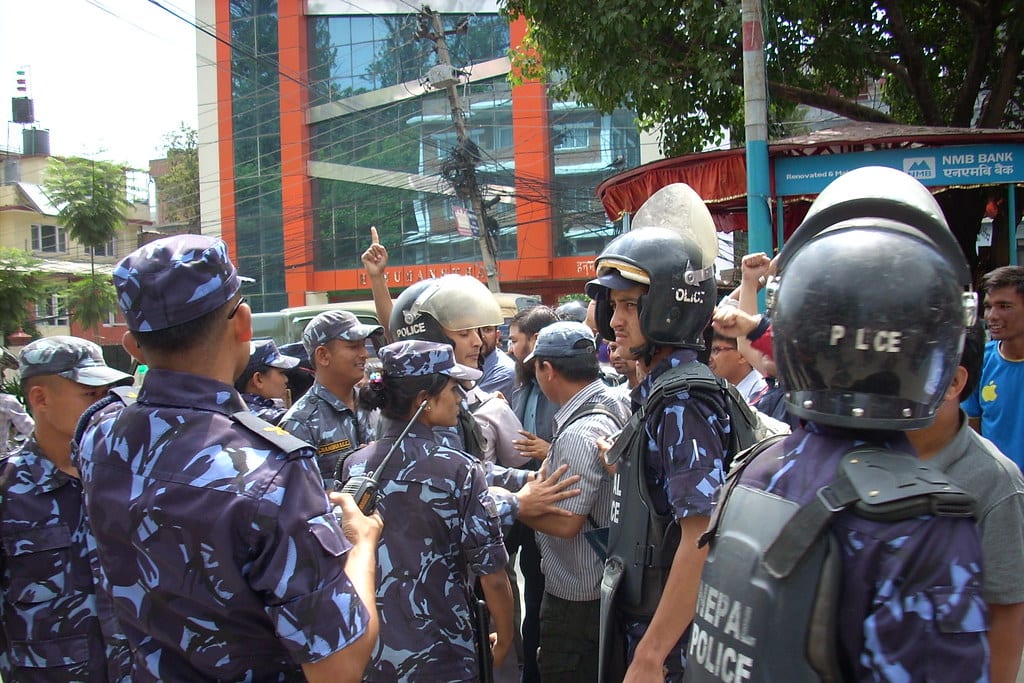
On April 23, RSP lawmakers and activists sat in overnight at the district administration office in Sindhuli. The next day, Inspector General of Police Dan Bahadur Karki, the head of Nepal Police, formed a five-member committee under Dinesh Kumar Acharya, a Deputy Inspector General, one of the force’s senior ranks. On April 28, his mother, Binda Maya BK, went to the police to file a First Information Report (FIR), the complaint that opens a criminal case. Both the police and the government attorney refused to register it. “My son died after torture in custody. Neither the police nor the government attorney agreed to register my complaint. I have sent the complaint via post,” she said.
The committee found no evidence of physical or mental torture, and the government said the post-mortem findings were consistent with suicide. It recommended action against 10 police personnel, from a Superintendent of Police down to constables. The recommended measures ranged from a warning to removal from duties for five of them and a demotion for one. It also told police to put the custody rules fully into practice, to keep off other tasks while on duty and to monitor detainees regularly.
On June 19, Home Minister Sudhan Gurung told the National Assembly: “The post-mortem report indicates that the cause of death is consistent with suicide. Additionally, the investigation report states that there is no evidence of any physical or mental torture by the police while in custody.” He said the committee’s recommendations had gone to Police Headquarters and the Sindhuli district administration for implementation, and that further investigation would continue. The report itself has not been released to the public, Pariyar wrote in July. The National Dalit Commission, a constitutional body, and Dalit lawmakers in the RSP had asked for an independent probe, he wrote. None had been ordered by July.
Binda Maya and her family held a sit-in at Maitighar Mandala, a protest square in central Kathmandu, from April 25, and refused to accept her son’s body without answers. By late June the body had been cremated, and the accounts of how differ. Hira Bishwakarma wrote in Nepal News that Dalit journalists helped secure some compensation for her, and that she cremated her son “on the condition that her fight for justice would continue.” Pariyar wrote that the government held talks with the family, and that nobody knows what was paid.
Why both records end in the same place
i
CC BY-SA 4.0Original on Wikimedia CommonsA speech and a police committee have one thing in common: the institution that answers for the harm also controls the answer. A gazetted apology binds every state body. A party chair’s speech binds none. An independent inquiry can be published and tested. A police committee’s report can stay at the Home Ministry.
Who sits in those institutions matters. Nepal’s new House of Representatives has 17 Dalit members against 134 from the Khas Arya, the historically dominant group, and the Cabinet has one Dalit minister, the Kathmandu Post noted in March. The ruling party’s 16-member secretariat has no Dalit member at all. It is 81.25 percent Khas Arya. “The police organisation cannot truly investigate the potential crimes of police officials,” Pariyar wrote.
The custody death was not a one-off, and the police’s own figures show more deaths in detention this fiscal year than in the two before combined. At least 29 people have died in custody since 2024, according to Amnesty International Nepal and Advocacy Forum-Nepal. They said detainees from Dalit and Indigenous communities face disproportionate risks of torture and abuse because of caste- and ethnicity-based discrimination.
7 deaths in police detention in Nepal’s 2025/26 fiscal year, with two months to run, against 1 in each of the two years before. Source: Nepal Police Headquarters figures, reported by OnlineKhabar.
Dalit voices on the record read the pattern the same way. “The government only pays attention after major protests. That shows how weak the state’s commitment remains when Dalits face discrimination or violence,” JB Bishwakarma, president of the Dalit NGO Federation, told the Kathmandu Post in May. Rima Bishwokarma, an RSP lawmaker who staged a sit-in over the case, told parliament on May 12: “It may not be surprising to call Shree Krishna BK’s death a suicide. But it is not natural that the majority of deaths inside custody are labelled as suicides.”
“Our son died inside state custody. If someone dies in the state’s care, justice must be delivered.” — Binda Maya BK, Shree Krishna BK’s mother, at Maitighar Mandala, to Republica
The government’s case, and where it falls short
The strongest reading in the government’s favour runs like this. The apology has not been dropped but tied to law and money, which Gautam said was the point: the government wants it linked to legal and budgetary measures rather than a symbolic statement. Gurung told parliament that Nepal Police now has a Dalit Cell for caste-discrimination cases. In May the government ordered a “fast track desk” for discrimination complaints, and the Home Secretary, the ministry’s top civil servant, said all 77 district administration offices would be told to run one. And the police committee found its own officers at fault, recommending action up the chain to a superintendent. The force’s spokesperson, Abhi Narayan Kafle, accepted that a death in custody “is the police’s responsibility” and that “such incidents have occurred due to lapses in duty.”
Each of those steps stays inside the state’s discretion. By mid-August the bill had been drafted, not passed. Whatever the budget lines deliver, Republica found no clear roadmap for the National Dalit Commission’s 15 recommendations, which include a fast-track special court. When the desks were ordered, the Home Secretary said existing laws were sufficient. The committee’s recommendations are departmental. Its report was unpublished when last reported, and the family’s criminal complaint was refused. Amnesty and Advocacy Forum put the result plainly: failing to investigate independently and prosecute has “entrenched a culture of impunity.” Pariyar also wrote that the government has dismantled two bodies set up for Dalit development, the Dalit Development Committee and the Badi Development Board, which served the Badi, a Dalit community. As activist Motilal Nepali put it when the pledge was new: “The wounds of the Dalits are deep; an apology alone will not heal them.”
What to watch
The courts may move before the Cabinet does. On August 3, Advocate Kumar Prasad Thapaliya filed a public interest petition in the Supreme Court against the Prime Minister’s Office, the Home Ministry, Police Headquarters and the prison department. It asks for a permanent, independent mechanism led by judges or experts to examine every unnatural death in custody, with autopsies video-recorded and reports sent to Nepal’s National Human Rights Commission. It says the vast majority of those who died belong to the most vulnerable groups, including the poor, Dalits and marginalised Indigenous communities.
The other tests are on the government’s own list: a Cabinet decision and a gazette notice for the apology, and a Dalit rights bill put before parliament. At Maitighar Mandala, Deepa Nepali’s sit-in against caste discrimination in rental housing passed 150 days in mid-September. “How long will the government remain silent when a woman has been on the streets for 150 days?” Parbati BK, an RSP lawmaker, asked the House on September 15.
The apology Nepal cited in New York exists as a speech. Binda Maya’s complaint was turned away at the police station, and by local accounts the copy she posted came back. On the public record, the state that is meant to answer both has registered neither.
If you or someone you know is struggling, help is available. In India, call Tele-MANAS on 14416. In Australia, call Lifeline on 13 11 14.