On 25 July 2026, India’s education minister, Dharmendra Pradhan, resigned. “We have done it, we have done it,” Abhijeet Dipke shouted into a microphone at Jantar Mantar, Delhi’s protest ground, Al Jazeera reported. Dipke founded the Cockroach Janta Party (CJP), the satirical youth movement whose weeks of protest over leaked exam papers had made that resignation its central demand. He was born into a Dalit family, he told NPR. Dalits are the communities once branded “untouchable”, at the bottom of South Asia’s caste order.
The movement he leads called itself a “secular, socialist, democratic and anti-caste organisation” from the outset, but its demands were about exams, jobs and accountability. But its founder flew into Delhi holding B.R. Ambedkar’s autobiography, its protest site rang with “Jai Bhim”, the Ambedkarite salute, and a writer who looked at its early office-bearers judged that most of them were Dalit or from the Other Backward Classes. A Dalit-led movement has carried Ambedkar’s language into what Reuters, in a story carried by Khaleej Times, called arguably the biggest street protest against Modi’s government since 2014. Dalit and Bahujan writers (“Bahujan” is a broad term for India’s historically marginalised communities) have answered with two readings: a breakthrough, and a warning about what is left unnamed.
What happened
On 15 May, during a hearing of India’s Supreme Court, Chief Justice Surya Kant said, as Al Jazeera reported: “There are youngsters like cockroaches, who don’t get any employment or have any place in the profession.” He later said his comment concerned people with fraudulent degrees, and told Bar & Bench, a legal news site: “It was never about the youth.” On 16 May Dipke, a recent public-relations graduate of Boston University who was then in the United States, posted on X, the platform formerly called Twitter: “What if all cockroaches come together?” The name of the party he set up mocks Prime Minister Narendra Modi’s Bharatiya Janata Party (BJP); “janta” means people.
Its Instagram account passed 11.1 million followers in three days, Al Jazeera reported. India’s government banned its first X account, citing “threats to national security”, NPR reported; Dipke opened another, saying “Cockroaches don’t die.”
The anger had a material cause. A leak of the May paper for the national medical entrance exam affected some 2 million students, Reuters reported in a story carried by Khaleej Times. Dipke flew back to India and, on landing in Delhi on 6 June, held up a copy of Ambedkar’s My Autobiography. Ambedkar was the Dalit jurist who led the drafting of India’s Constitution. The sit-in at Jantar Mantar demanded Pradhan’s resignation; the students held him responsible for a series of exam leaks, NPR reported. On 20 July police fired tear gas and hit demonstrators with sticks as they marched on Parliament, NPR reported; Delhi Police denied using violence. Al Jazeera reported more than 100 protesters wounded that day.
The minister’s side. Pradhan did not respond to NPR’s questions. In an interview with the news channel NDTV, NPR reported, he called the protesters “a B-team of terrorists” who were trying to “divide the country”. When he resigned, he wrote in a two-page letter posted on X that he did not want the students’ anger to be exploited by “anti-national forces”; he did not apologise for the leaks, NPR reported.
About 2 million students were affected by the May 2026 leak of India’s national medical entrance exam paper, the scandal behind the Cockroach Janta Party’s protests. Source: Reuters, via Khaleej Times
A Dalit founder, an Ambedkarite grammar
Of racism in the United States, he told NPR: “It wasn’t too different from the casteism I experienced in India.” When a user on X asked on 21 May why the movement had said nothing on reservation, India’s system of reserved places in education, jobs and legislatures for communities shut out by caste, he answered: “I am a Dalit myself.” What the replies to that post said about “merit” is the subject of “The merit card”.
He has also explained what Ambedkar means to him. In a video interview with Frontline, a news magazine, quoted by the writer and academic Pramod Ranjan on the blog Kafila, he said:
“I come from a Dalit family. That is why Dr Ambedkar has had such a profound influence on my life. If I am sitting in Boston today, it is because he secured for us the right to equality and the right to live with dignity.” — Abhijeet Dipke, founder of the Cockroach Janta Party, as quoted by Pramod Ranjan in Kafila
i
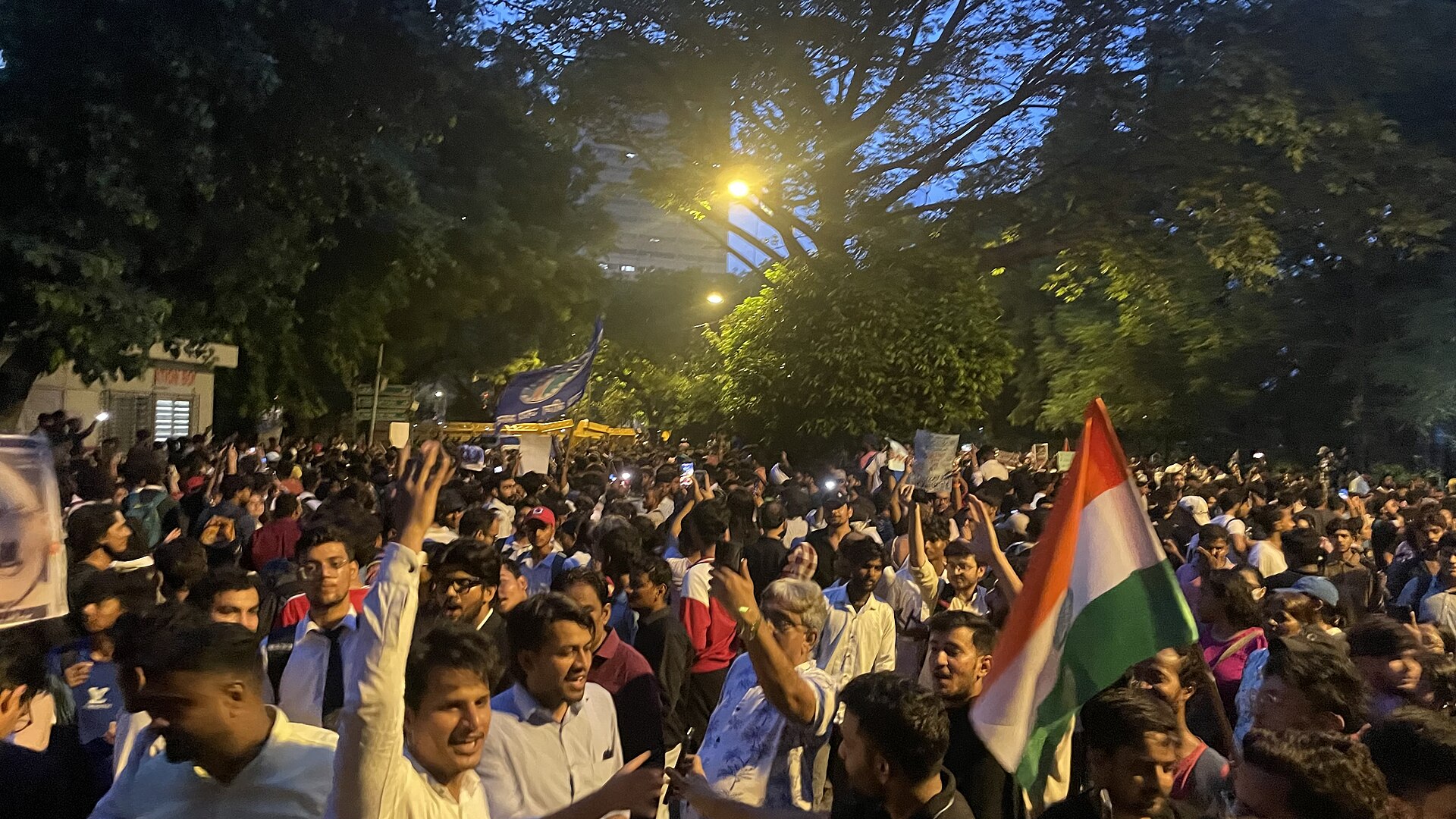
CC BY-SA 4.0Original on Wikimedia CommonsThe signs at the protest matched. On 18 July a woman threw blue ink at him while he was addressing supporters. “Blue is my colour. Jai Bhim,” he said, the news agency Press Trust of India reported. Blue is the colour closely associated with the Ambedkarite movement, Reuters noted in a story carried by WMBD Radio. From 20 June to 25 July, Ranjan wrote, the protest at Jantar Mantar “was marked above all by ‘Jai Bhim’ slogans and blue flags”. Ashutosh Ranka, a spokesperson, told protesters to use only four slogans, one of them “Jai Bhim”, and wrote on X, in Ranjan’s translation: “Jai Bhim is not a slogan of Dalits. Jai Bhim is the slogan of every true Indian who believes in equality.”
Ranjan also counted who led. Most of the early office-bearers “come from non-dwija backgrounds—Dalit and OBC”, he wrote; “dwija” refers to castes traditionally designated “twice-born”, and the Other Backward Classes (OBC) are the official category for intermediate castes. He set that against a report by the Hindi news channel TV9 Bharatvarsh that Brahmins, the priestly caste at the top of the order, were the largest group, and against social-media claims that the movement was a dominant-caste victory.
What Dalit and Bahujan writers saw
For Shruthy Harilal, a doctoral scholar at IIIT Delhi, a public technology university, who studies caste and gender, the slogan was the story. Saying “Jai Bhim” at a protest, she wrote on the site Countercurrents, used to place the speaker as “the ‘other’, that is, those from the oppressed communities.” Watching the protests, she saw it become shared: “Ambedkar’s language was no longer restricted to Dalit movements, Ambedkarite gatherings, or university spaces, but was becoming part of the wider vocabulary of democracy.” She credited “decades of work by Ambedkarites across the country”, not one leader.
Avdhesh Kumar, a journalist with the news site Newslaundry who covered the protest, wrote on X that “hardly anyone tried to view it from a Dalit perspective”, in Ranjan’s translation. He asked: “For which communities is a government job not merely employment, but a path to social respect and economic security—a step beyond the previous generation?” A leaked exam, in that reading, is a caste question even when nobody says the word.
Ranjan went further: “Perhaps for the first time in Indian politics, we are seeing a Dalit-led student platform that upper-caste and backward-caste youth alike have come to regard as their own.” The political theorist Kancha Ilaiah Shepherd, writing in Countercurrents after the resignation, called Dipke “the first Dalit leader to become acceptable to youth of all castes, communities, and religions”. On the cockroach itself, he wrote: “Dipke interpreted it from a Dalit identity perspective.”
The cautious reading
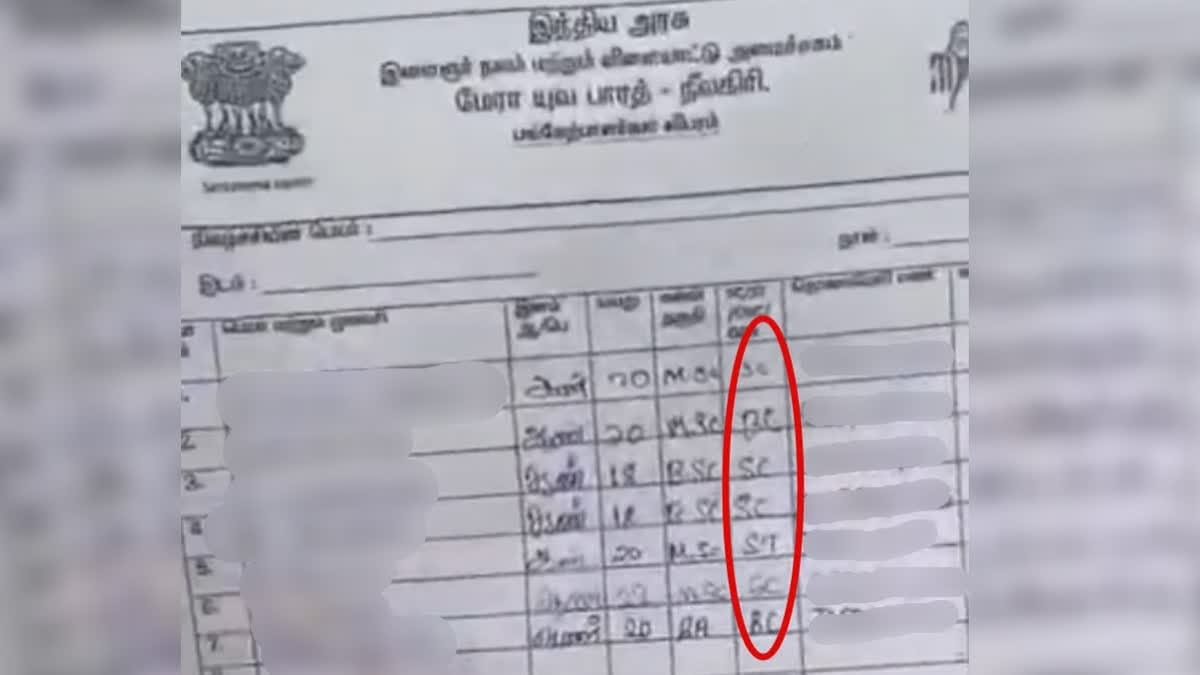
Other anti-caste writers distrust that picture, and their case deserves its full weight. On Round Table India, a long-running anti-caste site, the researchers Neeraj Bunkar and Mahesh Admankar called the early enthusiasm “largely caste-blind — not in a progressive sense, but in an inadvertent one.” They recorded that “many voices from the Bahujan and Dalit community were skeptical — labelling CJP as an ‘elite Gen-Z movement’”, and that the comment sections under its manifesto drew numerous demands for “no caste-based reservation”. Their verdict: “the movement that surrounds him is not yet Ambedkarite simply because its founder is Dalit.”
A second Round Table India essay, by Govind Dhaske and Gayatri Sutar, went further. Written before the street protests, it argued that “a vague youth revolt is easier to manage than a movement that names caste”, and called the movement “anti-BJP in language and approach” but “BJP-friendly in effect”.
Part of that warning has been answered. A movement dismissed as a meme held a protest site for weeks, and a senior minister resigned in the face of its protests; NPR quoted the analyst Sushant Singh saying its crowd “cuts across caste, class, religion, language”, which made it hard for the state “to demonize them”. The rest has not been answered. Dipke has since backed reservation in public, Ranjan reported. But its demands have not named caste, and the Ambedkarite site ambedkarite.in put the gap precisely: it is not a “card-carrying Ambedkarite party”, but it is “running on Ambedkarite muscle memory.”
What to watch
- The next demand. On 24 September, after a newspaper report about changes to voter lists, the movement gave India’s Chief Election Commissioner, Gyanesh Kumar, 48 hours to resign. Dipke repeated the demand the next day and said protests would begin in Mumbai on 2 October, Al Jazeera reported. The Election Commission said all its actions were lawful.
- Party or movement. “To convert the CJP into a political party is a big decision,” the spokesperson Vaishnavi Gaur told Al Jazeera in July. Analysts there called Dipke’s being Dalit “a crucial arc to follow”.
- The caste question. Whether the movement writes caste into its demands, or keeps it in its slogans, is the test both Round Table India essays set.
Jai Bhim at Jantar Mantar
The movement took its name from a word the Chief Justice says was never meant for the young. Its founder answered with Ambedkar’s book and a blue-ink “Jai Bhim”, and its protests ended with a minister’s resignation. Harilal watched thousands of people chant a slogan that once marked its speakers as outsiders. Whether that chorus becomes a politics that names caste is, in the words of the Round Table India writers, “a live question that neither the founder nor his followers have yet resolved.”