In the crew rooms of the New York City subway, where conductors wait between trains, Sujatha Gidla used to carry a laptop. Beginners are “extra-extra”, she told the economist Tyler Cowen in 2017, waiting to take over from anyone who falls sick or goes home: “so half the time, we’re just sitting around for eight hours and going home.” She filled those hours with writing. “I always used to carry a computer with me,” she said, “and one of the names I have is Computer Girl, apart from Hindu Conductor.”
Neither name described what she was writing. It was the history of her family, Dalit Christians from Andhra Pradesh in south-eastern India. Dalits are the communities once branded “untouchable” under South Asia’s caste order. She grew up, she has written, in “the small South Indian town of Kakinada”, a coastal town in Andhra Pradesh. “I come from Andhra Pradesh and my family belongs to the Mala caste,” Gidla wrote in The Caravan in 2019. “Malas traditionally do agricultural labor and other menial work.” The book became Ants Among Elephants: An Untouchable Family and the Making of Modern India, published in 2017. By her literary agency’s account, it follows her mother, Manjula, and her uncles Satyam and Carey from the last days of British rule. Satyam, K. G. Satyamurthy, became a poet and a founder of a Maoist guerrilla movement.
The book’s claim is in its subtitle: that the making of modern India can be told from the bottom of the caste order, through one Dalit family, and that the story changes when it is. “Yeah, I would say that story of India is the story of caste, and it is not a pretty story,” she told The Wire that year.
Eight years after the book, Gidla went back to its source. In November 2025, Granta published her essay “I Am My Mother’s Older Brother”, about caring for her mother through dementia. Manjula is the woman whose taped stories became the book. In February 2026 the magazine put out a podcast conversation with her about the caste system, writing a political memoir, and her years as a train conductor. The two pieces return to her mother, to the memoir, and to the working life she wrote it in.
A family that kept the record
Gidla did not set out to write a book. In the Granta essay she describes a phone call with her mother:
“One time, when I casually asked her a question about our caste status and where it had come from, she started telling me stories I had never heard before. I started taping these conversations – over a hundred hours of them – which I transcribed for my own interest and later used as the basis for a book.”
— Sujatha Gidla, “I Am My Mother’s Older Brother”, Granta, 2025
100+ hours of taped conversations with her mother, transcribed by Gidla, became the basis of Ants Among Elephants. Source: Sujatha Gidla, Granta, 2025
The tapes overturned what she thought she knew. “I was shocked to learn we had not always belonged to the mainstream of Indian civilization,” she wrote. “My great-grandparents lived as hunters and gatherers in a remote forest. They were forced out onto the plains by British economic policies and there, being latecomers, entered Hindu society at the very bottom, as untouchables.” Canadian missionaries offered the family education, medical care and jobs. In a 2019 interview with Bloom, a literary site, she said nobody had talked about those forebears: “I guess they weren’t talked about because there was nothing to boast of.”
The missions gave her grandparents literacy and work. “My grandparents found deliverance thanks to Christian missionaries, who educated them and offered them jobs in their schools,” she wrote in The Caravan. Her parents went to government schools and universities and became college lecturers: her mother taught history and her father English.
Christianity did not take caste away, and that was the question she started with. “As a young girl, I really wanted a reason, a concrete reason why we were untouchable,” she told Slate’s Isaac Chotiner. “I thought that it was because we were Christians because Christianity is a minority religion, and probably that’s why we were being treated like this.” A film changed her mind. It showed a wealthy Christian family “socially superior to even Brahmins”, the priestly caste at the top of the order. As a child, she recalled in The Caravan, she used to answer questions about her caste with “We’re Christians, we don’t have caste.” In the book she sets out what hiding costs. “If you get them to believe your lie, then you cannot tell them your stories, your family’s stories,” she writes, in a passage the scholar Anand Teltumbde quoted in ThePrint. “Because your life is your caste, your caste is your life.”
The uncle she barely knew
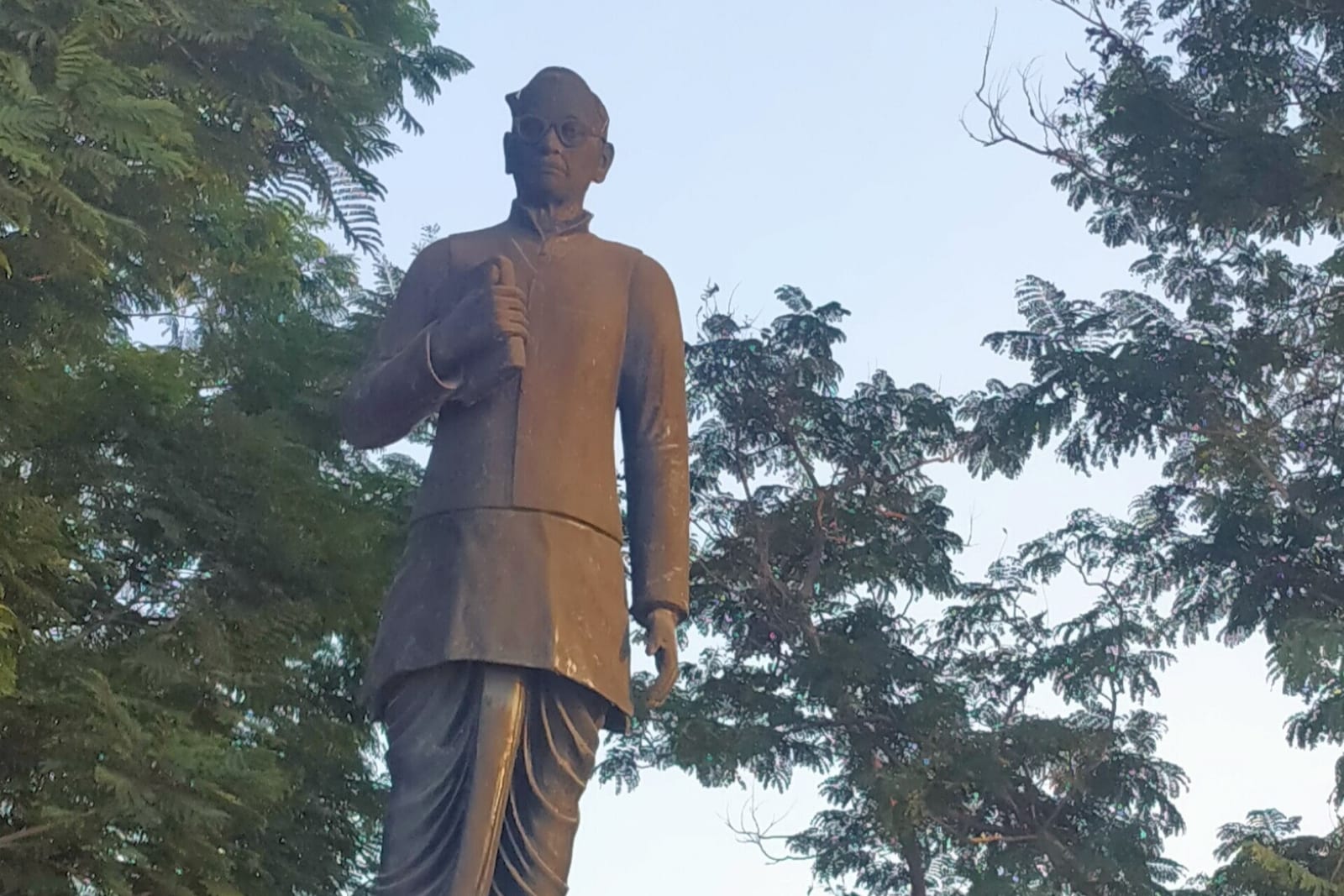
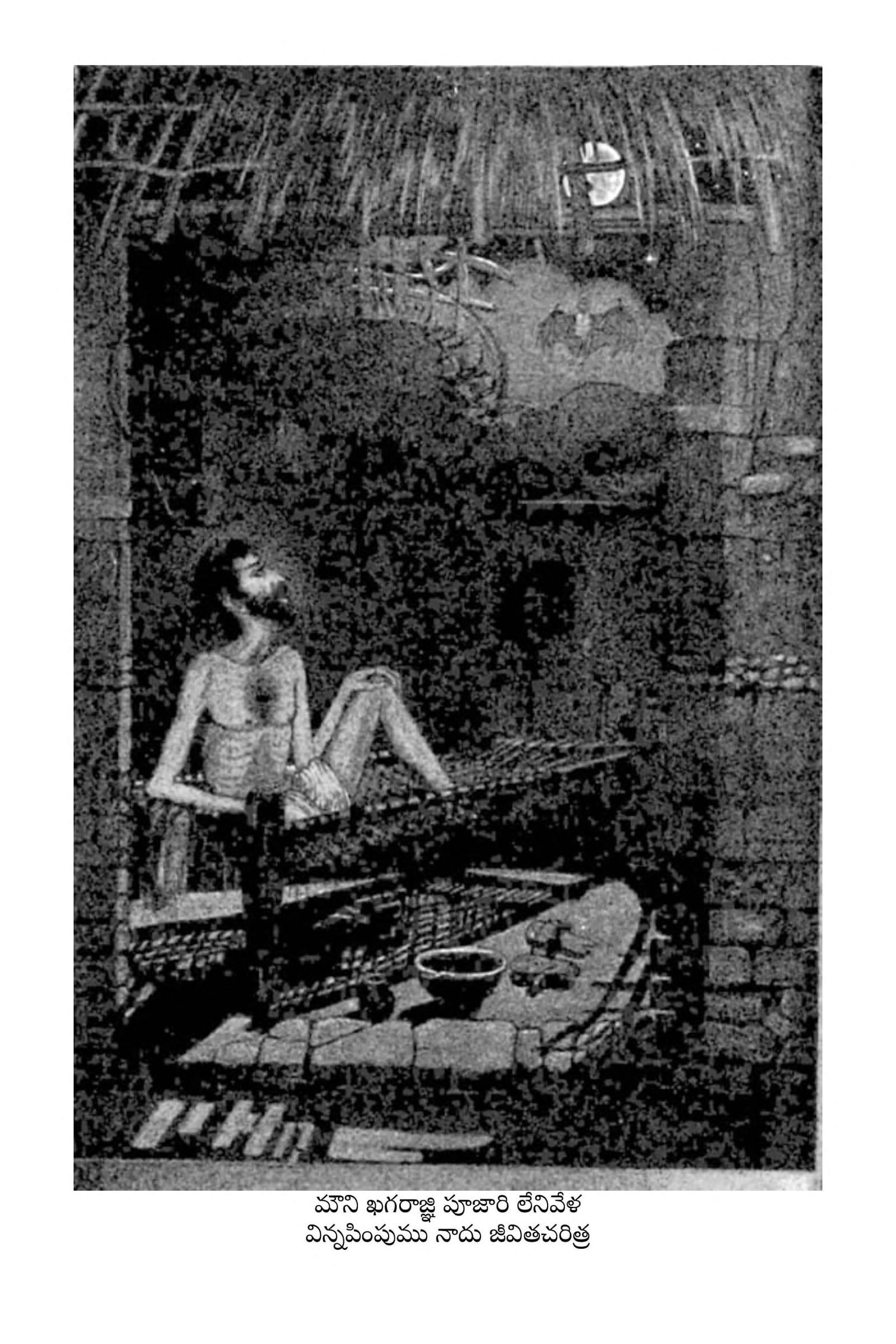
The book’s centre is Satyamurthy, her mother’s elder brother, known in the public life of Telugu, the language of Andhra Pradesh and Telangana, by his pen name, Shivasagar. The historian Jairus Banaji, writing on the site Raiot in 2017, describes him (1931–2012) as a “lifelong Communist who eventually broke with his party largely over the issue of its caste-blindness”. In 1980, Banaji writes, Satyamurthy and Kondapalli Seetharamaiah helped form the Communist Party of India (Marxist-Leninist) People’s War, better known as the People’s War Group (PWG), the most militant of the Maoist groups in Andhra.
Gidla came to his life late. “Actually, I didn’t see my uncle until just before I came here,” she told Cowen. She had first heard him without knowing it. At 14, cycling home from a maths class, she told Open magazine’s Rohini Mohan, she came upon young men singing on a street corner about the landless and about workers “who create wealth but do not enjoy the fruits of their labour”. “That was the moment of my political awakening,” she said. “I later learned some of them were written by my uncle.”
She went to him, she told Open, to learn about her ancestors, “but once he started talking about his own life, his stories directly intersected with the history of modern India”. He joined the Youth Congress, the nationalist party’s youth wing, at 11, she told Bloom. In his early twenties, she told Open, he fought the government of Jawaharlal Nehru, India’s first prime minister, in the campaign that ended with states redrawn along language lines; then he helped found the Maoist movement. He also saw Black Americans as kin. As a teenager, she told Bloom, he wrote an essay for a Telugu publication about a Black American boxer. When she asked him why, “He said, ‘Because he is ours.’”
The party he helped build, in her account, did not treat him as an equal. Late in his life Satyamurthy told a reporter, as Banaji quotes him: “I am a Mala, an untouchable. Whenever I went for a bath, someone would leave something valuable in the bathing area to see if I stole it. They thought it was a caste habit and I guess they were testing me.” In 1987 he was expelled for “conspiring to divide the party”. Banaji reads this, with Gidla’s book, as expulsion “for raising the issue of casteism and caste discrimination within the party”. “Talk of caste feeling inside the party had always been taboo,” the book says, in a passage Banaji quotes. “But the political climate had changed in the wake of a shocking massacre that year [1985] in the village of Karamchedu, where an entire madiga settlement was brutally attacked by a mob of two thousand kamma men.” The Madigas are another Dalit community of Andhra; Gidla has described the Kammas as “the land-owning Kamma caste”.
Satyamurthy died before the book came out. “In the end he was telling a journalist that ‘my life is just a joke,’” she told Slate. “If he had seen this book, he would have known that his life was not just a joke.”
Nineteen, and in a cell
Gidla’s own part of the story is short in the book and stark in her interviews. She studied physics at the Regional Engineering College in Warangal, her agency says, in what is now the state of Telangana. She told ThePrint she later worked as a researcher in applied physics at the Indian Institute of Technology Madras, in Chennai. She was drawn to her uncle’s politics, she told Cowen: “It was very highly romantic movement. Young people from high caste and very wealthy young people, people who had great futures sacrificed that, and they were fed into the mouth of state repression, and I was one of them. I wanted to do something for the people.”
She was a member of the Radical Students Union, which VICE News described in 2021 as a student wing of the PWG. “I was 19 years old,” she told Cowen of her arrest. “I was in the jail for three months, and then I was released.” In her account to VICE, the police took her from her family’s home to a station and then to another several hours away. There, she said, a deputy asked her: “Why do you want to be in these radical politics? Uh, you want to be a terrorist or something?… You’re the only one we arrested because you’re a Dalit.” VICE reports her account that officers then took her into another room and beat her. “That beating, I don’t remember very well,” she said. “That’s the first time, I guess, like I was hearing some people saying that ‘you’re an untouchable and this is why we are doing this to you.’” No officer is named in her accounts.
She has spoken of torture plainly and only briefly. “As for my own story, I don’t feel any anxiety about it, except for the torture I faced in jail,” she told The Wire. To Cowen she said: “After I got arrested, I really went blank. Things were happening to me. Things were being done to me, but I really, really went blank.” When she was arrested, she said, her mother told her, “I wish I could take you back into my womb.”
Jail changed how she saw the party. “When we were arrested, I became more critical,” she told Open. “When the untouchables suffered and continue to suffer more at the hands of the police and in jails than Brahmins, the party didn’t take special precautions to protect untouchable members. In fact, untouchables were assigned menial tasks by the party and put forward as cannon fodder, while Brahmins were given intellectual tasks such as writing articles, running publications, etcetera. Then came my uncle’s expulsion.”
A conductor in New York
At 26, Gidla left for the United States. “My idea of coming here is to be more free,” she told Cowen. “Women are very, very, very repressed in India compared to here.” People, she said, call her the first girl in her town to ride a bicycle. She was not, quite, but “I used to pedal like a man.”
She worked in information technology for more than thirteen years, she told Bloom, latterly at the Bank of New York. The greater part of the writing, she said, was done while she worked in a bank’s IT department, often after hours. “At six in the evening, everyone else would go home and I would stay and write,” she said. “I used to feel like a vampire, waking up when everyone else was going to bed.”
She had been telling her family’s stories for a while by then. In the early 1990s, at demonstrations against war and racism, she wrote in The Caravan, she carried a sign she had made herself: “The System Sucks!” There she met white anti-racists, and “in India I had never seen caste-Hindus protest casteism.” She guessed they would not look down on her if she told them she “was born untouchable”, and she was right. “Their reaction was one of sympathy for me and outrage against the caste system,” she told Open. “They wanted to know more.”
In 2009 the bank laid her off, she told ThePrint, and she took a job on the New York subway. “There are lots and lots of Indians. It’s just that I’m the first Indian woman,” she told Slate of the conductors. At the bank, she told Cowen, she had earned almost three times as much, and written programs without knowing what they were for. She still preferred the subway. “Now, I know what I’m doing is how it’s affecting. We’re taking people from point A to point B, where they want to go.”
i
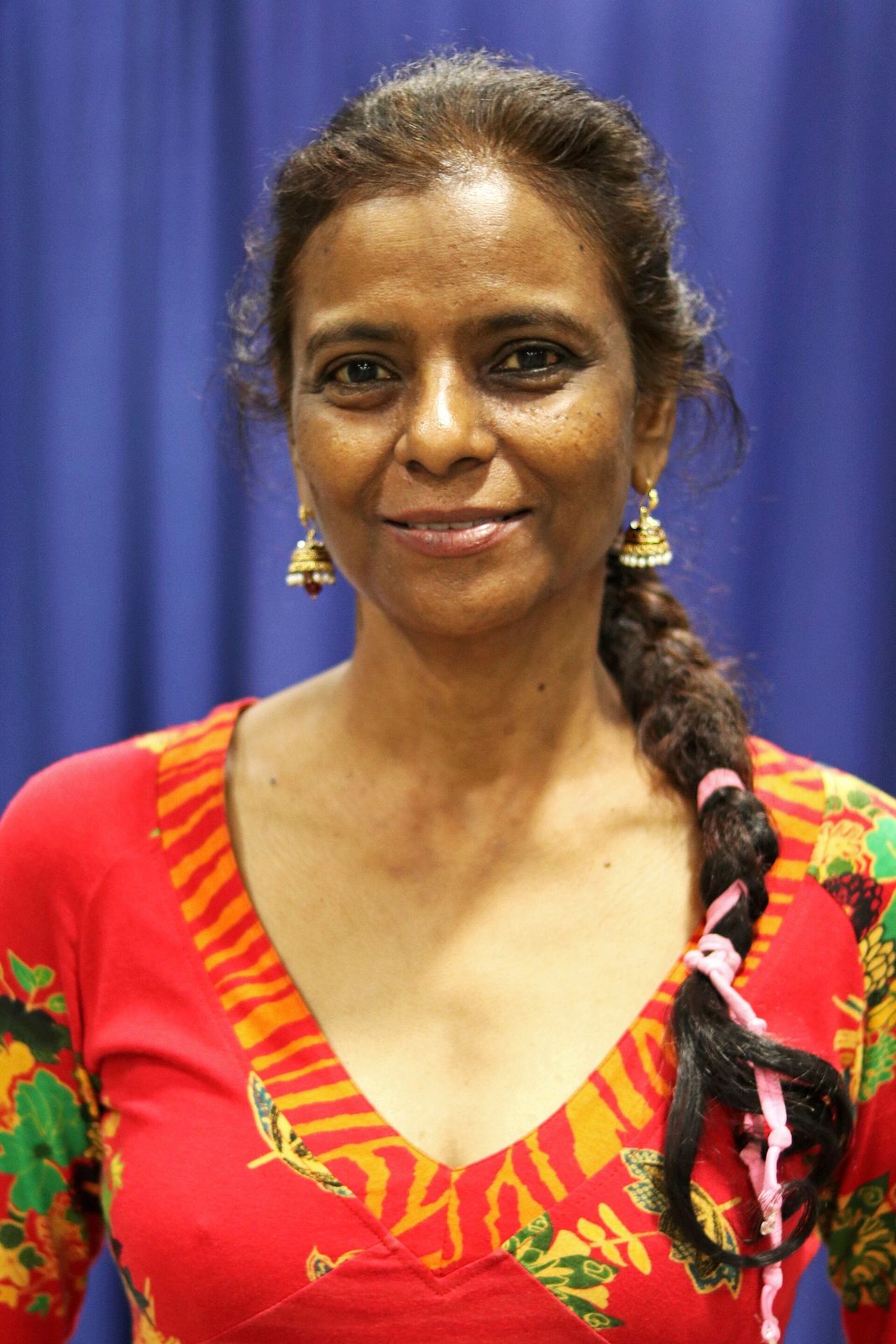
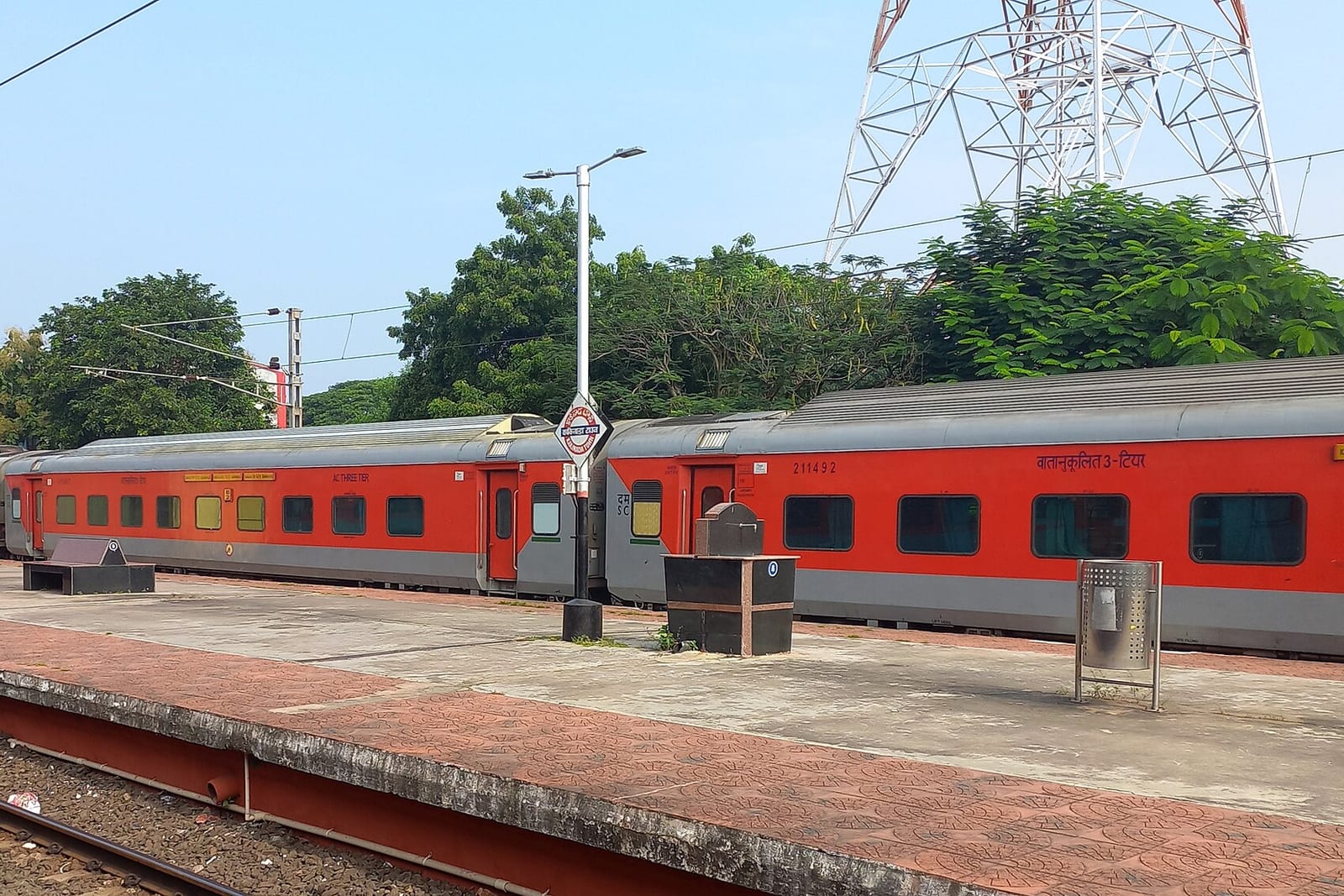
CC BY-SA 4.0Original on Wikimedia CommonsThe transit workforce was where she found the comparison she had been reaching for. “I worked in the IT field for more than thirteen years and never had a Black colleague. Not one,” she told Bloom. “But I have many Black friends and coworkers in the New York City transit system where I work now as a subway conductor.” She put her own calling to VICE this way:
“My occupation is to inform the West of Indian caste oppression, and to inform Dalit fighters about the Black struggle in America,” she told VICE News in 2021.
Caste had followed her to New York. “Indians definitely have brought along the caste system to America,” she told Slate. “In every American Indian organization, there is caste.” Diaspora associations, she told Cowen, “ostensibly, they are there to celebrate Indian culture and festivals, but they’re actually the caste groups.” Once, she told VICE, a bank teller in the city asked her to put the money on the counter so the teller would not have to touch her hand. Her family felt it too. Her niece wanted to post about the book on Instagram, she told ThePrint, “but her parents expressed concern that others will start identifying them as being from an untouchable family.”
In March 2020 she caught Covid-19. She described to VICE lasting fatigue and insomnia, and coworkers who died. “We gave so much, like we’ve worked without equipment, PPE, we worked through the pandemic and we’ve worked, [with] no hazard pay, nothing,” she said. “Hopefully this experience will make us see clearly the crucial role we play in keeping society running,” she said, “so that we can stand up for our interests, for our lives.”
The readers who argued back
American readers, she told Open, were “uniformly sympathetic”. Michiko Kakutani wrote in The New York Times, as the agency’s page quotes her, that the book gives readers “an unsettling and visceral understanding of how discrimination, segregation and stereotypes have endured”. The Indian response was harder. “Among Indian readers, many complained that I was exposing India’s dirty laundry,” she told Open. Her mother’s dominant-caste neighbours, she told Slate, “shut their doors and they haven’t said a word since the New York Times article came out.”
Two Dalit scholars read it in opposite ways. Anand Teltumbde, a scholar who has described growing up in “the Dalit side of the village”, reviewed it in ThePrint in December 2017. “Gidla’s major contribution is the way she has presented Satyamurthy,” he wrote. “In all these myriad details, she has kept her focus intact—on how caste operates in India.” His verdict: “it is an important book that must be read by all interested in knowing contemporary reality of India.”
The historian Chinnaiah Jangam disagreed sharply. Jangam teaches at Carleton University in Canada and has said “Being a Dalit, one of the important ethical responsibilities I feel is to advocate for anti-caste movements”. In The Wire in May 2018, under the headline “How Not to Write a Dalit Memoir”, he wrote that as a research scholar he had spent time with Satyamurthy. He argued that “Gidla – in her ahistorical presentation and lack of empathy with the subjects involved – is engaged in a self-defeating exercise.”
His main charge is about who gets credit. Dalits, Jangam wrote, built the communist movement in coastal Andhra long before Satyamurthy. He named Thupakula Simhachalam, who organised the Relli sanitation workers of Vijayawada, a city in coastal Andhra, into a union and wrote a 1946 autobiography. Gidla’s “portrayal of Satyamurthy as the pioneer of communist mobilisation among Dalits … is factually inaccurate and tantamount to the erasure of history of Dalit activists who sacrificed their lives to emancipate their brethren.” He disputed her account of the Naxalite movement, the Maoist insurgency the PWG belonged to, which the book says assigned recruits duties by caste: “it is sheer fantasy to assume that the Naxalite movement recreated caste hierarchy in its organisational structures.” He also objected to how the book exposes the private lives of relatives, and concluded that “Gidla’s narrative fails as a human story because of its lack of empathy.”
Gidla had expected some of this. “Many people mentioned in the book or their relatives and friends are still alive,” she told The Wire in 2017. “There will also be many who will be upset because what I write may not be flattering.” On her mother’s version of family quarrels, she told Bloom: “I took the information my mother gave me, but did not entirely adopt her attitude.”
A third reading asked for more of her, not less. Oeendrila Lahiri, reviewing for The Wire, noted that Gidla’s own story “is only partly told; up to the point when she is released from jail as a student activist and leaves for the US,” so that “Gidla’s own internal struggle and contradictions remain inaccessible.”
A Marxist among Ambedkarites
Those contradictions are in plain view in her interviews and essays, and they are why her politics fit no camp. “I consider still myself a Marxist,” she told Cowen. Asked about reservations, India’s constitutional quotas for Scheduled Castes in education, jobs and legislatures, she called them “like putting a Band-Aid on a bullet wound”. In the same breath she said: “Reservations are here whether I fought for it or not, and attack on them is definitely a reactionary thing to do. I would defend reservations from being attacked by upper-caste people.”
Her sharpest disagreement is with Ambedkarism, the movement built on the work of B. R. Ambedkar, the Dalit leader who chaired the drafting of India’s Constitution. Reviewing Yashica Dutt’s Coming Out as Dalit for The Caravan in 2019, she called it “required reading for anyone interested in the Dalit cause”. She also found in Dutt’s story an echo of her own, and she quarrelled with its politics. “Ambedkarism is a caste-based, middle-class movement that seeks Dalit advancement through self-improvement and social reforms under capitalism,” she wrote. Families like hers and Dutt’s, she argued, are “a tiny minority”, and the root of caste is exploitation: “Dalits will never be free unless the productive resources of society are collectivised, centrally planned, and democratically managed.”
Teltumbde, in his review, named the difficulty: “Ambedkar and Marx had different ideological foundations, which were not easy to reconcile.” Gidla’s family found its way out through mission schools and state universities, and she through an engineering college and emigration. She has said so herself. “India provided narrow windows of opportunity for untouchables,” she told Cowen. “It’s like we were driving in a car and all the lights were turning green just in time.”
She also refuses the feminist label, though gender runs through the book. “I see feminism as a pro-capitalist ideology that accepts the institution of the family, which is the main source of women’s oppression, as a given,” she told Bloom. In the same interview she set out what her mother lived through. “When the time came for marriage, her choice was restricted by caste and by the values of a patriarchal society. Her married life was a life of drudgery.” Her own reason for leaving India, she said, was to escape that: “I wanted to escape the burden of husband and children. And I did.”
In 2019 she said she was writing a second book: the “full version” of her family’s descent into caste, “from the lives of my great-grandparents up to when my mother and uncle entered their teenage years.”
Annayya
The Granta essay is a different kind of record. Between finishing the manuscript in 2013 and its publication four years later, Gidla writes, “our connection started to fray in ways I could not understand.” Her mother accused her of things she had not done. Gidla blamed her mother’s years alone after her father’s death, the distance America had put between them, a hidden side of her mother’s character. Then a psychiatrist diagnosed dementia. “When I was first told she had dementia, I was happy to learn she was not evil but merely sick,” she writes.
She stayed in India to care for her, then brought her to New York. The essay is about care, and it is political too. In Kakinada, she writes, she could afford aides on her mother’s modest pension because she was “residing in a poor country dominated by imperialism where medical services and domestic help are, for better or worse, dirt cheap”. The aides, she notes, “were allowed only one day off a year by the agency that sent them”.
Her mother lost her mother at four, and grew up, Gidla writes, with an older brother “who was also her father, mother, and best friend”. That was Satyamurthy, who went underground when Gidla was five. Now her mother calls her daughter by the word for him. “Ever since she came home from the hospital, she has called me Annayya, ‘dear older brother’,” Gidla writes. “I know she is calling me her protector.”
The essay ends with the two of them at night. Gidla asks her mother who she is to her. Her mother suspects a trick. “From a sociological point of view, you are my husband’s daughter,” she says, and then, “There is the scientific point of view.” Gidla asks who she is from that one.
“You are my mother.”
“No, no …”
“You are my mother,” she insisted.