On Coffee with Kaushik, an interview programme on the Marathi news channel ABP Majha, Nagraj Manjule was asked recently whether he has to think hard about the surnames he gives his characters. His answer, as TV9 Marathi reported it on 18 August 2026, began with a rule of Indian cinema: “What matters is exactly what we hide, and that thing is caste” (our translation from Marathi). Then he turned it on himself. “I deliberately hid my surname. But even so, people ask on their own: where are you from? There are many fine poems on this in Dalit literature. People will dig out your caste.”
He has been saying versions of this for twelve years. After a screening in Los Angeles in 2014, he told the audience that in India “it is never enough to introduce yourself with your first name. One will always probe for your last name, because it instantly identifies you with a region, caste and community”. The interviewer who wrote that down noticed that, through their whole conversation, Manjule never asked for anyone’s last name.
Manjule, a filmmaker, poet and actor who works mostly in Marathi, the language of Maharashtra, is the director of Fandry and Sairat, two films about caste, a subject that Marathi cinema “typically shies away from”, as The Caravan, a Delhi magazine, put it in 2016. Dalits are the communities once branded “untouchable” under the caste order, and in interviews he has described himself as one. He makes popular films, with songs, stars and box-office records, and he puts in them what popular Indian films usually leave out. “Every slum you look at in India, what do you see? A statue of Babasaheb Ambedkar, blue walls,” he told Open magazine in 2022, using “Babasaheb”, an honorific for B.R. Ambedkar, the Dalit jurist who chaired the drafting of India’s Constitution. “I am merely showing you what you turn away from.”
This year he has been everywhere at once. His series Matka King premiered on Amazon Prime Video. He starred in another director’s film, Frame. And in July his production company, Aatpat, and Jio Studios unveiled the teaser for Khashaba, his next film as director, which Variety reports opens in cinemas on 1 January 2027. Each new project reopens the same argument about what a Dalit filmmaker owes his audience, and what he is allowed to make.
“I never knew I was a Dalit till Class VIII”
Manjule grew up in the 1980s in a modest household in Jeur village, in Solapur district of Maharashtra, the western Indian state whose capital is Mumbai. Forbes India introduced him in 2016 as the son of “a Dalit labourer from Karmala in Maharashtra’s Solapur district”; Karmala is the taluka, or sub-district, that contains Jeur. In a 2022 interview with the Press Trust of India (PTI), a national news agency, he said his father was a stone-crusher who was also required to catch pigs, and that he drew on that for Fandry.
He has described learning what caste meant only slowly. “While growing up, I did not know that I was bearing the brunt of being a Dalit,” he told Forbes India. “It was normal then, in the same way as it was normal for a woman to cook while the man sits in the living room. We were Dalits and considered tuchcha [inferior] compared to others. It’s so direct and so subtle that it does not lead to riots. Everyone knows their place in the village there is a hierarchy that people are aware of.”
To Open in 2016 he gave the moment it changed. “I never knew I was a Dalit till Class VIII [eighth grade]. People would treat me like an Untouchable. And then you start thinking what this really means. You question yourself, you get scared, you accept it, you rebel against it and then you grow above it.”
Reading came first. He found the Russian writer Anton Chekhov in “a little library outside my village”, he told Open, reading him in translation “with the dictionary because I didn’t know English”. When he began reading Ambedkar, the social reformer Jyotirao Phule and the 17th-century Maratha king Shivaji, “my horizons expanded”, he told Forbes India. “I realised what our identity is and where we stand in society.”
Cinema came at the same time, and it came as Bollywood, the Hindi film industry in Mumbai. After Deewar and Coolie, he told Forbes India, “I would walk around with a knot on my shirt like the superstar did in his films”, meaning Amitabh Bachchan. To Open in 2016 he described himself as “anti-inspired by Bollywood. I grew up watching those masala films but I was angry because I knew that this isn’t me.” He went on to a master’s degree in Marathi literature at the University of Pune and another in communication studies at a college in Ahmednagar, a city in Maharashtra, Open reported. “I didn’t even know I could make films, or that anyone would want to watch them,” he said.
The poet first
Before the films there were poems. “When I flunked my tenth standard, I turned into a poet,” he told The Review Monk in 2014. It began as a diary, until someone told him the one-line entries he kept were poetry written as prose. “When I was a young boy, I spent a lot of time inside my own head and I would never express myself to anyone. When I did, people either didn’t understand me or did not accept my ideas. That drew me to writing because we all need an outlet for expression. Poetry was that outlet for me. And now Film is the same outlet where I want to express myself.”
His collection Unhachya Kataviruddha (our translation: “Against the sun’s conspiracy”) is in Marathi; the current edition is from Aatapat Prakashan. The anti-caste website Round Table India called it a reflection of his lived experiences that “won multiple awards”.
The poet and publisher Yogesh Maitreya, founder of the anti-caste press Panther’s Paw Publication, wrote in 2020 that after reading Manjule’s love poems “we enter a totally different world in which love is seen intelligently, felt with wisdom, and experienced rationally”. The essay quotes one, in English, in which the poet turns from his beloved to his mother:
Look,
How my mother
Has furiously aimed at
Deranged darkness
—that comes upon running—
With the embers
Of her pale eyes— Nagraj Manjule, in the English version Yogesh Maitreya quotes
In Maitreya’s reading the mother stands for “his social location, his roots—the history that is impossible to separate from him”. For a man treated as “untouched” by society, Maitreya argued, love in these poems is never only private: “to be in love is to be in the constant struggle against ‘caste’.” That idea runs through his films.
Pistulya and Fandry: the stone
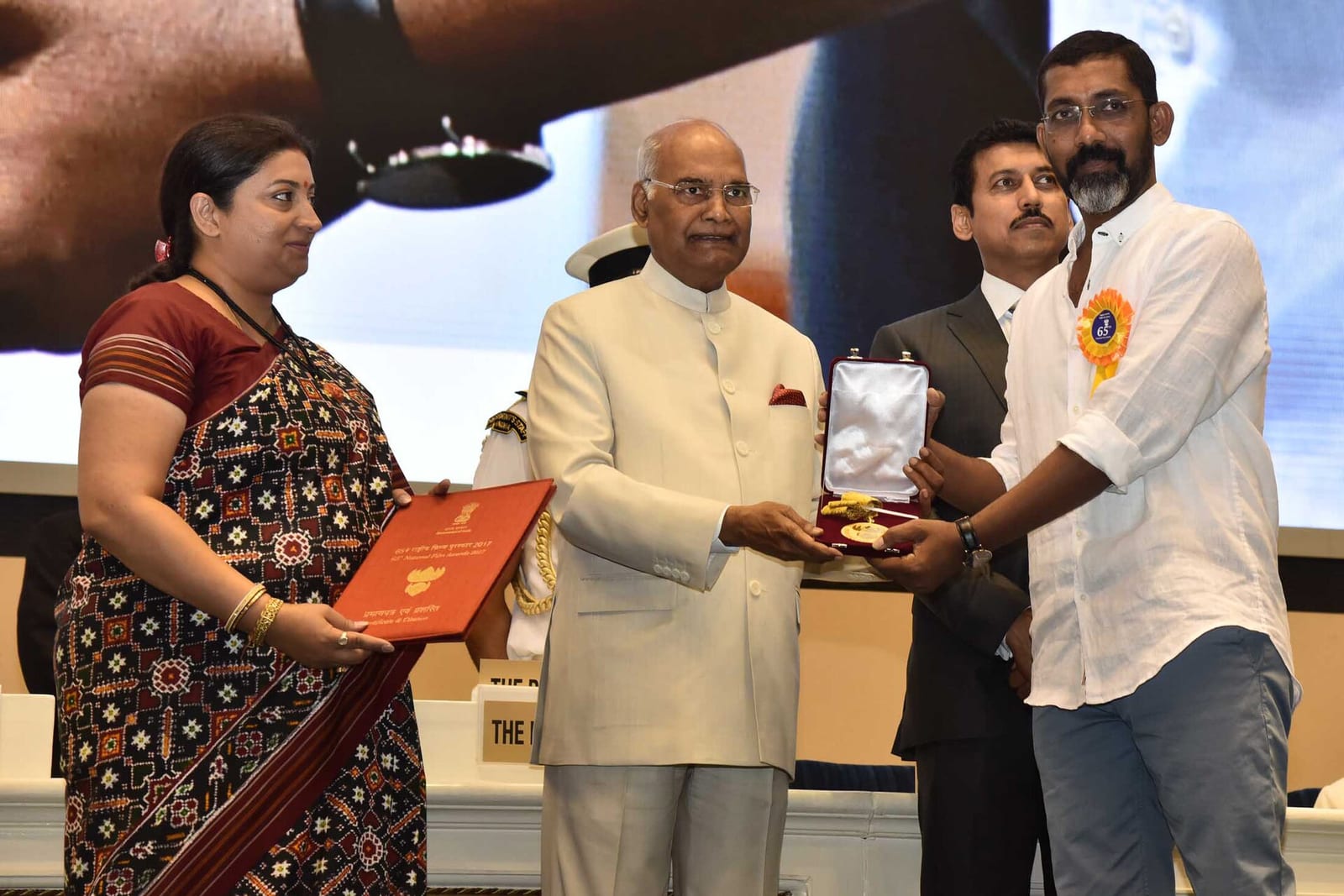
His first film was a short, Pistulya, made while he was studying in Ahmednagar. It follows a Dalit boy’s dream of going to school, and it won him the National Film Award for Best First Non-Feature Film, one of India’s state film honours. According to Round Table India, the crew worked with amateur actors and almost no equipment, and Manjule dedicated the film to Phule.
Fandry, his first feature, reached cinemas in 2014 and won the Indira Gandhi Award for Best Debut Film at the 61st National Awards. Its hero, Jabya, is a teenager from “an oppressed family of pig-catchers” who loves a girl from a dominant caste and can show it only through gestures. In the film, “fandry” is the insult the village throws at him. “It is a colloquial Marathi word for ‘pig’,” Manjule said; asked whether he had seen it used to ridicule Dalits, he answered: “Yes, I have very much seen it in reality. It still happens.”
The film’s politics sit on its walls. Round Table India’s Utkarsh Manav listed them: images of Ambedkar and the Buddha on the door of Jabya’s friend’s house, a photograph of the Dalit writer Annabhau Sathe in a bicycle garage, a school wall painted with the educator Savitribai Phule, the reforming ruler Shahu Maharaj, Ambedkar and the saint Gadge Maharaj, passed by Jabya’s family as they carry a tied pig. The scholar Prashant Ingole, writing in the Economic and Political Weekly, an Indian social-science journal, read the painted school wall as irony: it is the school “which Jabya misses to go to perform his traditional caste-based work”.
Then the ending. As the village jeers at the family chasing a pig, Jabya throws a stone, and it flies at the camera. For Manav, the stone “not only portrays a stern assertion but also poses a challenge to the upper caste filmmakers who often show Dalit charectors as helpless victims”. Balakrishna Ganeshan, writing in The News Minute in 2022, described how the camera “almost turns voyeuristic, like the villagers” before Jabya “hurls a stone which hits the camera and the film ends abruptly”, leaving the audience uncomfortable about its own privilege.
Sairat: the drum and the ending
Fandry won the awards; Sairat won the country. It premiered at the Berlin International Film Festival in February 2016 and opened in Indian cinemas on 29 April. Within two weeks it had taken over Rs 520 million, the film critic Tanul Thakur reported in The Caravan, and become the highest-grossing Marathi film ever. Open wrote in 2022 that it was the first Marathi film to earn Rs 1 billion. Cinemas in Satara district, in Maharashtra, added screenings at three in the morning.
Rs 1 billion: what Sairat earned at the box office, the first Marathi film to reach that mark, as Open magazine reported. Source: Open, 2022
The story is old on purpose: a fisherman’s son, Parshya, falls for Archie, the daughter of a landlord, and they run away to Hyderabad, a city in southern India. Manjule told Open why he chose the form. “I was happy Fandry was appreciated, but I was also unhappy that not many people were watching it,” he said. “In our village we play a percussion instrument to get attention if we want to say something. I used the commercial format to my advantage, but I still said what I wanted to. Fandry made Rs 7 crore [Rs 70 million], Sairat is touching 70 [Rs 700 million]. That means those many more people have heard me and that’s important.”
What he said with that style came in the last minutes. Archie’s relatives kill the couple, and their small son walks out leaving bloody footprints. For three hours the film is a musical romance; then it is a killing over a relationship across caste lines. Manjule refuses to call the ending a shock tactic. “Anyone who is aware of what happens in life would expect the couple to die,” he told Open. “People want to forget what exists. People want to see songs, dances, happy endings and that’s when the shock happens.” And: “Lovers were killed 100 years back, 50 years back and even 10 years back.”
Archie is the one who drives the tractor. Manjule said that was deliberate. “I am fed up of the male-dominated culture and the films that we have,” he told Forbes India. “While caste discrimination exists in our society, gender bias is an uncomfortable truth too.” In 2022 he told the film critic Namrata Joshi he had tried “to bring the two together in Sairat”, adding: “when we talk of gender, we break away from caste to talk about it. When we talk of caste, we break away from gender.”
The reaction showed what the film had touched. Thakur’s reporting for The Caravan found that much of the public praise “noticeably avoided commenting upon caste”, while WhatsApp messages told people not to idolise Archie, and a well-known Marathi producer, in private, disparaged the rural dialect of the two lead actors. A writer for Marathi films told Thakur that most of the criticism was a “caste thing”, from insiders who asked “how can an outsider come and be so successful?” Thakur concluded that the film is “a stinging indictment of caste made by a Dalit—a very rare combination in Marathi cinema, as in other Indian film industries”.
The film travelled, and lost its subject on the way. Open counted five remakes, in Punjabi, Kannada, Odia, Bengali and Hindi, and found that only the Kannada one kept the caste politics; the others “translate it to the class differential”. The Hindi remake, Dhadak, is the example Ganeshan gives of an industry that “shies away from addressing caste”.
Faces from his own world
Manjule casts people who have never acted. “I love working with non-actors,” he told The Review Monk in 2014. “With non-actors, it’s very important to retain their unadulterated ‘originality’ and it is my job to motivate them and increase their confidence.” He gives them no training, he said, and tells his crew not to coach them. The payoff, as he saw it: “Today, the boy who plays Jabya in my film (Somnath Awghade) has become a star in his own right. So the audiences and conversations go beyond the celebrity culture.”
Sairat’s two leads, Rinku Rajguru and Akash Thosar, were complete newcomers “picked from Manjule’s native district”, Thakur reported. For Jhund, Open reported, he sent his brother to run the auditions because he was too well known himself; they saw more than 400 children and chose 25, and he workshopped with them for about nine months.
For Round Table India’s Manav, this was the sharpest argument in the work. Actors with “no formal training”, Manav wrote, who “might not even have heard about National School of Drama (NSD) or FTII [the Film and Television Institute of India]”, went on to national awards. “This raises a fundamental question: What really is ‘merit’?” The question is aimed at the Indian argument against reservation, the quota system for oppressed castes, which turns on the same contested word.
“Caste is the foundation of our society. It’s a reality that you need to have a special talent to avoid. Bollywood has that talent, I don’t.”
— Nagraj Manjule, to The Hindu in 2017, as Namrata Joshi recalled in 2022
The village, the city and the wall
His map of caste has three places. The village is where, as he told Forbes India, “everyone knows their place”. The city is where people go to escape it, and in Sairat it does not save them. In Jhund, the city has a wall. He does not pretend that this is a choice of style. “Caste is the foundation of our society. It’s a reality that you need to have a special talent to avoid. Bollywood has that talent, I don’t,” he told Joshi for The Hindu in 2017, as she recalled in a later interview.
Jhund, released on 4 March 2022, was his first Hindi feature, starring Amitabh Bachchan, the star he grew up imitating. It is based on Vijay Barse, who founded the non-governmental organisation Slum Soccer in Nagpur, a city in eastern Maharashtra. In the film, a wall divides the slum of Gaddigodam from a college whose team trains on a manicured field. At the end the young players sit in a plane, flying over a wall painted with the warning, as Newslaundry quoted it, “Crossing the wall is strictly prohibited”.
Manjule said he wanted to get past the way Hindi cinema usually shows such neighbourhoods. “When we talk about slums, we don’t talk about the people living in slums. We make it all about class, we simplify it. My attempt is to go into details,” he told the Press Trust of India. In the same interview he called caste a sickness: “The irony is, if you talk about caste, you’re called casteist. Those who are actually casteist, they are never told anything. It’s a dangerous thing. If I don’t know my sickness, how can I be cured?”
Ambedkar in the frame
Jhund’s best-known scene is an Ambedkar Jayanti procession, the celebration of Ambedkar’s birthday on 14 April, with the young people of the slum dancing to a song by the composers Ajay-Atul in front of a towering photograph of Ambedkar. Bachchan’s character steps up and folds his hands before it. “We see a lot of things on screen, we see a lot of festivals in films, but rarely do we see the pride of Babasaheb Ambedkar,” Manjule said before the release. “We see his portraits hanging on the walls only in sequences of courts, never outside of that.”
To BBC Marathi, in an interview republished by Webdunia Marathi, he was plainer: “I walk by Babasaheb Ambedkar’s thought. That Dr Babasaheb Ambedkar appears in the film is a matter of great pride for me. It is the first time a big hero has stood before Babasaheb with folded hands” (our translation from Marathi).
The scene was celebrated, and it was also argued over by the people it was made for. Mayura Saavi, writing in Newslaundry as “someone who was born and raised in a slum in Nagpur”, called the Bachchan moment “a significant act of courage” in an industry dominated by casteists. But the film, in Saavi’s account, missed the Ambedkarite Nagpur Saavi knew. There are no Buddhist viharas, or temples, in any frame, Saavi wrote, though there are viharas in Gaddigodam and Saavi’s parents married in one; and the procession’s banner has no Buddha. “In my experience, you can’t have Ambedkar Jayanti celebrations without Buddha and Babasaheb together in a frame.” Nagpur is where Ambedkar converted to Buddhism in 1956; Saavi wrote that Dikshabhoomi, the site of the conversion, appears in Jhund as “yet another background”.
Bharathy Singaravel, in The News Minute, noticed something else: before Bachchan’s character pays his respects, the film reassures him that the procession will not block an ambulance. “That reassurance never seems required from the countless wedding or Hindu religious processions depicted on screen,” Singaravel wrote. Still, Singaravel argued, critics should weigh the industry he was entering: it was perhaps the first time Ambedkar Jayanti had been shown on that scale, in a positive light, in a Bollywood film.
The critics on his side
Some of the sharpest criticism of Jhund came from admirers of his earlier work. Ganeshan, a self-described “huge fan of Fandry”, wrote that Jhund “faces the problem of Savarna gaze”, the gaze of the dominant castes: the camera stays outside the slum’s homes, “like Amitabh Bachchan’s character”, and jokes about the players turning up to a match in the wrong clothes laugh at them. “Any Savarna filmmaker could have done this, right? So how is Manjule different from them?” Singaravel found that Bachchan’s long courtroom speech “elbowed out of the screen the very people the film is about”.
There is a quieter argument about labels. In 2016 Gaurav Somwanshi, writing on Round Table India, pointed out that “quite a few articles” called Sairat’s hero Dalit, when the character “belongs to the Pardhi community which falls under Scheduled Tribes category”, a community “formerly labeled as ‘criminal tribes’”. That did not change the film’s meaning, Somwanshi wrote; the question was why the media were so eager to use “Dalit” as a catch-all. The Marathi screenwriter Maheshkumar Munjale made a similar point in Aksharnama in 2017: the heroes of Pistulya, Fandry and Sairat come from nomadic and denotified communities (groups once listed by law as “criminal tribes”), the Wadar, Kaikadi and Pardhi, which, Munjale argued, a narrow use of the word “Dalit” leaves out.
And there is the question of range. Matka King is an eight-episode fictional retelling of the origins of street gambling in 1960s Bombay, as Mumbai was then called. Neeraj Bunkar, in the magazine Forward Press, welcomed it as a break: the authenticity of the early films “became a cage”, Bunkar wrote, and the series “proves he is far more versatile than the reductive label of ‘caste cinema’ director allows”. Tatsam Mukherjee, in The Wire, found it too sanitised and predictable “coming from the director of films like Sairat (2016) and Fandry (2013)”.
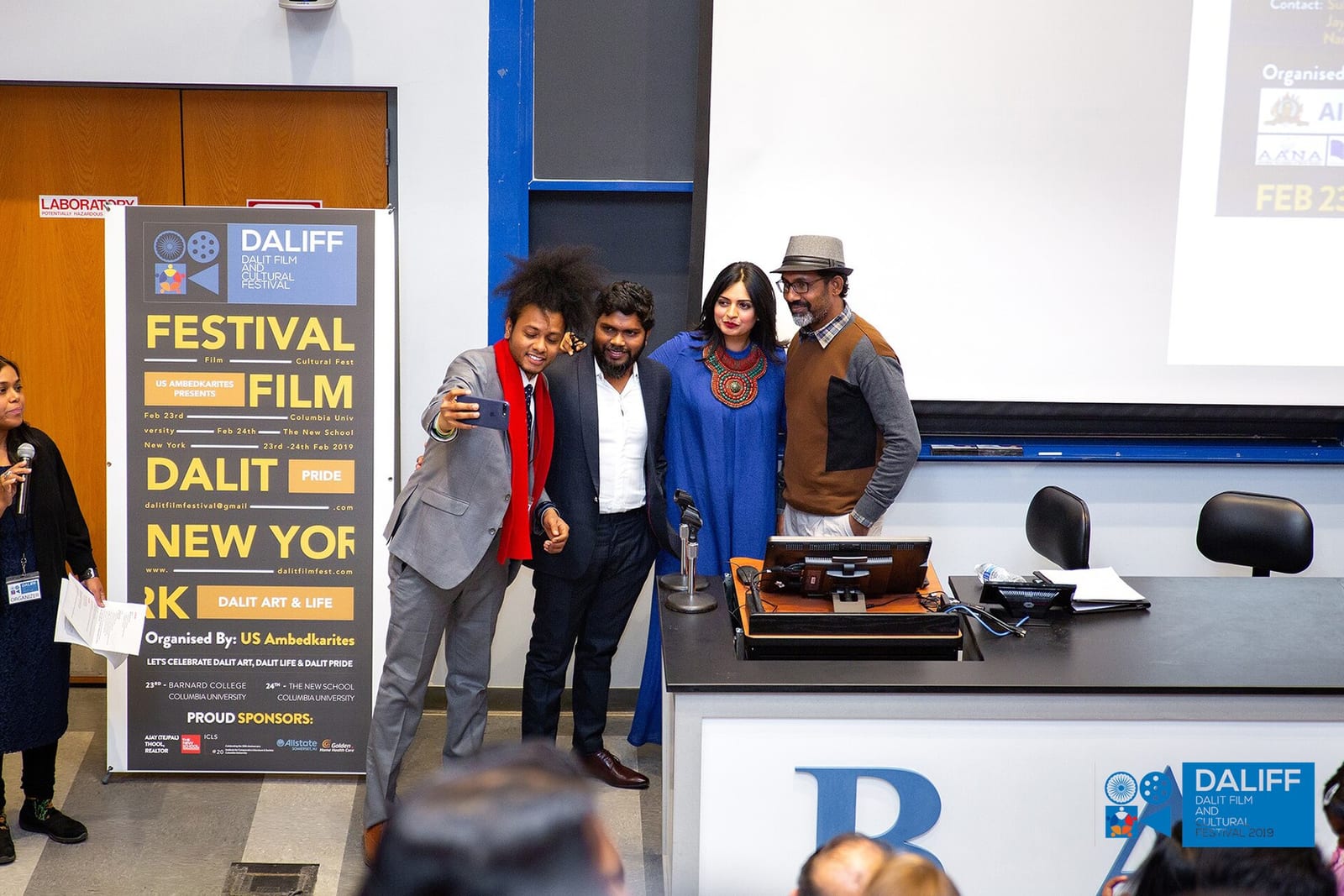
Manjule’s own position on all of this has a tension that he does not hide. He insists on naming caste: “We need to talk about caste, so that there is a dialogue and it eventually ends,” he told the Press Trust of India. He also reaches past it. “Casteism, feminism, beyond all isms, is humanism,” he told Joshi. “A good human being is not a Dalit or Brahmin, Hindu or Muslim, man or woman.” At the first Dalit Film and Cultural Festival, in New York in 2019, organised by Ambedkarite groups, he said the same: humanism is where “all -isms converge”. For him, humanism is the destination, and caste is the road the films have to take to reach it. The films do not skip the road.
Why the stories have to be his
He has been asked, again and again, whether he is angry. “No. I don’t harbour any ill feelings. My anger and problem is with the establishment and the system,” he told Forbes India in 2016. “You don’t need to have a grudge to depict the harsh realities of our society.”
At that New York festival, on a panel called “Dalit Cinema: Art of the Century”, he explained it another way. “Movies are made out of perspectives,” he said. “If a movie is made keeping Ram in mind, then Ravana automatically becomes a villain. But if someone makes a movie based on Ravana’s viewpoint then, it may portray Ram as a villain.” Ram and Ravana are the hero and the demon king of the Hindu epic, the Ramayana.
His next film is Khashaba, about the wrestler Khashaba Dadasaheb Jadhav, who won bronze at the 1952 Helsinki Olympics and became, Variety notes, independent India’s first individual Olympic medallist. On screen this year, in Frame, he played Chandu, a veteran newspaper photographer in Pune who believes his job is “to document rather than intervene”, the film critic Nandini Ramnath wrote in Scroll.
Manjule does not claim that distance for himself. “If I hadn’t done ‘Fandry’, ‘Pistulya’, who would have?” he asked in 2022. “Since time immemorial, these people have been in the background. I want to tell their stories, they should be the hero of such stories. If I don’t, despite having the chance, then it’d be so unfair.”