On 21 May 2026, a user on X, the platform formerly called Twitter, asked Abhijeet Dipke why the Cockroach Janta Party had said nothing about reservation, India’s system of reserved places in education, government jobs and legislatures for communities historically shut out by caste. Dipke, 30, had founded the satirical youth movement five days earlier; its name puns on India’s ruling Bharatiya Janata Party, with “janta” meaning people in Hindi. His reply came an hour later: “I am a Dalit myself. I hope that will answer all your questions.” Dalits are the communities once branded “untouchable”, at the bottom of South Asia’s caste order.
ThePrint, an Indian news site, reported the replies that followed the same day. “So the self-proclaimed Gen Z leader is against Merit,” one read. “Aa gya D card (here comes the Dalit card),” said another. Writing on the blog Kafila in August, the writer and academic Pramod Ranjan summed up the response: “He was branded ‘anti-merit’.”
Dipke had not said a word about exams, admissions or anything else “merit” might measure. He had named his caste, and that was enough. That is the job the word now does in India’s online arguments. It turns a Dalit person’s identity into a charge of unfairness, and it lets a defence of caste hierarchy speak in the language of fairness. It was not an isolated moment. The same grievance, that protections for Dalit and other reserved-category students are unfair to everyone else, ran through campus rules in January and a medical-exam scandal in the summer.
What happened
The movement began with a judge’s words. On 15 May, during a Supreme Court hearing, India’s Chief Justice, Surya Kant, said, as Al Jazeera reported: “There are youngsters like cockroaches, who don’t get any employment or have any place in the profession. Some of them become media, some of them become social media, RTI activists and other activists, and they start attacking everyone.” (RTI is the Right to Information Act, India’s freedom-of-information law.) The next day he said in a statement: “It is totally baseless to suggest that I criticised the youth of our nation.” In July he told Bar & Bench, a legal news site, that the discussion had been about lawyers with fake degrees: “It was never about the youth. That is why I said I had been completely misquoted.”
By then Dipke had posted on X, Al Jazeera reported: “What if all cockroaches come together?” How that joke became a mass movement, and what its founder’s signals of loyalty to B.R. Ambedkar, the Dalit jurist who led the drafting of India’s Constitution, mean, is the subject of “The cockroach and the Constitution”. The replies to his disclosure raise a narrower question: how caste argues online when it cannot argue in its own name.
The 2026 flashpoints, and a longer record
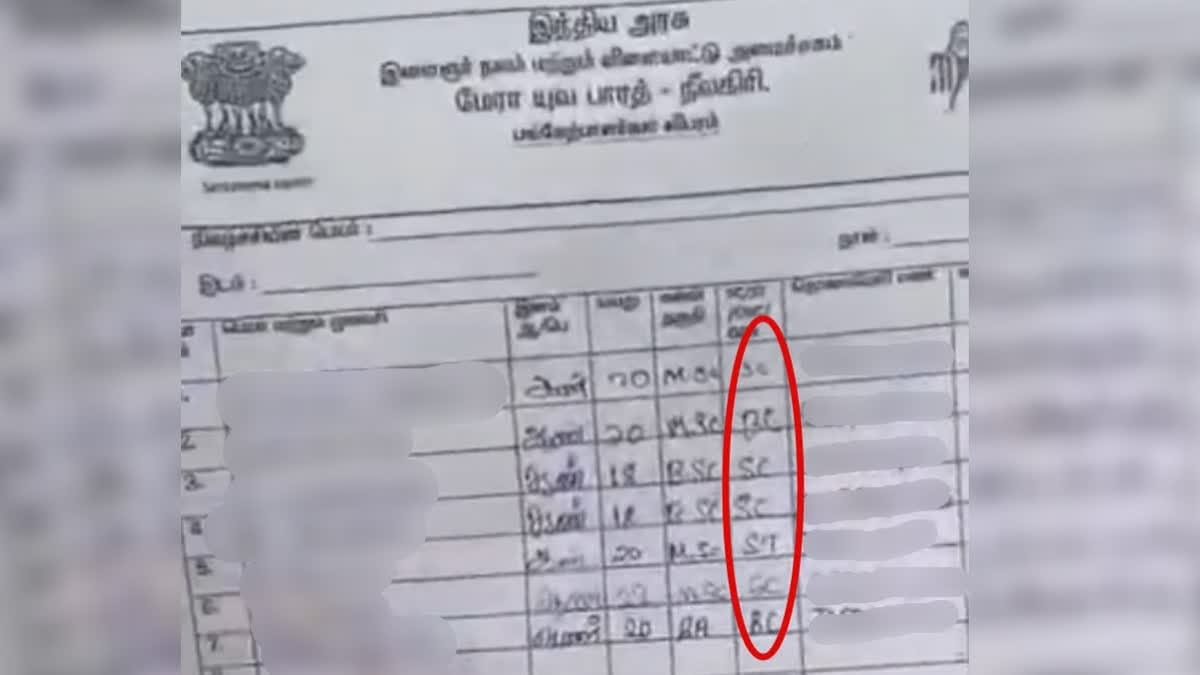
January: the campus rules. In mid-January the University Grants Commission (UGC), India’s higher-education regulator, notified rules requiring every college and university to set up equity committees for discrimination complaints, with members from the Scheduled Castes (SC, the official category for Dalits), Scheduled Tribes (ST), Other Backward Classes (OBC), people with disabilities and women, the education site Careers360 reported. Opponents from the “general category”, the term for people outside the reserved groups, mainly from dominant castes, Careers360 noted, called the rules “state-sponsored apartheid” and got “#Rollback UGC” trending on X. On 29 January a bench of Chief Justice Kant and Justice Joymalya Bagchi put the rules on hold, finding them vague and open to misuse on a first reading, and kept the 2012 rules in force. The Chief Justice said his concern was not the general category but an effective mechanism to protect marginalised students, Supreme Court Observer, a legal research site, reported. The online campaign had made a rule against discrimination look like a threat to students outside the reserved groups.
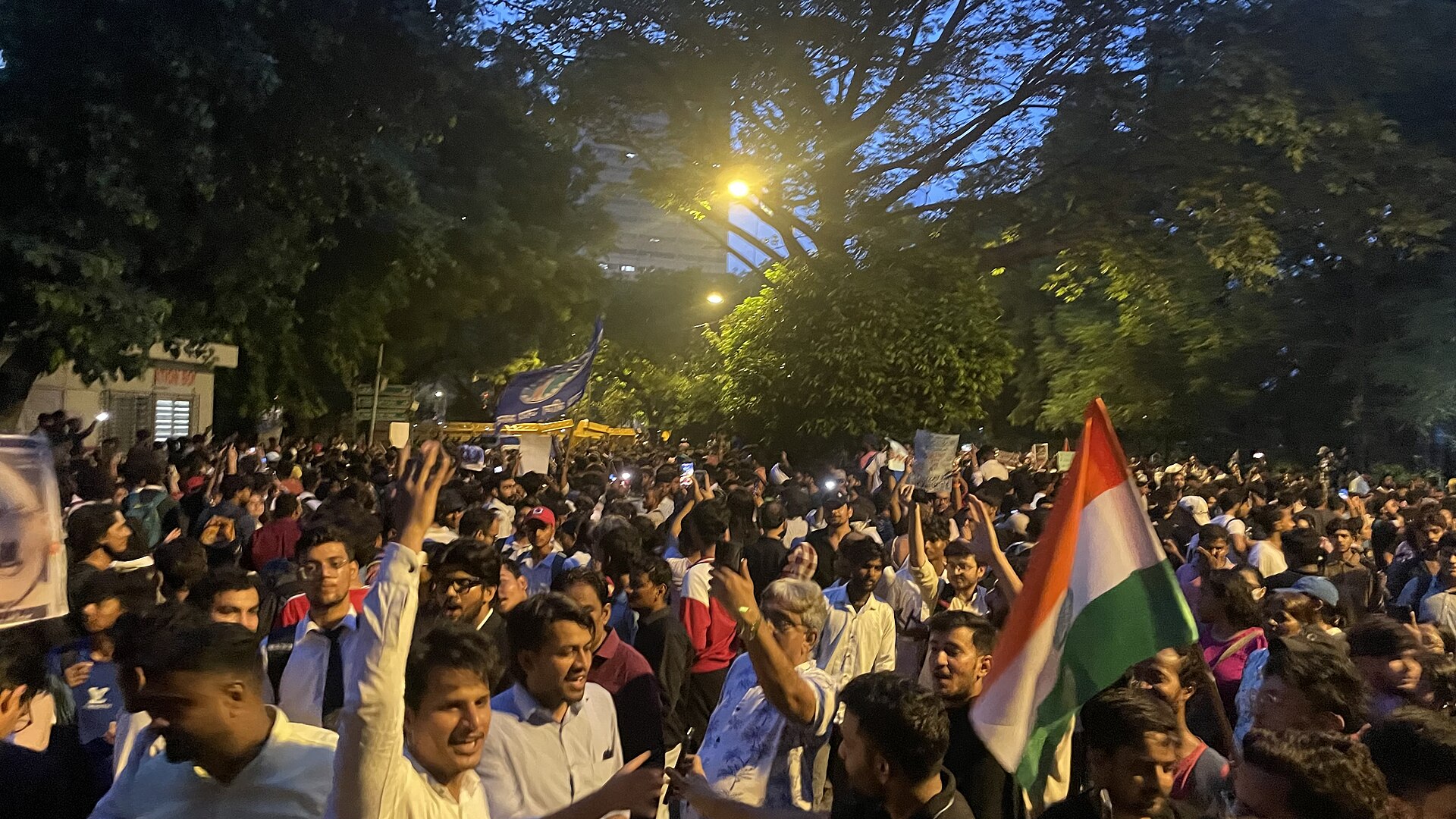
Summer: the exam leak. From 20 June to 25 July the Cockroach Janta Party held protests at Jantar Mantar, Delhi’s protest ground. They began over a leaked paper in the NEET (National Eligibility cum Entrance Test, the national exam for medical school). As the protests put the government on the back foot, The News Minute, an Indian news site, reported, “the big news channels along with several social media handles began a curious campaign against caste-based affirmative action to discredit the protests.” B. Shripad Bhat, an author on higher education, told the outlet: “This is the most consolidated sentiment against reservations since the anti-Mandal protests.” Those were the 1990 protests against reserving federal jobs for the Other Backward Classes. A scandal about a leaked exam paper was turned into an argument against the reserved places held by Dalit, Adivasi (Indigenous) and OBC students.
The longer record. None of this is new to the platforms. In 2019 Equality Labs, a South Asian community technology organisation, studied 1,000 hate-speech posts on Facebook India in six languages. Of the casteist posts, 40% were anti-reservation, The News Minute reported, and Facebook was least likely to remove a post when it was casteist.
How the word works
40% of casteist posts in Equality Labs’ 2019 sample of Facebook India hate speech were anti-reservation. Source: Equality Labs, as reported by The News Minute
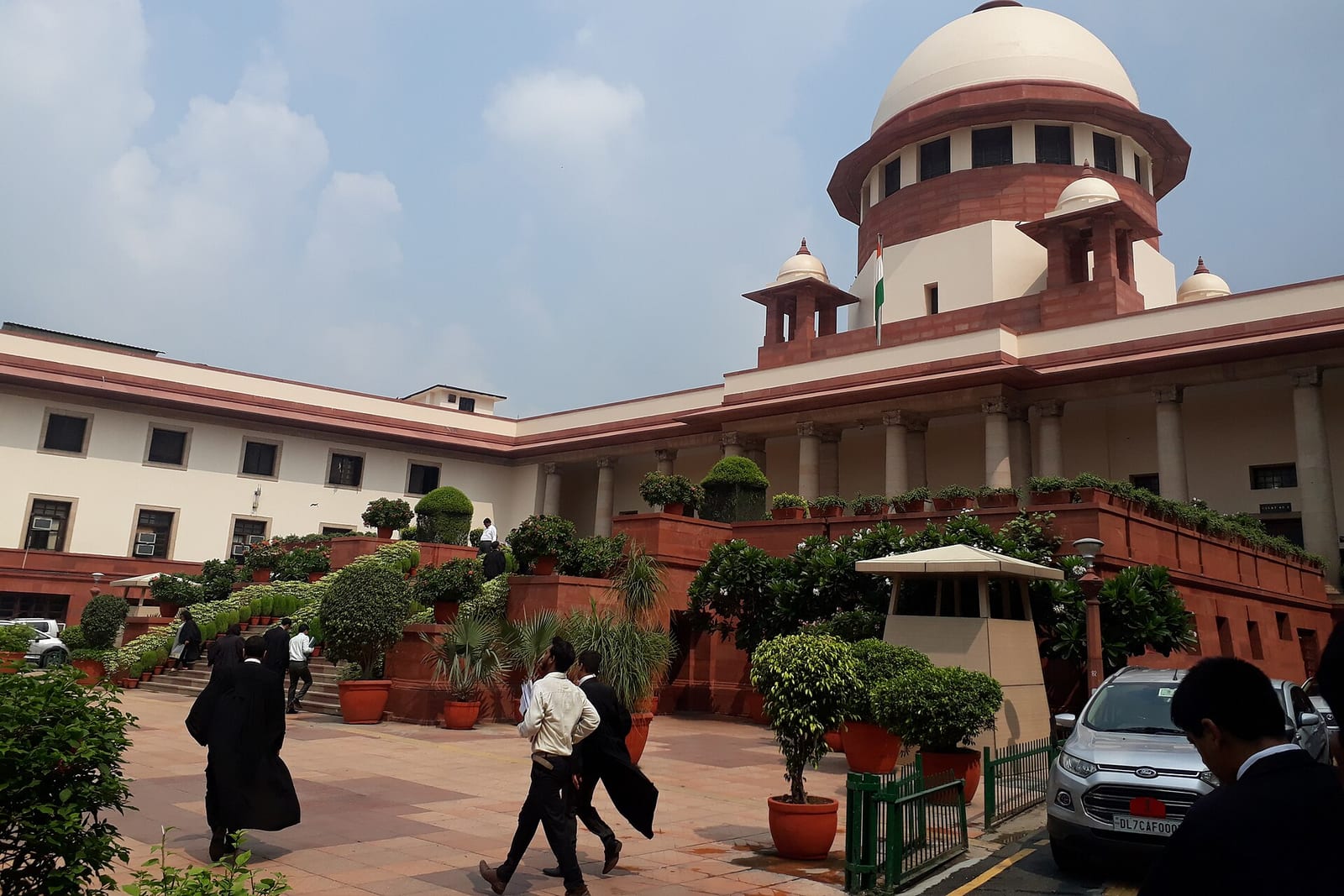
It reads the score and hides the start. India’s Supreme Court took this apart in January 2022, when it upheld reserved places for the Other Backward Classes in the all-India quota, the share of state-run medical and dental seats open to students from across the country. “High scores in an examination are not a proxy for merit,” the bench of Justices D.Y. Chandrachud and A.S. Bopanna wrote in Neil Aurelio Nunes v Union of India. “Otherwise claims of individual merit are nothing but tools of obscuring inheritances that underlie achievements.”
i
CC BY-SA 4.0Original on Wikimedia CommonsYashica Dutt, the journalist whose memoir Coming Out as Dalit tells how she hid her caste for years, made the same point about the coaching centres that prepare students for India’s entrance exams. “It isn’t that people who cannot solve them are dumb,” she told the Indian news site Scroll in 2020. “How did they get this education? With money.”
It is aimed at one kind of seat. Private colleges fill a share of their places through a “management quota”, admission for those who can pay. “The sole qualification required to avail this quota is wealth,” The News Minute wrote in August, asking why it “never face[s] the same vitriol directed at caste-based reservations”. Dipke asked the same thing in an interview with the news agency ANI (Asian News International), the outlet reported: “The way people talk about reservation, why do they not say that about management quota. All colleges have management quota, but why doesn’t anybody talk about that?”
It marks the person. The deeper work is on the student who arrives through a reserved place. “In fact, quotas have become a way for people to identify who a Dalit student is,” Dutt said. “And once you’re recognised, you are a Dalit student; ergo you are merit-less.”
Sukhadeo Thorat, the economist and former chairman of the University Grants Commission, who told Scroll “I belonged to an untouchable caste”, described what lies under the anger. As more Dalit and OBC students enter universities, he said in 2016, “Now, it is an issue of gaining and losing space in the system.” The objection, in his words, amounts to: “Education is my field, not yours, and you are encroaching upon it.” He headed a three-member government committee that, he told Scroll, investigated complaints of harassment from Dalit students at the All India Institute of Medical Sciences (AIIMS), a public medical school in New Delhi. In 2023 he told a convention in Chennai, in southern India,: “Discrimination against Scheduled Castes/Scheduled Tribes in institutes of excellence is an empirical reality.”
The same logic runs up to the staff room. Harish S. Wankhede, a political scientist at Jawaharlal Nehru University in Delhi, wrote on the news site The Wire in 2020, of the Indian Institutes of Technology (IITs), the country’s elite engineering schools: “The number of SC and ST faculty members in IITs is below 3%.” In his account, “The faculty and administrative positions are dominated by social elites, who see themselves as ‘talented’.”
Dipke has since answered in his own terms. Speaking to reporters in his home city, Chhatrapati Sambhajinagar in the western state of Maharashtra, on 3 August, he said, in Ranjan’s English translation: “If a child from a deprived background is getting an education, what is wrong with that?” He has also told his family’s story, which Ranjan quotes: his father, from a very poor family, left school during a drought in the 1970s, went back three years later and finished a diploma. “Because he benefited from reservation, he became the first engineer from his village.”
“Somebody who does not have access to money does not have access to ‘merit’.” — Yashica Dutt, author of Coming Out as Dalit, to Scroll, 2020
The counter-reading
The strongest objection runs like this. Exams are the fairest sorting tool India has, and criticising reservation is not the same as casteism. A handful of angry replies to one post prove nothing about a society.
Each part has a true core, and none of it holds up. The Supreme Court called examinations “a necessary and convenient method of distributing educational opportunities” in the same judgment that refused to treat scores as merit. The argument is not against exams. It is against reading a score as the person and ignoring what bought it. Reservation can be debated. Writing on the anti-caste site Round Table India in 2021, one author asked: “Can there be no criticism of the reservations policy? It would be foolish to answer ‘no’.” But none of the replies ThePrint reported raised a policy. Their target was a man naming his caste. And the replies were not isolated. They fit the pattern Equality Labs measured on Facebook in 2019, and in 2026 television gave it what The News Minute called “a platform and a push toward the mainstream.”
What to watch
- The campus rules. The Supreme Court tagged the challenge to the UGC rules with a pending case on caste discrimination in universities and directed the federal government to set up a committee of jurists and experts. The 2012 rules apply until further orders, Supreme Court Observer reported.
- The movement. Dipke has backed reservation and pointed at the management quota. Whether the Cockroach Janta Party holds that line as it grows will show whether “merit” can be answered from inside a mass movement.
- The platforms. In 2019 Equality Labs found Facebook least likely to remove casteist posts. Posts that call a Dalit “against merit” for naming his caste borrow the language of fairness; whether moderators read them as caste hate is the test.
The answer
“I hope that will answer all your questions,” Dipke wrote. The replies ThePrint reported answered a different question: what “merit” is for, when it is said to a Dalit who has not mentioned an exam.