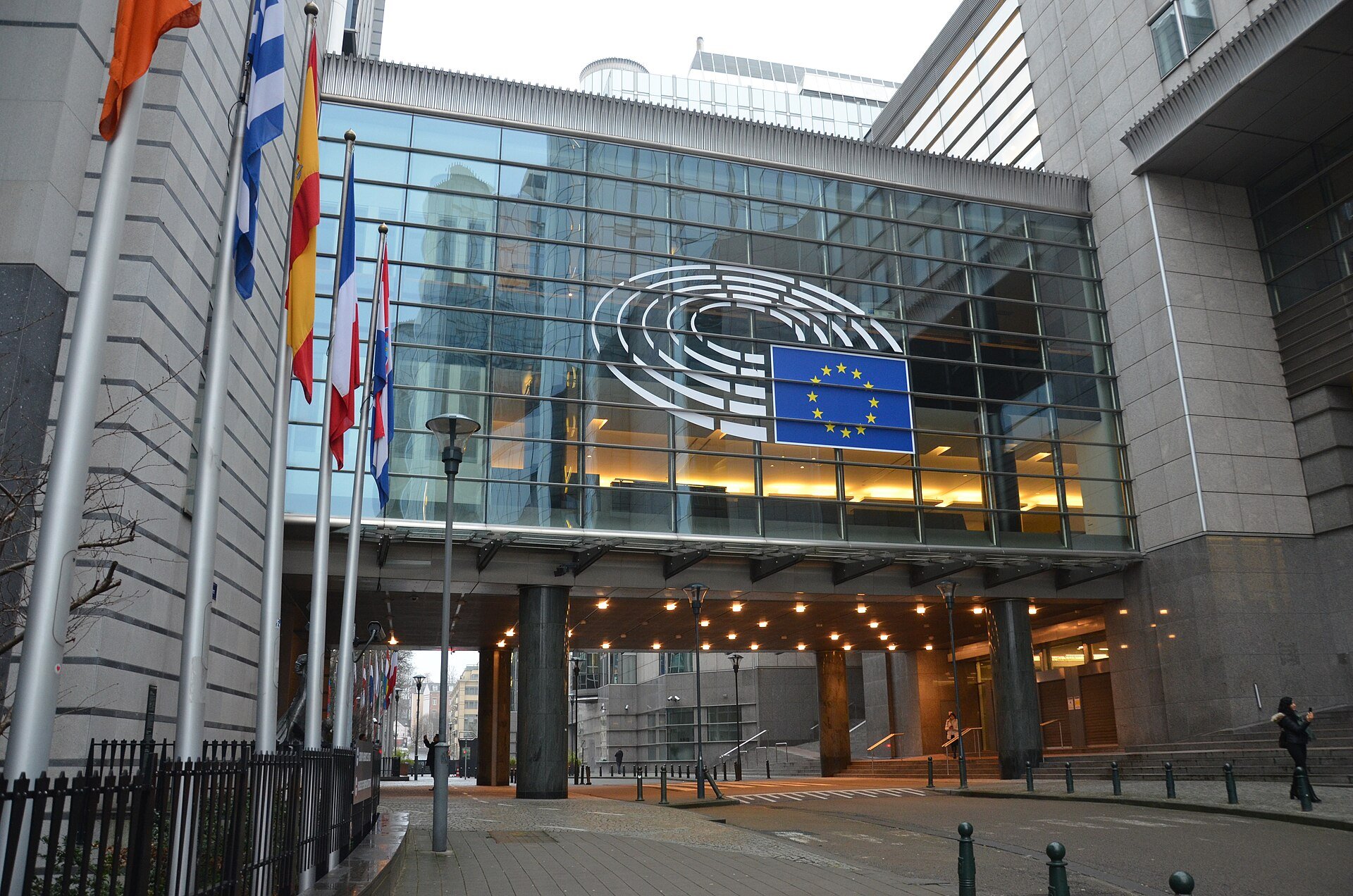
On 14 April 2026, a European Parliament hearing on caste discrimination in South Asia heard from the EU’s own diplomatic service. Michal Pesta, acting head of the South Asia division at the European External Action Service (EEAS), said of non-discrimination: “The principle is not a Western value or European value. It’s a universal one.” That is how the International Dalit Solidarity Network (IDSN) recorded it.
In September 2026 the European Commission sent the EU–India free trade agreement to the Council, where EU governments sit, for signature. The Commission has published the deal’s text: 20 chapters and their annexes. The word “caste” appears nowhere in it.
That silence is a choice. The EU has real leverage over how caste shapes the work Europe buys from India: a trade deal, a law on corporate due diligence, and a standing human-rights dialogue. Each of these tools stops just short of Dalits, the communities once branded “untouchable”, whom an impact study the EU commissioned expects to fill many of the new export jobs. It can still be fixed: the European Parliament has yet to give the deal its consent.
A labour chapter without sanctions
The deal’s trade and sustainable development chapter commits each side to “respect, promote and realise” the principles of the fundamental rights at work, including “the elimination of discrimination in respect of employment and occupation”. Caste discrimination in hiring and pay is exactly that kind of discrimination, but the chapter never names it.
The chapter’s commitments are binding, but they sit outside the deal’s ordinary dispute settlement: the agreement’s dispute settlement chapter lists the trade and sustainable development chapter among the provisions it does not cover. A disagreement over labour rights goes to consultations between the two governments, first in the chapter’s committee, then in the joint committee and finally between ministers. Those consultations are confidential, though the two sides may publish an agreed outcome.
The EU knew who would be affected. A sustainability impact assessment, written for the Commission by consultants in December 2023, found that new jobs in garments and leather “are likely to be taken mostly by women, Muslims, and Dalits”. It judged it likely that many of the additional jobs would fall into the category of “working poor”. The Commission’s draft position paper on that assessment, dated 23 November 2023, mentions neither caste nor Dalits.
The European Parliament asked for something different. In a 2013 resolution on caste-based discrimination, it called on the Commission and the EEAS “to include, where relevant, a ‘caste-based discrimination clause’ in all trade and association agreements”. The deal has no such clause.
A due-diligence law that names caste once
The EU’s Corporate Sustainability Due Diligence Directive (CSDDD) of 2024 requires large companies to find and address human-rights harms in their supply chains. It names caste once, in recital 33 of its preamble, as one of the “intersecting factors” companies should consider. IDSN welcomed that word in 2024, saying it “has the potential to make a giant leap of difference to millions of workers suffering human rights abuses in global supply chains”. The annex that defines which abuses companies must address is narrower. It lists discrimination in employment “on grounds of national extraction or social origin, race, colour, sex, religion, political opinion”. Caste and descent are not named.
i
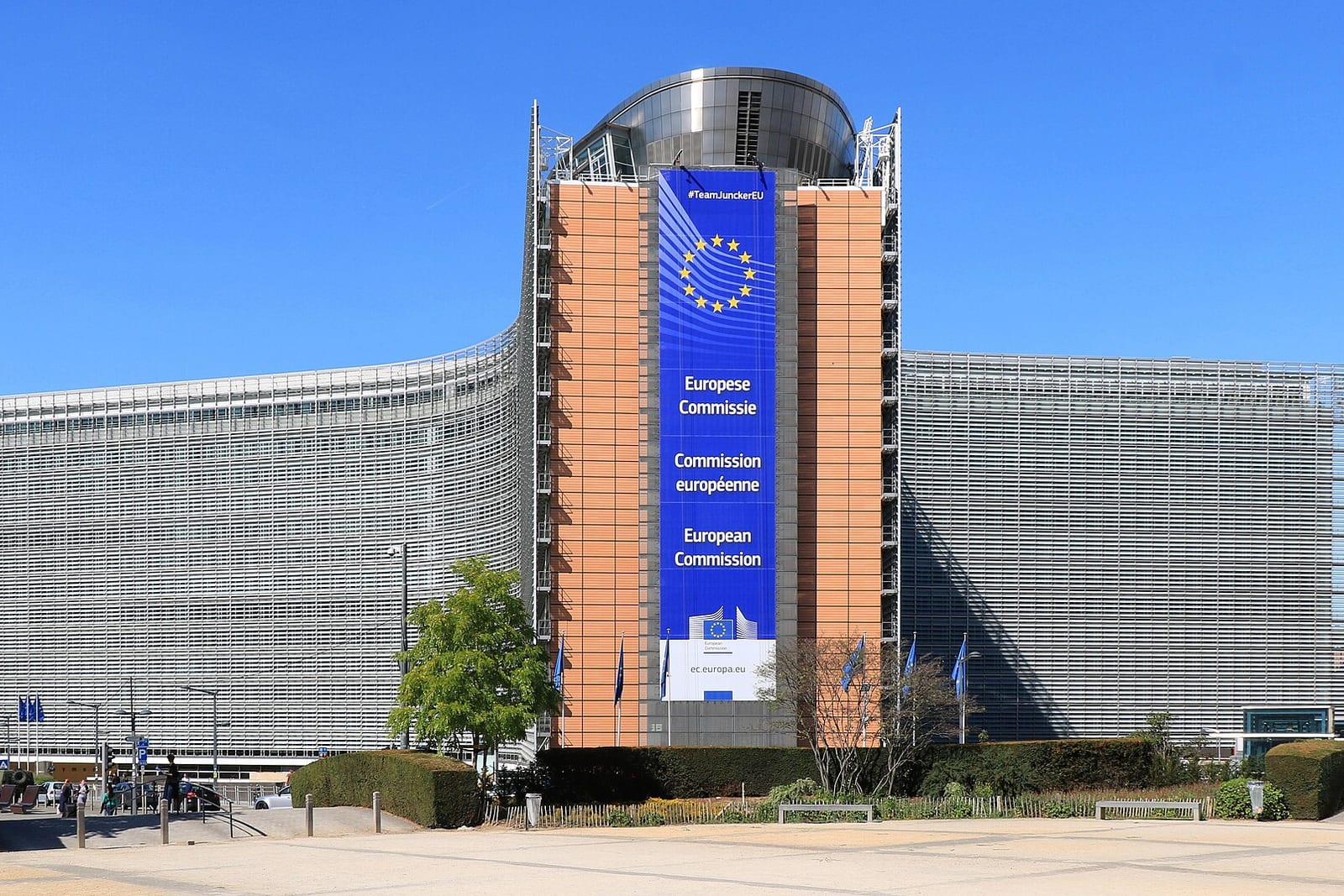
CC BY-SA 4.0Original on Wikimedia CommonsThen the law shrank. The Omnibus I amendments, a “simplification” package adopted in February 2026, raised the thresholds to more than 5,000 employees and more than €1.5 billion in turnover. They pushed the rules’ application back to 26 July 2029 and deleted the EU-wide civil-liability clause, which leaves compensation to national law. The Commission’s own guide to the amended law says its main guidelines for companies are due by 26 July 2027. That deadline is the opening: guidance can name caste where the annex does not.
At the April hearing, according to IDSN, Sandra Claassen, director of the human-rights group Arisa, warned that caste remains a major blind spot in business and human rights. Her case was that EU due-diligence rules should treat caste discrimination explicitly as a foreseeable supply-chain risk.
A dialogue that does not say the word
The 12th EU–India Human Rights Dialogue met in New Delhi on 24 June 2026, 17 months after the previous round. Its readout mentions the “elimination of discrimination in all its manifestations”. It does not mention caste. In January 2024, Parliament had asked for this dialogue to set “concrete commitments and benchmarks for progress”. It also asked the EU to “adopt in particular a country strategy to help fight caste-based discrimination”. The readout records neither.
“It is the need of the hour to explicitly and legally recognize caste as a protected ground under all forms of anti-discrimination law in regional and national frameworks, including the international human rights framework.”
— Ashwini K.P., UN Special Rapporteur on contemporary forms of racism, at the European Parliament hearing, 14 April 2026, as recorded by IDSN
The objection, and why it falls short
India’s government rejects the premise. At the UN Committee on the Elimination of Racial Discrimination (CERD) in August 2026, India argued that caste falls outside the race convention. The committee rejected that and reaffirmed “that discrimination on the grounds of caste is fully covered under article 1 of the Convention”. The trade chapter itself warns that labour standards “should not be used for protectionist trade purposes”.
The protectionism worry deserves a concession. Tariff threats could cost Dalit workers the very export jobs the impact assessment expects them to fill. IDSN itself urges companies to stay in caste-affected countries and work with their suppliers.
But naming caste is not a tariff. India’s own Constitution abolishes untouchability in Article 17. Asking a trade partner to report on a practice its own constitution forbids is not protectionism. Leaving caste unnamed has a cost too. IDSN’s account of the hearing says Pirbhu Satyani, speaking for the network, told EU officials that Pakistan had made progress with the added incentive of the EU’s GSP+ trade preferences, but that the full impact had not reached the most marginalised Dalits, especially in rural areas. Conditionality that never names caste can miss the people caste holds down.
What Brussels should do before the vote
The Commission lists four steps before the deal can take effect: adoption by the Council, signature, Parliament’s consent and the Council’s final decision. India must then ratify it too. Parliament’s consent is the point of leverage, and Dalit rights defenders are already working it. In December 2025, IDSN brought Rup Sunar of Dignity Initiative, Nepal, and Aiswarya Rao of Better World Shelter, India, to meet Parliament staff, Commission officials and the EEAS in Brussels. Before Parliament votes, its members (MEPs) should secure four things:
- A caste item on the labour committee’s agenda. The new trade and sustainable development committee should take up caste discrimination in employment from its first meeting. Dalit-led organisations should have a seat on the domestic advisory body each side must set up or designate under the agreement, with balanced representation of civil society. The chapter’s public-submissions article obliges each side to give “a timely response” to a labour-rights submission from its own people that meets the article’s conditions. That gives Dalit organisations in Europe a formal route to raise caste.
- Caste named in the due-diligence guidelines due in July 2027. It should also go into the Commission’s risk database under the Forced Labour Regulation, which applies from 14 December 2027.
- Caste in the dialogue. Future readouts should name caste and report against benchmarks, as Parliament asked in 2024.
- A new resolution. Parliament should adopt the updated caste resolution that IDSN has called for “during 2026 or early 2027”.
The EEAS has already said the principle is universal. A universal principle can survive being written into a treaty in plain words.