On 18 May 2026, nine days after Suvendu Adhikari was sworn in as the first chief minister of West Bengal from the Bharatiya Janata Party (BJP), which also governs India nationally, his government announced it would scrap the eastern state’s list of Other Backward Classes (OBCs), the constitutional category for castes that are socially and educationally disadvantaged but are not Scheduled Castes (Dalits, among the communities once branded “untouchable”) or Scheduled Tribes (Adivasi, or Indigenous, communities). The notification that followed kept only the 66 classes that were on the list before 2010, with a single quota of 7% of state government posts. The quota had been 17%.
The government says it is carrying out a 2024 judgment of the Calcutta High Court, the state’s highest court. That judgment did strike down the 77 OBC classifications West Bengal made between 2010 and 2012, after finding the process deficient, with the state’s Backward Classes Commission bypassed at key steps, and that “religion indeed appears to have been the sole criterion”. But the court also set out how the gap should be filled: a fresh, commission-led study of which communities qualify as backward classes, reported to the state legislature. The new government restored the pre-2010 list before that study began. For now, the removed classes, most of them Muslim castes, have no OBC reservation in new appointments.
What the list means is also a question of caste, not only of religion. Under India’s 1950 presidential order on Scheduled Castes, no one who professes a religion other than Hinduism, Sikhism or Buddhism can be a Scheduled Caste, whatever caste they were born into. West Bengal reserves state posts for Scheduled Castes, Scheduled Tribes and OBCs, India Tomorrow reported. For Muslim castes at the bottom of the local order, the OBC list is the route to caste-based reservation.
What the court held in 2024
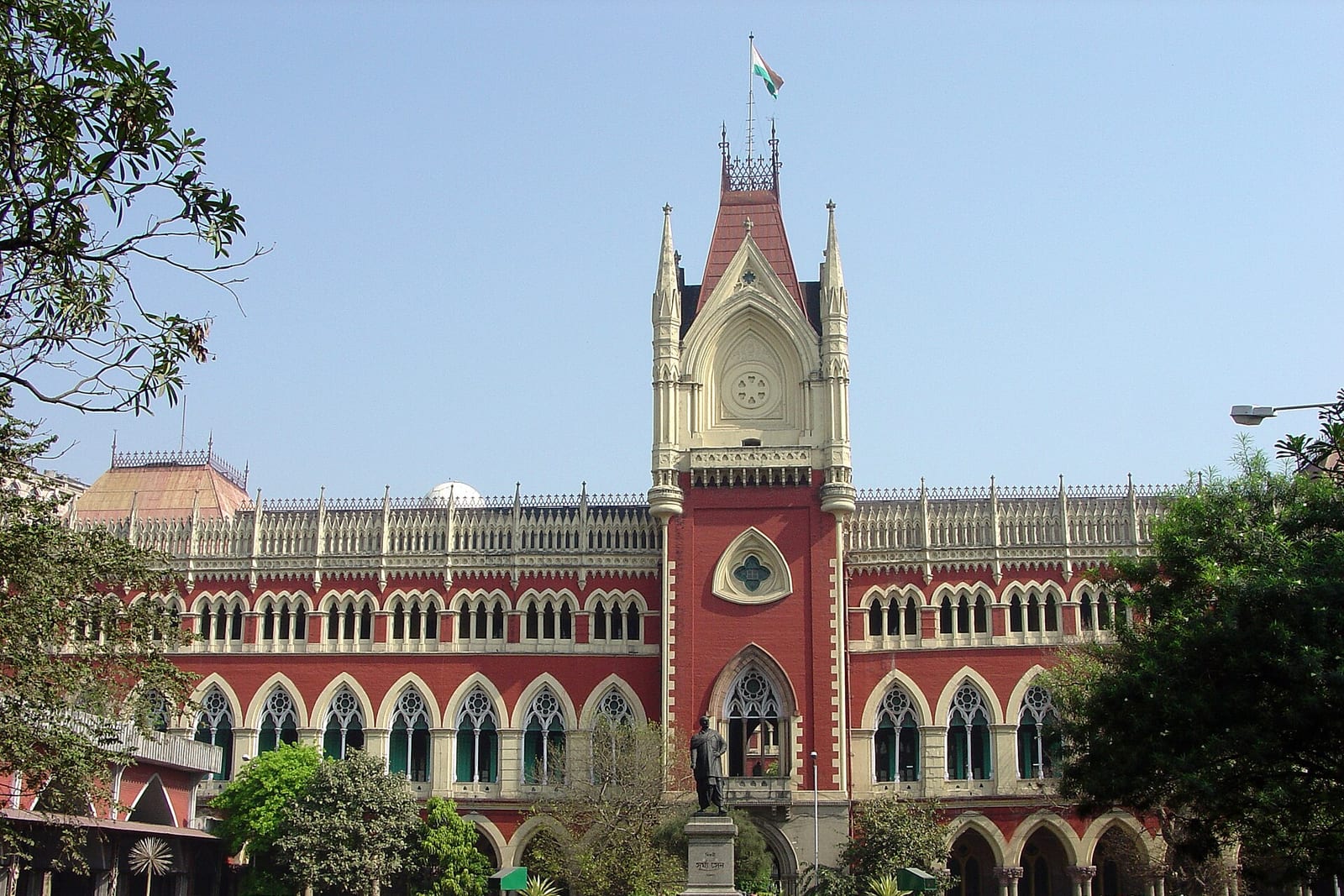
On 22 May 2024, Justices Tapabrata Chakraborty and Rajasekhar Mantha decided a batch of public-interest petitions filed from 2010 onwards against 77 classes declared OBC by “seven Executive Orders/Memoranda issued between 5th March 2010 and 11th May 2012”.
Those dates span two state governments. The Left Front government, a coalition led by the Communist Party of India (Marxist) or CPI(M), under Chief Minister Buddhadeb Bhattacharjee, added 42 classes in 2010, 41 of them Muslim, within six months of a February 2010 announcement of 10% reservation for Muslims, the court recorded. The Trinamool Congress (TMC) government of Mamata Banerjee, which took office in 2011, added 35 more by an order of 11 May 2012; 34 of those were Muslim, according to the ruling.
The court’s reasoning rested on law that predates both governments. In Indra Sawhney v Union of India (1992), the Indian Supreme Court case that settled the framework for OBC reservation, the judges said there ought to be “a permanent body, in the nature of a Commission or Tribunal” to examine complaints about who is on the list, and that its advice “should ordinarily be binding upon the Government”. West Bengal set up its commission under a 1993 Act. The High Court found that the state had amended that Act in 2010 to dilute the commission’s role and then bypassed it when dividing the list into sub-categories, which it called “a fraud on power if not a fraud on the Constitution”. It also found that the state disclosed no data on whether the classes were inadequately represented in government services, which the Constitution’s Article 16(4), the clause allowing reservation in public posts for backward classes that are not adequately represented, makes a condition.
The test of “quantifiable data” comes from a different case. M. Nagaraj v Union of India (2006) concerns reservation for Scheduled Castes and Scheduled Tribes in promotions: a state that chooses to provide it “has to collect quantifiable data showing backwardness of the class and inadequacy of representation”. It does not govern OBC lists.
The judgment’s harshest language concerned how the 2010–2012 additions were made. “This Court’s mind is not free from doubt that the said community has been treated as a commodity for political ends,” it said, calling the selection of 77 classes of Muslims “an affront to the Muslim Community as a whole”. Mamata Banerjee, then chief minister, refused to accept the ruling and said she would appeal. Her government argued in the Supreme Court that the classes were chosen for socio-economic backwardness, not religion.
Three directions matter now. The 66 classes listed before 2010 were left alone, because no one had challenged them, and would share 7% reservation. People from the struck-down classes who were already in service, or had already won a selection, were protected. And from the date of the judgment, members of those classes could not claim reservation “until the Commission and the State conduct fresh exercise for the purposes of Art. 16(4) in accordance with law”. The court did not decide that any of the 77 classes was not backward. It found that the process used to list them was unlawful.
The ruling affected about 500,000 people, PTI estimated.
What changed in 2025 and 2026
The TMC government did run a new exercise. In June 2025 it notified a list of 140 sub-groups, 79 of them Muslim, which the High Court stayed on 17 June, saying it was prepared in violation of the 2024 order. In July 2025 the Supreme Court stayed the High Court’s stay and issued notice on the state’s appeal.
The BJP won the 2026 Assembly election with 207 of 294 seats. On 18 May the cabinet decided to cancel the existing list, after the previous government’s petition in the Supreme Court was withdrawn, Madhyamam reported. The notification cites the 2024 judgment and lists the 66 pre-2010 classes “to avail 7% reservation”. The government also said it would re-verify about 4.8 million OBC certificates issued under the TMC, Scroll reported.
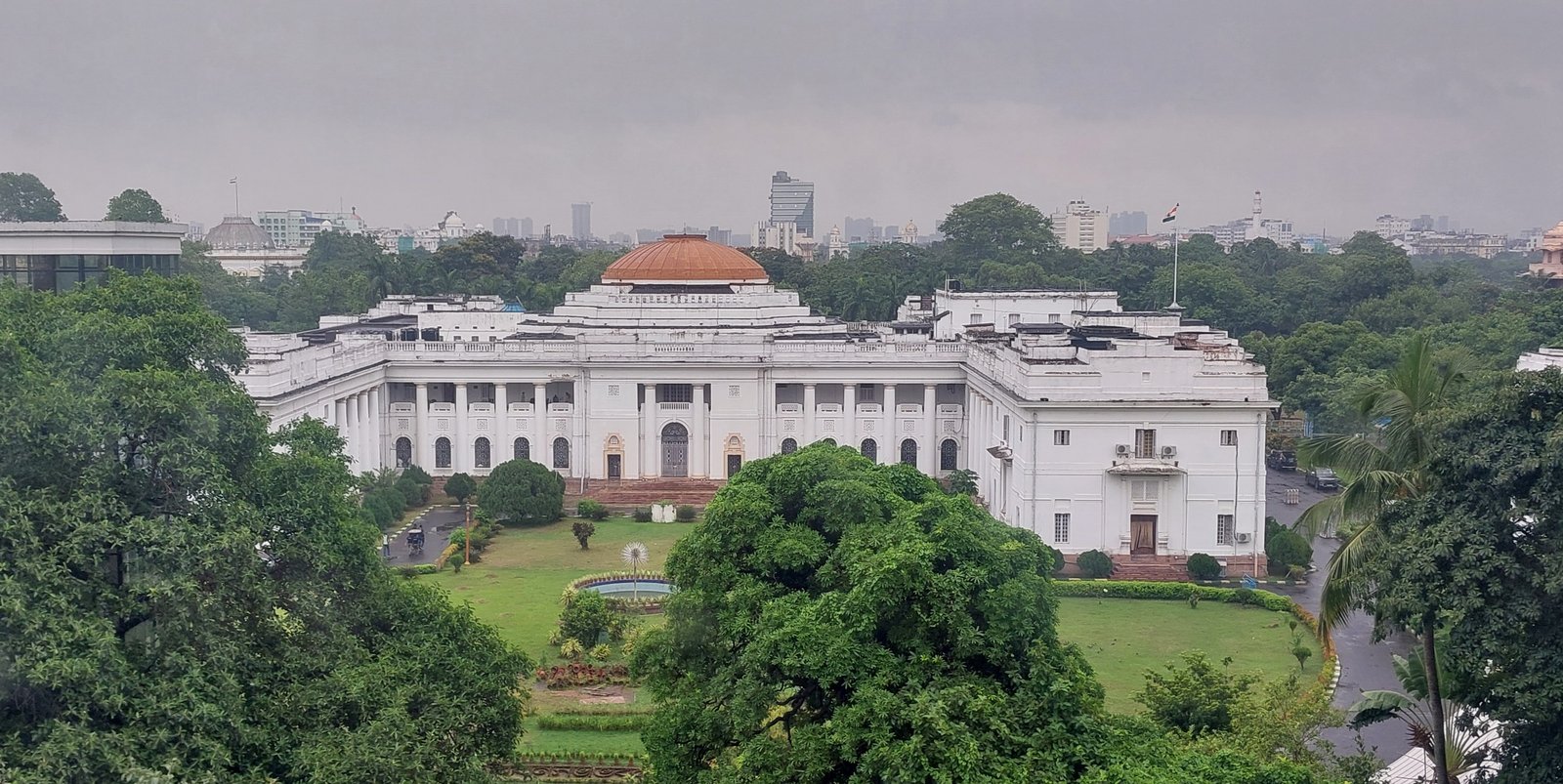
i
CC BY 4.0Original on Wikimedia CommonsOn 29 June the Assembly, the state legislature, passed two amendment bills by 186 votes to 17, writing the 7% quota and the 66-class list into law, LawBeat reported. The amended law requires the commission to survey communities before recommending additions or deletions, The Federal reported. In August the High Court cancelled certificates issued under the previous government’s revised classification and said their holders would be treated as general category, competing without reservation, Millennium Post reported.
Who lost reservation
17% → 7%: West Bengal’s OBC reservation in state government posts, after the May 2026 notification restored the pre-2010 list of 66 classes. Source: Backward Classes Welfare Department notification; Calcutta High Court, 22 May 2024
Backward Classes Minister Gourishankar Ghosh told the Assembly: “We have removed 113 classes included earlier without conducting any field survey, and retained 66 sub-classes, which were included following various surveys.”
Several outlets, including LawBeat and Maktoob, describe the removed groups as 77 Muslim communities, among them Muslim Nehariya, Muslim Haldar, Muslim Rajmistri and Ghosi (Muslim), India Tomorrow reported. By The Federal’s count, 48 of 102 Hindu communities on the earlier list were removed, and 65 of 77 Muslim sub-groups. Muslim castes recognised before 2010 stay on the list, including Jolah (Ansari-Momin), Fakir, Pahadia Muslim, Hajjam and Chowduli.
The anthropologist Adil Hossain, writing in The Quint, pointed to Muslim castes left out entirely, among them the Halalkhor, whose Hindu counterparts, he wrote, are Scheduled Castes. Unlike those counterparts they cannot be Scheduled Castes themselves, and Hossain wrote that they have been left out of the OBC list too.
The harm falls mainly on people applying now; the 2024 judgment protected those already in jobs.
What those affected have said
“Neither the Left nor the Trinamool made any serious efforts to study the status of lower-caste Muslims. They just rushed to include some castes in the OBC list whenever it was politically expedient for them to do so.” — Abdul Matin, political scientist, Jadavpur University, Kolkata, to Scroll
“There was an OBC vacancy for a lower division clerk in the Calcutta high court recently; a few other vacancies had also come up at the Uttar Dinajpur court (Raiganj) for night guard among others. But since our OBC certificates have been cancelled, we cannot apply.” — Wasim Akram Mondal, 26, a history graduate from Nadia district preparing for the state civil service exams, to The Wire, August 2024
Hossain told Scroll that neither the Left nor the TMC had treated the disadvantage of Muslim castes as a matter of social justice, and that “Hindutva [Hindu nationalist] forces can easily pit Hindu OBCs against Muslim OBCs here.” A government employee who had used the quota told The Federal, anonymously, that it was unclear whether those already in service could face “administrative issues”.
The government’s case
The government says it is complying with a court order. Ghosh denied any political motive and said the commission would examine any future claims, LawBeat reported. The government rejects the charge of religious discrimination and says every community can seek inclusion through the statutory process. State minister Nisith Pramanik said “appeasement politics” under the previous government had deprived Hindus of their rights, Maktoob reported. Party spokesperson Debjit Sarkar told Scroll: “Those who are actually OBCs did not get any benefit.”
On the law, the government has a strong case. The court itself set the 66 pre-2010 classes at 7%, and found the 2010–2012 process unlawful. The court also recorded the state’s own reply, which justified the additions on the ground that “most of the backward communities from the Hindu religion have already been included in Scheduled Caste (SC) list” and so Muslims should be compensated as OBCs.
What compliance does not settle is the order of steps. The new law gives the commission the job of surveying communities before adding or removing them, yet the government restored the pre-2010 list first, as The Federal noted. “The government should have allowed that statutory process to conclude before reducing reservation and restoring the earlier list,” the commentator Amal Sarkar told The Federal. Md. Salim, state secretary of the CPI(M), said the government had deprived poor Muslims in the Other Backward Classes (OBC) category of reservation benefits, and other critics argued it could have run fresh surveys while protecting existing beneficiaries, Maktoob reported.
The 2024 judgment protected people already in service and barred new reservation benefits only until a lawful exercise was done. Two governments of different parties made the additions without the process the court required. The cost now falls on applicants from the removed classes, who had no part in either decision.
What to watch
- The commission’s survey. How it measures backwardness and representation, and whether it covers the removed Muslim and Hindu classes alike.
- The re-verification. What happens to the 4.8 million certificates the government said it would check, and to holders already in service, whom the 2024 judgment protected.
- Census 2027. India’s next census, with a reference date of 1 March 2027, is due to include an enumeration of castes. Whether that data reaches the commission in usable form is open.
The Calcutta High Court’s 2024 ruling asked who decides which communities qualify as backward classes, and on what evidence. Two years on, no exercise that has survived in court has answered it for the classes it struck down. Until a lawful exercise covers them, they stay off the list.