What happened
On 7 September, Vanni Arasu, Tamil Nadu’s minister for social justice, told the Assembly, the state legislature, that the government would soon set up a special commission to identify Panchami land, the land granted under colonial rule to Dalit families, from the communities once branded “untouchable”, in the south-eastern state, ETV Bharat reported. Marimuthu, a member of the Assembly from the Communist Party of India, had asked for a separate board to recover the land. Of about 1.2 million acres (486,000 hectares) once granted, only 186,000 acres (75,000 hectares) are left now, the minister said, citing information obtained under the Right to Information Act, India’s freedom-of-information law. He did not say whether that is land still held by Dalit families or land still recorded as Panchami land.
Three earlier panels had studied the land, he said, and no action had been taken on any of their reports, Oneindia Tamil reported. On 22 September he said work on the commission had begun with the approval of the Chief Minister, the head of the state government, and that it would not stop at an announcement, ETV Bharat reported.
Why it matters
The grants were meant to give Dalits land of their own. J.H.A. Tremenheere, the colonial official whose report led to them, listed “small or marginal land holdings” first among the factors that “could lead to transformation” in their lives, the Madras High Court, Tamil Nadu’s high court, recorded. A bench of the same court wrote in 2010 that “vast extents of the lands so distributed are now with the persons who do not belong to the depressed classes”, and that the conditions meant to protect them “appear to have been violated without any restraint or check” (V.G.P. Prem Nagar v State of Tamil Nadu). The same grants were made across the old Madras Presidency, the British province that covered much of southern India; in coastal Karnataka they are called DC Manna land, and Dalit organisations there are fighting over what is left (our explainer).
What is Panchami land?
In 1891 Tremenheere, the Collector (the senior official) of Chengalpattu district, next to Madras, now Chennai, wrote a memorandum on the need to give land to the Depressed Classes, the colonial term for the castes held “untouchable”. Government orders 1010 and 1010A of 30 September 1892 then provided for land to be assigned to them, Justice K. Chandru of the Madras High Court recounted in 2008. The name comes from “Panchama”, a term for the outcastes, ETV Bharat explained.
The land could not be sold, leased, gifted or mortgaged for ten years, and after that could pass only to other members of the Depressed Classes. A breach let the government take it back without compensation, the High Court set out in 2010.
How much land was granted, and how much is left?
The High Court has used the 1.2 million figure for the original grants. Counts of what is left differ. In 2018 state officials told the National Commission for Scheduled Castes (NCSC), a federal constitutional body, that there were about 150,000 acres of Panchami land, and the commission’s vice-chairman, L. Murugan, spoke of “huge discrepancies”, Business Standard reported. Dalit rights groups said in 2019 that Dalits in Tamil Nadu hold less than 10% of the land allotted to them, the Thomson Reuters Foundation reported.
186,000 acres of Panchami land are left in Tamil Nadu, out of 1.2 million acres granted, the state’s social justice minister says. He did not say whether that is land still held by Dalit families or still recorded as Panchami land. Source: Social Justice Minister Vanni Arasu in the state Assembly, citing information obtained under the Right to Information Act, as reported by ETV Bharat, 7 September 2026
Who holds it now?
Court records show where some of it went. In Coimbatore, in western Tamil Nadu, a private housing company and a residents’ association holding house sites on assigned land asked the High Court to stop the state taking it back. The court refused in 2008, and a bench dismissed their appeal in 2010 (2008 order; 2010 judgment).
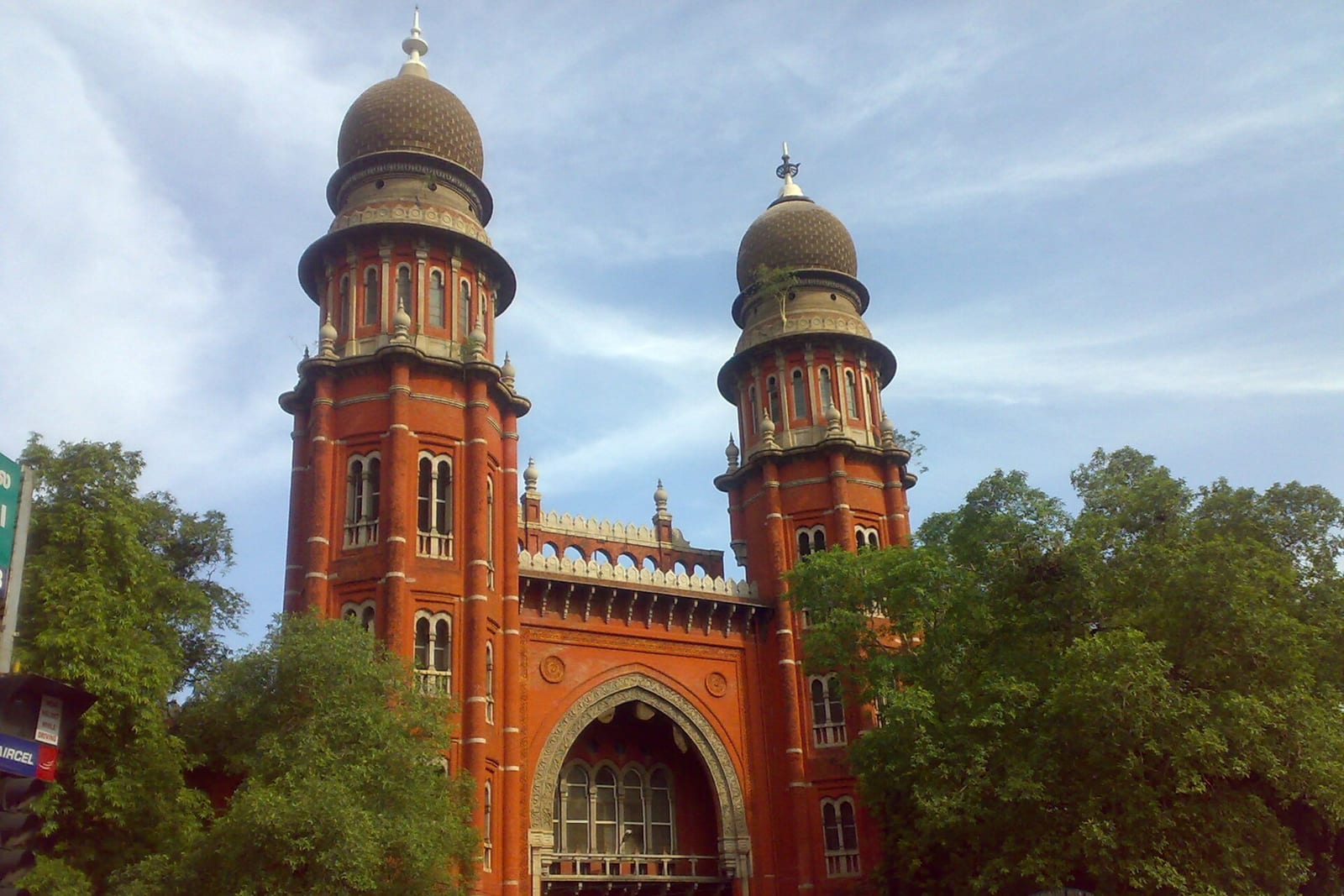
i
CC BY 3.0Original on Wikimedia CommonsIn Ariyalur district, in central Tamil Nadu, 1.12 acres (about 0.45 hectares) assigned to a Dalit man was sold to a non-Dalit buyer in 1963, then divided into house sites and sold on, deed after deed, until 2021. In 2023 Justice P. Velmurugan held the sales void and directed the government to remove the occupants, cancel the pattas (land-title records), and assign the land to eligible landless people from the Depressed Classes (Kamaraj v State).
Over time, as cities spread and irrigation improved, the land “fell into the hands of dominant castes”, ETV Bharat reported. Land recovered by the Dalit Liberation Movement, a Dalit organisation in the state’s south, had become part of a private cotton mill and the site of a private school, the outlet reported. “It has been a few generations now, so there is little documentation with the owners and the state has not made much effort to map these lands and update records,” Vanessa Peter, a researcher at the Information and Resource Centre for Deprived Urban Communities in Chennai, told the Thomson Reuters Foundation.
What have the courts and the state done?
The courts have backed the conditions. A Madras High Court bench upheld them as constitutional in 1991, and in 2010 the court relied on a 1996 Supreme Court ruling that a sale of land assigned to Scheduled Castes, the Constitution’s category for Dalit communities, in breach of its conditions is void (2010 judgment). On 12 August 2015 the High Court directed the state to form a committee within six weeks, Deccan Chronicle reported.
The state has formed panels. The 2015 committee, headed by the Commissioner of Land Administration, the state’s senior land-revenue official, was asked to suggest how the land could be recovered and returned. It was the third. The first was headed by the revenue minister of the 1991–96 government, and the second by a retired judge, M. Maruthamuthu, appointed in January 2011, Deccan Chronicle reported. In 2018 the NCSC gave district revenue officers 15 days to report the land’s extent and the encroachments on it, and its vice-chairman said 60 acres (about 24 hectares) had been recovered and given to Dalits in Coimbatore, Business Standard reported.
Dalit organisations have pushed recovery, case by case. The movement to reclaim the land took root in the late 1980s around Karanai, about 26 km from Chennai. On 10 October 1994 police opened fire there and killed two of its activists, John Thomas and Elumalai (also spelled Ezhumalai), ETV Bharat and the publisher Navayana have recorded. The Dalit Liberation Movement has since won land back by pressing revenue officials rather than through militant struggle, recovering 60 cents (0.6 acres, about a quarter of a hectare) in Madurai district, in the south, in 2005, then 4.16 acres, 14 acres and 2.66 acres between 2014 and 2021, the outlet reported.
“We painstakingly started collecting revenue records and submitted them to the authorities for action and at times approached the National Commission for SCs [Scheduled Castes] to secure directions.” S. Karupaiah, general secretary of the Dalit Liberation Movement, to ETV Bharat, July 2021
Does Tamil Nadu need a new law?
Dalit organisations have differed on this. “We are not asking for a new law. We simply want the existing legislation to be implemented, so that panchami land is given to Dalits and any attempt to use that land for other purposes is stopped,” Vincent Manoharan of the National Campaign on Dalit Human Rights said in 2019, Gulf News reported.
This month’s announcement has revived the call for one. Narendra Paraiyar, state coordinator of the Tamil Nadu Paraiyar Peravai, one of the Dalit organisations that responded, asked why another commission was needed. “Instead of another commission, Tamil Nadu needs a special law with clear powers to identify Panchami lands, cancel illegal transfers, remove encroachments and restore the land to genuine beneficiaries and their legal heirs,” he said in a statement, Deccan Chronicle reported. His organisation pointed to the laws of the neighbouring states of Karnataka and Andhra Pradesh against transfers of assigned land as models, and asked the government to say whether land already declared recovered had reached the families.
Key terms
- Depressed Classes: the colonial-era term for the castes once branded “untouchable”, broadly those now listed as Scheduled Castes, the Constitution’s category for Dalit communities.
- Panchami land: land assigned to the Depressed Classes under the 1892 orders, on condition that it stay with them.
- Patta: the revenue record that names the holder of a plot.
- Resumption: the state taking back assigned land when its conditions are broken.
What’s next
The minister’s 22 September remarks gave no members, powers or deadline for the commission. P. Shanmugam, Tamil Nadu secretary of the Communist Party of India (Marxist), welcomed it but said earlier commissions and committees had made no progress, and asked that the new one have the power to recover land and hand it to eligible families, within a time limit, Daily Thanthi reported. Watch three things: whether the commission can cancel transfers or only identify land, whether the earlier panels’ reports are published, and whether the government takes up the call for a Panchami land law.