What happened
On 21 September, after Karnataka’s cabinet had met in Mangaluru, the port city that is Dakshina Kannada’s headquarters, leaders of the Dalit Sanghatanegala Samanvaya Samithi (the coordination committee of Dalit organisations) told reporters that a promise had been broken, Vartha Bharati reported. Ashok Konchadi, a Dalit leader, said U.T. Khader, the state minister in charge of the district, had assured a delegation that the DC Manna question would be settled at that meeting, News Karnataka reported. It wasn’t. Konchadi called it a betrayal of the Dalit community, and said assurances had been coming for nine years.
“We will stage protests against the minister wherever he attends public programmes in the coming days,” he said. The Samithi plans a district-wide awareness campaign, leaflets, padayatras (protest marches) and large demonstrations, the outlet reported. The leaders also demanded Khader’s resignation, ETV Bharat reported. No public response from Khader appears in the reports.
The organisations had already set a deadline. At a press conference in Mangaluru on 7 September, Ramesh Kotian, the Samithi’s chief convener, demanded a decision at the cabinet meeting and allotment within a month, or the organisations would stage fierce protests, Vartha Bharati reported. Raghu K. Ekkar, a Samithi convener, told ETV Bharat before the cabinet met that a district-wide struggle was unavoidable if allotment did not start within a month.
Why it matters
The question is whether a promise of land to the castes at the bottom of the caste order, made more than a century ago, will be kept. The Samithi says about 6,000 people in the district have applied for DC Manna sites, News Karnataka reported. And the organisations want more than house plots: 2 acres (about 0.8 hectares) of farmland for each rural applicant and 10 cents (about 400 square metres) for each urban one, Ekkar told ETV Bharat. The grants were meant to make Dalits self-supporting cultivators, they argue, not wage labourers with a plot for a house, the outlet reported.
“Whenever the issue is raised during meetings with the district administration, authorities cite the need to amend the Draft Rules-2017. Ministers and elected representatives have failed to demonstrate the political will to allot land to eligible beneficiaries.” Ramesh Kotian, chief convener of the Dalit Sanghatanegala Samanvaya Samithi, to News Karnataka, 22 September 2026
Where does DC Manna land come from?
“DC” stands for Depressed Classes. The land was reserved when the region, then the district of South Canara (today’s Dakshina Kannada and Udupi districts), was part of the Madras Presidency, the British province covering much of southern India, officials told a 2017 meeting.
The Madras High Court has set out the origin. In 1891 J.H.A. Tremenheere, Collector of Chengalpattu district, in present-day Tamil Nadu, wrote a memorandum on the Depressed Classes’ need for land, and government orders 1010 and 1010A of 30 September 1892 provided for land to be assigned to them, Justice K. Chandru recounted in 2008. The land could not be sold or mortgaged for ten years, and after that only to other members of the Depressed Classes. A breach made the grant liable to cancellation. In Tamil Nadu these are Panchami lands: 1.2 million acres, the court said in 2010.
Karnataka’s courts have recorded similar conditions on the coast. A grant in Udupi taluk (a sub-district), then part of Dakshina Kannada, was made to a Scheduled Caste woman “under Depressed Class Rules”, subject to the Madras Board of Revenue’s Standing Order 15, the Karnataka High Court noted in 1990. A 1963 grant in Sullia taluk said “the lands granted to the depressed class shall not be alienated other than the persons belonging to the depressed class”, the court recorded in 2012.
How much land is there, and who has it now?
i
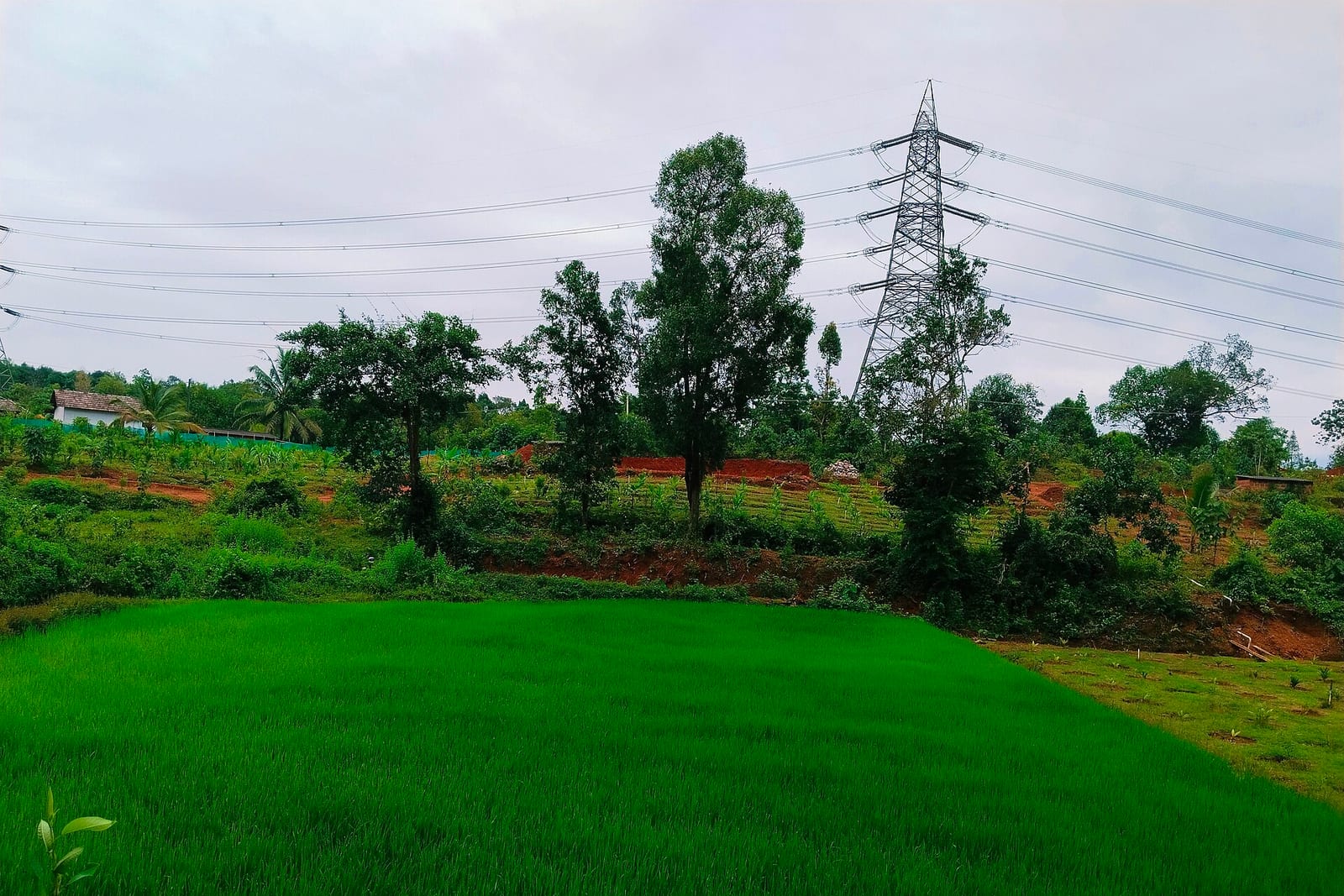
CC BY-SA 4.0Original on Wikimedia CommonsNobody agrees on the total. In 2017 the then Deputy Commissioner (the district’s senior civil servant), K.G. Jagadeesha, said 7,117 acres (about 2,880 hectares) had been reserved in the undivided district. Of that, 6,435 acres had been allotted “including the depressed classes, unauthorised occupants of land and also government departments”, Deccan Herald reported. Konchadi said the true figure was about 8,000 acres. A year earlier he had said most of it was “encroached upon by the rich and influential”, the paper reported.
Much of the land now carries roads, drains, school grounds and electricity poles, a 2012 letter from the then Deputy Commissioner to the state revenue department said, arguing that land in public use could not be cleared, according to a Dalit land-rights committee that quoted the letter, Deccan Herald reported. Some DC Manna land in three taluks has been leased to the state’s cashew development corporation. At an August grievance meeting, Dalit leaders asked the current Deputy Commissioner, H.V. Darshan, to take it back, and named encroached parcels at Kavoor and Ullal, in and near Mangaluru, Mangalorean reported.
190 acres of DC Manna land are available for allotment in Dakshina Kannada, against 2,222 applications from Dalits for land or house sites. Source: Deputy Commissioner H.V. Darshan, as reported by Mangalorean, 28 August 2026
Other counts are higher: the Samithi says about 6,000 applicants, and ETV Bharat reported 5,590 pending applications.
Why is the allotment stuck?
The law went quiet. Karnataka’s Land Reforms Act did not take in the DC category, so the rest of the land stayed unallotted “owing to the lack of supporting law”, Jagadeesha said in 2017, Deccan Herald reported. The 2012 letter, as the committee quoted it, said the state’s land grant laws made no provision for Depressed Classes grants and that there was “no clear definition on depressed classes”, the paper reported. Today officials say draft rules from 2017 must first be amended, according to Kotian. Governments have not approved the amendment in nine years, ETV Bharat reported.
Little land is left. The district does not have the revenue land to give every applicant one or two acres to farm, Darshan told ETV Bharat, and a state circular says to give house sites instead: 30 by 40 feet (about 110 square metres) in towns and 60 by 40 feet (about 220 square metres) in villages. Darshan said the 190 acres should go to the landless first, with land bought where needed, and that a proposal had gone to the state government, Mangalorean reported.
Clearing it runs through the courts. Non-Dalits cannot occupy DC Manna land, and such occupation would be cleared, Darshan said, while government buildings on it could be given other sites, Mangalorean reported. Occupants go to the High Court. In 2023 a shopkeeper in Udupi district challenged a notice, filed under a DC Manna reference, from the tahsildar of Hebri taluk (the taluk’s revenue officer) over the premises where he ran a petty shop. The court let him reply and kept possession as it was until two weeks after the tahsildar decided, its order shows.
Key terms
- Depressed Classes: the colonial-era term for the castes once branded “untouchable”, broadly those now listed as Scheduled Castes, the Constitution’s category for Dalit communities.
- Deputy Commissioner: the district’s senior civil servant in Karnataka. The “DC” in DC Manna stands for Depressed Classes, not this office.
- Cent: one-hundredth of an acre, about 40 square metres.
- Panchami land: Tamil Nadu’s name for land granted to the Depressed Classes under the 1892 orders.
What’s next
The Samithi says it will follow Khader to public events and carry the campaign into the next state election. “We will teach a lesson to U T Khader in the next Assembly [state legislature] elections for betraying the Dalits,” Konchadi said, News Karnataka reported. In Udupi, a delegation of the Karnataka Dalit Sangharsha Samiti (Ambedkar Vada) petitioned the chief minister to have DC Manna land given to people without house sites, Prajavani reported.
Watch for two things in the coming weeks: whether the state approves the district’s proposal and amends the 2017 draft rules, and whether the offer is farmland or only house sites.