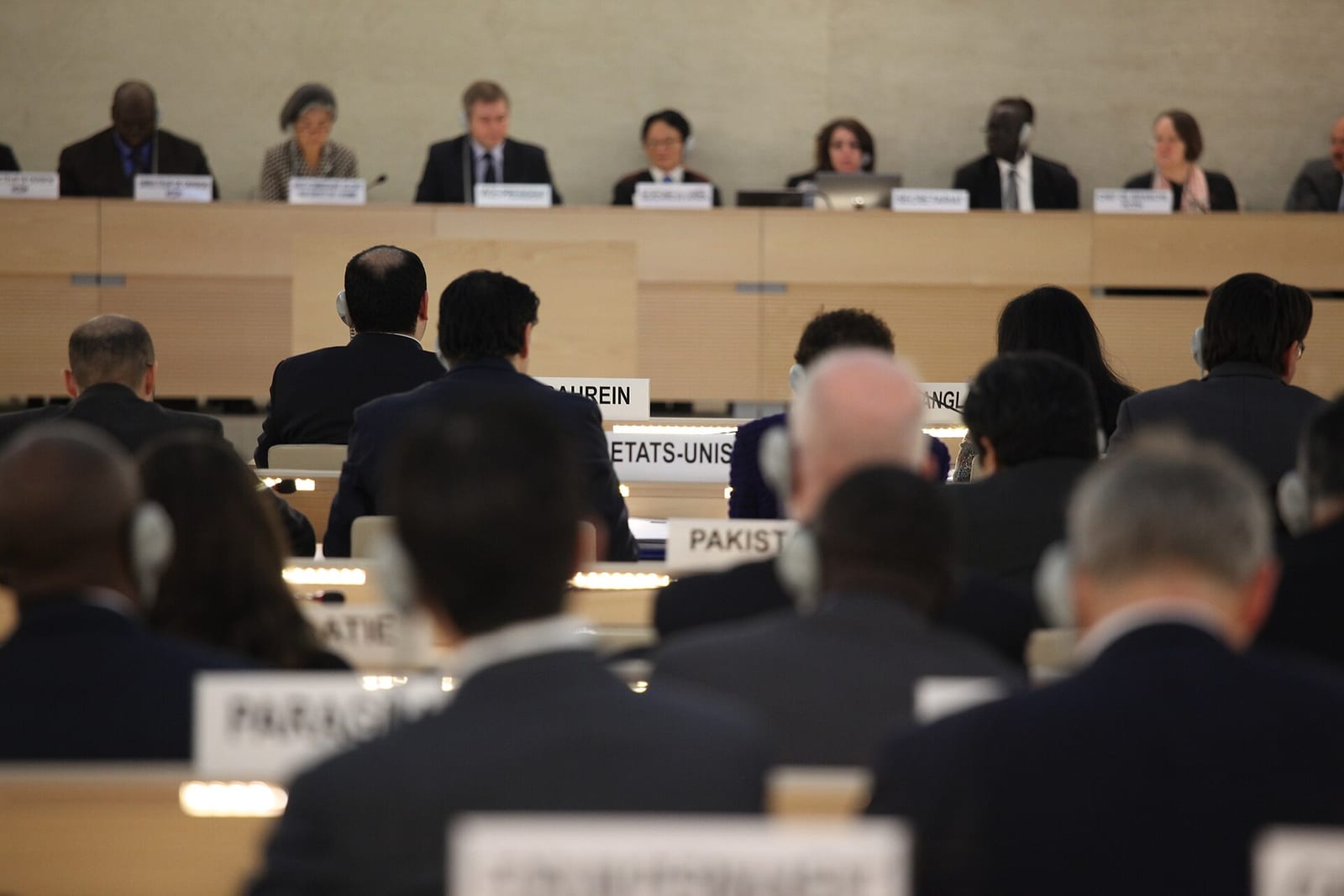
On 21 January 2026, Nepal sat for its fourth Universal Periodic Review (UPR), the United Nations process in which every member state’s human rights record is examined by other states roughly every five years. Other governments made 284 recommendations that day, the review’s official report records. By The Dalit Project’s count of that list, 16 of them named caste, Dalits (communities once branded “untouchable” under the caste order) or “untouchability” itself. Croatia asked Nepal to “strengthen the implementation and enforcement of the Caste-Based Discrimination and Untouchability Act”, the 2011 law that makes caste discrimination a crime. Germany asked for “the facilitation and enhancement of the registration and proper investigation of violence and discrimination”.
In April, Nepal answered. It supported 12 of the 16, including both of those. It “noted”, the UN term for declining, the four that asked for a comprehensive anti-discrimination law: legislation covering caste or Dalits, proposed by Czechia, Congo and South Africa, and Italy’s call for a law “establishing mechanisms for redress and accountability” and to “amend the Caste-Based Discrimination and Untouchability Act of 2011 to further strengthen victim protection”. It did support Malta’s broader call to “reform laws relating to sexual and caste-based violence”.
That split is the structure of the problem. International law now names caste plainly, and a state can agree to every word about enforcement, because enforcement happens, or fails to, at a police counter that no UN body reaches. The figures show where it fails.
What the review recorded
The UN’s own file for the review was blunt. Its compilation of UN findings summarises the UN’s expert on extreme poverty: “Caste-based discrimination persisted, with prejudices triggering violence.” It records that several UN experts had raised the alleged lynching of Dalit youths and “alleged shortcomings in the police investigation”.
Nepal’s own report to the review says the state had acted: “A total of 312 cases related to CBD [caste-based discrimination] were registered and investigated during the reporting period.” It gives no breakdown by year or by agency. The report covers Nepal’s work on the recommendations it accepted at its previous review, in 2021.
Samjha Shrestha, who coordinates a national network of Nepali non-governmental organisations for the review, gave The Kathmandu Post the verdict in a sentence: “Nepal is ahead in adopting the recommendations relating to the promulgation of laws.” Then: “However, it lags behind in implementation.”
In July, when the UN Human Rights Council adopted the outcome, the International Commission of Jurists, a Geneva-based legal rights group, and three other groups told the Council that “many of the recommendations Nepal only noted concern the legal and institutional reforms necessary to make these commitments meaningful”, naming comprehensive anti-discrimination legislation among them.
Where enforcement stops
Nepal’s 2011 Act carries prison terms of three months to three years for the more serious offences, Amnesty International’s 2024 report on Nepal notes. A case has to be filed within three months of the offence.
Few cases begin at all. Amnesty compiled the number of First Information Reports (FIRs), the police complaint that opens a criminal case, registered under the Act from Nepal Police annual reports: 43 in the 2019/20 reporting year, 30 in 2020/21, 39 in 2021/22, 15 in 2022/23 and 27 in 2023/24. Amnesty set those figures against “a country with more than 3.6 million Dalit people” and called them “derisive”. In the same pages it cites a 2020 UN survey of three provinces in which 54% of Dalit respondents said they had faced caste discrimination in the previous 12 months.
15 to 43 — complaints Nepal Police registered each year under the 2011 caste-discrimination law, 2019/20 to 2023/24. Source: Amnesty International, from Nepal Police annual reports.
Cases that reach court often end without a conviction. Citing the 2022/23 report of Nepal’s Office of the Attorney General, which leads government prosecutions, Amnesty found that district courts handled 52 cases under the Act, with 15 convictions and 12 acquittals, and the rest still pending. In the High Courts, which hear appeals, 44 cases produced 10 convictions and 19 acquittals.
i
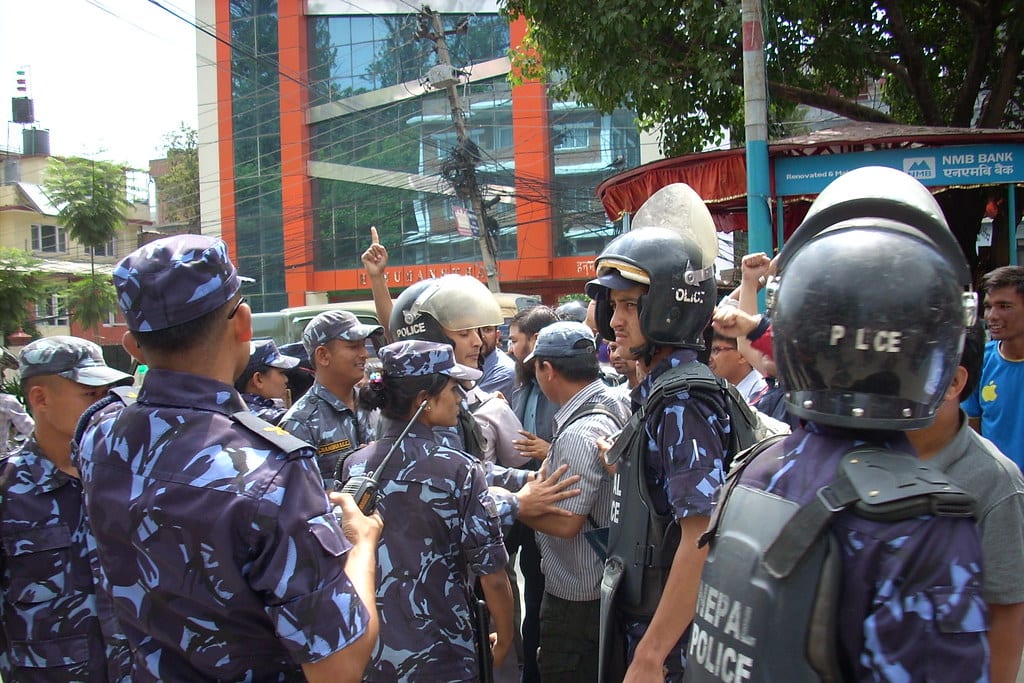
CC BY-NC-SA 2.0Original on FlickrThe reasons are on the record, and they sit inside institutions. The UN Committee on the Elimination of Racial Discrimination (CERD), the expert body that oversees the UN treaty against racial discrimination, said in 2018 it was concerned by “reports that law enforcement officials are reluctant to act suo motu [on their own initiative] upon caste-based discrimination and do not, upon receipt of related allegations, consistently file first information reports”. Dalit lawyers told Amnesty that police often register such cases under other laws instead, which, Amnesty wrote, has “the effect of qualifying the offence as a less serious crime and diluting the discriminatory motive”. Amnesty also cites a 2015 report by the Samata Foundation, one of its Nepali research partners, finding that grave incidents, such as physical assault, are “covered up at the local level by informal mediation by non-Dalits under the pretext of maintaining communal harmony”. A consortium of Dalit organisations told the 2026 review that FIRs on caste discrimination “are often delayed or rejected by police”.
Who it fails
Sarswati Nepali, born into a Dalit family in Baitadi in Nepal’s far west and now president of the Dalit Society Development Forum, put the chain in two sentences to The Guardian in 2023:
“The hardest part is getting justice for Dalit victims because police refuse to register complaints. If it is registered, a Dalit hardly gets justice because all institutions are run by upper-caste people who still think Dalits are untouchable.” — Sarswati Nepali, president of the Dalit Society Development Forum, to The Guardian, 2023
In Geneva in November 2025, at a pre-session briefing for diplomats ahead of the review, Moti Lal Nepali of the Dalit Welfare Association described the same gap: “Legally, Dalits are now free from caste discrimination according to the Nepali Constitution of 17 September 2015. But in social behavior, Dalits are still discriminated against and tortured through untouchability, caste persecution, rape, and murder in inter-caste marriage events.”
What international law asks, and what it cannot do
The law is not silent. In 2002, CERD’s General Recommendation XXIX settled that discrimination based on “descent”, one of the grounds in the treaty, “includes discrimination against members of communities based on forms of social stratification such as caste and analogous systems of inherited status”. It told states to “resolutely implement legislation and other measures already in force” and to “ensure the prosecution of persons who commit crimes against members of descent-based communities”.
In 2018, CERD applied that to Nepal in detail. It asked Nepal to extend the three-month limit, and to “ensure that all criminal complaints of race-based discrimination are formally recorded by law enforcement through first information reports and that law enforcement officials who fail to do so are sanctioned”. It asked for Nepal’s next report by 1 March 2022. The same document regretted that the report it was reviewing had arrived more than eight years late.
The UN’s Special Rapporteur on racism, Ashwini K.P., named the pattern across South Asia in her 2025 report to the Human Rights Council: “Caste and gender-based violence reinforce social hierarchies and often occur with impunity due to systemic discrimination within justice institutions.”
Each of these bodies can describe the failure precisely. None can order a police officer to write down a complaint. Nepal answers for the recommendations it accepted at its next review, which The Kathmandu Post reports falls in 2030. The Geneva International Centre for Justice, which tracked the review, warned that “the lack of enforcement mechanisms and delayed reforms risks reducing compliance to a performative exercise rather than a genuine effort toward structural change”.
The strongest counter-reading
The case for the UN machinery is that recognition is leverage. Mitra Pariyar, a Dalit rights activist, made it in The Kathmandu Post in 2024: international human rights voices “could still prove useful in powerless and donor-dependent countries like ours. Here, Western governments and agencies have a degree of leverage, which could be utilised to liberate the suppressed masses.” The 2026 review proves part of that. Dalit organisations wrote their own submission and spoke in Geneva, and Germany and Switzerland went on to press Nepal on the registration and prosecution of caste crimes, two demands that submission had made.
But Pariyar’s own diagnosis shows why recognition stalls. He argues the obstacle sits in the people who staff the system: “Today’s policemen and judges probably don’t need to be preached about universal human rights, but they also cannot deny their long-standing cultural and spiritual beliefs and practices of keeping their castes sacred.” If that is right, recommendations to “strengthen efforts” address the wrong layer. The measures that would reach it are the ones with consequences attached: sanctions for officers who refuse a complaint, a longer filing window, and new law with redress built in. CERD asked for the first two in 2018. The third is what Nepal declined in April.
India: registration without conviction
India shows what happens further down the same road. Its Scheduled Castes and Scheduled Tribes (Prevention of Atrocities) Act, the 1989 law against caste violence, is older than Nepal’s, and its police register far more cases. India’s National Crime Records Bureau (NCRB) counted 55,698 cases of crimes and atrocities against Scheduled Castes, the official category for Dalits, in 2024.
The courts have not kept pace. Of the 357,009 such cases before Indian courts in 2024, trials ended in 16,973, and 33.9% of those ended in conviction. At year’s end, 95.2% were still pending. The two countries count differently: India’s figure covers crimes against Dalits by people outside the Scheduled Castes and Scheduled Tribes, the official category for many Adivasi (Indigenous) communities, while Nepal’s counts only cases filed under its 2011 Act. The comparison is of shape, not size. Getting complaints registered moves the blockage from the police station to the courtroom, as India’s own court figures show.
What to watch
- Whether Nepal amends the three-month limit on filing a case, which CERD asked it to extend eight years ago.
- Whether Nepal Police publish caste-discrimination data broken down by offence, place and the people affected. Amnesty found no such breakdown.
- Nepal’s next report to CERD, which the committee asked for by March 2022, and its next UPR, in 2030.
- What the government does with its own promises to Dalits, which another piece follows through 2026.
Nepal told the UN it supports enforcing its 2011 law. That promise will not be measured in Geneva. It will be measured in how many complaints a district police office writes down. In the five years Amnesty counted, the national figure never passed 43.