When Oxfam India, the Indian arm of the international charity, and Newslaundry, a Delhi-based news and media-criticism site, last counted who runs India’s news media, they looked at 218 leadership positions across newspapers, television channels, magazines and news websites: editors-in-chief, managing and executive editors, bureau chiefs, resident editors, directors and producers. People from the “general category” held 191 of them. “None of the mainstream media houses had people belonging to SC/ST categories in leadership roles,” the report’s summary says. The two Scheduled Caste or Scheduled Tribe leaders the summary counts were at “two alternative media platforms”; the report’s own outlet tables record a few more SC leaders.
Scheduled Castes (SCs) is the legal name for Dalits, the communities once branded “untouchable”; Scheduled Tribes (STs) covers Adivasi, or Indigenous, communities. India’s 2011 census counted 201.4 million SC and 104.3 million ST citizens in a population of 1.21 billion, about a quarter of the country. The “general category” is the report’s term for castes outside the lists that reserve government jobs and university seats for SCs, STs and Other Backward Classes (OBCs); the report uses it interchangeably with the dominant castes.
The count is the second edition of Who Tells Our Stories Matters, released in October 2022 and covering April 2021 to March 2022. Its numbers do not describe a shortage of Dalit talent waiting to come through. They describe an industry whose gatekeepers come overwhelmingly from one social group, which decides who is hired, which stories run and who explains the news on air. Dalit journalists who have worked inside it describe the same structure from the other side of the desk.
What the count found
The researchers read bylines in seven English-language and seven Hindi-language newspapers, 12 magazines and nine news websites, and logged the anchors and panellists of 1,094 English and 981 Hindi prime-time television debates. The pattern held in every medium.
- Newspapers. Over 60% of bylined articles in the English and Hindi papers were by general-category writers, less than 5% by SC or ST writers, and 10% by OBC writers. Even on the caste beat, “No newspaper had a journalist from SC/ST categories writing on caste and tribal issues.” More than half of the journalists who wrote on caste and tribal issues came from the dominant castes.
- Television. About 56% of the anchors on English prime-time shows and 67% on Hindi ones came from dominant castes, and “None of the channels had any SC/ST anchors for hosting debates.” The other anchors were OBC, from religious minorities, or could not be classified. Less than 5% of panellists were SC or ST. Caste and tribal issues took up 0.5% of English debates and 1.6% of Hindi ones; religious identity and communal politics took 4.8% and 9.4%.
- Digital. Over 55% of writers on the mainstream news websites were general category, and less than 5% of articles were by SC or ST writers. The exceptions were outlets the report calls alternative media, such as EastMojo and The Mooknayak, a news site founded by the Dalit journalist Meena Kotwal. The report counted half of The Mooknayak’s leadership as SC, and a quarter of The News Minute’s.
Where the door closes
A newsroom’s leaders hire, assign and approve. The report spells out what that means for a Dalit reporter: one “may be interested in reporting or covering stories related to caste but without a senior’s approval, his/her stories may not get published or at times get published when the importance of the issue is no more relevant.” Its authors conclude that “it is equally important to diversify leadership position along with newsroom diversity.”
By the report's summary, no SC or ST person held a leadership role at a mainstream outlet; the two it found were at alternative media platforms.
Source: Oxfam India and Newslaundry, Who Tells Our Stories Matters (2022).
Hiring is where it starts. India’s reservation rules set quotas for SCs, STs and OBCs in government jobs, and there SC representation is close to the community’s 2011 share of the population, about 16.6%: SCs held 17.14% of federal government jobs on 1 January 2026, the government told Parliament in August. Private newsrooms have no such rule. The reservation policy does not apply in private workplaces, “including the news industry”, Tejas Harad noted in a 2020 paper for the Reuters Institute at the University of Oxford, for which he surveyed 16 SC, ST and OBC journalists in English media, anonymously. One told him: “positions in newsrooms happen only because of connections. Nobody advertises that they have openings.”
The 22 journalists the Oxfam–Newslaundry team interviewed about the barriers facing marginalised communities said the same. They “told us that the general category work as gatekeepers to big media houses, making it difficult for them to gain access,” the report says, and story ideas on caste oppression were “rejected by sheer nitpicking”, so that “in most cases, story ideas die at their initial stages.”
In their own words
Dalit journalists who have been through those newsrooms have put it plainly, on the record.
Babita Gautam, a Dalit journalist who left a regular newsroom to found the YouTube news channel The Voice Media, told the report’s researchers what colleagues’ assumptions about “merit” cost: “Their stories and ideas are either constantly rejected or criticised. For a person who is already dealing with socio-economic and cultural trauma, such disappointments severely affect their self-confidence. Sometimes, there is also a constant spree of casteist abuse by colleagues. The remuneration gap oppresses them further.”
She named the cause in an interview with Al Jazeera Journalism Review in 2023:
“Discrimination on the basis of caste is everywhere. Be it on the field or in the newsroom. This discrimination is the root reason that Dalits and other marginalised people do not get much space in the Indian media.” — Babita Gautam, founder, The Voice Media
i
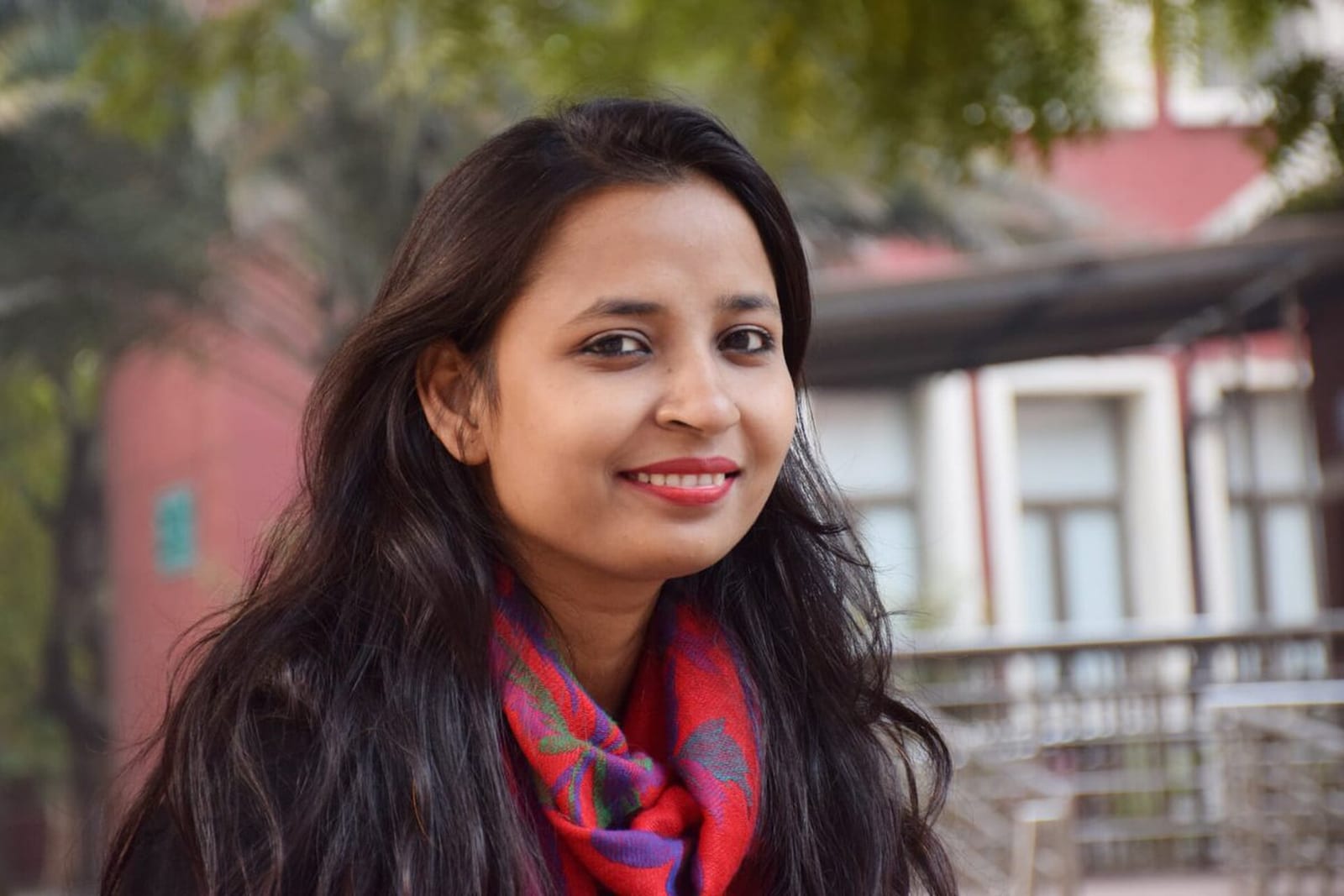
CC BY-SA 4.0Original on Wikimedia CommonsMeena Kotwal, in the same piece, explained why she started The Mooknayak with her own savings in 2021: “I started a Dalit-centred newsroom because there is very little representation of Dalits in the Indian media. There are very few organisations which give space to journalists coming from the marginalised and underprivileged section of the society. I have faced discrimination while working for an international news outlet and have been called out for my caste.” She told Voice of America that stories about Dalits get a few lines in newspapers and no prime-time debates because there are no editors from the community. Ashok Das, who founded the magazine and news site Dalit Dastak after a short stint in a regular newsroom, told the same publication: “You face a lot of discrimination for being a Dalit and it has become normal.”
Sumit Chauhan worked at two national Hindi news channels before founding the outlet The Shudra. In mainstream media, as the only Dalit journalist in the room, he was the target of routine casteism for talking about Dalit issues or wearing a T-shirt bearing B.R. Ambedkar, the Dalit jurist who chaired the drafting of India’s Constitution, two young Dalit writers, Shreeja Rao and Sankul Sonawane, reported on the Indian news site The Wire in 2023. “My mistake is not only mine, but it is of my community, it is of my people, of my roots and where I belong. So, there is that responsibility and that fear. There is that psychological pressure to prove that we are good enough and capable,” Chauhan said. Rao and Sonawane wrote of their own work: “Dalits are kept away from telling the stories we feel, breathe, and live with every day.”
The case that it is changing
The strongest reply to all this is that the numbers are soft and improving. Both points are partly right.
The caste data is uncertain. With no official figures, the researchers used surveys, public records and university and civil-service results, and placed about 70% of the people in their dataset. For leaders they relied on “triangulation methods” because they “hardly got any response from the media houses”. The report’s tables are not fully consistent with its summary either: outlet-level charts record a few SC leaders: at Sansad TV, Parliament’s public channel; at the Hindi edition of the news magazine Outlook; and at The News Minute, a news site based in the southern city of Bengaluru.
The trend is also upward, slightly. In its 2019–2022 comparison of editors and proprietors, the report puts the SC share at 3.17% in 2022, up from none in its 2019 edition, and the general-category share at around 86%, down from over 88%. Digital media moved most: SC representation rose by 11 points from zero there.
Neither point rescues the industry. Read at its most generous, 3% SC leadership sits against an SC population share of about one in six. The uncertainty in the count is itself a product of newsrooms hardly answering when researchers asked about the caste of their leaders. And much of the movement is in outlets Dalit journalists built for themselves, such as The Mooknayak, or in a public broadcaster. The report also found OBC representation in leadership had fallen.
The other familiar reply is that too few Dalit graduates apply. The investigative journalist Sudipto Mondal tested that in a 2017 column for Al Jazeera. He followed six Dalit students and one Adivasi student who won places at the Asian College of Journalism in Chennai, in the southern state of Tamil Nadu, most of them on funded seats, competing against “aspirants who had generations of privilege behind them”. As they graduated, four had job offers from leading news organisations, and all seven had agreed to reveal their caste only after making a name for themselves. Mondal’s conclusion: “most jobs still go to those with connections.”
What would change it
The report’s interviewees did not ask for patience. Almost all of them questioned the diversity of newsrooms and asked for “an adequate number of Dalits and Adivasis” in editorial and sub-editorial roles, with caste-based reservation extended to the private sector, media houses included. They also warned that “a mere change in leadership position will not address the issue. Representation should be ensured at all levels to bring about a democratic transformation.” They wanted SC/ST grievance cells inside news organisations, and an Annual Diversity Report from each one, to “make media houses more accountable on the question of representation”.
The report adds its own recommendations: employee profiles published on outlets’ websites, a “uniform and transparent recruitment process” that is recorded for checking, placement drives at government colleges, affirmative policies for the news industry, and a body to oversee diversity in Indian newsrooms. When the researchers asked newsroom leaders about recruitment, the ones who answered were all general category, and the marginalised-caste journalists disagreed with what they said.
Each of those steps can be checked: whether any large outlet publishes a caste breakdown of its staff, whether hiring is advertised, whether a third edition of the count appears.
Until then the 2022 edition stands: 191 of 218 leadership positions held by general-category journalists, and SC leaders, on the report’s most generous count, at about 3%. The report’s title is also its argument. Kotwal, Das, Gautam and Chauhan each answered it by building a newsroom of their own.