On 22 September 2026, Business Standard reported a new index from the investor Prosus and the data firm Dealroom on what it called “the Indian founder story”. It counts 102 unicorns, private start-ups valued at US$1 billion or more, based in India, worth about $349 billion on the index’s measure, which splits each company’s value among its founders, and 205 more built abroad by founders who grew up in India. The index sorts founders by where they grew up or were born. Caste does not appear in Business Standard’s account of its method, and when Rest of World reported on India’s tech industry in 2022 it found no widely collected data that tracks caste there.
Economists at the World Inequality Lab coded the surnames on the Forbes list of Indian billionaires by caste, using government notifications and news reports and, where those left doubt, a probability model built on India’s 2011-12 Socio-Economic Caste Census. They found that the castes they group as “upper castes”, outside the Scheduled Caste, Scheduled Tribe and Other Backward Class (OBC) categories, held nearly 90% of billionaire wealth in 2022-23. Dalits, the communities once branded “untouchable” and listed in law as Scheduled Castes (SCs), held 2.6%. Scheduled Tribes (STs), India’s listed Adivasi (Indigenous) communities, held none.
In investors’ and founders’ own accounts, India’s start-up economy hands out its scarcest resource, the first serious meeting with an investor, through networks that run through a few elite colleges. Those colleges, a leading study of the IITs argues, have long turned caste advantage into the look of merit. The programmes built for Dalit entrepreneurs offer something else: loans, and equity that is small and slow to arrive. The gap is between founders who get equity on trust and founders who are offered loans.
What the record shows
The longest view comes from the Economic Census, India’s periodic count of every non-farm business. Lakshmi Iyer, Tarun Khanna and Ashutosh Varshney analysed three rounds of it. In 2005, SCs owned 9.8% of private enterprises while making up 16.4% of the population, and their share of ownership was the same as in 1990. SC-owned firms were smaller, less likely to hire outside the family and less likely to reach institutional finance. Other Backward Classes (OBCs), the large middle band of castes, owned 43.5%, roughly their share of the population.
The latest Economic Census figures available, from 2013, show the same shape. Akhil Alha and K.B. Saxena, writing in the Economic and Political Weekly in December 2025, report that only 8.3% of Dalit-owned units employed even one hired worker, against 54% of units owned by people outside the SC, ST and OBC categories. They find SC and ST entrepreneurs “severely underrepresented in high-value credit categories and government procurement contracts”.
The mechanism: a credential that opens doors
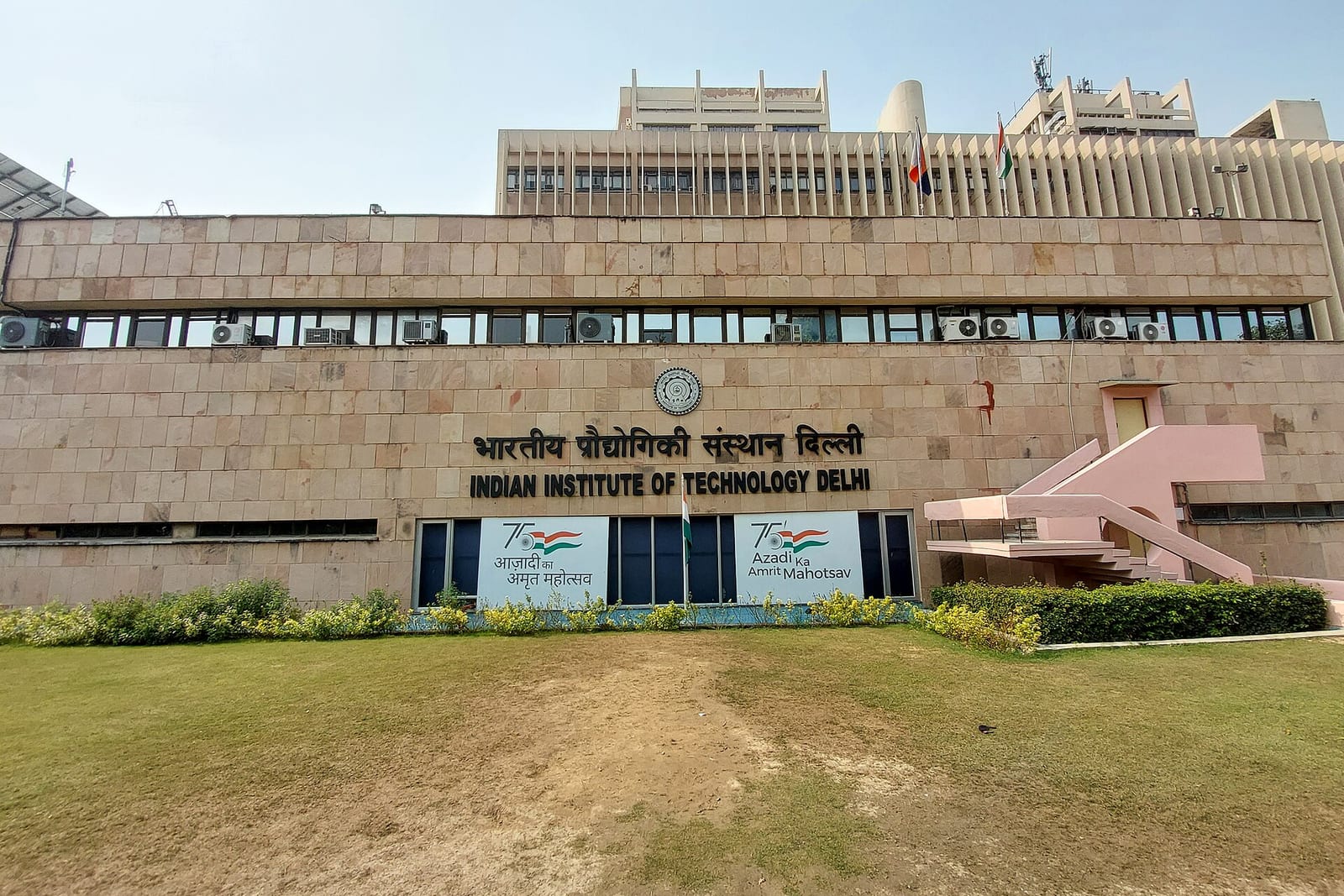
Start-up money in India follows a credential. ThePrint found in 2022 that more than half the founders of India’s first 100 unicorns had graduated from an Indian Institute of Technology (IIT), the state-run engineering colleges, and that nearly 20 of the rest held degrees from an Indian Institute of Management (IIM). By Rest of World’s count from the data firm Tracxn in 2023, 68 of 108 Indian unicorns had at least one IIT-educated founder.
Investors say plainly how the credential works. Abhishek Goyal, an IIT Kanpur graduate who was at the venture firm Accel when it made an early investment in the e-commerce company Flipkart, told Rest of World how its founders’ IIT backgrounds helped: “It’s just easier to find reference checks, find common friends — so all of them help in scouting as well as building trust.” He added: “If someone comes with a large market, and they come from tier 1 schools, it’s easy to validate and back them.” In an earlier Quartz report, Prasanto K. Roy, who works with the industry bodies Nasscom and The Indus Entrepreneurs, put the timing exactly. Founders from outside the IITs and IIMs, he said, get attention or funding “usually because they already have a successful product or a track record. IIT-IIMers are likely to attract attention even before that stage.”
More than half of the founders of India’s first 100 unicorns graduated from an IIT. Source: ThePrint, 16 June 2022
The credential is not caste-neutral. The anthropologist Ajantha Subramanian, studying IIT Madras in the southern state of Tamil Nadu, argues that the IIT graduate’s status rests on “the transformation of privilege into merit, or the conversion of caste capital into modern capital” (Comparative Studies in Society and History, 2015). Carol Upadhya of the National Institute of Advanced Studies in Bengaluru, India’s southern tech hub, wrote in 2007 that Hindus of the castes she grouped as “upper castes” made up almost 67% of engineering and technology graduates, as quoted by Rest of World. The IITs now reserve seats for SC, ST and OBC students, but reserved seats do not fill every department: in reply to a request under the Right to Information Act, India’s freedom-of-information law, IIT Bombay said that two of its departments admitted no SC students at all between 2015 and 2019, Rest of World reported.
The older networks have not gone away either. In the western state of Gujarat, the researcher Kathryn Lum sat in on a Dalit credit co-operative whose 1,300 members borrow mainly for marriages, housing and higher education. When she asked why so few of them ran businesses, the answers, she wrote, “revealed the widespread discrimination Dalits face in being able to access credit from both public and private banks”. The group’s one businessman, a share broker, worked under an adopted surname so that, as he explained it, clients “are automatically more at ease”. In nearby Ahmedabad, she found that the village associations of the Patels, a caste she describes as dominant politically and economically in Gujarat, give young men entering business “low interest loans, as well as mentorship and contacts”. Iyer, Khanna and Varshney offered the same hypothesis from the census data: SC and ST owners “might thus be disadvantaged by their relatively smaller networks”.
Who funds Dalit founders
The federal government’s own programmes for Dalit founders show what is on offer: mostly debt.
The Venture Capital Fund for Scheduled Castes opened in January 2015 and is managed by IFCI Venture Capital. Despite its name, it provides “concessional finance”, money on cheaper-than-market terms, at a 4% coupon (the interest the company pays), from Rs 1 million to Rs 150 million per company. Its early rules funded projects “ensuring asset creation” and capped support at twice a company’s current net worth, Factly reported in its first year. By March 2025 the fund, including its student programme, had sanctioned Rs 5.88 billion (Rs 588.4 crore) to 245 SC-owned companies in ten years, the federal social justice minister told the Rajya Sabha, Parliament’s upper house. Venture and growth funds put about US$16 billion into Indian companies in 2025 alone, by Bain & Company’s estimate.
That student programme, the Ambedkar Social Innovation and Incubation Mission (ASIIM), was launched in 2020 to support 1,000 start-up ideas from SC students and young entrepreneurs by 2024, with up to Rs 3 million (about US$34,000) of equity each over three years. By 1 May 2025 it had sanctioned 105 companies and paid out Rs 112.2 million (about US$1.3 million) to 79 of them.
Stand-Up India, the federal bank-loan scheme for SC, ST and women entrepreneurs, is larger. It had sanctioned Rs 97.5 billion to 46,248 SC borrowers by November 2024, the government’s press office said, out of Rs 610 billion sanctioned under the scheme by March 2025. These are bank loans. They are not the equity that IIT founders describe finding through their seniors and classmates.
State support can also arrive late, or in poor shape. In the southern state of Karnataka, the Karnataka Dalit Entrepreneurs’ Association told a news conference in April 2025 that only Rs 4 billion of the Rs 420 billion the state sets aside for SC and ST communities under its Sub-Plans, less than 1%, had been earmarked for enterprise schemes such as site allocation and seed capital, Deccan Herald reported. Its working president, C.G. Srinivasan, said many Dalit entrepreneurs had been allotted land on the state’s industrial estates that was litigated, uneven or unusable. “Ultimately, many had to pay fines for not being able to start their businesses within the stipulated time because of the condition of lands allotted,” he said. The report carries no response from the state government.
What Dalit entrepreneurs say
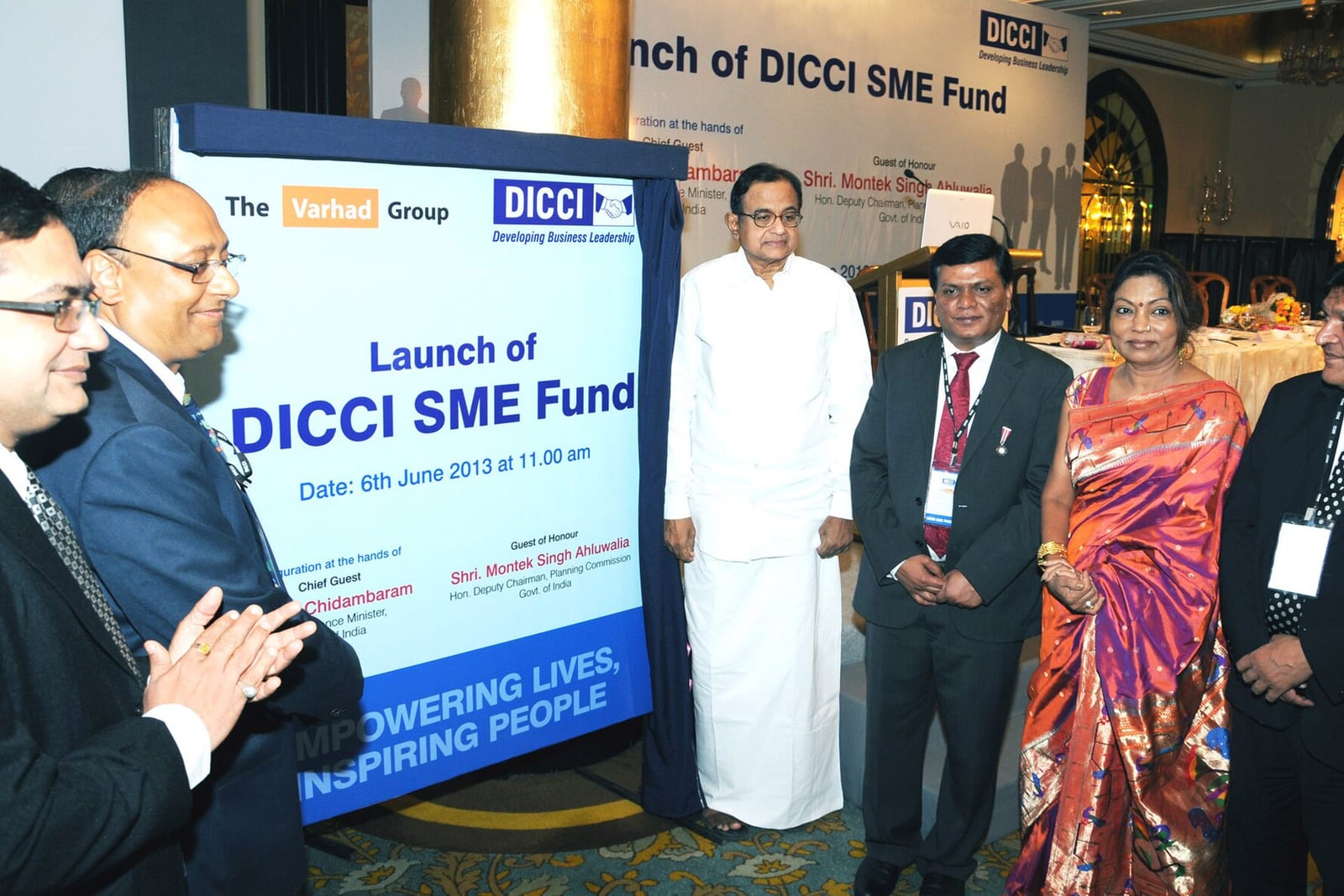
In 2013, the Dalit Indian Chamber of Commerce and Industry (DICCI) launched a Rs 5 billion fund that, its founder said, would be registered with the Securities and Exchange Board of India, the market regulator. The founder, Milind Kamble, a construction entrepreneur from Pune in the western state of Maharashtra, said in an interview with The Indian Express, republished by Round Table India:
“Till the day Dalit entrepreneurs make their presence felt on Dalal Street, let growth be how much ever it is, it won’t be sustainable.” — Milind Kamble, founder of the Dalit Indian Chamber of Commerce and Industry, 2013
Dalal Street is Mumbai’s stock-exchange district. Kamble also named the signal that the market reads without saying so: “In Maharashtra, your surname often gives away your caste. Look at my name: Milind Kamble. Kamble is a known Dalit surname.”
Thenmozhi Soundararajan, the Dalit American executive director of the civil-rights group Equality Labs, told Rest of World how trust works in senior tech hiring, where managers from elite colleges look for graduates of the same colleges: “If you have crossed paths with them in their careers somewhere, they trust you more.”
The counter-reading: markets as the way out
The strongest objection comes from inside the Dalit movement. In the same interview, the Dalit writer Chandra Bhan Prasad, DICCI’s mentor, argued that “capitalism is changing caste much faster than any human being” and that “Dalits should look at capitalism as a crusader against caste”. Kamble described how the end of the licence system, under which only a few licensed firms made cars and parts, opened supply chains to new vendors, and Prasad said most Dalit entrepreneurs of the day were “beneficiaries of outsourcing”. Suryakant Waghmore, reviewing Subramanian’s book for Scroll, notes that the Joint Entrance Examination (JEE), the entrance test for the IITs, works in favour of SC, ST and OBC candidates “due to the caste-blind policy in assessment and selection”, and that the first and only candidate to score a perfect 360 in JEE Main in 2017 was from the SC category.
Both points are real, and neither closes the gap. The openings Kamble described came through supply contracts, where a buyer needs a part and pays for it. Equity is different. An investor pays for a future on the strength of who vouches for the founder. Roy describes that judgement being made before a founder has a successful product or a track record, and Goyal describes it resting on reference checks and common friends. A more open market for parts can sit alongside a closed market for trust. The census series also shows SC ownership flat between 1990 and 2005, across the first years of market reform.
What to watch
Three things to watch. First, caste data: the Prosus-Dealroom index shows that founder backgrounds can be counted when investors want them counted, and start-up funding data could ask founders to self-identify, as Stand-Up India already counts its SC and ST borrowers. Second, whether the federal fund moves from sanctions to cheques: ASIIM had paid out to 79 companies by May 2025, against a 2020 target of supporting 1,000 ideas by 2024. Third, whether Dalit-led funding rounds start to show up in the data firms’ counts.
The Indian founder story is now counted in hundreds of billions of dollars. Until it is also counted by caste, the best evidence available says who gets to write it: founders with the right degree and the right reference, while the programmes meant for Dalit entrepreneurs mostly lend.