Listen to this article
Read by an AI-generated voice · Report a mispronunciation
On the third Saturday of Purattasi, a month of the Tamil calendar, the Dalit residents of Kural set out for their village’s Perumal (Vishnu) temple. Kural is a village near Chinnasalem, a town in Kallakurichi district, in the north of the southern state of Tamil Nadu. Dalits are among the communities once branded “untouchable” under India’s caste order. That Saturday, 3 October 2026, they walked in procession with drums, The New Indian Express reported, carrying trays of offerings, according to ETV Bharat.
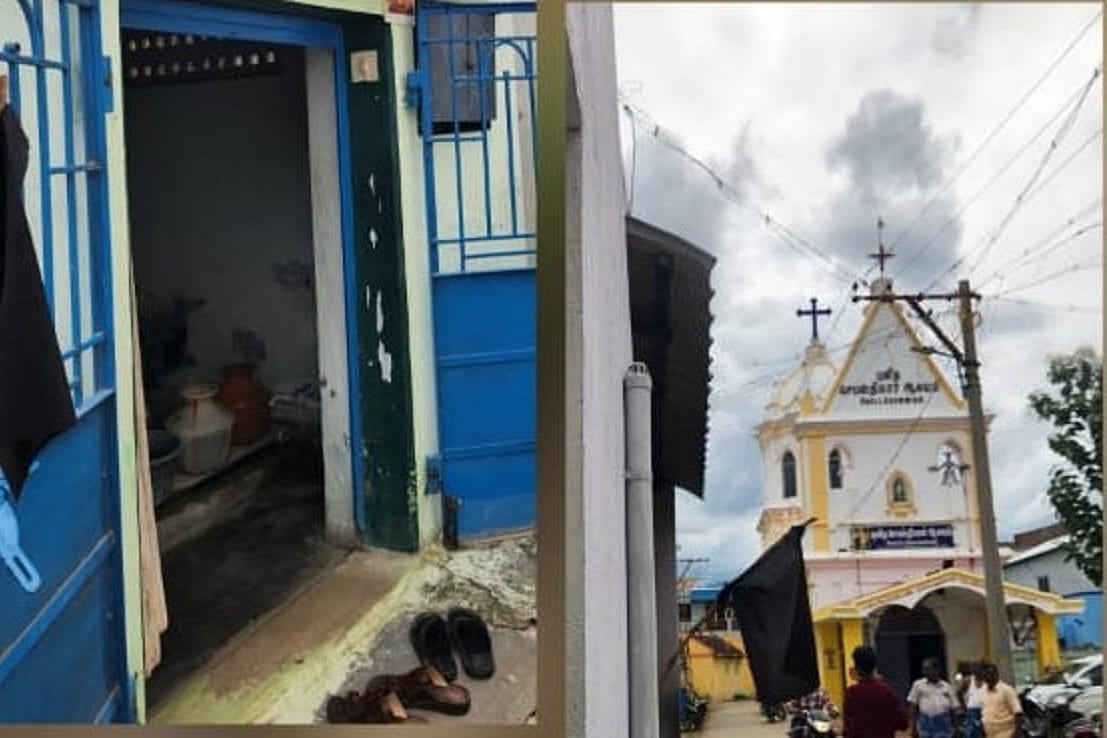
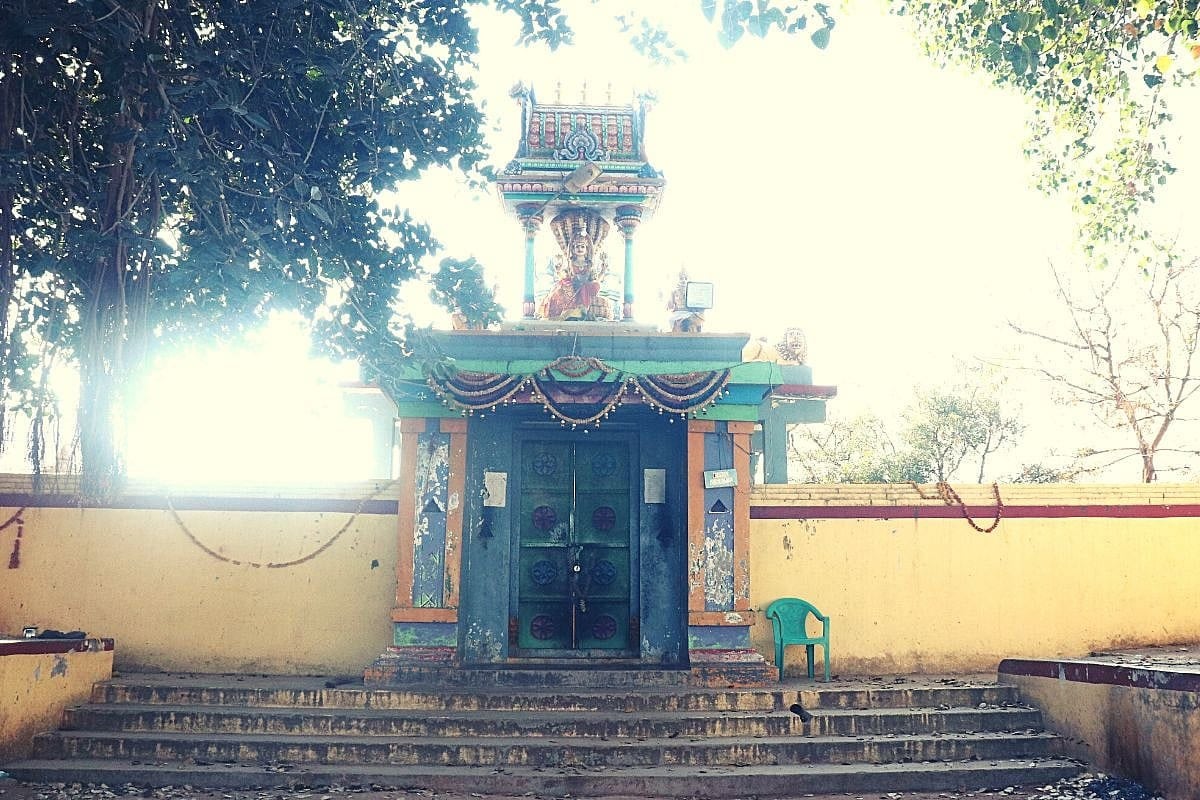
They did not get in. According to The New Indian Express, members of what it calls “a dominant community” allegedly sat at the entrance of the Sri Kaliyuga Srinivasa Perumal temple and stopped them. ETV Bharat reports that they told the Dalit residents they were not permitted to enter and should leave, and that after an argument they closed the temple gates and locked them. Neither report quotes anyone from that community. The temple is not private property. Both outlets report that it belongs to Tamil Nadu’s Hindu Religious and Charitable Endowments (HR&CE) Department, the state agency that administers Hindu temples.
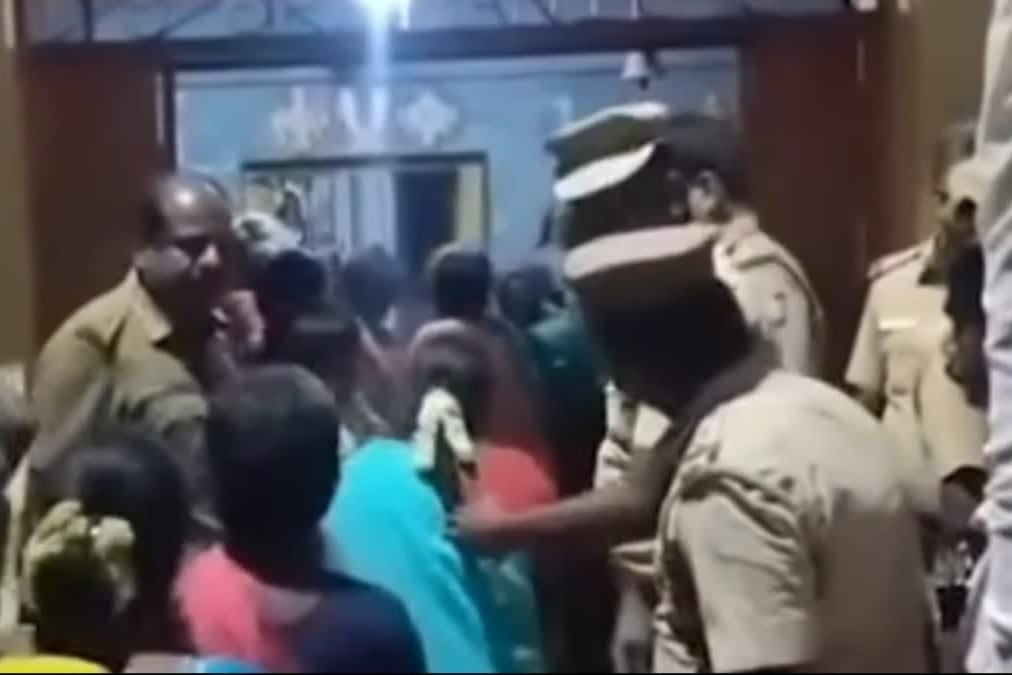
The Dalit residents sat down in front of the gate. Kallakurichi’s Superintendent of Police (SP), the district’s police chief, Shahnaz, came to the village. Her team told the other side that the temple is a public place open to everyone and that no one could be barred, ETV Bharat reports. The talks failed. Police then broke the lock in her presence and escorted the Dalit residents in to worship, ETV Bharat reports; after the prayers, The New Indian Express reported, they were escorted home under police protection. More than 100 police personnel were deployed around the temple as tension continued. The response was quick, and the officer acted on the law, the way India still answers untouchability: with the police. But the scene is not new, even in this district, and what Tamil Nadu’s recent record shows is that the day of entry is rarely the end of the matter.
The same district, three years earlier
On 2 January 2023, the date The Hans India gives, about 250 Dalits entered the Sri Varadharaja Perumal temple at Eduthavainatham, also in Kallakurichi district, for the first time, escorted by some 300 police, The Mooknayak reported. The temple was said to be about 200 years old. It too was under the HR&CE Department, which directed the district administration to make the entry possible. The Dalit villagers, The Mooknayak reported, had believed the temple was privately owned; only when they learned it was under state control did they ask the district to enforce their right to enter. The Hans India, which put the number who entered at more than 500, reported that they had protested for six months, through peace talks at the Chinnasalem revenue offices, before the department’s joint commissioner gave permission.
P. Ramesh Kumar, a Dalit resident, told The Hindu how long the exclusion had lasted, in words The Mooknayak carried: “The temple is said to be around 200 years old and Dalits have been barred from entering the temple from the beginning. We had repeatedly requested the caste Hindus from the village to permit us to participate in the processions of the temple. But they refused and even suspended the temple procession in 2008.”
When ETV Bharat reported the Kural lockout, it recalled Eduthavainatham in its last paragraph. Kural is the same district, a different temple, the same department, and once again a police operation.
The mechanism: public by law, run by the village’s dominant caste
Tamil Nadu’s law on this is old and clear. The Tamil Nadu Temple Entry Authorisation Act of 1947 allows all Hindu castes and classes to enter Hindu temples and worship, as ThePrint summarised it. The state’s endowments law, which grew out of the Hindu Religious Endowment Act of 1927, passed under the non-Brahmin Justice Party, brought temples under a secular administration and “makes temples public places to which all have equal access”, Dhivya Sivaramane, a doctoral researcher in political science at the University of Delhi, wrote in The India Forum in 2023. Untouchability itself is abolished by Article 17 of India’s Constitution.
The gap is between the department’s books and the village. At Melpathi, in neighbouring Villupuram district, the temple at the centre of a 2023 dispute was, as the Deccan Herald reported, “managed by the Hindu Religious and Charitable Endowments (HR&CE) Department”, yet the Vanniyars, the caste that forms the village’s majority, “control the temple’s day-to-day affairs”. The HR&CE list showed the temple under the department since 1978, ThePrint found, but in the 45 years since, the village’s Vanniyars said, it had appointed no trustees and done no maintenance work.
i
Source: ThePrintWhere the state is absent from the running of a temple, whoever holds its keys decides who comes in. Sivaramane described the pattern: when officials step in, “the higher castes disapprove of such measures. They refuse to take part in talks, stage protests, and postpone efforts to grant rights to Dalits. In some instances, they lock the temple or stop conducting temple festivals.”
What followed the escorted entries
i
Shared with creditOriginal on thenewsminute.comThe days after an entry are where Tamil Nadu’s recent record is hardest to read.
At Thenmudiyanur, in Tiruvannamalai district, Dalits entered the Muthumariamman temple on 30 January 2023 with the district collector (the district’s senior civil official), the SP and the revenue officer present. They had petitioned the HR&CE Department to make the entry happen after the village’s caste Hindus, as the dominant castes are called, again refused to let them take part. The temple had been under the HR&CE Department for three decades. On the same day, TNM (The News Minute) reported, HR&CE officials shut the temple and took the keys. Within days, TNM found, the village’s caste Hindus had cut off water to Dalit-owned fields and imposed a social and economic boycott: Dalit labourers had been removed from their jobs, and shops near the Dalit colony had closed. On 7 February a shop belonging to a Dalit woman who had sat on the pre-entry peace committee was burned; police said an investigation was under way. Police registered the fire under the general criminal law, not the Scheduled Castes and Scheduled Tribes (Prevention of Atrocities) Act, India’s 1989 law against caste violence.
At Melpathi, a 21-year-old Dalit man walked into the Sri Dharmaraja Draupadi Amman temple during its festival on 7 April 2023. Dominant-caste residents beat him and two other Dalit men, according to the police complaint, ThePrint reported; The Observer Post reported an attack on four members of a Dalit family, and The India Forum on three Dalit youths. The village’s Vanniyars called the complaint, filed against 18 people, “fake”, ThePrint reported, and went to the Madras High Court to assert their right over the temple. After seven rounds of talks failed, the revenue officer sealed the temple on 7 June with nearly 2,000 police. It stayed shut for almost a year and ten months. When it reopened under an order of the Madras High Court, Tamil Nadu’s highest court, in April 2025, about 80 Dalits (around 100 devotees, by DT Next’s count) went in with police protection and were shouted at and abused by a group of caste Hindu women as they left, The Observer Post reported. Soon after, a section of the villagers had reportedly begun to boycott the temple because Scheduled Caste devotees (the legal term for Dalits) had prayed there, according to a statement by P. Shanmugam, state secretary of the Communist Party of India (Marxist), carried by DT Next.
A Dalit resident of Melpathi said what an escorted entry is worth:
“We aren’t sure of what is going to happen. The police can’t always be here for our protection. We entered today for the sake of court order, but we all know the reality.”
— a Dalit resident of Melpathi, speaking to The New Indian Express on the day the temple reopened in April 2025i
Source: as reported by The Observer Post
The strongest counter-reading
The case for the state is real. In Kural the police chief came the same day, her team said plainly that the temple was public, and the lock was broken that day, without the six months of protest and peace talks that came before the entry at Eduthavainatham or the court order Melpathi needed. At Veeranampatti, in Karur district, in June 2023, ThePrint reported, the district administration reopened a sealed temple to everyone within two weeks, after the collector warned the Urali Gounders, a sub-caste of the dominant Gounder community, that the atrocities law would be used, and promised development money to the village. T.K.S. Elangovan, a spokesperson for the Dravida Munnetra Kazhagam (DMK), which then governed Tamil Nadu, told The Federal in July 2025 that “there have been many instances where authorities have intervened in support of Dalits accessing temples and other public spaces.”
It falls short because each of those interventions is an event, not a change in who runs the temple. The same report in The Federal quoted the Dalit rights activist A. Kathir as counting 35 temple-entry cases filed in Tamil Nadu’s courts in three years, and saying that officials often call peace committee meetings merely to delay Dalit entry. D. Ravikumar, general secretary of the Viduthalai Chiruthaigal Katchi (VCK), a Dalit party allied to the DMK, told the same paper that officials can bring cases under the 2015 amendment to the atrocities law against anyone who keeps Dalits out of public places: “But I haven’t heard of anyone being imprisoned for blocking temple entry since the Act was enacted.” A broken lock lets people in on a Saturday. It says nothing about the next festival, the next procession or the next set of keys.
What to watch in Kural
Neither report of the Kural lockout says whether a case was registered against those who locked the gate, or under which law; whether the HR&CE Department has put its own staff or trustees in charge of the temple; or whether the Dalit residents can now walk in on an ordinary day without police. Those are the questions the record since 2023 says matter. No report so far gives a date for the temple’s next festival or procession, the first test of ordinary access. When the Melpathi temple reopened, officials said it would open on Tuesdays and Fridays, DT Next reported.
The Dalit residents of Kural went to their temple with drums and offering trays, sat down at a locked gate, and went in. What the state does after the police leave the village will decide whether that Saturday was an entry or only a visit.