Listen to this article
Read by an AI-generated voice · Report a mispronunciation
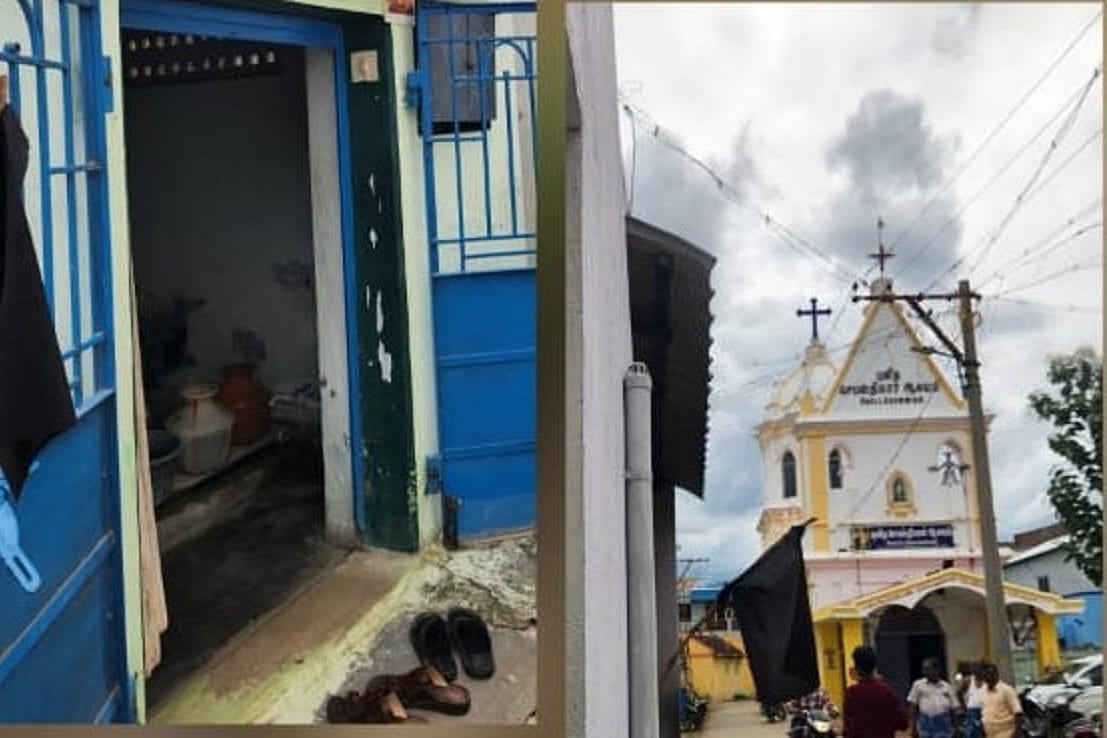
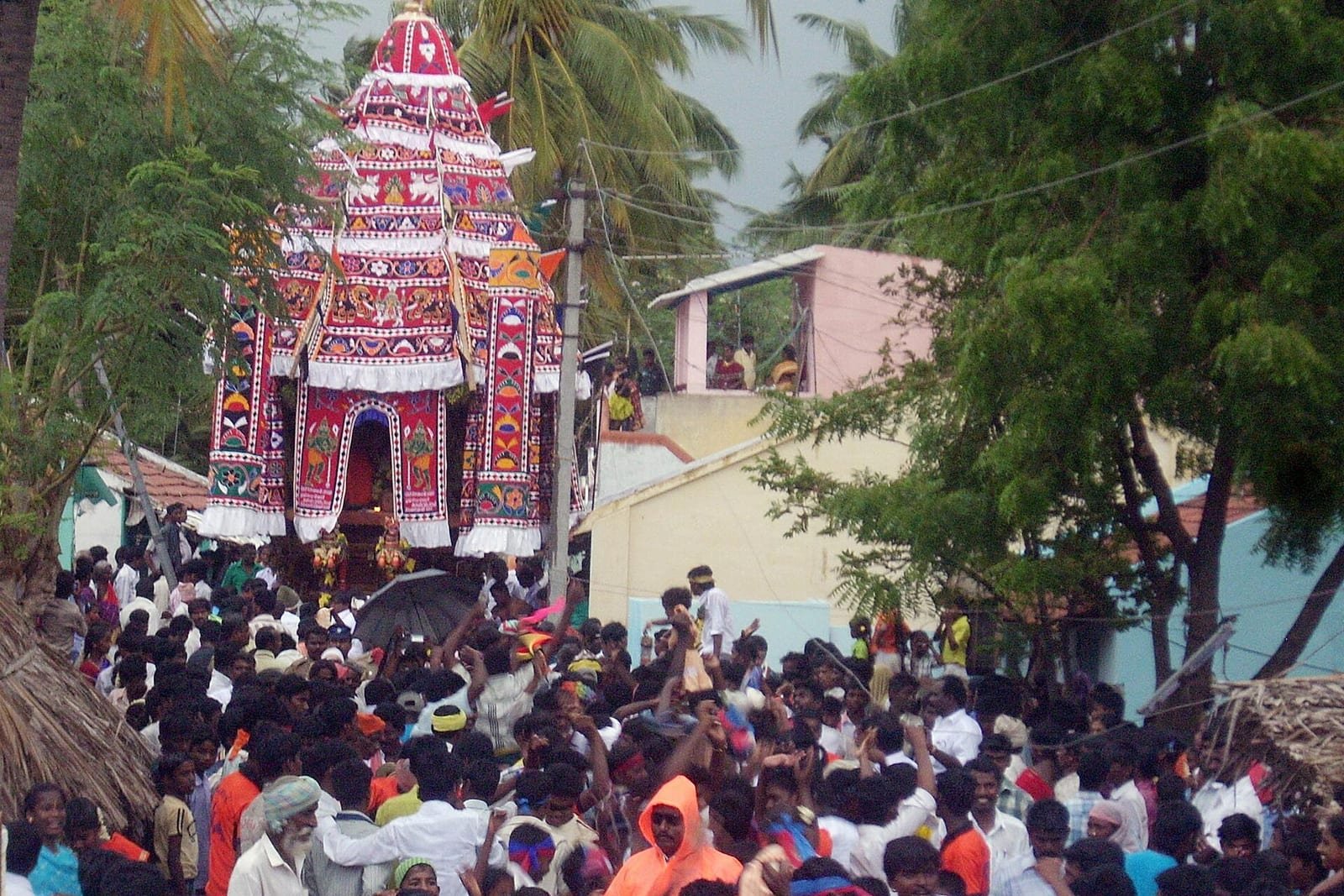
On Sunday, 25 October 2026, a temple chariot was pulled into the Dalit colony of Puthagaram, a village near the town of Walajabad in Kanchipuram district, in the southern Indian state of Tamil Nadu. Dalits are the communities once branded “untouchable”. The chariot of the Arulmigu Sri Muthu Kolakki Amman Temple had not entered their locality for 42 years, Deccan Chronicle reported. When it did, residents offered prayers, performed deeparadhana, the offering of lamps, and pulled the chariot rope themselves to the traditional percussion of chenda melam and drums.
The route the chariot took was one the colony’s residents had demanded and had to win in court. Almost a year earlier, the Madras High Court, Tamil Nadu’s high court, had ordered it, and even then it took more than 200 police personnel to move a festival car down a street in its own village. Which streets a deity visits is a map of who counts as part of the village. In Puthagaram, redrawing that map needed a writ petition, a Collector’s survey and a police operation.
What happened
The case began with a festival. In September 2025, when the temple’s car festival was announced, Scheduled Caste residents, the official category for Dalits, were kept from taking part, the petition alleged, as summarised by SCC Online. It blamed the village’s caste Hindus, Hindus outside the Dalit communities, who it said continued to resist entry and worship by Dalits. Representations to the district administration and a peace committee meeting, where officials sit down with both sides, followed. At that meeting, the petition said, three private respondents, described in the case as claiming to represent the “Upper Caste community”, opposed including Dalits in the festival.
Selvaraj, a Scheduled Caste resident of Puthagaram, then filed a writ petition, a direct application to the High Court to enforce a right. He asked the court to order officials to let his community enter the temple and worship, and to send the chariot into the Dalit colony during both the trial run and the main run, a test pull of the chariot before the festival and the festival procession itself. He alleged that caste Hindus had historically kept Dalits out of the temple and the car out of their colony. The temple is under the control of the Hindu Religious and Charitable Endowments (HR&CE) Department, the state government department that administers public Hindu temples, and the petition said the exclusion continued regardless. The Tamil Nadu Untouchability Eradication Front (TNUEF), a campaign group, joined the case as a respondent and supported the petitioner.
The court first asked for facts on the ground. By an interim order it directed the District Collector, the district’s senior administrative officer, to inspect the area and report whether the route could be extended. The Collector, after a joint inspection with the Superintendent of Police, the Sub-Collector, HR&CE officials and revenue officers, filed an integrated route plan. (The Superintendent of Police is the district’s police chief; the Sub-Collector is the official under the Collector for part of the district.) It found the extension technically feasible with minor repairs to some stretches of road.
On 7 November 2025, Justice P.B. Balaji allowed the petition. He ordered that the car follow the Collector’s integrated route, into the Dalit colony, during both the trial run and the main run of the festival, that officials ensure no discrimination in worship, and that the police provide protection. He also said:
“Faith cannot be fenced by caste or creed and divinity cannot be confined by human prejudice. God does not reside in certain streets alone. No street is unworthy of the chariot or the god it carries. God never discriminates. So discrimination cannot be wrapped in the sanctity of tradition.” — Justice P.B. Balaji, Madras High Court, 7 November 2025, as reported by Verdictum
Then the chariot did not come. Deccan Chronicle reported that, despite the court’s order, the procession “had not taken place for a long time”. The reports do not say why. When the trial run finally came, on 25 October 2026, it was conducted under the district administration’s instructions and two Tamil Nadu ministers pulled the rope to start it.
The mechanism: a route is a ranking
A temple car festival takes the deity out of the temple and through the village. The streets on its route are the streets the festival treats as the village. Leaving one out is not an accident of road width. In Puthagaram the Collector had already found the colony’s streets usable with minor repairs. The private respondents argued that the procession route “had been unchanged for decades and altering it would lead to similar demands from others”, and that a change “would lead to complications”. The defence was custom itself.
That is why the court reached for Article 17 of India’s Constitution, which abolishes untouchability. The court held that Article 17 abolishes it “not just in physical form but in true letter and spirit”. A boundary that the deity does not cross is untouchability kept in the form of a ritual.
The enforcement shows the same structure from the other side. Under the leadership of the district’s Superintendent of Police, over 200 police personnel were deployed, including four Deputy Superintendents, senior officers below the police chief, and 10 inspectors, and the chariot moved through the village under police protection. The Dalit residents’ claim had been accepted by a court and mapped by the Collector, and it still needed that force to be carried out.
Key number: more than 200 Police personnel deployed in Puthagaram for the trial run that took the temple chariot into the Dalit colony, including four Deputy Superintendents of Police and 10 inspectors. — Deccan Chronicle
The counter-reading
i
CC BY 4.0Original on Wikimedia CommonsThe private respondents’ case deserves a fair statement. They denied any caste-based discrimination and said Dalit residents were already permitted to worship and to offer “Padayal”, food offerings, during the festival. It was also claimed in the case that the existing route ran only along four “Mada Streets”, the streets around the temple. On this reading, the route is a matter of tradition, not exclusion, and opening it invites every street to ask for the same.
The court tested each part and found it did not hold. The officials had already said there was no bar on anyone of any community entering the temple, so the question left was the route alone. The court found that the existing route ran beyond the four “Mada Streets”. The fear of further demands was answered by the process: the change was approved only after the Collector confirmed it was feasible, so it opened no Pandora’s box. And on custom, Justice Balaji was blunt: “to resist change citing settled custom, tradition and practice can never be a valid defence available to the private respondents”.
Permission to worship inside the temple, in other words, does not answer exclusion from the procession. A community that may offer food at the deity’s door but whose street the deity never visits is still being placed outside.
What Tamil Nadu’s courts have ordered
Puthagaram is not a one-off. The Madras High Court has given the same answer to the same question in other districts.
In July 2025, in a case from Elayaperumal Nallur village in Ariyalur district, Justice N. Anand Venkatesh ruled that Scheduled Caste devotees were entitled to enter and take part in temple rituals and festivals, after the petitioner said he and other members of his community had been barred from a temple car festival. He relied on the Tamil Nadu Temple Entry Authorisation Act, 1947, the state law that entitles every Hindu, regardless of caste, to enter and worship in any Hindu temple, and held that it made no difference that the temple was not under the HR&CE Department if it was open to the public. He ordered the Revenue Divisional Officer, the senior revenue official for the area, and the police to ensure access.
In a ruling reported in July 2026, in a case from Muthalapuram village in Dindigul district, Justice L. Victoria Gowri heard a petitioner who alleged that a festival procession was deliberately kept out of North Street because it is inhabited mainly by members of his community. The private respondents denied the allegations and any caste discrimination, and said the procession had followed the same route from time immemorial. The court held that “faith cannot be compartmentalised street-wise on caste lines” and that Article 17 is not subject to “custom, usage, local tradition or social acceptance.” But it also said disputed questions of a route’s history could not be settled on affidavits alone, and it directed the Dindigul Collector to hold an inquiry and decide within 12 weeks whether the route should be expanded.
The pattern is clear. On the principle, the courts do not waver: caste custom gives way to the Constitution and to Tamil Nadu’s temple-entry law. On the remedy, they hand the work back to the district Collector, the revenue officers and the police. In Puthagaram those were the authorities the petitioner had already gone to, through representations and a peace committee meeting, before he went to court. The right is won case by case, village by village, by whoever can bring a writ petition.
What to watch
The 25 October run in Puthagaram was a trial run. The order covers both the trial run and the main run of the car festival, and the reports of the trial run do not say when the main run will be held. Whether the chariot enters the colony again, at the main festival and in the years after, without a court order and 200 police on the streets, is the test of whether the route has changed or only been forced open once. In Dindigul, the Collector’s inquiry decides whether another Dalit street joins its village’s procession.
Forty-two years after the chariot last entered their streets, Puthagaram’s Dalit residents pulled its ropes themselves. The court had already said no street is unworthy of the chariot. What Puthagaram has not yet shown is that the chariot will come without being made to.