Listen to this article
Read by an AI-generated voice · Report a mispronunciation
On 25 August 2026 the UN Committee on the Elimination of Racial Discrimination (CERD), the body of independent experts that monitors the world’s race-discrimination treaty, published its findings on India. It was the first review of India since 2007, because India’s report, due in January 2010, arrived in July 2023. Among the committee’s concerns was “low levels of reporting and complaint registration in untouchability cases involving Dalits under the Protection of Civil Rights Act, with only 18 cases in 2024”, its concluding observations say. Dalits are the communities once branded “untouchable” under India’s caste order.
The committee did not read the low count as good news. It recalled that “an absence or low number of complaints and legal action relating to racial discrimination may reveal a lack of suitable legislation, poor awareness of the legal remedies available, a lack of trust in the judicial system, a fear of reprisals or a lack of will on the part of the authorities to prosecute the perpetrators”, the same document says.
India’s laws against untouchability are criminal laws, and only criminal laws. Every claim has to pass a police station before it reaches a judge, and nothing in Indian law lets a Dalit turned away from a flat or a shop ask a court for damages instead. That is the gap the committee asked India to close, and it is why the 1955 law, the Protection of Civil Rights (PCR) Act, sits nearly unused while untouchability does not.
What the UN asked for
The committee asked India to “develop and adopt, within a clear timeframe, comprehensive anti-discrimination legislation” covering “direct, indirect and intersecting forms of discrimination in both the public and private spheres”, and to “establish an independent, comprehensive equality body at both the union and state levels”, its recommendations read. It noted that a private member’s anti-discrimination bill introduced in Parliament in 2016 “lapsed without debate”, and that the national commissions for Scheduled Castes and Scheduled Tribes, the official categories for Dalits and Adivasis, “have not been granted enforcement power”.
The ask is old. Draft UN guidelines on discrimination based on work and descent, the UN’s term for caste and similar systems of inherited status, said in 2009 that governments should “explicitly provide for criminal and civil remedies in cases of violation”, the Human Rights Council paper says. The Council has never formally adopted them.
India rejects the committee’s starting point. Its 2023 report says “caste cannot be equated with race or covered within descent” under the treaty, and that it supplied information on Scheduled Castes and Tribes “purely in a spirit of transparency and out of courtesy”, the report says. The committee answered that “discrimination on the grounds of caste is fully covered” by the treaty, as it had in 2007.
A right with no civil door
The case for a civil route does not depend on the UN. It rests on India’s own Supreme Court.
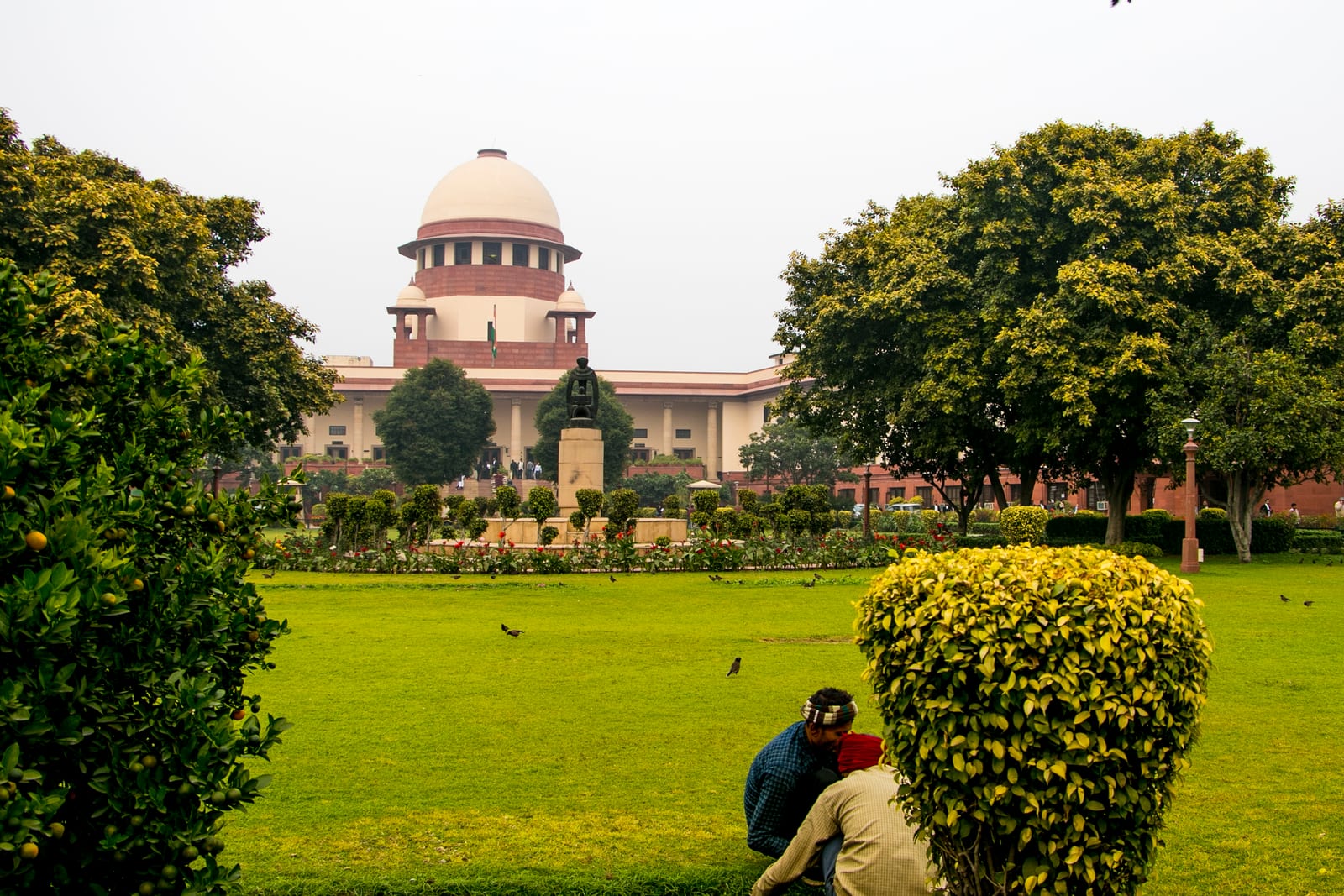
In 2023 a Constitution Bench of five judges held that “the right not to be enforced with any disability arising out of untouchability is available against non-State actors under Article 17”, its judgment in Kaushal Kishor says. Article 17 of the Constitution abolishes untouchability. A landlord, a shopkeeper or a temple committee is bound by it, not only the government.
But the only statute that enforces Article 17 for everyday exclusion is the PCR Act, and it works through the criminal courts alone: a police complaint, an investigation, a charge sheet, a trial. Its penalty for a first offence is one to six months in prison and a fine of Rs 100 to Rs 500 (about US$1 to US$6), set in 1976. It offers no compensation, the Act shows. In 2024 courts decided 13 cases under it and convicted in none, NCRB’s figures show, as The Dalit Project’s explainer on the Act sets out.
The court has said where the gap lies. In 2005 it upheld a housing society’s rule admitting only Parsis, and wrote that “so long as there is no legislative intervention of that nature, it is not open to the court to coin a theory that a particular bye-law is not desirable”, the Zoroastrian Co-operative Housing Society judgment says. That case was about religion. The same reasoning would leave a caste-only housing society to Parliament, which has passed nothing. Proposals for a civil equality law, from a 2008 government expert group’s equal opportunity commission to a 2016 private member’s bill and a 2019 Equality Bill drafted by a legal research centre, have come and gone, as The Leaflet, a legal news site, has recorded.
B.R. Ambedkar, the Dalit jurist who chaired the drafting of the Constitution, knew what a right is worth without a way to claim it. Of the article that lets citizens go to the Supreme Court to enforce their fundamental rights, now Article 32, he told the Constituent Assembly:
“An article without which this Constitution would be a nullity.” B.R. Ambedkar, Constituent Assembly debates, 9 December 1948
Why the police gate matters
A criminal law puts the police between a Dalit and a judge, in a country where most police officers come from the castes the law is meant to restrain. Anand Teltumbde, a Dalit scholar, described what happens at that gate:
“The police often dissuade the victim from registering a case, in order to avoid incurring the wrath of the powerful people accused.” Anand Teltumbde, writing in Scroll, April 2018
i
CC BY-SA 4.0Original on Wikimedia CommonsThe committee saw the same pattern under India’s other caste law, the Scheduled Castes and Scheduled Tribes (Prevention of Atrocities) Act of 1989. It cited “the systematic failure to effectively implement” that Act, with “only 217” exclusive special courts in 15 states and union territories, and “the inadequacy of investigations due to a reported lack of will on the part of the law enforcement officials”, its findings say.
18: untouchability cases involving Dalits registered under the Protection of Civil Rights Act across India in 2024, as the UN committee counted them. India’s crime bureau counts 13 for Scheduled Castes. Source: CERD, concluding observations on India, 2026
What other countries show
Raising penalties alone has not opened the gate. Nepal’s Caste-based Discrimination and Untouchability Act of 2011, as amended in 2018, punishes its main offences with three months to three years in prison and a fine of 50,000 to 200,000 Nepali rupees (about US$358 to US$1,501), and it reaches private places. Yet Nepal’s police registered 43 cases under it in 2019/20, then 30, 39, 15 and 27 in the years to 2023/24, in a country of “more than 3.6 million Dalit people”, Amnesty International found in 2024. It also found that Bahun-Chhetri men, from castes Amnesty describes as dominant, make up 14.44% of Nepal’s population and 85.44% of its judges.
Sri Lanka’s Prevention of Social Disabilities Act of 1957 allows up to three years in prison. It also does what India’s PCR Act does: it presumes the caste motive and places “the burden of proving that the social disability was imposed on that person for any other reason” on the accused, the consolidated Act says. The UN committee praised India’s version of that rule in 2007, asking India to consider “victim-sensitive rules of evidence similar to that of Section 12 of the Protection of Civil Rights Act” for sexual violence against Dalit women, its 2007 findings say.
The civil model works differently. South Africa’s Promotion of Equality and Prevention of Unfair Discrimination Act of 2000 lists “birth” and “social origin” among its grounds. Once a complainant makes “a prima facie case of discrimination”, the respondent must prove it did not happen, and an equality court can order damages for “impairment of dignity”, an “unconditional apology”, an audit of the respondent’s practices, or a recommendation to suspend a business licence, the Act says. In the United States, the 1964 Civil Rights Act lets a person refused service at a restaurant or hotel bring “a civil action for preventive relief”, with a court-appointed lawyer and no fees, the statute says, while prison is kept for hate crimes that cause bodily injury. Exclusion is a civil wrong there, and violence a crime. India made both criminal.
The strongest objection
The strongest objection is that civil courts face the same gate. South Africa’s equality courts heard 447 cases across the country in 2008/09, and a survey that year found 11 with no clerk or no working court, researchers Botha and Kok reported. A Dalit tenant who depends on a dominant-caste landlord fears reprisal whichever court she goes to.
A second objection is that a general equality law protects everyone alike, and would drop the word “untouchability”, which the PCR Act names as a crime of caste.
Neither argues for leaving things as they are. A civil route would not replace the police; it would add a second door, one that does not need an officer’s signature to open, with the burden of proof on the person who shut the door. And the drafts India has already seen show the naming can be kept: a civil law can list untouchability, boycott and segregation as wrongs of their own. What it needs most is what the UN committee found missing, a body with the power to enforce.
What to watch
- India’s reply. The committee marked its recommendations on Dalits as of particular importance and asked for detailed answers in India’s next report, due by 4 January 2030. Whether India answers on the equality body is the test.
- The Supreme Court’s nine-judge bench. It is hearing questions on religious practice that include how far Article 17 reaches, The Federal reported in April 2026.
- NCRB’s 2025 figures. Whether PCR Act cases stay in the teens.
The committee counted 18 cases and saw a failure of law, not an absence of untouchability. Ambedkar would have recognised the problem: a right that only the police can open is a right most Dalits will never get to use.