Listen to this article
Read by an AI-generated voice · Report a mispronunciation
A standing reference on the history and lived experience of Dalit Christians. For the argument that the law should follow the caste, not the creed, see India’s own commission found caste survives conversion.
“Within the Christian community, caste discrimination plays out in very subtle, yet powerful ways,” Aleena, a Dalit Christian poet from the southern state of Kerala, told South First in April 2025. It is the answer to a question people often ask when they first hear the words “Dalit Christian”: does Christianity have castes too?
It does, and many of India’s Christians live inside that answer. Dalits, the communities once branded “untouchable”, make up a large share of Indian Christianity, many of them descended from people who joined the churches together, village by village, to get out from under caste. Inside the churches, caste often waited for them. Outside, the state decided in 1950 that a Dalit who became a Christian stopped being a Dalit in law, while staying one in every other way.
Why it matters now
The question has rarely been as live. In March 2026 the Supreme Court, India’s highest court, ruled that a pastor born into the Madiga community, a Dalit community of Andhra Pradesh, could not invoke India’s law against caste violence because his conversion had ended his Scheduled Caste status, as The Dalit Project reported. In July 2026 a Dalit Catholic in Tamil Nadu was buried in his parish’s common cemetery only after nearly nine hours of talks, 12 years after he joined a lawsuit for that right, as The Dalit Project reported. And a federal commission on whether Dalit converts should keep Scheduled Caste status had its last deadline on 10 June 2026, and its report was said in June to be ready for submission, Countercurrents noted in October.
Timeline
- First centuries AD to 849: The St Thomas Christians of Kerala trace their church to the apostle Thomas, who by their tradition arrived in AD 52. The first outside record of a church on the Malabar coast dates from the early 6th century, and a set of copper plates granting privileges to a church in Quilon is dated 849, the Gorgias Encyclopedic Dictionary of the Syriac Heritage records.
- 1606: The Jesuit Roberto de Nobili arrives in Madurai, in today’s Tamil Nadu, and adopts the life of a Brahmin ascetic to win converts from the dominant castes, the Catholic Encyclopedia records.
- 1744: A papal constitution, Omnium sollicitudinum, settles the long dispute over the “Malabar rites” and makes formal a separate band of missionaries for Dalit converts, the Catholic Encyclopedia notes.
- 1855: Travancore, a princely state in today’s Kerala, declares owning slaves illegal; Pulaya bonded labourers begin approaching missionaries in numbers, the historian George Oommen writes.
- 1873: Ditt, a Chuhra from Sialkot district in Punjab, is baptised, starting the Chuhra mass movement, a study in the journal Pakistan Vision records.
- 1909 or 1910: Poykayil Yohannan founds the Prathyaksha Raksha Daiva Sabha in Travancore, a Dalit church community of his own.
- 1950: The Constitution (Scheduled Castes) Order limits Scheduled Caste status to Hindus. Sikhs are brought in in 1956 and Buddhists in 1990; Christians and Muslims never are.
- Early 1980s: Dalit theology begins to take shape at United Theological College in Bangalore.
- 2007: The Ranganath Misra Commission recommends that Scheduled Caste status be made religion-neutral.
- 2016: India’s Catholic bishops adopt a policy on Dalit empowerment, calling caste discrimination a “grave social sin”.
- 2022: The federal government appoints a commission under K.G. Balakrishnan, a former Chief Justice of India, to examine the question again.
- 2026: The Supreme Court rules in Chinthada Anand v. State of Andhra Pradesh; Anthony Poola, the first Dalit cardinal, is elected to lead the Catholic Bishops’ Conference of India.
Origins: a church that started at the top
In much of India, Christianity reached the dominant castes first. In Kerala the St Thomas Christians, also called Syrian Christians after the language of their liturgy, held a settled place in the local caste order for centuries. “Communities like Syrian Christians often cite descent from Brahmins or Jewish settlers,” Aleena told South First; such claims, she said, “lead to separate churches, unequal treatment, and internal conflicts.” The Latin Christians came with the Portuguese, and the Dalits, in large numbers, only in the late 19th century.
The Catholic missions that came with the Portuguese in the 16th century made their own accommodation with caste. In 1606 de Nobili was sent to Madurai, and “in his zeal to convert the Brahmins he adopted their mode of life”, the Catholic Encyclopedia records. He let his converts keep their customs “in as far as these contained nothing wrong and referred to merely political or civil usages”, and the same reference quotes his own defence: “unity of religion destroys not the civil distinction of the castes”, it reads.
That reading of caste, as a social arrangement rather than a religious one, shaped what followed. The Madurai mission decided that there should be “two classes of missionaries, the Brahmin and the pandaram”, the second for the oppressed castes. When Rome finally ruled on the controversy over these practices, Benedict XIV’s constitution of 1744 kept a version of the split, a band of missionaries “who should attend only to the care of the pariahs”, the Catholic Encyclopedia notes. The Catholic Encyclopedia, published in 1911, is sympathetic to the Jesuits.
How it evolved
The mass movements, from the 1850s
The shape of Indian Christianity changed in the second half of the 19th century, when Dalits began to come not one by one but as whole communities.
In Travancore, most Pulayas were bonded agricultural labourers. In 1875, “97% of the Pulayas were attached agricultural labourers and only 3% seem to have owned any property”, Oommen writes. After slavery was declared illegal on 24 June 1855, Pulayas from across central Travancore asked the Anglican Church Missionary Society for “Christian instruction” and “slave schools”. Their landlords answered with force: Pulaya efforts to join “met with stiff resistance and organised violence from Syrians as well as Nairs”, and landlords “attempted to burn down the ‘slave schools’ and places of worship”, he records. His conclusion: “For thousands these conversions were protests heralding exit from the inhumanity of the caste system.”
In Punjab, the Chuhras, a Dalit community who worked for landlords as farm labourers and scavengers, followed Ditt, who was baptised in 1873 by the United Presbyterian mission; large-scale conversion followed from the 1880s, the Pakistan Vision study finds. In the Telugu country, now Andhra Pradesh and Telangana, mass movements among the Malas and Madigas “began before the turn of the century and continued through the 1930’s”, the historian Susan Maneck writes.
“Rice Christians” and the question of motive
From early on, critics had an explanation for these conversions: food. A “rice Christian”, Merriam-Webster says, is a convert who accepts baptism “not on the basis of personal conviction but out of a desire for food, medical services, or other benefits”.
i
Shared with creditOriginal on thenewsminute.comDalit Christians tell it differently. “When a Dalit hears [Genesis 1:27], it is the first time in their entire life that they feel like a human,” Ram Surat, an activist and Dalit scholar, told Christianity Today in 2022, citing the verse that says God created humankind in his own image. The pull he describes is dignity, not rice.
The record from Travancore points the same way. The Pulayas who asked for schools kept asking in the face of organised violence from their landlords.
Caste inside the church
Equality was promised. In Kerala, Aleena told South First, it stops at shared worship: “Everyone shares the same Holy Communion, attends the same events, but that is where equality ends.” “Even in 2025, in churches like the Mar Thoma Church, Dalits and Syrian Christians often have separate churches,” she said, and marriage across the line is “still a taboo”. “I have seen so many love stories end because of caste,” she said. “Endogamy is casteism, plain and simple.” Her mother tells her that some church members “will not even eat food from Dalit homes”, she said.
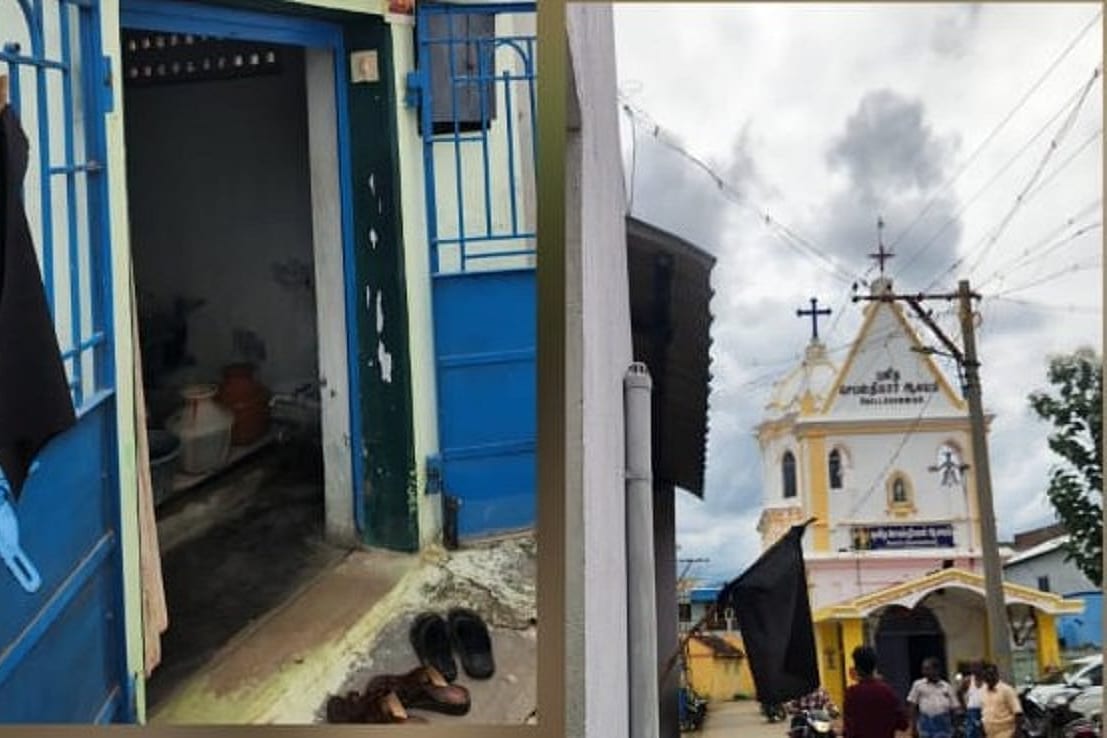
That is the pattern across India. Dalit groups say that in some Tamil Nadu parishes they are given separate places to sit in church and separate burial plots, UCA News reported, a claim the church hierarchy has denied. In Kottapalayam, in Tamil Nadu’s Tiruchirappalli district, Dalit Christians went to court in 2014, saying dominant-caste Reddiar Christians had “constructed a wall blocking their entry” to the common cemetery; “Though a court ruling instructed shared access, the wall remains”, and the case is still in court, The News Minute reported in 2025. In Kerala, a 2008 study commissioned by the federal minorities commission found Syrian and Pulaya members of the same church conducting rituals “separately in separate buildings”, The News Minute reported.
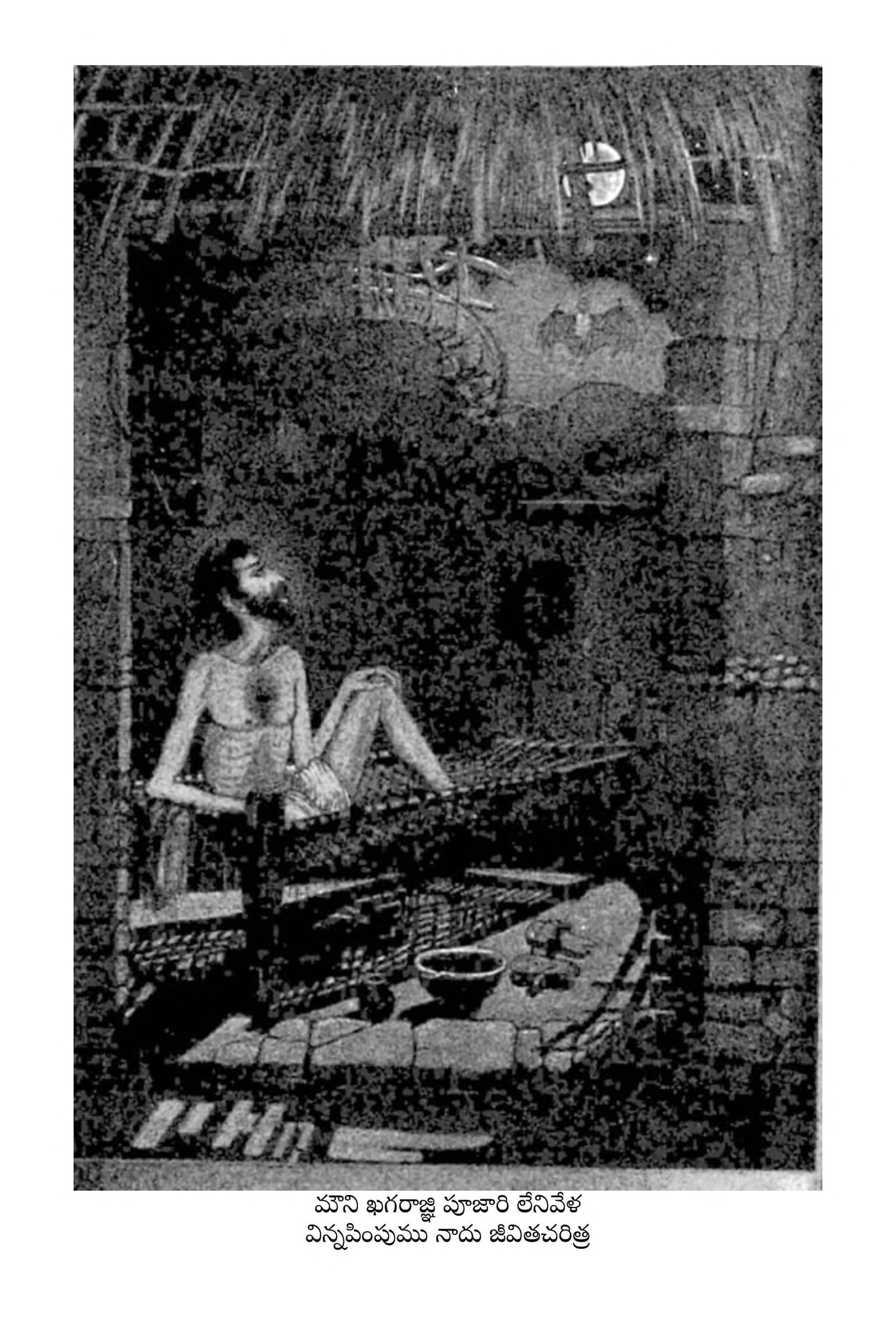
Some Dalit Christians left. Poykayil Yohannan, a Dalit preacher in Travancore whose family had converted, faced discrimination even in the Brethren church he joined, the Kerala Museum records, and parted ways with the churches. In 1909 or 1910 he founded the Prathyaksha Raksha Daiva Sabha, his own church community, at Eraviperoor, near Tiruvalla; the museum gives 1909 and the historian P. Sanal Mohan 1910. He drew in Parayas, Pulayas and Kuravas, Dalit communities of the region, Sanal Mohan writes.
The state steps in, 1950
Independence brought reserved seats, jobs and college places for the Scheduled Castes, the legal category for Dalits. The Constitution (Scheduled Castes) Order of 1950 attached a condition: “no person who professes a religion different from the Hindu, the Sikh or the Buddhist religion shall be deemed to be a member of a Scheduled Caste”, in its present wording. The Sikh words were added in 1956 and the Buddhist ones in 1990. Christians were left out, on the reasoning that Christianity does not recognise caste, so a Dalit who joins it leaves caste behind.
Dalit Christians name the double bind. A Dalit converts “to gain dignity and to get away from the grip of untouchability and the caste system but finds that she or he continues to face discrimination, thus marginalizing them twice with respect to both caste and religion,” Ram Surat told Christianity Today. The state, which could mark that discrimination, counts it out. “For Dalit Christians, the current system offers almost nothing,” Aleena told South First; in Kerala, she said, “We are barely granted 1 percent reservation in educational institutions.”
Dalit theology, from the 1980s
Dalit Christians also answered in theology. Dalit theology “began to take shape in the early 80’s” when A.P. Nirmal, then teaching at United Theological College in Bangalore, “floated the idea of ‘Shudra Theology’”, Oommen writes in a history of the movement. Its thinkers rejected both missionary theology and the Brahmanic traditions of Indian Christian thought. Nirmal’s central move was to read the servant God of the Bible as Dalit: “To speak of a Servant-God, therefore, is to recognise and identify him as a truly Dalit deity,” he wrote, as Oommen quotes him. “For Dalit theologians Jesus is the ultimate Dalit,” Oommen sums up. He names James Massey, M.E. Prabhakar and V. Devasahayam among its other leading figures.
Where it stands today
No one knows how many Dalit Christians there are, because the 1950 rule keeps them out of the count. The 2011 Census counted 201.4 million members of Scheduled Castes, the government reports, and 27.8 million Christians, 2.3% of Indians, its religion data show. Estimates of the Dalit share of Christians run from 21% in the 2015 National Family Health Survey, a federal household survey, the Pew Research Center reported, and 33% in Pew’s own 2019-20 survey, to about 70% in the figure of the National Council of Churches in India. Applied to 27.8 million Christians, that is roughly 6 million to 19.5 million people, by The Dalit Project’s arithmetic. Many Dalit Christians stay Hindu on paper to keep their Scheduled Caste status, Christianity Today reported, so official forms undercount them.
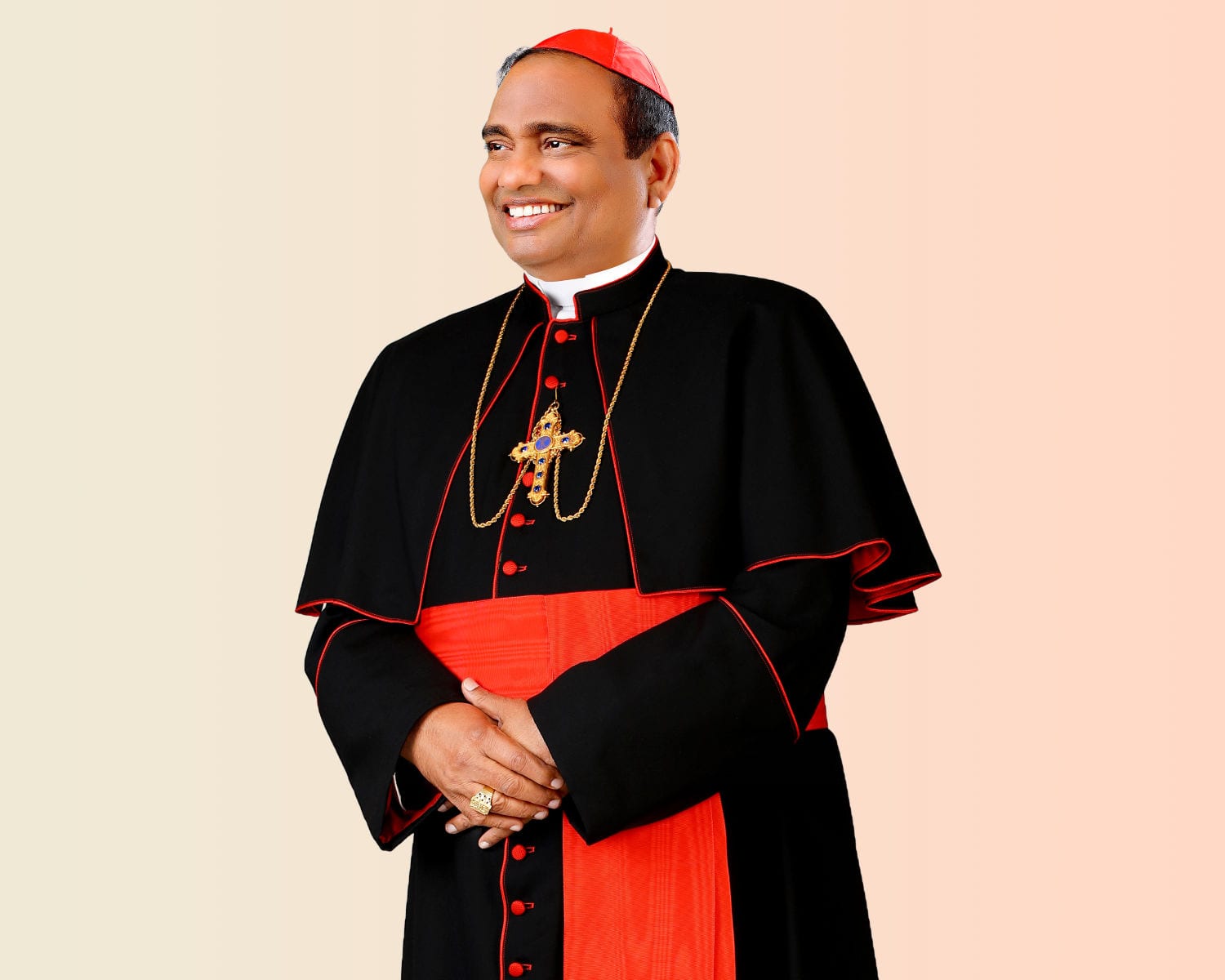
Whatever the share, the leadership does not match it. About 12 of India’s roughly 180 Catholic bishops are Dalit, John Dayal of the All India Catholic Union told UCA News in February 2026, when Cardinal Anthony Poola of Hyderabad became the first Dalit to lead the bishops’ conference; Christianity Today counted 11 of 200 in October. Either way, Dalits hold about 6% of the posts. “Caste permeates through both mainline and independent Protestant churches too, yet it is implicit and hush-hush,” Richard Devadoss, president of the National Dalit Christian Watch, told Christianity Today in October.
Key players and institutions
- The Catholic Bishops’ Conference of India (CBCI). Its 2016 Policy of Dalit Empowerment set out to “eradicate the practices of untouchability and caste discrimination at all levels”; Cardinal Baselios Cleemis, then its president, said the church was “admitting that it’s a grave social sin”, Vatican Radio reported.
- The National Council of Churches in India. The body of Protestant and Orthodox churches runs a Dalit Christian support programme and backs Scheduled Caste status for Dalit Christians.
- The Supreme Court. Petitions on Scheduled Caste status for Dalit Christians and Dalit Muslims, among them one filed by the Centre for Public Interest Litigation in 2004, are still pending.
- Federal commissions. The Ranganath Misra Commission recommended in 2007 “delinking of the Scheduled Caste status from religion”, India Legal reported; the government told the Supreme Court in 2022 that it took a “myopic view”, The Tribune reported. The Balakrishnan Commission was set up on 6 October 2022, LiveLaw reported.
- Dalit Christian writers and activists. Aleena, whose collection Silk Route won the Kerala Sahitya Akademi’s Kanakashree award, TEDxFarookCollege notes, is one of a generation using poetry and social media to name caste in the church.
Open debates
- Why they converted. Material need, faith, or protest: historians such as Oommen read the mass movements as Dalits’ own collective decisions, and Dalit Christians such as Ram Surat speak of dignity. The “rice Christian” story persists.
- Whose fault the caste is. Church leaders have at times denied that discrimination exists, UCA News reported. Dalit Christians point to the walls, the chairs and the bishops’ list.
- Whether the law should follow caste or creed. The federal government holds that Christianity does not recognise caste; Dalit Christians, a federal commission and a 2008 study commissioned by the federal minorities commission say the disadvantage survives conversion. The case is set out in India’s own commission found caste survives conversion.
What to watch
- The Balakrishnan Commission’s report. Its last deadline was 10 June 2026, and in June it was said to be ready. Watch whether it is submitted and whether the government publishes it.
- The Supreme Court petitions on Scheduled Caste status for Dalit Christians, the oldest of them dating to 2002, Supreme Court Observer records: whether the court lists them for hearing once the commission reports.
- Census 2027, which will ask Christians their caste, as The Dalit Project has reported, and may give the first official count of Dalit Christians.
- The church’s own record: cemetery cases in Tamil Nadu, and how many Dalit bishops are appointed while Cardinal Poola, elected in February 2026, leads the bishops’ conference.
Until the state counts them, Dalit Christians remain a community the law cannot see. “How can any community progress when it is not even seen?” Aleena asked.