Listen to this article
Read by an AI-generated voice · Report a mispronunciation
India has two national laws against untouchability, the part of the caste order that treats Dalits, the communities once branded “untouchable”, as ritually polluting. The older one is the Protection of Civil Rights (PCR) Act. In 2024 police across India registered 13 cases under it involving Scheduled Castes, and five involving Scheduled Tribes. In the Scheduled Caste cases, courts decided 13 that year, acquitted in every one, and left 878 waiting for trial, according to figures from the National Crime Records Bureau (NCRB), the federal government’s crime-data agency, in the government’s 2024 report to Parliament on the Act, as The Dalit Project’s Data desk sets out.
The newer law is the Scheduled Castes and Scheduled Tribes (Prevention of Atrocities) Act, India’s 1989 law against caste violence. Police registered 48,669 cases of crimes against Scheduled Castes under it in 2024, according to NCRB figures the government gave the Rajya Sabha, Parliament’s upper house, SCC Times reported.
Why does it matter?
Untouchability did not fall to 13 cases a year. More than a quarter of Indian households admitted practising it in some form in the country’s largest non-government household survey, The Dalit Project has reported. What has fallen away is the law written to punish it.
Article 17 of India’s Constitution says: “‘Untouchability’ is abolished and its practice in any form is forbidden”, and makes enforcing any disability arising from it “an offence punishable in accordance with law”, it reads. Parliament passed that law in 1955 as the Untouchability (Offences) Act, repealing the state laws against untouchability listed in its schedule. Its drafters wrote that it “is not confined to Hindus”, and that “it is not possible to define untouchability”, so it lists the commonest forms instead. In 1976 Parliament added minimum sentences and renamed it, the Act’s own record shows.
B.R. Ambedkar, the Dalit jurist who chaired the drafting of the Constitution, had warned of that gap.
“In politics we will have equality and in social and economic life we will have inequality.” B.R. Ambedkar, speech to the Constituent Assembly, 25 November 1949
What does the PCR Act make a crime?
It punishes anyone who, “on the ground of untouchability”, the Act says:
- bars a person from a place of public worship, or from a sacred tank, well, river or lake;
- enforces any disability over a shop, hotel, water source, road, cremation or burial ground, public transport, a home in any locality, a procession, or “the use of jewellery and finery”;
- refuses admission to a hospital, school or hostel, or refuses to sell goods or a service;
- insults a member of a Scheduled Caste, the legal category for Dalits, or boycotts anyone for exercising these rights;
- preaches untouchability, or “justifies, whether on historical, philosophical or religious grounds or on the ground of any tradition of the caste system”, its practice;
- compels anyone to scavenge, sweep, remove a carcass or flay an animal.
Most first offences carry at least one month and up to six months in prison and a fine of Rs 100 to Rs 500 (about US$1 to US$6 at 2026 rates), amounts set in 1976; compelling someone to scavenge carries at least three months. A court must presume that an offence against a member of a Scheduled Caste was committed on the ground of untouchability, section 12 says; the accused can rebut the presumption. Police can arrest without a warrant, and most cases can be tried summarily, in a short trial before a magistrate.
How is it different from the Atrocities Act?
Parliament passed the Atrocities Act in 1989 for violence, humiliation, land grabs and sexual assault against Dalits and Adivasis (India’s Indigenous peoples, listed in law as Scheduled Tribes). A 2015 amendment, in force since January 2016, then copied much of the PCR Act into it: its clause 3(1)(za) punishes obstructing a Dalit or Adivasi over a water source, a cremation ground, a road, a place of worship, a procession, a school, a hospital, a shop or a job, the amended Act shows. What differs is who it covers and what follows:
- Sentence. One to six months under the PCR Act; six months to five years under the Atrocities Act.
- Who is protected. The PCR Act protects “any person”. The Atrocities Act protects members of the Scheduled Castes and Scheduled Tribes only.
- Who can be accused. Anyone, under the PCR Act. Under the Atrocities Act, only someone “not being a member of a Scheduled Caste or a Scheduled Tribe”.
- Courts. A magistrate can try most PCR Act cases summarily. The Atrocities Act requires an Exclusive Special Court for one or more districts, and asks for trials to finish within two months of the charge sheet, the police report that sends a case to trial, “as far as possible”.
- Bail and victims. The Atrocities Act bars anticipatory bail, release granted before an arrest, and gives victims and witnesses rights to protection and to be heard. The PCR Act does neither.
- Proof of caste. The PCR Act presumes the untouchability motive. The Atrocities Act presumes only that an accused who knew the victim or the family knew their caste.
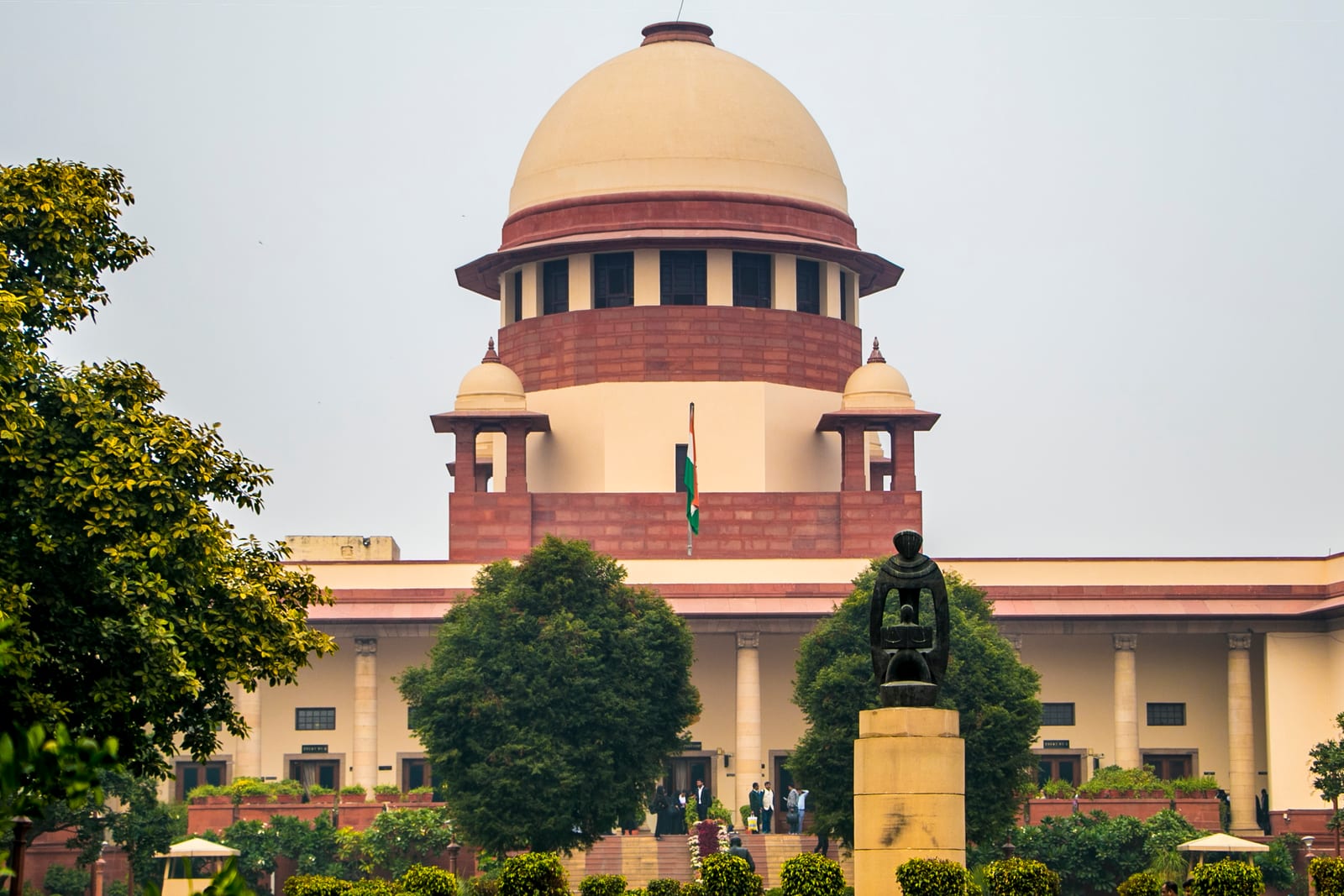
The newer law’s strength has been fought over. In March 2018 the Supreme Court, India’s highest court, required an inquiry before a case could be registered and approval before an arrest. After mass Dalit and Adivasi protests, Parliament reversed the ruling, and in 2020 the court upheld the reversal, Supreme Court Observer records. Anand Teltumbde, a Dalit scholar, answered the 2018 judgment’s concern with false complaints:
“All Acts are misused by the powerful – but only those which are meant to protect weaker sections like the rape laws or anti-dowry laws are decried.” Anand Teltumbde, writing in Scroll, April 2018
Why is the PCR Act so rarely used?
i
CC BY-SA 4.0Original on Wikimedia CommonsPolice registered 234 cases under it in 2017, 212 of them in Uttar Pradesh. By 2019 the count was 13, and Uttar Pradesh has registered none since. NCRB’s tables do not say why, the Data desk notes.
The two laws side by side suggest one reason. For the same act against a Dalit, a police officer can charge a law that carries up to five years, a special court and no anticipatory bail, or one that carries six months. The counts fit officers choosing the first, though no official study has asked them.
The states have also left the older law’s machinery unbuilt. As of the federal government’s report for 2022, no state or Union Territory had declared any area “untouchability prone”, The Leaflet, a legal news site, reported.
What happens to the cases that are filed?
From 2017 to 2024, courts decided 557 PCR Act cases and convicted in 16, the Data desk’s compilation of NCRB figures shows. In 2024, 878 of the 891 Scheduled Caste cases before the courts, 98.5%, were still pending at the year’s end, the government’s report shows.
The Atrocities Act’s record is better, and still poor. In 2024 courts convicted in 5,192 Atrocities Act cases of crimes against Scheduled Castes, and 287,694 such cases were pending trial, according to the NCRB figures given to the Rajya Sabha, SCC Times reported. The Dalit Project has examined that gap, and the Data desk tracks it.
What do the other laws add?
- Article 15(2) of the Constitution bars any restriction, on grounds including caste, on access to shops, restaurants and hotels, or on the use of wells, tanks, roads and public places paid for by the state or dedicated to the public.
- India’s 2013 law against manual scavenging bans employing anyone to clean human excreta by hand, whatever the motive, where the PCR Act reaches only compulsion “on the ground of untouchability”. Its narrow definition leaves sewer workers out of its promise of rehabilitation, as The Dalit Project has reported.
- The Bharatiya Nyaya Sanhita, the criminal code that replaced the Indian Penal Code, punishes murder by a group of five or more “acting in concert” on the ground of “race, caste or community” with death, life imprisonment or at least seven years in prison, its section 103(2) says.
Is the PCR Act still needed?
The case against it is that two laws for the same act divide the effort, and the weaker one costs victims years for a penalty of months. That misses three things the older law does and the newer one does not.
It punishes the teaching. The PCR Act makes justifying untouchability, on religious or traditional grounds, an offence in itself.
It does not depend on who the accused is. Untouchability runs down the graded order: 15% of Scheduled Caste respondents and 22% of Scheduled Tribe respondents admitted practising it in the same household survey, as The Dalit Project reported. The Atrocities Act cannot charge them. The PCR Act can.
And it may reach Dalits the state has written off its lists. Scheduled Caste status is limited to Hindus, Sikhs and Buddhists. In March 2026 the Supreme Court held that Chinthada Anand, a Christian pastor born into the Madiga community, a Dalit community of Andhra Pradesh, could not invoke the Atrocities Act over the assault he says he suffered, as The Dalit Project reported. The PCR Act protects “any person” and was written not to be “confined to Hindus”. On its wording, it is the national law left for a Dalit Christian or Muslim barred from a well or a shop. Its presumption of motive covers Scheduled Castes only, and how courts would read the rest has not been tested in the rulings cited here.
The law that carries out Article 17 most directly is the one the state has let fall to 13 cases a year. Reviving it would not replace the Atrocities Act. It would reach the cases the Atrocities Act was never written for.
Key terms
- Untouchability: treating people born into certain castes as ritually polluting, and excluding them from touch, food, water, worship, space and work.
- PCR Act: the Protection of Civil Rights Act, 1955, called the Untouchability (Offences) Act until 1976.
- Atrocities Act (PoA Act): the Scheduled Castes and the Scheduled Tribes (Prevention of Atrocities) Act, 1989.
- Scheduled Castes / Scheduled Tribes: the Constitution’s official lists of Dalit and Adivasi communities.
- Anticipatory bail: bail granted before an arrest, which the Atrocities Act bars.
What to watch
- NCRB’s 2025 figures. The next Crime in India will show whether PCR Act registrations stay in the teens and whether any case ends in conviction.
- The federal report to Parliament. The PCR Act requires one every year on what the federal and state governments have done under it, and the report for 2024 is the source of the figures above. Whether any state names an “untouchability prone” area is the test.
- Dalit Christians. Petitions asking the Supreme Court to recognise Dalit Christians as Scheduled Castes are still pending, as The Dalit Project reported. Until they are decided, the PCR Act’s “any person” carries more weight.