Listen to this article
Read by an AI-generated voice · Report a mispronunciation
In Tamil Nadu, a state in southern India, Dalits who become Christian are moved from one reservation list to another. Dalits, among the communities once branded “untouchable”, are listed as Scheduled Castes, the legal category that carries reserved seats and posts. A 1950 rule takes that status away from anyone who professes Christianity, and Tamil Nadu then lists them among its Backward Classes, communities it counts as socially and educationally behind. On 12 November 2026 the Madras High Court, the high court for Tamil Nadu, admitted a petition that asks it to strike out that entry, along with nine others that give Christian communities and converts a place on the state’s lists.
The petitioner builds part of his case on Dalit Christians: he says the lists treat a Dalit who converts worse than converts from some other castes. But the remedy he asks for would not move Dalit converts up. It would remove their listing with the rest.
What happened
Two judges of the Madras High Court’s bench at Madurai, a city in the south of the state, heard the case: Justices G.R. Swaminathan and M.D. Sumathi. G. Kodeeswaran of Madurai district brought it as a writ petition, a direct challenge under the Constitution. The order describes him as “a youth hailing from the Kallar community, which is a notified Backward Class”, who has applied for the Group IV services examination of the Tamil Nadu Public Service Commission (TNPSC), the body that recruits for the state government.
He challenges ten entries in Schedule I of the Tamil Nadu Government Servants (Conditions of Service) Act, 2016, the state law that sets out its Backward Classes and Most Backward Classes lists for government jobs: six in Part A, the Backward Classes list, and four in Part C, the Most Backward Classes list. The order says they “collectively confer Backward Class or Most Backward Class status on various Christian communities and converts to Christianity”. He asks the court to declare them unconstitutional and to direct that they be deleted.
The bench opened its order with a principle. “There is nothing axiomatic or eternal about one’s OBC status,” it wrote, using the national term, Other Backward Classes, for these groups. When an entry is challenged, “the Government is obliged to demonstrate to the Court’s satisfaction” that including or keeping it is “constitutionally warranted or justified”. Satisfied that the petitioner had shown “a prima facie case that warrants deep constitutional scrutiny”, a case strong enough on its face to be heard, it admitted the petition and ordered notice returnable in eight weeks. The respondents are two state government departments, the Tamil Nadu Backward Classes Commission and TNPSC, which the court added on its own motion, the order records. Because recruitment is under way, as his counsel told the court, it allowed him to file an interim application, a request for an order before the final hearing.
Notice is not a ruling. The order sets out the petitioner’s case; the state has not answered it yet, and its reply is due when the notice returns.
Why it matters for Dalit Christians
Paragraph 3 of the Constitution (Scheduled Castes) Order, 1950, says that “no person who professes a religion different from the Hindu, the Sikh or the Buddhist religion shall be deemed to be a member of a Scheduled Caste”, as The News Minute quotes it. The 2016 Act follows it: its Explanation to Section 3(w), the petitioner points out, as the order records it, says a person professing Christianity cannot be deemed a member of a Scheduled Caste. Then, “under Entry 17 of Part A, a person from the Scheduled Castes who converts to Christianity is deemed a Backward Class.”
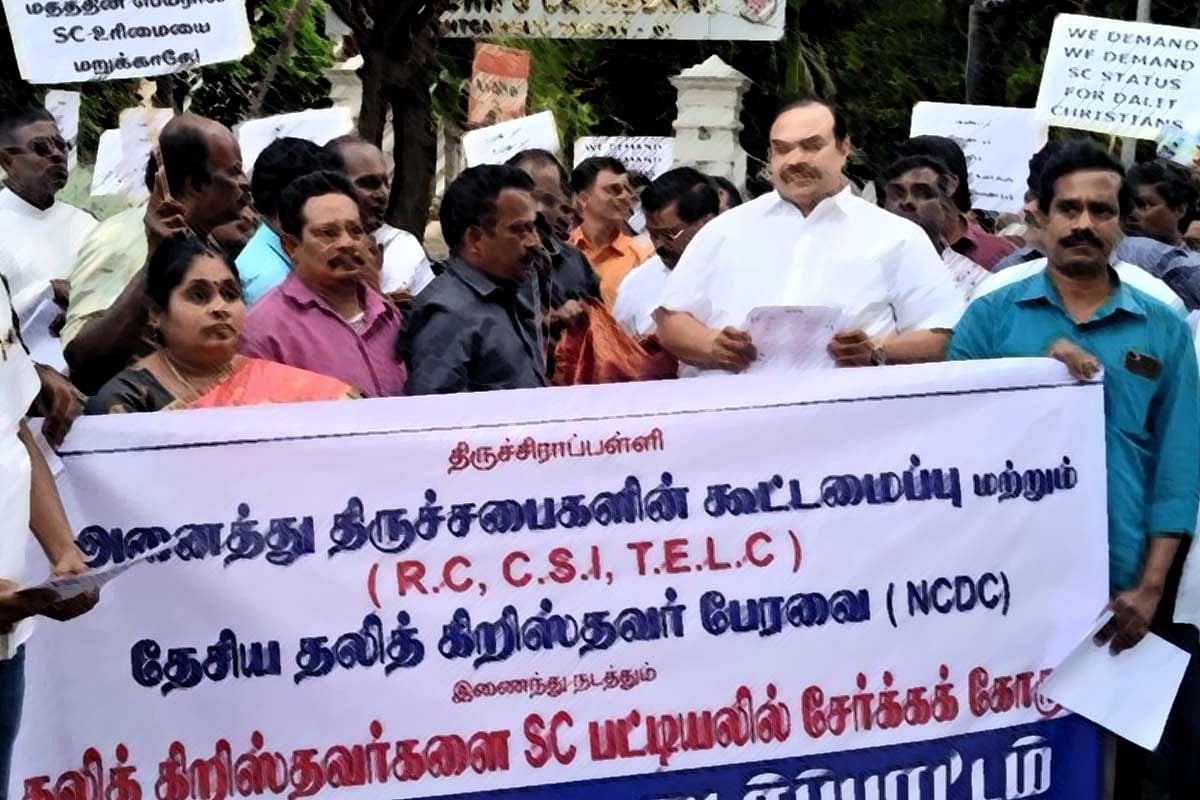
That entry is the place the law leaves Dalit Christians in Tamil Nadu: they “are presently categorised as BC”, The News Minute reported in 2021. They have not accepted the 1950 rule that put them there. In 2004 a petition filed for Franklin Caesar Thomas, a Dalit Christian advocate, asked India’s Supreme Court to amend the 1950 Order “to include Christians and Muslims”, The News Minute reported. Entry 17 is the first of the Part A entries the petition asks the court to delete. The order does not say what would become of Dalit converts if it went.
Why does the petitioner say Dalit converts are worse off?
i
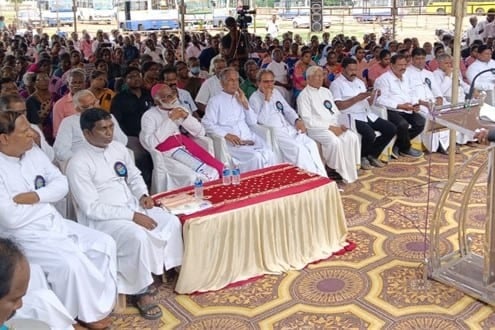
Shared with creditOriginal on catholicconnect.inEntries 31, 32 and 33 of Part C let converts to Christianity from some Most Backward Classes, “such as the Meenavar, Parvatharajakulam, and Mukkuvar”, keep that category, the order records. In the petitioner’s words, as the order sets them out, “an erstwhile Scheduled Caste convertee, whose ancestors suffered the most egregious forms of historical untouchability, is relegated to the Backward Class category upon converting to Christianity”, while a convert from those communities “continues to enjoy the highly sought after ‘Most Backward Class’ quota”. He calls it “a legal fiction where the SC convertee is structurally disadvantaged in relation to the MBC convertee.”
He uses the comparison to argue that the entries are arbitrary. His prayer is to delete the Christian entries, Entry 17 included, not to place Dalit converts higher.
How does he say the entries got there?
Without data, he argues. According to the petition, as the order records it, the state’s First Backward Classes Commission, under A.N. Sattanathan, “explicitly declined to examine the claims of Christian communities” in its 1970 report. The Second, under J.A. Ambashankar, listed “Christian (Converts from B.C.)” among communities found not eligible in 1985. A government order of 24 February 1986 then included all converts to Christianity from Hindu Backward Class communities, and Christian Nadars, Shanars and Gramanis, now part of Entry 78 of Part A, had been added by an order of 5 August 1983. “In none of these instances,” he says, was any “objective, quantifiable data” collected. The court found these assertions “raise serious doubts about the constitutional validity” of the entries.
What did the court say about the Church of South India?
Entry 18 of Part A gives Backward Class status to members of the Church of South India (CSI), a Protestant church. The petitioner argues that anyone, even someone from a forward caste (one not counted as backward), could claim that status by joining it through baptism. “The Petitioner’s counsel startled us by asserting that if a Brahmin gets converted and joins CSI denomination, he can enjoy OBC status as per the present statutory framework,” the bench wrote. “If this assertion is true, then a serious re-think is certainly called for.” Brahmins are the caste ranked highest in the Hindu order.
How does this connect to the Supreme Court?
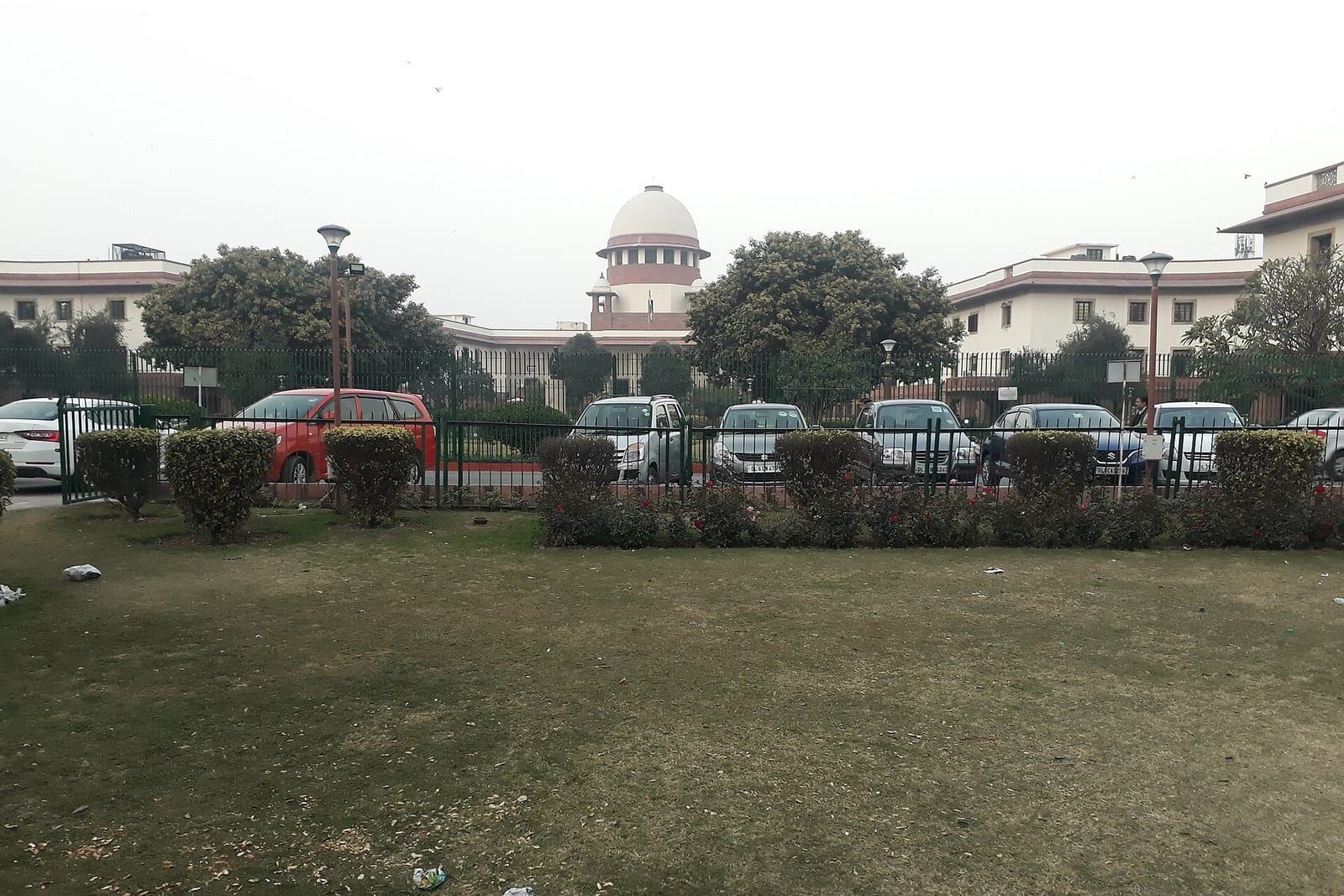
The petitioner leans on the Supreme Court’s ruling in Sameer Ahamed, which in October upheld the quashing of a Tamil Nadu order for converts to Islam. The order quotes its holding that no reservation “predicated upon a particular Hindu social order, can be claimed or extended merely on the basis of such antecedent membership after the person has converted to Islam, Christianity or any other non-Hindu social order.”
In March the same court held, in Chinthada Anand, that conversion to Christianity brings the “immediate and complete loss” of Scheduled Caste status, the Supreme Court Observer reported. Together, the two rulings treat conversion as the end of the caste a person was born into, for one list and then for another.
Dalit Christians have long answered that caste does not end at the church door. A movement against the denial of their status “is picking up within churches itself”, the activist and lawyer Henri Tiphagne told The News Minute. Franklin Caesar Thomas put it this way:
“Caste exists in the sanctum sanctorum of the temple, as it does in churches. There is no point citing dogma to say some religions don’t recognise caste. Society upholds caste.” — Franklin Caesar Thomas, to The News Minute, 2021
Key terms
- Scheduled Castes: the legal category for Dalits, set by presidential order. Under paragraph 3 of the 1950 Order, only Hindus, Sikhs and Buddhists can hold it.
- Backward Classes (BC) and Most Backward Classes (MBC): Tamil Nadu’s lists of communities held back socially and educationally, with separate reserved shares in state jobs and colleges. Nationally they are called Other Backward Classes (OBC).
What’s next
The case returns to court eight weeks from 12 November, when the state, its Backward Classes Commission and TNPSC are expected to reply. Separately, the commission under K.G. Balakrishnan, a former Chief Justice of India, which India’s central government set up in 2022 to examine Scheduled Caste status for Dalits who convert, had prepared its report by June, the Catholic news site Catholic Connect reported, citing the national newspaper The Hindu. Challenges to paragraph 3 itself have been pending in the Supreme Court since 2004.
Until one of them moves, Dalit Christians in Tamil Nadu hold the one listing the 1950 rule left them. That listing is now in question too.