Listen to this article
Read by an AI-generated voice · Report a mispronunciation
In June 2026 officials told The Hindu, an Indian daily, that the commission led by K.G. Balakrishnan, a former Chief Justice of India, had prepared its report on whether Dalits who become Christian or Muslim can be counted as Scheduled Castes, and one official said it was expected to submit the report “in a few days”, as Catholic Connect carried the report. Its latest deadline was 10 June 2026, and gazette records showed no further extension, the same report said. By 21 November 2026 The Dalit Project had found no public record that it has been submitted or published.
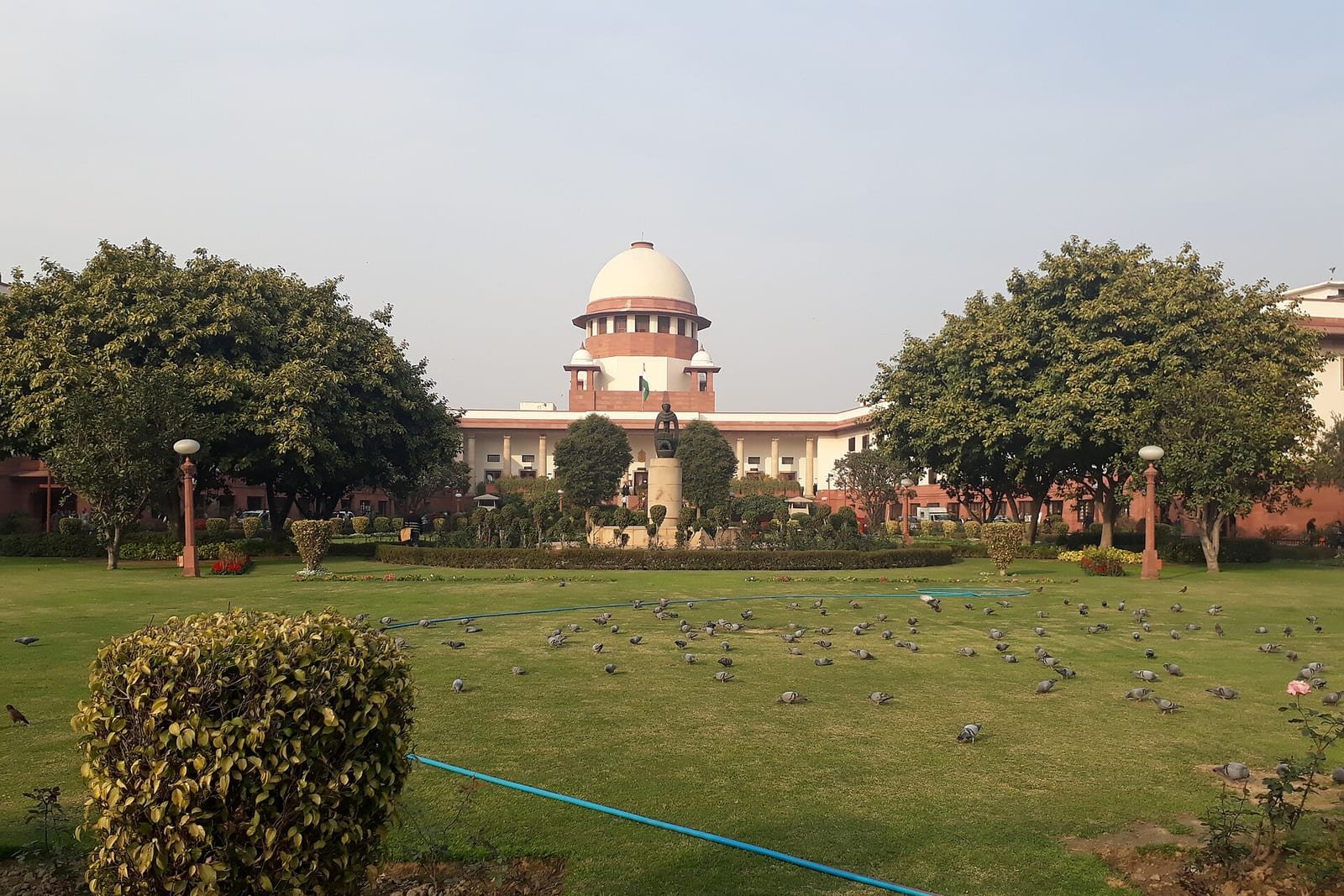
Scheduled Caste status is the constitutional category that carries reserved places in jobs and colleges for Dalits, the communities once branded “untouchable”, and the protection of the Scheduled Castes and Scheduled Tribes (Prevention of Atrocities) Act, India’s 1989 law against caste violence. Since 1950 one paragraph of a presidential order has kept it from any Dalit who professes a religion other than Hinduism, Sikhism or Buddhism. Petitions against that paragraph have been before the Supreme Court for more than two decades, and in December 2022 the central government told the court it would wait for this commission’s report before considering them, The Wire reported.
The pattern since has been the same. Asked whether caste survives conversion, the state has answered by waiting: for the court, then for a commission, then for that commission’s extensions. Each wait leaves the 1950 line where it was, and the Dalits on the wrong side of it carry the cost.
The clause
India’s lists of Scheduled Castes are made by presidential order under Article 341 of the Constitution, and the article’s second clause leaves it to Parliament to add or remove communities, Countercurrents notes. The first list, the Constitution (Scheduled Castes) Order, 1950, added a condition about religion. As first published, its paragraph 3 said no person “who professes a religion different from Hinduism” would be deemed a member of a Scheduled Caste, with one exception for four Sikh castes in Punjab, The Dalit Project’s research brief records. The text in force reads:
“Notwithstanding anything contained in paragraph 2, no person who professes a religion different from the Hindu, the Sikh or the Buddhist religion shall be deemed to be a member of a Scheduled Caste.”
The paragraph was amended in 1956 to take in Sikhs and in 1990 to take in Buddhists, and “Christianity has not been included under this Order by any of these amendments”, the Supreme Court said in March 2026.
That judgment, in Chinthada Anand v. State of Andhra Pradesh, shows what the paragraph does. Anand, from a village in Andhra Pradesh, in south-eastern India, says he belongs to the Madiga community, a Scheduled Caste, and had led Sunday prayer meetings as a pastor for about ten years. He alleged two attacks in January 2021. On 3 January, he says, one of the accused called him out of a prayer meeting, slapped him and abused him by his caste. On 24 January, in what the judgment calls the principal incident, he alleges that six of the accused and 25 others restrained him on his way home, dragged and beat him, abused him by caste name in public and threatened to kill him and his family, the judgment records. The accused belong to what The Wire calls “the dominant Reddy community”, outside the Scheduled Castes. A bench of two judges held that the paragraph was “categorical and unambiguous”: because Anand professed Christianity, “[i]rrespective of the appellant’s caste of origin, he cannot be deemed to be a member of a Scheduled Caste”. The case under the atrocities law fell on his faith. The bench also held that the other charges, of wrongful restraint, hurt and criminal intimidation, rested “solely on the statement of the appellant, with no independent witness attributing any specific overt act” to the accused, and upheld the Andhra Pradesh High Court’s quashing of the whole case, the judgment records. The same bench later dismissed his review petition, finding “no error apparent on the record”, Bar & Bench reported.
The judgment, Supreme Court Observer adds, “contains no reference to the pending petition, the Balakrishnan Commission or the Ranganath Mishra recommendations”.
The petitions
The oldest of those petitions began with a municipal election. Ghazi Saaduddin of Aurangabad, in the western state of Maharashtra, won a ward reserved for Scheduled Castes in 2000, claiming the Madari caste, which the 1950 Order lists as a Scheduled Caste. The defeated candidate complained that a person professing Islam could not claim the status; a caste verification committee invalidated his claim, the Bombay High Court, Maharashtra’s highest court, dismissed his challenge, and he appealed to the Supreme Court in January 2002, Supreme Court Observer’s case page records. Other petitions were tagged with his, among them one filed in 2004 by the Centre for Public Interest Litigation. It argues that the 1950 Order violates Articles 14 and 15 of the Constitution, the guarantees of equality and against discrimination, because it shuts out Dalits who have converted to religions other than the three it names, The Wire reported.
The same year the lawyer Prashant Bhushan filed a petition for Franklin Caesar Thomas, a Dalit Christian advocate supported by the National Council of Churches in India and the Catholic Bishops’ Conference of India, The News Minute reported.
In 2022 the government answered in an affidavit. Dalits had converted to Christianity and Islam, it said, “so that they can come out of the oppressive system of untouchability which is not prevalent at all in Christianity and Islam”, and so “they cannot claim to be backward”. At a hearing on 7 December 2022, Solicitor General Tushar Mehta, the central government’s second law officer, said the government would wait for the new commission’s report. A bench of three judges led by Justice Sanjay Kishan Kaul said: “The first aspect to be dealt with is whether this court should stay its hands till the report of this Commission comes or whether it should proceed on the basis of the material on record”, The Wire reported. It listed the matter for January 2023.
The matter was last heard by a bench of three led by Chief Justice Surya Kant, Supreme Court Observer records. Its page gives no date or ruling.
The commission
The government had already been told the answer once. In 2007 the commission led by Ranganath Misra, another former Chief Justice, recommended extending Scheduled Caste status to Dalit Christians and Muslims and deleting the religion bar, The Wire’s explainer notes.
The new Commission of Inquiry was appointed by a notification of 6 October 2022, with Balakrishnan as chair and two members, Ravindra Kumar Jain, a retired civil servant, and Sushma Yadav, a member of the University Grants Commission, India’s universities regulator. It was to examine giving Scheduled Caste status to “new persons who claim to have historically belonged to the Scheduled Castes” but have converted; what adding them would mean for existing Scheduled Castes; and the changes converts go through in “customs, traditions, social and other status discrimination and deprivation”, LiveLaw reported. Given two years, it had its term extended to 10 October 2025 and to 10 April 2026, The Dalit Project’s research brief records, and in April to 10 June 2026, The Hindu reported.
Why the wait favours the clause
The case for the bar rests mostly on what the two religions teach. The central government’s Ministry of Social Justice has also argued in these cases against extending the status to converts to Islam and Christianity, “citing the foreign origins of these faiths”, The Hindu reported. The court in Anand’s case relied on the New Testament, Galatians 3:28, and held that Christianity does not “by its very theological foundation” recognise caste, Supreme Court Observer notes. The same bench held that conversion does not end Scheduled Tribe status, where it asks whether a person still keeps their tribe’s customs and community. “For tribes, the Court insists on an empirical inquiry into whether conversion has actually altered a person’s social reality. For castes, it treats Clause 3 as a mechanical bar,” Supreme Court Observer writes.
The commission’s terms ask the empirical question. Until it answers, the mechanical bar decides. The evidence that exists points one way. A 2008 study by Satish Deshpande and Geetika Bapna of Delhi University for the government’s minorities commission concluded: “Based only on the descriptive and statistical evidence available, there is a strong case for including Dalit Muslims and Dalit Christians in the Scheduled Caste category”, as The News Minute quoted it.
5 of 1,467 teaching posts in 40 Christian-aided colleges in Kerala, in India’s south-west, were held by Dalit Christians, in Vinil Paul’s caste-wise count. Source: Vinil Paul, Round Table India, 21 May 2024
What the bar leaves out
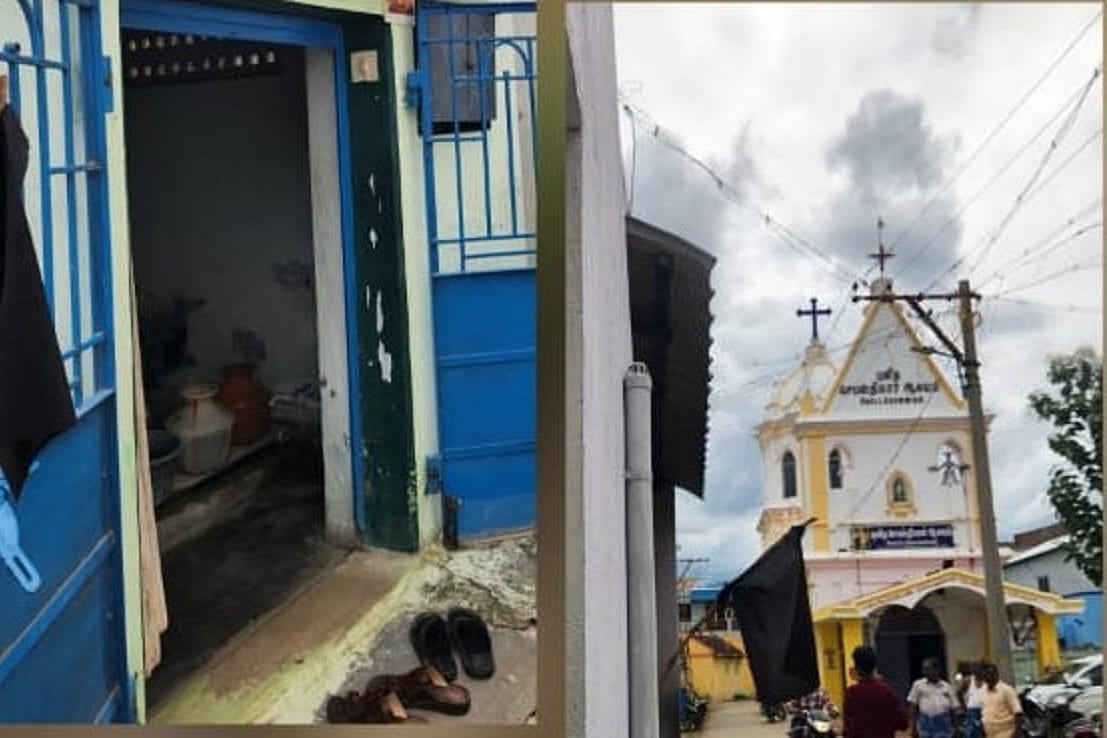
“Others called us Puthu Christiani (new Christians). Even now they do that secretly. When I used to work, I was given meals outside the house, I wasn’t allowed to use their toilets. … We don’t hold any positions in the church.”
— Jayan Joseph, a daily wage labourer in Kannur, Kerala, born into a Scheduled Caste Hindu community, who became a Catholic when he was youngi
Source: The News Minute, 2020
Jayan Joseph’s account is of untouchability practised by fellow Christians. The petitioners’ own case is the same. “Casteism is in the minds of people. Theologically, Christians are not discriminated against. But Dalit Christians face discrimination in many sectors,” Franklin Caesar Thomas told The News Minute in 2020. The question the paragraph answers is about theology. The question Dalit Christians and Muslims are asking is about how they are treated.
The objections
The government’s strongest argument is that Sikh and Buddhist converts are different. Its 2022 affidavit said Dalits accepted Buddhism at the call of B.R. Ambedkar, the Dalit leader who chaired the drafting of the Constitution, in 1956 and that the “original castes” of those converts could be determined clearly. “This cannot be said in respect of Christians and Muslims who might have converted on account of other factors since the process of such conversions had taken place over the centuries,” it said.
Anand’s own case answers it. During the investigation a tahsildar, a revenue officer, certified him as “Hindu-Madiga”, and the court accepted as “an admitted fact” that he had belonged to the Madiga community, the judgment records. Saaduddin claimed a caste named in the 1950 Order itself, and the complaint against him was about his religion, not his caste, Supreme Court Observer’s case page records. In Anand’s case the state could name his caste. It refused him the status because of his faith.
The second objection comes from Dalits who already hold the status. The 2022 notification records that “certain representatives of the existing Scheduled Castes have objected”, The Dalit Project’s research brief records, on account of what LiveLaw reported as its “negative impact” on existing members. It is a real concern about shares of a fixed quota, and the commission was told to weigh it. It is a question about how large the quota should be. It does not answer whether caste survives conversion, which is the question the paragraph settles by decree. The argument from foreign origins is about where a religion began. It says nothing about how Dalits inside it are treated.
What to watch
- The report. Whether the Balakrishnan Commission formally submits it, whether the government publishes it, and whether it goes before Parliament.
- The court. Whether the Supreme Court lists the Saaduddin and Centre for Public Interest Litigation petitions for hearing, and whether it decides the question its bench put in 2022.
Supreme Court Observer’s case page records no ruling on the question the court put in 2022. The commission’s last known deadline has passed, and no report has been made public. Ghazi Saaduddin’s appeal is nearly 25 years old. Until a report, a ruling or an Act of Parliament moves it, the line drawn in 1950 decides which Dalits count as Scheduled Castes in law, and it does not look at how Dalits are treated.