Listen to this article
Read by an AI-generated voice · Report a mispronunciation
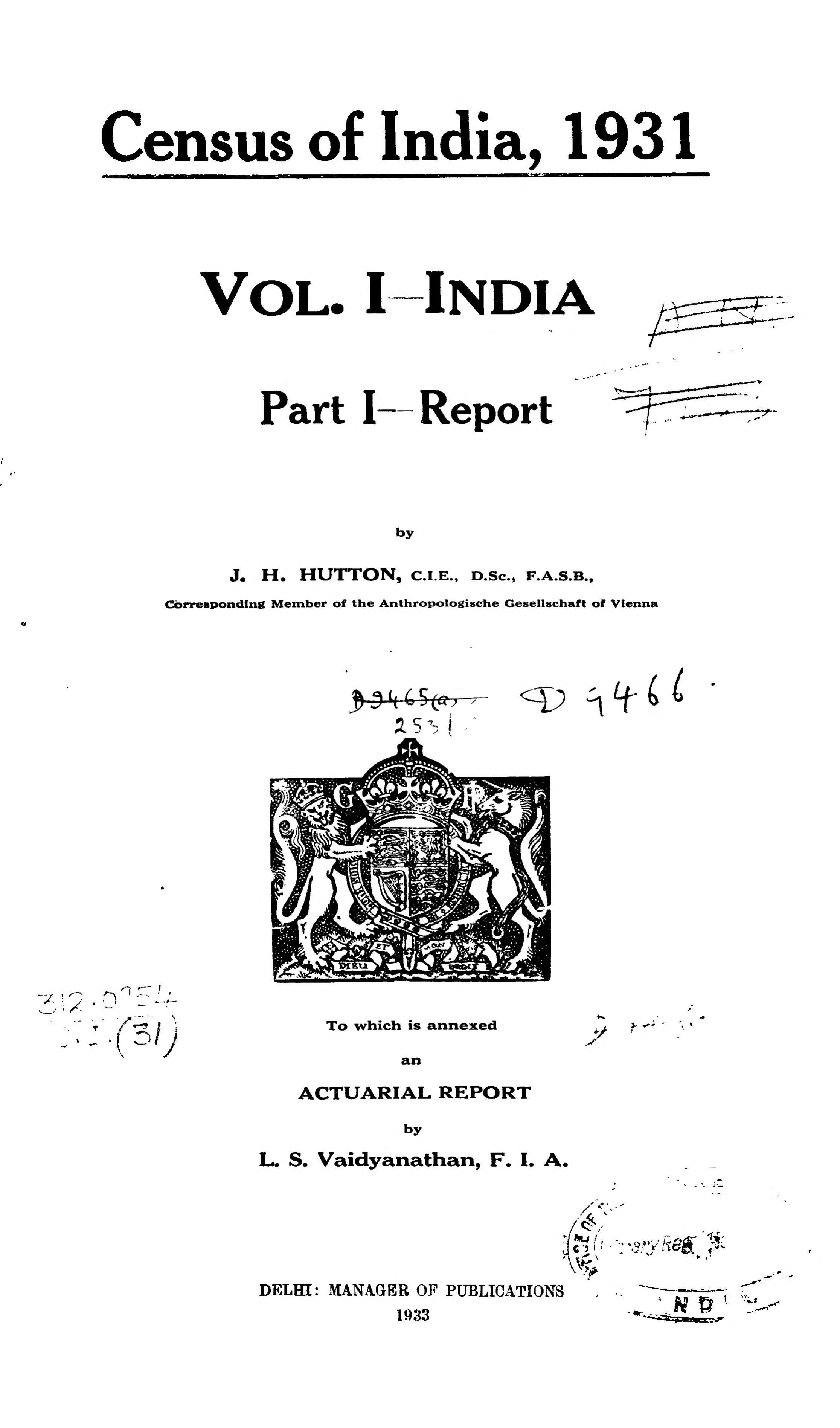
In January 1931, before the census of India was taken, its superintendents in each province met. They agreed that each province would draw up its own list of castes “who suffered disability on account of their low social position and on account of being debarred from temples, schools or wells”, as the census commissioner for India, J.H. Hutton, recorded in Appendix I of his all-India report. No specific definition of depressed castes was framed for them. The method was “local enquiry into what castes were held to be depressed and why and the framing of a list accordingly.”
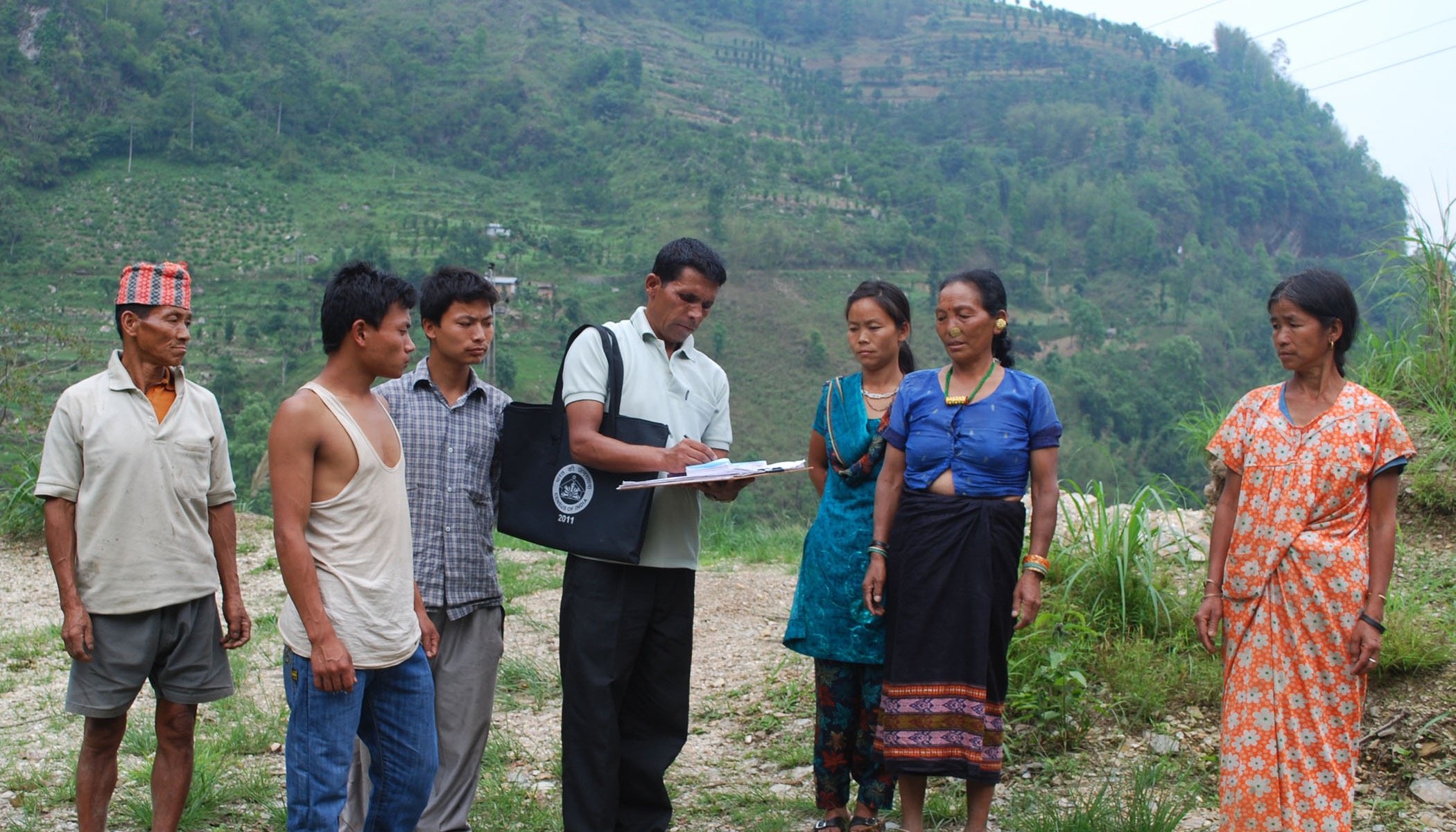
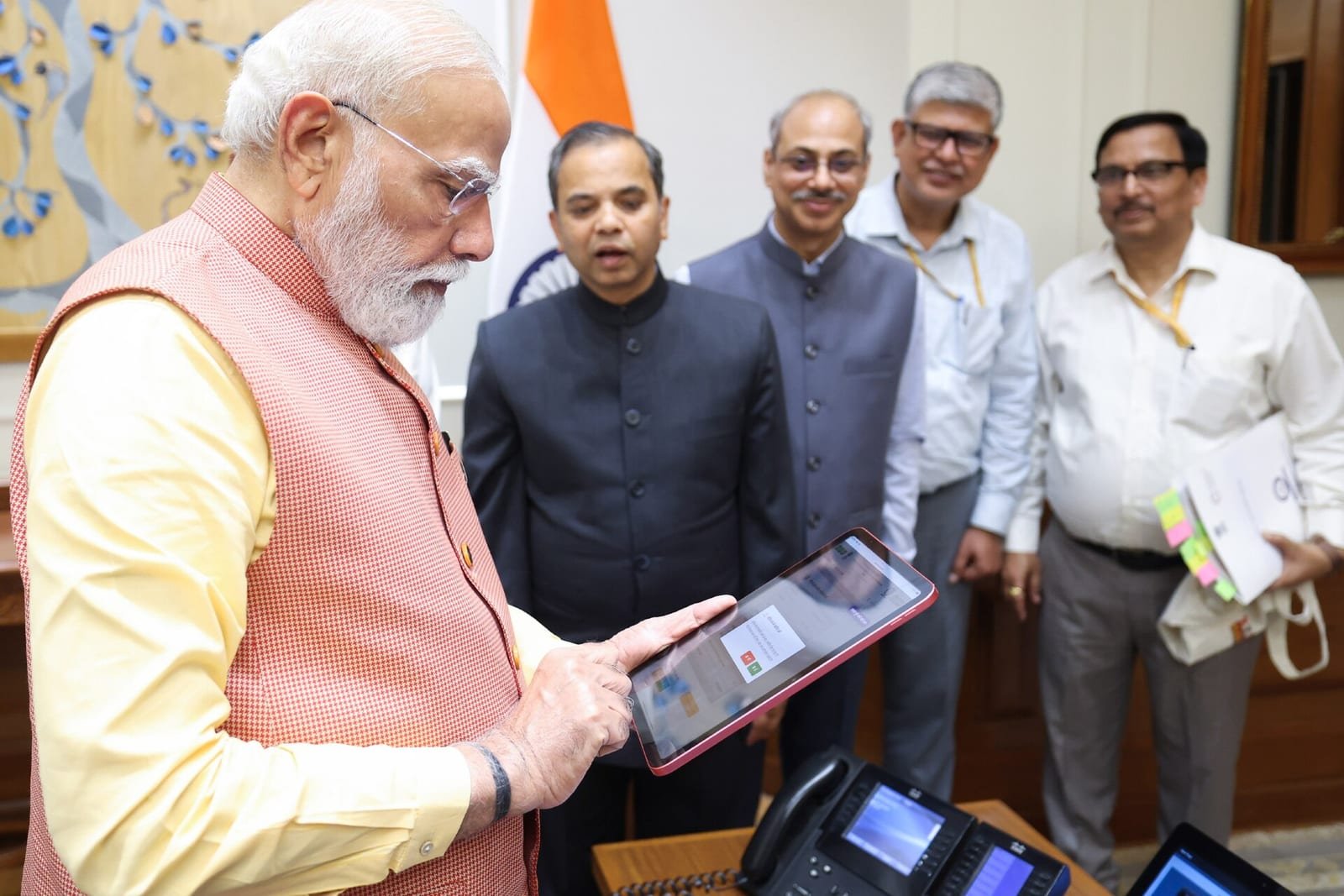
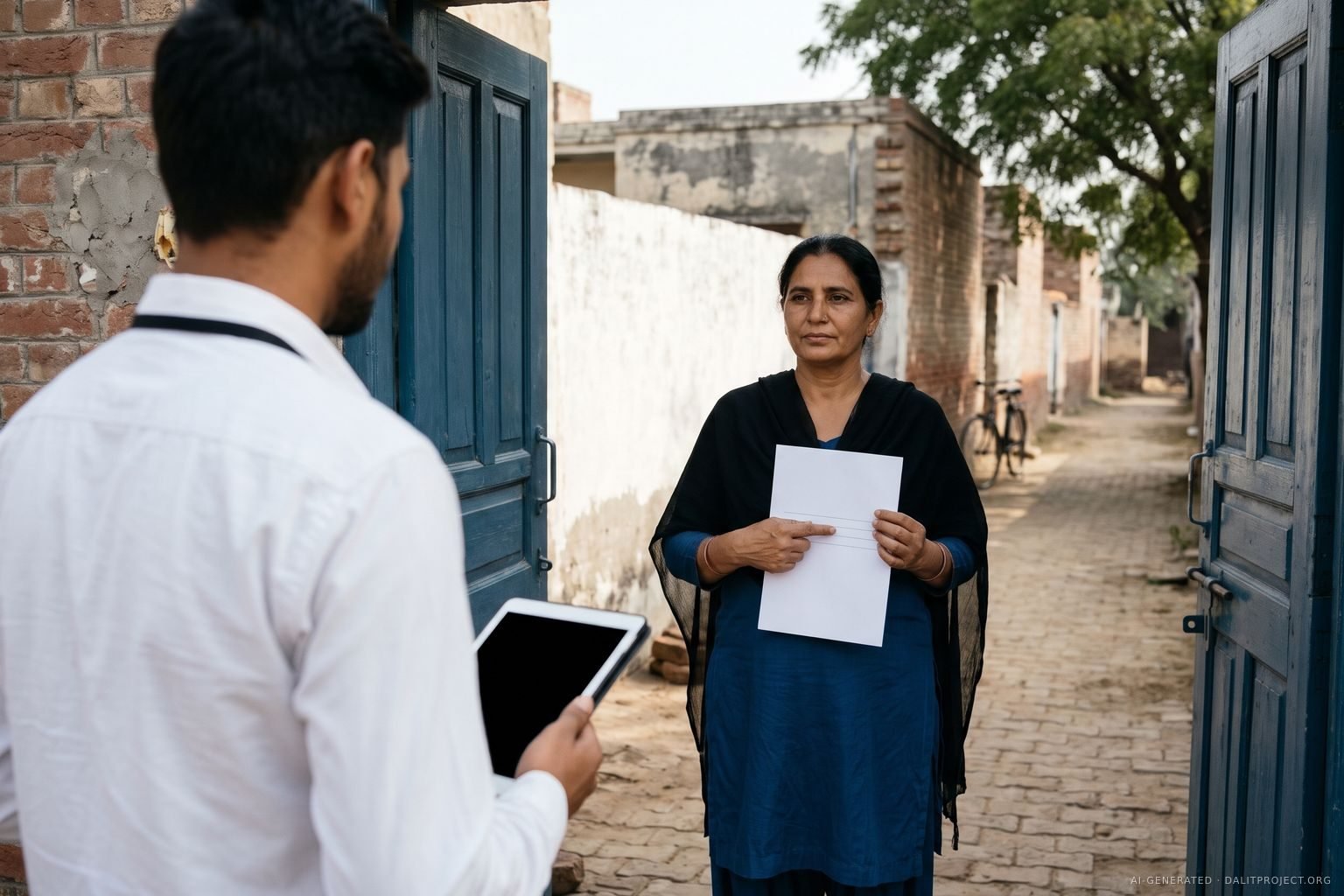
That decision matters again now. India’s next census, the first since independence to ask every resident about caste, reaches most of the country in February 2027. Under the questionnaire the central government notified on 14 August 2026, question 10 reads “Scheduled Caste (SC)/ Scheduled Tribe (ST)/Caste”. Dalits, the communities once branded “untouchable”, are counted in it as Scheduled Castes, except Dalit Christians and Muslims, whom the Scheduled Caste list leaves out. In the census’s trial run, The Wire reported, Scheduled Castes and Scheduled Tribes were recorded against existing codes, while everyone else was asked to give their caste in their own words. Officials say that trial format is not final. The category rests on a list, and its forerunners were not found in society. Officials drew them, province by province, in 1931, and the record they left shows how.
What the 1931 census did
The Government of India’s instructions for the 1931 census asked for “a better knowledge of the backward and depressed classes and of the problem involved in their present and future welfare.” The census office then told provinces they would need lists, while warning that “there are insuperable difficulties in framing a list of depressed classes which will be applicable to India as a whole.” A later instruction explained depressed castes as “castes, contact with whom entails purification on the part of high caste Hindus”, those denied temples, made to use separate wells, or kept outside the schoolhouse by dominant castes, as Hutton’s report sets out and its next pages describe.
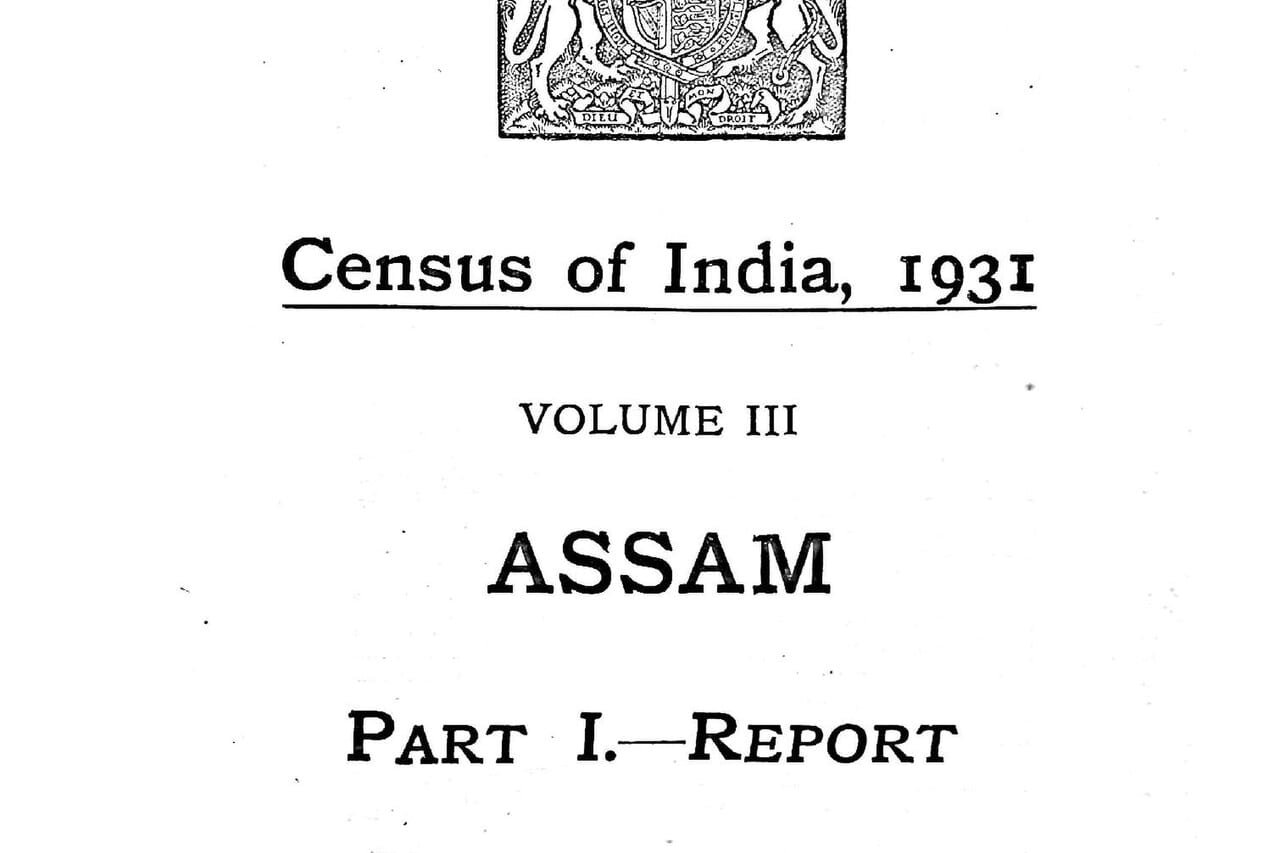
Hutton renamed these castes. He called “depressed class” an “unfortunate and depressing label”; he adopted “exterior castes”, a term first suggested by the census superintendent for Assam, a province in the north-east, and conceded that “‘exterior’ is but old ‘out’ writ large.”
The report says plainly why the numbers were wanted. “Both for social and political reasons it is obviously necessary to know the number of these classes,” the appendix continues, “not only with reference to their representation in the body politic” but for any social work among them. Earlier estimates ran from the 1921 census commissioner’s minimum of 52,680,000 across India down to about 30 million for British India from an official committee. “Clearly it is time that some more definite figures were obtained,” Hutton wrote.
He then listed nine possible tests, among them whether “clean Brahmans”, priests of the caste at the top of the scriptural order, would serve a caste, and whether a well-educated member of it would be treated as an equal by “high caste men” of the same education. He judged that “none of these tests can be taken alone.” For the state, the test that counted most was “the right to use public conveniences—roads, wells and schools.”
From census list to law
Each province’s superintendent drew his own list, Hutton wrote, because “it certainly is not the case that a caste which is depressed in one part of India is depressed everywhere.” In the Central Provinces, a province of central India, the castes treated as depressed varied from district to district. The officials also made choices that were not counts at all. “It was decided that Muslims and Christians should be excluded from the term ‘depressed class’”, the appendix records, and hill and forest tribes whose religion was returned as tribal were left out too. Some castes were dropped because officials judged them strong enough not to need protection: the superintendent for Cochin, a princely state in the south-west, excluded the Iruvans, a caste with strong caste organisations.
The total for India, the provinces Britain ruled directly and the princely states under their own rulers, came to about 50.2 million people, about 39.1 million of them in the provinces, in a table that names each caste, its number and the provinces that treated it as “exterior” (the appendix’s caste table).
About 50.2 million: people the 1931 census of India counted in castes treated as “exterior”, the castes formerly called “depressed”, across British India and the princely states. Source: Census of India 1931, Vol. I, Part I, Appendix I
Those lists did not stay in the census. The appendix itself records that Assam’s census superintendent wrote a note on Assam’s “depressed and backward classes” for the Franchise Committee. Five years later, the Government of India (Scheduled Castes) Order, 1936, made at Buckingham Palace on 30 April 1936 under the Government of India Act 1935, Britain’s law for governing India, set out, province by province, the castes “to be treated as the Scheduled Castes” for the purposes of the Act’s First, Fifth and Sixth Schedules. When the draft Order came before the House of Commons in March 1936, R.A. Butler, Under-Secretary of State for India, a junior minister in Britain’s government, said it “sets out, in its schedules the different castes which, for the purposes of reserved seats in the general constituencies, are to be regarded, according to local conditions, as scheduled castes,” and told members that the Franchise Committee’s report “gives some idea as to how these castes were chosen.” Reserved seats were seats in the legislatures that only candidates from these castes could contest, and Butler said they followed “the scheme laid down in the Poona Pact negotiated between the scheduled castes and the caste Hindus”, the Hindus outside the lists. Officials drew the lists, but the seats came out of a negotiation in which the scheduled castes were a party.
i
Public domainOriginal on Wikimedia CommonsPart of the census’s religious line came with them. The 1936 Order says that “no Indian Christian shall be deemed to [be] a member of a Scheduled Caste”, and that in Bengal no one who professed Buddhism or a tribal religion would be. It does not name Muslims.
The names show the line running on. The 1936 schedule for Bengal, the eastern province, lists 76 castes as Scheduled Castes throughout the province. Four castes, the Sunri, Tiyar, Turi and Rajwar, each counted as “exterior” in Bengal in Hutton’s 1931 table, are on it, and all four are still on the list of 58 Scheduled Castes printed for West Bengal under the Constitution (Scheduled Castes) Order, 1950, in the same West Bengal government compilation. The 1950 Order is the instrument that, with its amendments, still decides who counts as a Scheduled Caste today.
What happened to the rest of the count
The 1931 census was also the last time India’s census sorted caste on an all-India scale, and even then only in part. Hutton told provinces they need not tabulate castes their governments did not think important, and suggested a minimum of four in every thousand people for a caste to be tabulated. “An exception was made in the case of exterior castes, and primitive tribes, with regard to which the instructions were that all should be tabulated,” he wrote. Exterior castes, in other words, were to be tabulated in full, along with “a dozen or so selected castes of wide distribution”; other castes only where provinces wanted them.
Hutton also recorded the pressure to stop counting caste at all. “A campaign against any record of caste was attempted in 1931 by those who objected to any such return being made,” he noted, strongest in Punjab, in the north-west, and he judged that “in some degree political considerations did contribute” to it. Three pages on, he admitted that “an abandonment of the return of caste would be viewed with relief by census officers”, since every census brought what he called a “pestiferous deluge of representations” from castes seeking recognition of a higher position. He floated a way out: if the exterior castes agreed to return their religion or community under one collective label such as “Adi-Hindu”, the census might even “omit the return of caste”.
“In 1941, caste sorting on an all-India scale was dropped,” the 1941 census commissioner, M.W.M. Yeatts, wrote in that census’s tables volume, and gave cost as the reason: “Even in 1931 it was severely limited for financial reasons,” he wrote, and there was “no justification for spending lakhs on this detail” (a lakh is 100,000). He added that he shared “Dr. Hutton’s views expressed ten years ago” and that “even had the full course been taken, there would have been no all-India caste table”. Independent India’s censuses then collected caste data only for Scheduled Castes and Scheduled Tribes, as The Wire summarises.
The result was a census that counted the people on the list and stopped counting the people the list was drawn against. Suraj Yengde, the Dalit scholar, put the consequence in one line:
“We need to know the numbers of the beneficiaries of the caste system as well. Without this, the SC, ST census is akin to counting the protected species in a jungle.” — Suraj Yengde, writing in The Indian Express, 2021
The strongest case for the fixed list
Hutton himself argued that counting caste does not entrench it. “It is, however, difficult to see why the record of a fact that actually exists should tend to stabilize that existence,” he wrote, comparing the alternative to “the proverbial ostrich.” A fixed list also has a practical defence. When the 2011 Socio-Economic and Caste Census, a separate national survey, let people write in their caste, it returned more than 4.6 million different caste names, and the central government said that data could not be considered reliable, The Wire reports. A list, on this view, is what makes caste countable.
That defence holds for the count. It does not hold for the list. Hutton’s own appendix shows that what went on the 1931 lists was decided by officials, province by province, with religious exclusions settled in advance and castes dropped for being strong enough not to need protection. The record he made was not simply a fact that existed; it was a set of choices, and the 1936 Order wrote lists of the same kind into who could stand for a reserved seat. The question was never whether to count Dalits. It was who drew the line, and on whose evidence.
What to watch in 2027
Census 2027 may keep that line. In the pre-test run in 16 states and union territories, the territories the central government runs directly, in July 2026, The Wire reported, citing the newspaper The Hindu, Scheduled Castes and Scheduled Tribes were recorded “using pre-existing community codes” while other respondents were asked to state their caste in an open field. Officials stressed that the trial format was not the final framework. If it holds, the open question, which lets people name themselves, stops where the list begins.
Three things will show whether 2027 repeats 1931 or breaks with it. First, who sorts the millions of written-in answers into categories, and whether that coding is published. Second, whether the caste tables are released at all, after years in which, The Wire reports, the central government cited the 2011 data’s unreliability to keep it obscure. Third, whether the count is used to revisit the Scheduled Caste list itself, which still carries a religious line, as the 1936 Order did, or only to measure everyone outside it.
In January 1931 the census superintendents agreed that each province would decide for itself which castes were “exterior.” Ninety-six years later, if the trial’s method holds, the census will let most Indians write in their own caste, and Dalits will still be counted against a list.