Listen to this article
Read by an AI-generated voice · Report a mispronunciation
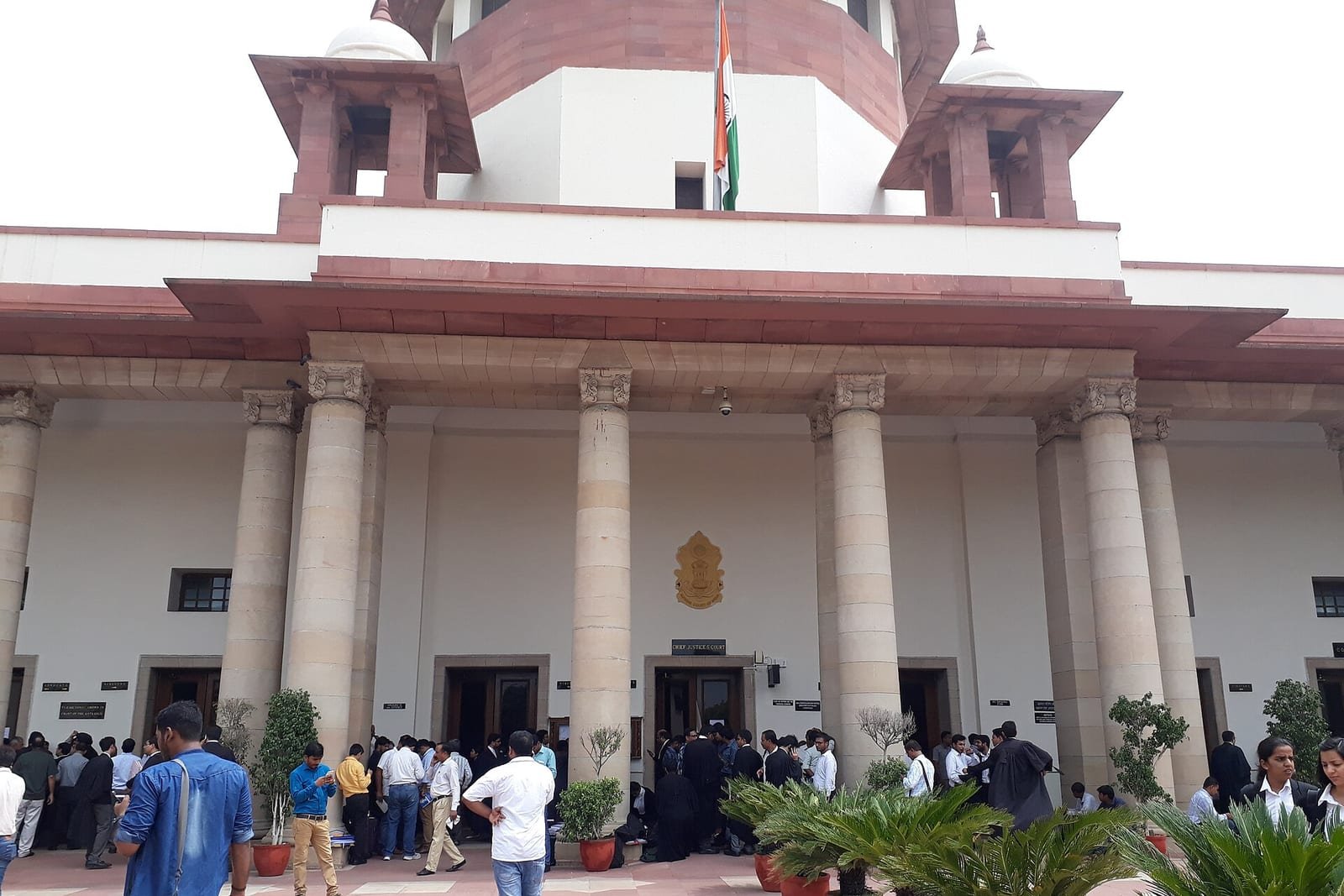
India’s Supreme Court on 16 November 2026 dismissed a challenge to a rule in Maharashtra, the western Indian state, that restarts the rotation of seats reserved for Scheduled Castes (SCs) and Scheduled Tribes (STs) in the state’s rural councils. SCs are the constitutional category that includes Dalits, the communities once branded “untouchable”; STs are India’s Adivasi communities. The court held that “no voter or candidate can have a vested right to have a particular constituency reserved”.
The ruling settles who controls the order in which reserved seats move: the state government, which the court said has discretion over “the manner and the time frame” of rotation. Reservation fixes how many seats Dalit and Adivasi candidates are guaranteed. Rotation decides where those seats fall, and so which villages and blocks ever have one. Under Maharashtra’s rules the seats rotate from the constituencies where SCs and STs are most numerous downwards, so the areas that wait longest are the ones where they are fewest. A reset sends those areas back to the end of the queue, and the court has now upheld Maharashtra’s reset.
It is the court’s second refusal this month to intervene on rotation. On 4 November it declined to order rotation of reserved seats in Parliament and the state assemblies, saying that was for Parliament.
What happened
The case was a challenge to Rule 12 of the Maharashtra Zilla Parishads and Panchayat Samitis (Manner and Rotation of Reservation of Seats) Rules, 2025. Zilla parishads are Maharashtra’s elected district councils, and panchayat samitis are the councils one tier below them, for each block, an administrative unit within a district. The 2025 rules replaced the earlier 1996 rules and reserve seats in proportion to the SC and ST population of each area. Rule 12 reads, as The Hindu quoted it: “For rotation of seats under these Rules, the general election held after commencement of these Rules shall be considered as the first election.” Whatever turns constituencies had already had, the count starts again.
The petitioner, Rupali Indrabhushan Sonde, first went to the Bombay High Court, the high court for Maharashtra, at its bench in Nagpur, a city in the east of the state. A division bench of Justices Rajnish R. Vyas and Anil S. Kilor dismissed a batch of petitions against the rule on 19 September 2025. The petitioners had argued that it would disrupt the existing rotation, harm candidates seeking to contest from reserved constituencies, and breach Article 14 of the Constitution, the guarantee of equality before the law.
Her appeal was heard in the Supreme Court, and the reports differ on who sat. The Hindu, LiveLaw and LawChakra name a bench of two, Justices Joymalya Bagchi and V. Mohana. Bar and Bench and LawBeat name three, with the Chief Justice of India, Surya Kant, alongside them. Her counsel, the senior lawyer Vipin Sanghi, told the bench that her constituency had never been reserved: “I am in a constituency where percentage is low. This has never been reserved. When my turn to be reserved comes, they say we will start afresh. Which means that this constituency would never get reservation.”
Justice Bagchi answered: “Do you have a right to have your constituency reserved? No. It is the cutoff date. It can always be shifted by the government.”
The order the bench dictated, as LiveLaw reported it, said the argument that Rule 12 made rotation “illusory” was “attractive at the first blush” but failed. The Constitution and the rules, it said, prescribe “a proportionate reservation of seats vis-a-vis the proportion of SC/ST in the total population of the local body concerned”. The order also accepted that rotation of the reserved seats is prescribed “as per descending order of the SC/ST population”. But “the manner and the time frame within which such reservation and such rotation is to be made is only within the discretion of the government”. The bench dismissed the appeal. It added that the dismissal would not stop the petitioner from asking the Maharashtra government to reconsider its scheme of rotation.
The mechanism: a fixed number, a moving queue
The Constitution’s rule for village and district councils is Article 243D. It requires seats to be reserved for SCs and STs in proportion to their share of each council area’s population, and says “such seats may be allotted by rotation to different constituencies”. It sets the number. It says nothing about the order of the turns or how long a cycle must run.
Maharashtra’s rules fill that gap with a sequence. Reserved seats rotate, the Supreme Court’s order said, “as per descending order of the SC/ST population”: the constituencies at the top of that order come first, and the turn moves down the list from one election to the next. A constituency near the bottom of the list, where Dalits or Adivasis are a small share of the population, comes last. When the count starts again, the top of the list comes first again, and the bottom waits once more. Mr Sanghi’s argument was that constituencies with smaller SC and ST populations could, as a result, remain outside reservation indefinitely.
Why it matters where the seats fall was spelled out by another court this year. In the case over the Kadipur state-assembly constituency in Uttar Pradesh, in northern India, which reached the Supreme Court on 4 November, the Allahabad High Court, the high court for Uttar Pradesh, said that where SC and ST populations are comparatively large, a candidate from those communities can get elected without the aid of reservation. “The goals of social justice, political justice and equality as provided in our Constitution,” it said, “can only be achieved by rotation of seats enabling the SC/ST candidates to get elected even from those seats where their population is comparatively much low.” On that reasoning, the constituencies at the bottom of Maharashtra’s list are the ones where a reserved turn makes the most difference to who can win. They are also the ones a reset delays longest. A Scheduled Caste ward member of a village council in Odisha, in eastern India, has described what reservation opened for women like her:
“This reservation has ensured the representation of marginalised social groups, and given women like me an entry point into a space which is highly patriarchal and occupied predominantly by men from dominant castes” — Shanti Lata, a Scheduled Caste ward member of Baladiyabandha panchayat in Dhenkanal district, Odisha, quoted by BehanBox in 2020
The strongest case for the rule
Maharashtra’s answer, which the High Court accepted, is that the old order no longer fits the map. The state told the High Court that the rules were framed to give effect to Section 12 of the Maharashtra Zilla Parishads and Panchayat Samitis Act, 1961, after an amendment let it divide districts into electoral divisions with the approval of the State Election Commission, which runs local elections, and that the boundaries of the constituencies were being changed for the first time. New boundaries mean new populations, and a constituency’s place in an order built on the old ones may mean little.
The High Court agreed. It said population percentages had changed since the last census, and that because the areas of constituencies were being changed, “it cannot be said that whether particular area would be reserved for particular category or not”. It called the petitioners’ fear “guesswork”. The petitioner’s own constituency, on this view, may not survive the redrawing in its old form.
That answer is fair for one reset after a full redrawing. Where it falls short is in what the Supreme Court said about the next one. The order, as reported, states no limit on when, or how often, a government may restart the count, and it did not have to decide whether a later reset would be lawful. Justice Bagchi’s remark at the hearing was that the cutoff date “can always be shifted by the government”. The one route the order itself names is the one it offered the petitioner: a representation, a formal petition, to the same government that wrote the rule. The proportion of seats stays protected by the Constitution. On the order’s own terms, “the manner and the time frame” of rotation are left to that government’s discretion.
What to watch
The two rulings this month now cover both kinds of reserved seat. For Parliament and the state assemblies, the court said on 4 November that rotation is for Parliament to choose, and no law requires those seats to rotate; the census now under way will supply the Scheduled Caste count that the next redraw of those seats rests on. For Maharashtra’s district and block councils, where rotation is the rule, it has said the state decides how and when.
Three things follow. First, whether the petitioner files the representation the court allowed, and how the Maharashtra government answers it. Second, the order of rotation under the 2025 rules. With Maharashtra’s rural elections being held on freshly drawn constituencies, the first election under Rule 12 sets the top of the new queue, and each one after it shows how far down the list the reserved turns reach. Third, whether any later rule moves the cutoff again before the queue reaches the constituencies at the bottom.
The court’s sentence is easy to quote: no voter or candidate has a vested right to have a particular constituency reserved. That is true of any one seat. The question the ruling leaves open is a different one: whether Dalits and Adivasis who live where they are few will ever have a reserved seat to vote in, if each new set of rules can start the count again.