Listen to this article
Read by an AI-generated voice · Report a mispronunciation
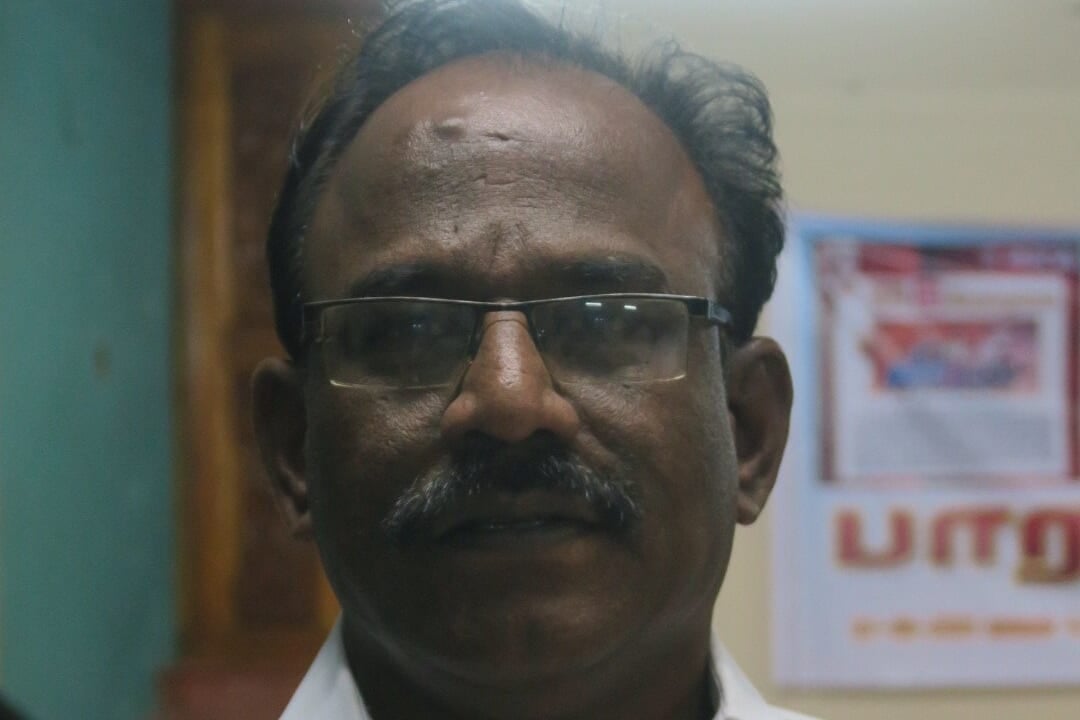
Justice C.S. Karnan, a former judge of the Madras and Calcutta High Courts, died in Chennai, the capital of the southern state of Tamil Nadu, on Friday, 13 November 2026, at a private hospital where he was being treated. He was 71. His funeral was to be held the next day, LiveLaw reported. He was a Dalit, from among the communities once branded “untouchable”, in a higher judiciary where, as Maktoob Media put it in its obituary, “people from marginalised communities have long been underrepresented”.
Most obituaries lead with the end of his career: in 2017 he became the first sitting High Court judge in India sentenced to prison for contempt of court. The record also holds something earlier and less remembered. In 2011, six years before the contempt case, a sitting judge of a High Court told a national body set up to protect Dalits that his colleagues were humiliating him because of his caste. That body passed the complaint to the head of the judiciary. Karnan’s career shows how little room the higher judiciary has for a caste complaint from inside it, and the government’s own figures show how few Dalit judges are inside it to make one.
What happened
Karnan was born in 1955 in Karnatham, a village in Cuddalore district of Tamil Nadu, and was named Karunanidhi at birth, Maktoob reported. He took his law degree at Madras Law College in 1983 and practised in Chennai’s courts. He was appointed an additional judge of the Madras High Court, the top court of Tamil Nadu, in March 2009 and became a permanent judge in March 2011, according to the same report.
On 26 September 2011, he met P.L. Punia, then chairman of the National Commission for Scheduled Castes (NCSC), the national body that hears complaints of discrimination against Dalits, and gave him a written complaint, The Hindu reported that November. He said he was being “harassed” and “victimised” by some “brother Judges” because he was a Dalit, and asked the commission to “constitute an enquiry”. He sent copies to the President and the Chief Justice of India.
The complaint, as The Hindu quoted it, set out small things. At a wedding in Chennai, he wrote, a judge seated next to him “crossed his leg deliberately touching mine”. At a Republic Day function, India’s 26 January national holiday, the same judge removed the name slip from Karnan’s chair and stuck it to the bottom of his own leg, “where it got crumpled”. At another function a judge in the row behind kept shaking his chair. He said he had twice been kept from attending functions in his home district as a guest. He wrote that his independent way of working was “not to the liking of a few judges”, and: “The obvious intention is to reduce the role to subjugation and make a scapegoat which I vehemently abhor.”
Punia told The Hindu the commission had examined the case and forwarded it to the Chief Justice of India, then S.H. Kapadia, “as the CJI is the ultimate authority in the judiciary”. Asked whether the commission would do anything more, he said: “This is our action.”
Two days after The Times of India first reported the complaint, Karnan held a press conference in his chambers, The Times of India reported that week. He said “more than four or five high court judges” had humiliated him on the basis of his caste, since April 2009, and that Dalit judges in the lower courts faced the same. Asked why he had gone to the commission rather than to his own Chief Justice, he said: “The National Commission for SCs is the watchdog for all dalits, including dalit judges, in the country.”
“Some judges are very narrow-minded; they seek to dominate dalit judges.” — Justice C.S. Karnan, at a press conference in his chambers at the Madras High Court, November 2011 (The Times of India)
Neither the reports of the time nor this week’s obituaries record what, if anything, came of the complaint once it reached the Chief Justice.
The mechanism: a complaint with one door
The commission’s answer shows the structure. India’s higher judiciary chooses its own: only those recommended by the Supreme Court’s collegium, a group of its most senior judges, are appointed to the High Courts, the Law Ministry has told Parliament, and Karnan’s own appointment was recommended by the Madras High Court’s collegium and accepted by the Supreme Court’s, The Hindu recorded this week. The commission set up to protect Dalits decided that its action was to send the complaint back up that line, to the judge its chairman called “the ultimate authority in the judiciary”. A Dalit judge who believed his colleagues were the problem had one door, and it opened onto those colleagues’ seniors.
Karnan also made the problem one of numbers. He confronted, sometimes in open court, successive Chief Justices of the Madras High Court over the names recommended for elevation to the High Court and what he alleged was discrimination against Scheduled Caste (Dalit) lawyers, The Hindu reported. In January 2014 he walked into a special bench hearing a public interest case on appointments to the court and objected to the selection, The Federal reported; the Supreme Court later called his intervention “indecorous”, as The Wire recorded.
i
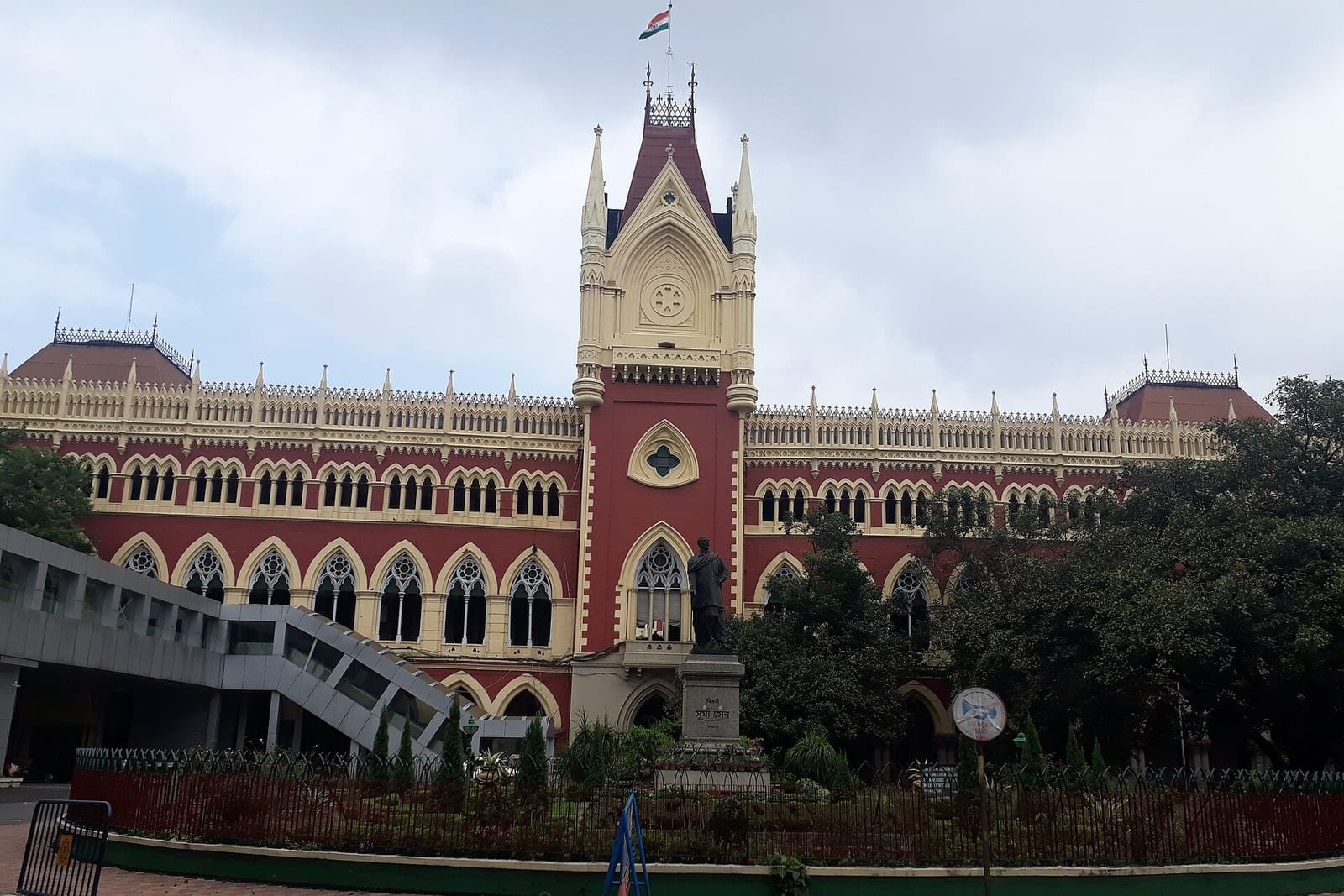
CC BY-SA 4.0Original on Wikimedia CommonsOnly since 2018 have people recommended for High Court posts had to state their social background. On that basis, India’s Law Minister, Arjun Ram Meghwal, told the Rajya Sabha, Parliament’s upper house, in March 2025 that of 715 High Court judges appointed since 2018, 22 were from the Scheduled Castes, the official name for Dalit communities. He added that the Constitution provides no reservation, India’s system of quotas, for judges. By The Indian Express’s count of the same answer, just over 77 per cent were from the general category, the official term for castes outside the quota lists, which the paper’s report calls “upper castes (general category)”.
22 of 715: High Court judges appointed from 2018 to March 2025 who belong to the Scheduled Castes, about 3 per cent. Source: Law Ministry’s written answer in the Rajya Sabha, March 2025, as reported by The Economic Times and The Indian Express.
The Supreme Court had seen this before. When it created the collegium in 1993, in what is known as the Second Judges case, it noted that there were then only 13 High Court judges from the Scheduled Castes and seven from the Scheduled Tribes, the official name for Adivasi (Indigenous) communities, together about 4 per cent of High Court judges, The Indian Express reported. “If the vulnerable section of the people are completely neglected,” the court wrote then, “we cannot claim to have achieved real participatory democracy.” Of the 715 appointed since 2018, Scheduled Caste and Scheduled Tribe judges together number 38: 22 and 16, by the minister’s answer as The Economic Times reported it. Who sits on the bench shows in what it does with caste: courts have written caste into bail conditions and, in the Khairlanji massacre case, read it out of the judgments.
How the institution answered him
The record after 2011 is mostly a record of confrontation. In November 2015 Karnan wrote to his Chief Justice that he had been given “insignificant” and “dummy” work and asked for long leave; twenty judges of the Madras High Court then wrote to the Chief Justice of India asking that he be transferred, The Wire reported. When the Supreme Court’s collegium recommended his transfer in February 2016, he issued an order staying his own transfer; the Supreme Court stayed his orders the same day, The Federal reported. He joined the Calcutta High Court, in the eastern city of Kolkata, in March 2016.
In January 2017 he wrote to Prime Minister Narendra Modi accusing 20 sitting and retired judges of corruption, Maktoob reported; The Federal reported that the letter also repeated his complaint of caste discrimination by fellow judges in Madras. In February a seven-judge bench of the Supreme Court led by Chief Justice J.S. Khehar began contempt proceedings against him on its own motion and barred him from judicial and administrative work, The Hindu reported. Karnan answered with “orders” of his own. On 8 May 2017 he “sentenced” the Chief Justice and other judges of the Supreme Court to five years’ rigorous imprisonment under the Scheduled Castes and Scheduled Tribes (Prevention of Atrocities) Act, India’s 1989 law against caste violence, The Hindu reported.
The next day, 9 May 2017, the seven-judge bench found him guilty of criminal contempt and sentenced him to six months in prison. It held, in The Hindu’s summary, that his conduct had seriously tarnished the image of the judges concerned and of the judiciary as a whole. He did not surrender, retired on 12 June 2017, and was arrested in Coimbatore, a city in western Tamil Nadu, on 20 June, The Hindu reported. He served his sentence in Kolkata’s Presidency Jail and was released in December 2017, according to Maktoob.
The strongest counter-reading
The strongest case against reading Karnan’s story as one of caste is his own conduct, and it is serious. A judge who stays his own transfer and “sentences” the Supreme Court is not a judge any court system could leave in place, and the court convicted him for what he did, not for who he was. After his release it got worse. In December 2020 Tamil Nadu police arrested him over videos in which, LiveLaw reported, he abused judges and their families and threatened the judges’ women relatives with sexual violence. He was granted bail in March 2021 after filing affidavits tendering an unconditional apology to all concerned and undertaking not to repeat such behaviour, The Hindu reported. None of this week’s reports says how the criminal proceedings over the videos ended. Nothing in his complaints would excuse what those videos are reported to show.
But the counter-reading answers a different question. It explains why he was jailed in 2017. It does not explain what happened to a sitting judge’s complaint of caste harassment in 2011, six years before any of it, when the national commission for Dalits decided that its action was to forward it to the judiciary’s own head. Nor does it touch the count of 22 in 715. His methods discredited him. They do not show that what he described was false. None of the reports of the time or of this week records a finding on it either way.
What to watch
Karnan’s death leaves the questions he raised where they were. The figure of 22 in 715 comes only from what recommended judges declare. The Law Ministry said in its answer that the responsibility for proposing High Court judges lies with the Chief Justices of the High Courts, The Indian Express reported, and that the government has asked them to give “due consideration” to candidates from the Scheduled Castes, Scheduled Tribes, Other Backward Classes (the official category for other disadvantaged castes), minorities and women, The Economic Times reported. Whether that request moves the count is something each new answer in Parliament will show. The question his 2011 complaint posed, who hears a judge’s complaint of caste, has no answer in the record of his case.
In 2011 Karnan told reporters, The Times of India reported, that he had stayed silent for months to protect the dignity of the institution, and had gone to the commission only when, in his words, “the atrocities crossed tolerable limits”. He called what he described “a black mark on Indian judiciary”. The judiciary’s answer to the man is on the record. Its answer to the complaint is not.