Listen to this article
Read by an AI-generated voice · Report a mispronunciation
Census 2027, now under way, is the first census since independence to ask everyone outside the Scheduled Castes and Scheduled Tribes, the constitutional lists of Dalit and Adivasi (Indigenous) communities, to write in a caste. It is also the census that ends a 50-year freeze on how India’s seats in Parliament are shared out.
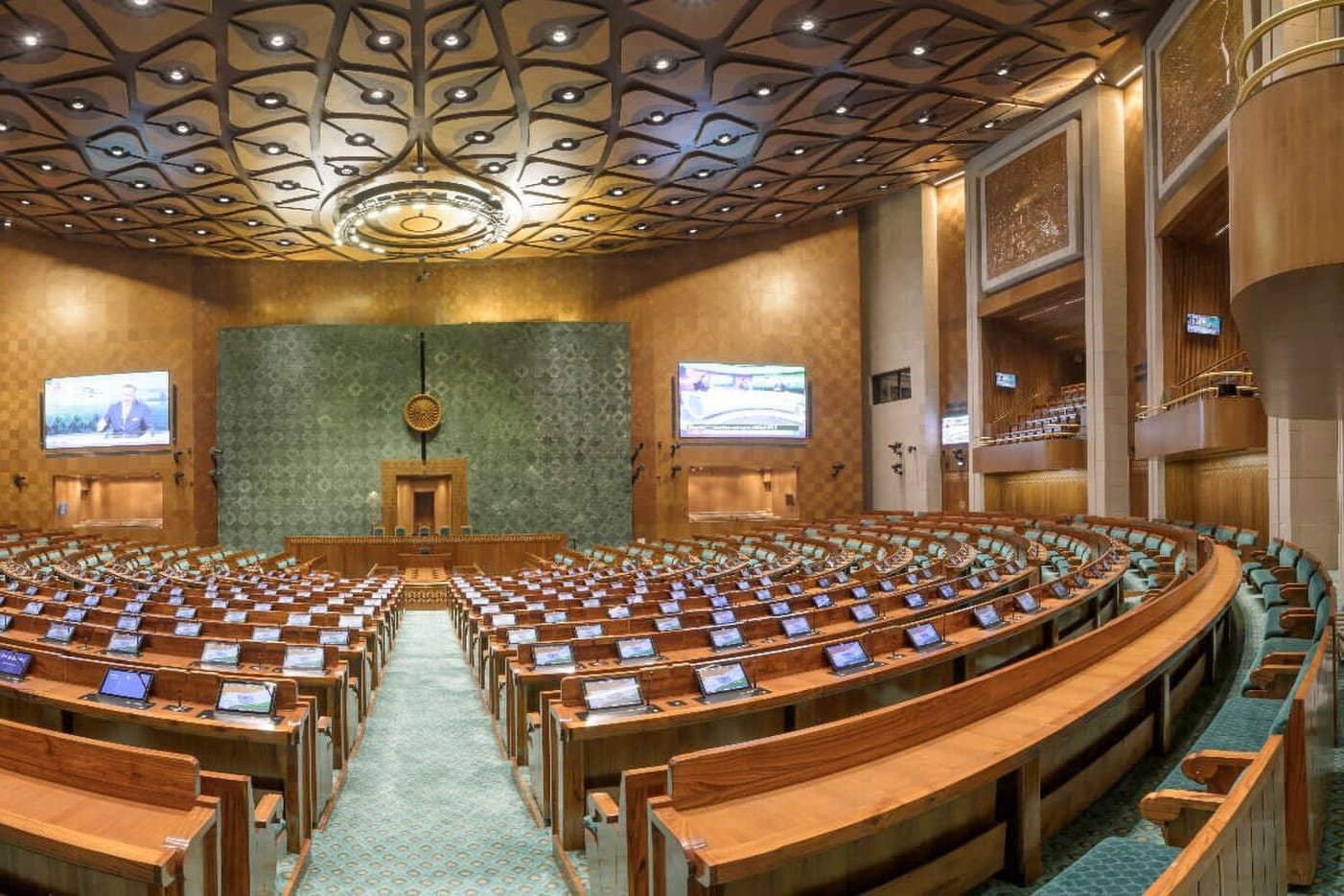
That matters most for Dalits, the communities once branded “untouchable”. Of the 543 seats in the Lok Sabha, Parliament’s lower house, 84 are reserved for candidates from the Scheduled Castes. When the freeze lifts, a new redraw will use the census’s Scheduled Caste count to settle how many of those seats each state holds and where.
What happened
In April 2026 India’s central government tried to redraw the map without waiting for the new census. Its Constitution (131st Amendment) Bill would have enlarged the Lok Sabha from 543 to 850 seats and allowed the redraw on the 2011 census, with a new commission setting the reservations for Scheduled Castes and Scheduled Tribes. On 17 April, LiveLaw and The Wire reported, the amendment won 298 votes to 230, short of the 352 it needed, and the government withdrew its companion Delimitation Bill.
Under Article 82, the freeze lasts only until “the relevant figures for the first census taken after the year 2026 have been published”. Census 2027 is that census.
Why it matters
Article 330 gives the Scheduled Castes in each state a share of its Lok Sabha seats in “the same proportion” as their share of the state’s population, and Article 332 does the same for state assemblies. The next redraw changes both figures in that sum: the state’s total seats and its Scheduled Caste population.
What is delimitation?
It is the redrawing of constituencies after a census so that each holds roughly the same number of people. Article 82 says that after each census the seats allotted to each state, and the lines inside it, “shall be readjusted” by an authority Parliament sets up by law. India has set up a Delimitation Commission four times, in 1952, 1963, 1973 and 2002. The last commission’s orders were finalised in 2008.
Why have seat numbers been frozen since 1976?
The 42nd Amendment of 1976 froze each state’s total seats in the Lok Sabha and in its assembly on the 1971 census, until the first census after 2000. In 2001 the 84th Amendment extended the freeze to the first census after 2026, which PRS Legislative Research, a Delhi policy institute, notes was done “as a motivational measure” so that state governments would pursue population stabilisation. The freeze covered each state’s total, not the lines inside it, which could be redrawn on the 2001 census.
How did the last redraw change Dalit seats?
Even with every state’s total frozen, fresh Scheduled Caste counts moved seats. When the commission applied 2001 figures, Scheduled Caste seats in the Lok Sabha rose from 79 to 84, and Scheduled Tribe seats from 41 to 47, by the central government’s own table. Uttar Pradesh, in the north, fell from 18 Scheduled Caste seats to 17, and Bihar, in the east, from 7 to 6. West Bengal, also in the east, rose from 8 to 10, Maharashtra, in the west, from 3 to 5, and Punjab, in the north-west, from 3 to 4.
i
Source: central government table, 2009What changes when the freeze lifts?
Two numbers move at once. The first is each state’s total. Had the April bill used the 2011 census with the House kept at 543, PRS projected, Tamil Nadu, in the south, would have gone from 39 seats to 32 and Kerala, also in the south, from 20 to 15, while Uttar Pradesh rose from 80 to 89 and Bihar from 40 to 46. Because Article 330 sets a state’s Dalit seats as a share of its total, a state that loses seats overall will tend to lose Dalit seats with them unless its Scheduled Caste share has risen enough to make up the difference.
The second is that share itself, which the Census 2027 Scheduled Caste count will update for every state. Neither number is known yet: PRS’s projections rest on 2011 figures, and the census is still in the field.
Which constituencies become reserved?
The Constitution says how many seats, not which ones. The choice is made under Section 9(1)(c) of the Delimitation Act, 2002, which says reserved constituencies “shall be distributed in different parts of the State and located, as far as practicable, in those areas where the proportion of their population to the total is comparatively large”. Nothing in the law rotates them, so a seat reserved in 2008 stays reserved until the next commission redraws the map.
On 4 November 2026 the Supreme Court declined to order rotation, leaving Section 9(1)(c) of the 2002 Act in place. Its order recorded that the Allahabad High Court, Uttar Pradesh’s highest court, had found that “although ideally rotation ought to be followed, such a recourse cannot be directed by the court and it is in the ambit of the Parliament”, and added: “We see no ground to take a different view.” The question now goes to whoever writes the next delimitation law.
Placing reserved seats where Dalits are most concentrated does not make Dalits the majority there, because every voter in a reserved seat votes, a system known as joint electorates. Udit Raj, a Dalit leader and then an MP for India’s governing Bharatiya Janata Party (BJP), put it this way to Outlook, an Indian news magazine, in 2018: “Under the existing system Dalit MPs are not elected by Dalit voters. They are elected by non-Dalits.”
“Through the joint electorates, the representatives of the untouchables became only nominal representatives and not real representatives, for no untouchable who did not agree to a nominee of the Hindu and be a Chamcha in their hands could be elected in a joint electorate …”
— Kanshi Ram, founder of the Dalit-led Bahujan Samaj Party, in The Chamcha Age (1982; chamcha means stooge)
Does the new caste question change Dalit seats?
Not directly. Every caste on the Scheduled Caste list is already counted at each census: a central government minister told Parliament in 2021 that India had not enumerated caste-wise population “other than SCs and STs” since independence. That Scheduled Caste count is what Article 330 uses. The open caste column enters seat arithmetic by another route. When Parliament reserved a third of legislative seats for women in 2023, the central government refused a sub-quota for women from the Other Backward Classes (OBCs), India’s intermediate castes, arguing, The Federal reported, that without caste enumeration since 1931 there was no reliable data to support OBC reservation in legislatures. Census 2027’s caste tables, if they are published, remove that argument.
Women’s reservation does bring rotation inside the Dalit seats. The 2023 law reserves a third of all seats for women, including a third of the seats reserved for Scheduled Castes and Scheduled Tribes, and rotates the women’s seats after each delimitation. The law was brought into force on 16 April 2026, but its seats exist only once a delimitation based on a census taken after the law has drawn them. PRS judged it unlikely that a redraw based on Census 2027 would be finished before the 2029 general election.
Key terms
- Delimitation: redrawing constituencies, and reallocating seats between states, after a census.
- Scheduled Castes: the constitutional list of Dalit communities, counted at every census.
- Reserved constituency: a seat where only a Scheduled Caste (or Scheduled Tribe) candidate may stand, and every voter votes.
What’s next
- The count: the census runs to its 1 March 2027 reference date. The freeze ends when its “relevant figures” are published, and the Constitution does not say when that must be.
- The law: Parliament must pass a delimitation law to set up a new commission. A government ally has said the plan will return: N. Chandrababu Naidu, chief minister of the southern state of Andhra Pradesh, said in mid-2026 that the BJP-led National Democratic Alliance government would bring the Delimitation Bill again, with a 50% rise in every state’s seats. Watch whether it keeps Section 9(1)(c), adds rotation, or changes how reserved seats are chosen.
- The southern states: a Tamil Nadu government committee headed by Kurian Joseph, a former Supreme Court judge, proposed in February 2026 extending the freeze to 2126, or until every state’s fertility rate falls within a narrow band of the national average.
Whatever Parliament decides on the size of the House, the number of Dalit seats in it will come from one column the census has always kept. Which constituencies they sit in, and whether they ever move, is still to be written.