Listen to this article
Read by an AI-generated voice · Report a mispronunciation
On 10 November 2026, the government of Tamil Nadu, the southern Indian state, issued an order appointing Justice M.V. Muralidharan, a former judge of the Madras High Court, the state’s highest court, as chairperson of the Tamil Nadu State Commission for the Scheduled Castes and Scheduled Tribes, the news agency PTI reported via ThePrint. The commission is the state’s statutory body for the rights of Dalits, the communities once branded “untouchable” and listed in law as Scheduled Castes, and of Adivasi, or Indigenous, communities, listed as Scheduled Tribes. The chair had been empty since its last holder, Justice S. Tamilvanan, died on 22 March.
The post had been vacant for nearly eight months when the order was issued. But the commission was not idle. Its vice-chairperson, the novelist Imayam, was given the chair’s duties by mid-April, and used them to press a campaign he calls one of the commission’s biggest achievements: stripping caste names from Tamil Nadu’s villages, streets and official records. The vacancy shows less about an empty chair than about where such a body’s power ends: it can question officials, summon them and recommend that they be disciplined, but it depends on the government to fill its seats and on district officials to act on what it says.
What happened
A government order issued by N. Subbaiyan, secretary of the state’s Social Justice Department, appoints Justice Muralidharan for three years or until he turns 75, whichever comes first, from the day he takes charge, according to PTI. A committee headed by the Chief Secretary, the state’s most senior civil servant, recommended him under the commission’s founding law of 2021.
That law, the Tamil Nadu State Commission for the Scheduled Castes and Scheduled Tribes Act, 2021, as its Bill was published, sets out who may sit on the commission. The chairperson must be a retired High Court judge belonging to a Scheduled Caste or Scheduled Tribe, with special knowledge of their affairs; the vice-chairperson a prominent person from those communities who has worked for their welfare; and five members, three of them from Scheduled Castes, one from a Scheduled Tribe and one with special knowledge, at least one of them a woman. A 2024 amendment raised the chair’s age limit from 70 to 75, to make use of “experienced and senior retired Judges”, the state said. The reports of the appointment do not describe Justice Muralidharan beyond his former post.
The law also says what happens when the chair is empty: until a new chairperson takes office, the chair’s duties are performed by the vice-chairperson, or another member, as the government directs. By mid-April an order of the Adi Dravidar and Tribal Welfare Department, the state department for Dalit and Adivasi welfare, had given those duties to Imayam until a chairperson was appointed, the current-affairs site Usthadian reported. Imayam, whose given name is V. Annamalai, won the Sahitya Akademi Award, India’s national literary prize, in 2020 for his novel Sellatha Panam, and was made vice-chairperson in February 2025, the newspaper DT Next reported. The same report described him as a card-holding member of the Dravida Munnetra Kazhagam (DMK), the party of the state’s previous government, which issued the order to remove caste names. Asked by the news site South First in May whether the commission could work without bias, given his DMK ties, he said: “I am not here as a DMK member or even as a writer. I am here as someone who gives voice to the oppressed.” He also recalled the caste atrocities of his youth: once, drawing water from a well, he was beaten with a whip for his caste, he told the outlet.
What the commission did without a chair
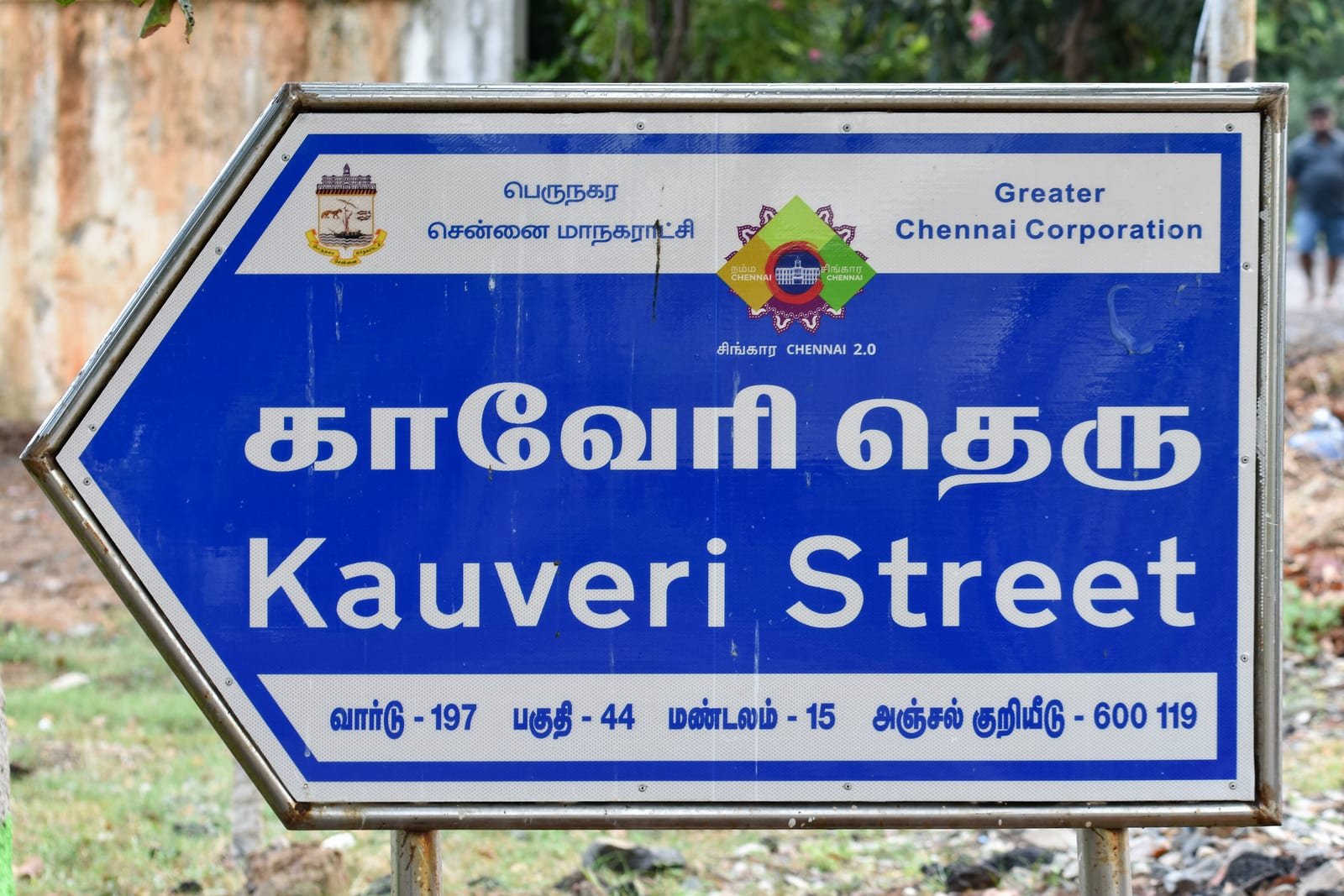
The commission’s work did not wait for a judge. On 24 April, Imayam wrote to the Collector of Virudhunagar district, in the state’s south. (A Collector is the senior civil servant who runs a district.) He asked why a Dalit settlement in the northern part of Achamthavilthan village was still recorded in official papers under a caste name, despite a government order of October 2025 to remove such names, the news site South First reported. Its residents said the name humiliates them. The letter gave the district a week to explain the delay, set out what it had done and give details of any action against the officials responsible. Official replies under the Right to Information Act, India’s freedom-of-information law, the outlet reported, show the Collector forwarded the renaming proposal in July 2025 and that it was pending with the state’s revenue administration. More than 60 families of the Paraiyar community, a Dalit community, live in the settlement, in a segregated cluster. They had called a boycott of the 2026 election to the state legislature, the Assembly, over the name. The commission’s letter said they had boycotted the vote; the outlet reported that most of them voted on 23 April. For more than 15 years, residents had petitioned the authorities, from the Tahsildar, the local revenue official, to the Chief Minister, the head of the state government, to rename the locality “North Achamthavilthan”. “If you can say your village name without hesitation and I cannot, that itself shows the difference in dignity,” S.V. Kumar, who leads the effort, told the outlet.
In May, Imayam told South First that the commission was running three courts, which heard an average of 20 to 30 cases a day, and that it had renamed a settlement called “Mettu Colony” in the town of Virudhachalam “Senthamizh Nagar”. In rural Tamil Nadu, he said, “colony” carries a caste-based meaning. “We have changed names wherever possible. But some officials are not cooperating, whether due to workload or lack of interest, we do not know,” he said.
On 23 September, the Madurai Bench of the Madras High Court, the court’s branch in the southern city of Madurai, upheld the October 2025 order, recording that 8,171 habitations, 17,993 streets, 349 roads, 2,095 water bodies and 10 public institutions had been identified for new names in village councils, South First reported. The commission then wrote to every district Collector, directing them to act within a month and report their progress, the outlet reported.
“For me, this is one of the biggest achievements of the SC/ST Commission since I assumed office,” Imayam told South First. “Governments may change, but if these names are permanently removed from official records and public usage, the impact will remain for generations.”
The mechanism: a body that can ask, summon and recommend
The commission’s power lies in its law. It may inquire, on its own motion or on a victim’s petition, into violations of the two national laws against untouchability and caste violence: the Protection of Civil Rights Act, 1955, and the Scheduled Castes and Scheduled Tribes (Prevention of Atrocities) Act, 1989, India’s law against caste crimes. It may inquire into a public servant’s negligence in preventing them, and recommend that the government begin disciplinary action against an official who was “grossly negligent or grossly indifferent”, the 2021 Act says. While doing so it has the powers of a civil court to summon people, examine them on oath and require documents.
What the Act does not give it is a power to order discipline. It can compel officials to appear and produce papers, but on disciplinary action, as on its other findings, it recommends to the government. Where the National Commission for Scheduled Castes or the National Commission for Scheduled Tribes, India’s constitutional bodies, is already dealing with a matter, the state commission loses jurisdiction over it, and where their recommendations conflict, the national body’s prevails, the Act says. “We have the authority to summon and investigate officials (except District Collectors and Superintendents of Police [district police chiefs]),” Imayam said in May, and when they fail to act, “we recommend departmental action”.
The commission also depends on the government to keep its seats filled, and empty seats can close its courts. The terms of the vice-chairperson and four members ended on 2 January 2025; for more than six weeks after that, two of the commission’s three benches stopped sitting and petitions piled up, DT Next reported in February 2025. The commission received about 20 petitions a day, on atrocity cases, land and caste certificates, a person familiar with its work told the paper.
5,000+ petitions had reached the Tamil Nadu SC/ST Commission by early 2025, from its start in 2021; about 4,000 had been closed by the end of December 2024 — DT Next
Where the delay sits
Asked in May whether the delay in renaming lay with officials or politicians, Imayam was direct:
“The problem is not at the political level; it lies with the officials.” Imayam, chairperson in charge of the Tamil Nadu SC/ST Commission, to South First, May 2026
Asked in the same interview whether a separate law against caste killings was needed, he said: “The law already exists. What is needed is proper and timely implementation. The chief minister can enact laws, but the officials responsible for implementation often carry caste biases. They delay enforcement as much as possible.”
How officials enforce the law against caste crimes is also before the courts. On 11 November, the day after the appointment, The News Minute reported that the Madurai Bench of the High Court had ordered the state government and the Director General of Police, the head of the state’s police, to file on 24 November a district-by-district report on how the Prevention of Atrocities Act has been enforced over five years: cases registered, charge sheets (the formal charges police file in court) filed and pending, trials, acquittals, convictions and appeals. The petitioner, Kathir, founder-director of the Madurai rights group Evidence, said in a statement that about 3,800 cases under the Act ended in acquittal between 2015 and 2025 and that the state had reportedly appealed in only 13 of them. The News Minute’s report carried no response from the state government.
The counter-reading
One reading of the last eight months is that the vacancy did not matter: the 2021 Act lets the government hand the chair’s duties to another member, as it did, and the commission’s letters on caste names, in April and after the September ruling, went out in that time.
That reading falls short in two ways. First, the stand-in arrangement exists only “as directed by the Government”, and every member holds office “subject to the pleasure of the Government”, the Act says; a commission meant to hold the state’s officials to account relies on the same state to staff it. The 2025 gap shows what happens when it does not: two of its three benches stopped sitting. Second, the law reserves the chair for a retired High Court judge, and a judge’s standing is part of what the commission brings to a hearing at which officials are summoned. The chair’s absence was covered, not filled.
What to watch
The first test for the new chair is the caste-names drive: whether the commission follows up the month-long deadline it gave Collectors after the September ruling, and whether it pursues officials who have not acted, as the Virudhunagar letter did. The second is the atrocities record: the state’s report to the High Court, due on 24 November, is to set out district by district how cases under the 1989 Act have ended, ground the commission has the power to inquire into. The third is its own record: the 2021 Act requires the commission to prepare an annual report on its work, which the government must lay before the state Assembly with a note of what it did about the recommendations.
Imayam said in May that the commission could provide records of the cases it had handled, the compensation paid, the land titles issued and the officials it had summoned. A new chair could publish them. That would show readers, and the officials who answer to the commission, what the months under a stand-in did, and what a judge in the chair does next.