Listen to this article
Read by an AI-generated voice · Report a mispronunciation
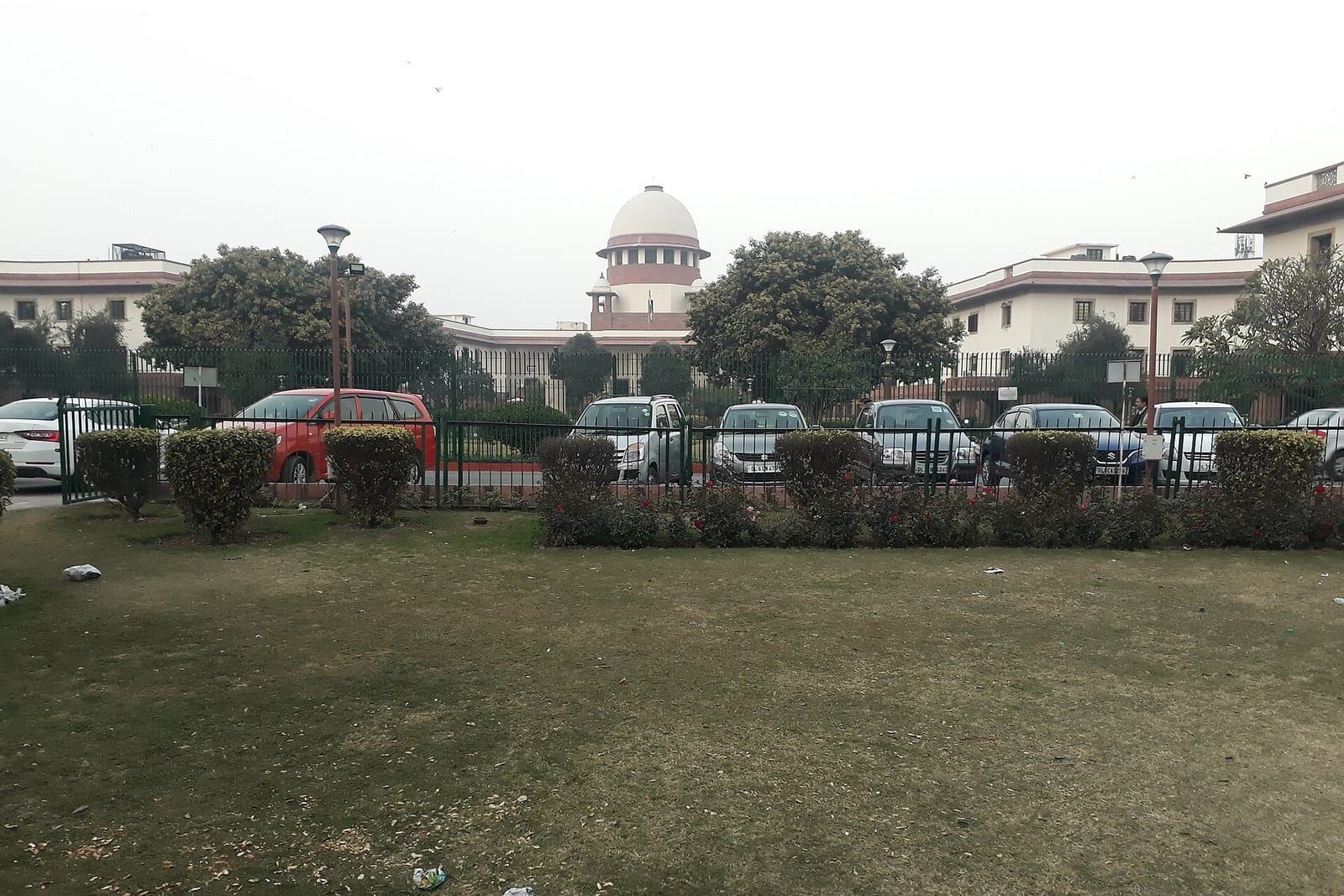
On 5 November 2026, two judges of the Rajasthan High Court (the state’s highest court), sitting at Jodhpur in India’s north-west, dismissed the appeal of a 40-year-old woman living in Banswara district, in the state’s south. She comes from neighbouring Gujarat, from a community that Gujarat lists as a Scheduled Tribe, the official category for Adivasi (Indigenous) communities entitled to reserved jobs and seats. She married a man of the same community in Rajasthan, and Rajasthan lists that community as a Scheduled Tribe too. When she applied to the state’s health department for a Nursing Officer post on the Scheduled Tribe quota, she was put in the General category instead.
Neither the order nor the report in the Times of India, a national daily newspaper, names her community.
The rule behind the ruling: a Dalit person (from the communities once branded “untouchable”) or an Adivasi person who moves to another state cannot claim that state’s reserved jobs, even when their community is on both states’ lists. It has reached the courts again and again through women who moved on marriage.
What happened
According to the court’s order, Justices Vinit Kumar Mathur and Chandra Shekhar Sharma heard her appeal against a single judge’s order of 23 September 2025, which had dismissed her petition. Her lawyer argued that because her caste is listed as a Scheduled Tribe in Rajasthan “on the same footing” as in Gujarat, she should be considered in that category.
The state’s Additional Advocate General, N.S. Rajpurohit, one of the senior lawyers who argue the state government’s cases, relied on two Supreme Court rulings, Marri Chandra Shekhar Rao (1990) and Action Committee (1994). Both were Constitution Bench rulings, made by the larger benches the Supreme Court sits to settle what the Constitution means. He also told the court that the job advertisement itself said reserved-category candidates who migrate to Rajasthan would be considered in the General category.
The bench agreed. A Scheduled Tribe candidate from another state, applying under an advertisement with that condition, “would automatically be dis-entitled to claim the benefit of reservation under the Scheduled Tribe category,” it held. LiveLaw, an Indian legal news site, reported the ruling on 7 November.
Why it matters
India’s Constitution does not list Scheduled Castes (SCs) and Scheduled Tribes (STs) once for the whole country. Under Articles 341 and 342, the President notifies them state by state, “in relation to that State or Union Territory” (the union territories are the parts of India governed from the centre rather than as states). In Bir Singh v. Delhi Jal Board (2018), the Supreme Court read those words to mean that the benefits of reservation “stand confined to the geographical territories of a State/Union Territory”.
In the same case, Justice R. Banumathi’s opinion describes a 22 February 1985 circular from India’s Home Ministry as clarifying that a Scheduled Caste or Scheduled Tribe person who has migrated “for the purpose of seeking education, employment, etc.” “will be deemed to be a Scheduled Caste/Tribe of the State of his origin and will be entitled to derive benefits from the State of origin and not from the State to which he has migrated.”
For a woman who has moved for marriage and now lives and works in her husband’s state, the quota for her new state’s own jobs is closed to her in law.
Isn’t she a Scheduled Tribe in Rajasthan too?
Her community is on Rajasthan’s list too, she argued. Courts have long rejected that. In Action Committee, as the Rajasthan order quotes it, the Supreme Court said a caste or tribe “bearing the same nomenclature” may be listed in two states “but the considerations on the basis of which they have been specified may be totally different.”
A woman of the Valmiki caste, a Scheduled Caste in Punjab, in India’s north-west, married a Valmiki man in Uttarakhand, a northern state, which also lists Valmikis as a Scheduled Caste, and Uttarakhand even issued her a caste certificate. In 2018, in Ranjana Kumari v. State of Uttarakhand, three judges held that the certificate “cannot dilute the rigours” of the Constitution Bench rulings, and dismissed her appeal. The single judge in Rajasthan relied on that order in turning the woman’s petition down.
Why does the law work this way?
In Marri Chandra Shekhar Rao (1990), quoted in the Rajasthan order, the Supreme Court said a Scheduled Caste or Tribe member is free to migrate, “but when he migrates, he does not and cannot carry any special rights or privileges attributed to him or granted to him in the original State”. The same judgment, as Bir Singh quotes it, names the caste order behind the lists: “Extreme social and economic backwardness arising out of traditional practices of untouchability is normally considered as criterion” for listing a community, but “the social conditions of a caste, however, varies from State to State”.
The Supreme Court has said the Constitution’s makers had this in mind, and in Action Committee, as the Rajasthan order shows, it quoted an exchange from the Constituent Assembly, the body that wrote the Constitution. On 2 December 1948, Jaipal Singh, who spoke for Adivasis in the Assembly, asked whether an Adivasi who moved out of a scheduled or tribal area could claim the same privileges where they settled. B.R. Ambedkar, the Dalit jurist who led the drafting of the Constitution, called it “a difficult question for me to answer”, according to the Assembly’s record of that day. His answer:
“But, so far as the present Constitution stands, a member of a scheduled tribe going outside the scheduled area would certainly not be entitled to carry with him the privileges that he is entitled to when he is residing in a scheduled area or a tribal area.” — B.R. Ambedkar, Constituent Assembly, 2 December 1948
Ambedkar also said that if the matter were raised “in quarters where a decision on a matter like this would lie”, an answer could be found “in the form of some clause in this Constitution”.
Does marriage change anything?
Not so far. The Patna High Court, the high court of Bihar in eastern India, ruled the same way for a Dalit woman from Uttar Pradesh, the northern state that borders Bihar, who married into Bihar. In November 2025 the Uttarakhand High Court dismissed petitions by women from Scheduled Caste communities in other states who had married into Uttarakhand, the news network ETV Bharat reported. One of them, from neighbouring Uttar Pradesh, belongs to the Jatav community, listed as Scheduled Caste there, and had an Uttarakhand caste certificate and residence certificate. The court held that migration, by choice or by marriage, does not carry reservation rights into another state, ETV Bharat said.
A bench of the High Court of Madhya Pradesh, in central India, upheld the refusal of a permanent caste certificate to a woman from Uttar Pradesh who had moved to Madhya Pradesh after marriage, the legal news site Verdictum reported on 14 October 2026. She had argued that she moved for marriage, not for education or a job.
The Rajasthan bench recorded her marriage among the facts but did not rest its reasoning on it. It decided the case on the rule and on the advertisement’s condition.
Is there an exception?
Two, both in Bir Singh. For the central government’s own services, wherever the office is, “recruitment to all positions is on an All India basis and reservation provided for is again a pan India reservation”, the majority noted. And it held that in the National Capital Territory of Delhi, the capital region, the “pan India Reservation Rule in force is in accord with the constitutional scheme”: Delhi may reserve posts for SC and ST candidates from every state. Justice R. Banumathi disagreed on that point: in her view, posts that Delhi and the other union territories recruit for themselves should be reserved only for the communities on their own lists. The majority left the other union territories undecided.
Key terms
- General category: candidates competing for posts not reserved for SCs, STs or Other Backward Classes (OBCs, the third reserved group, of classes the state counts as socially and educationally backward).
What’s next
The Bir Singh judgment says the route to change runs through Parliament: a state that wants to extend reservation beyond its lists must persuade the central government so that “an appropriate parliamentary exercise” can amend them. Until then, under the Jodhpur order, a Scheduled Tribe woman from another state who marries into Rajasthan and answers an advertisement carrying that condition competes as General. Still open, by the Bir Singh majority’s own account: whether union territories other than Delhi may reserve posts for candidates from every state.